
- Original TTR manufacturer since 2013
- Automated coating and slitting
- IQC / IPQC / OQC control
- ANSI barcode grade testing
- -20°C to 120°C environmental testing
- Batch-level traceability
- ANSI barcode grade
- Batch traceability
- RoHS / REACH compliance
- SGS and MSDS documents on request
To print durable logistics labels, match the label surface and ribbon to the printer, then qualify the complete label on its intended package. Buyers should check both the printed information and attachment after the handling and exposure expected on their route. A readable fresh sample is the starting point; release the combination only after application checks and barcode quality checks meet the agreed requirements.
Key Takeaways
- Ribbon selection depends on the label surface, printer architecture, print settings and required durability.
- Wax/resin is a candidate for coated paper and selected films, with greater durability than wax.
- Printed-label trials should use the production substrate, printer and settings.
- Barcode decoding and barcode print-quality verification answer different questions.
Prepare the printer, label stock and route requirements
A durable thermal-transfer label depends on the complete printed construction, including the label surface, ribbon, printer and settings. Begin by writing down where the label will be applied and what it must survive before its final scan. For a logistics trial, list the relevant handling, moisture, temperature changes and chemical contact rather than requesting an undefined “durable” ribbon.
Separate the printing surface from the package surface. The ribbon must work with the label's printable face; the label must also remain attached to the actual carton, container or other package. Temperature cycling, chemical contact and surface energy affect adhesion, so a trial on a convenient test panel does not establish suitability for your production package.
Confirm that your printer supports thermal transfer before ordering ribbon. Thermal transfer uses a ribbon, whereas direct thermal uses specially treated label material without ribbon. For the thermal-transfer route described here, check the exact printer model, printhead type, permitted ribbon width, core, roll length and ink-side orientation against its documentation. Record the label dimensions and surface finish alongside those details.
Finally, obtain the receiving customer's label-data and barcode-quality requirements. Use those requirements to define the trial outcome before printing. Keep a copy of the intended artwork, required encoded data and package material with the trial record so purchasing and production approve the same combination.
Match the consumables and print a controlled trial
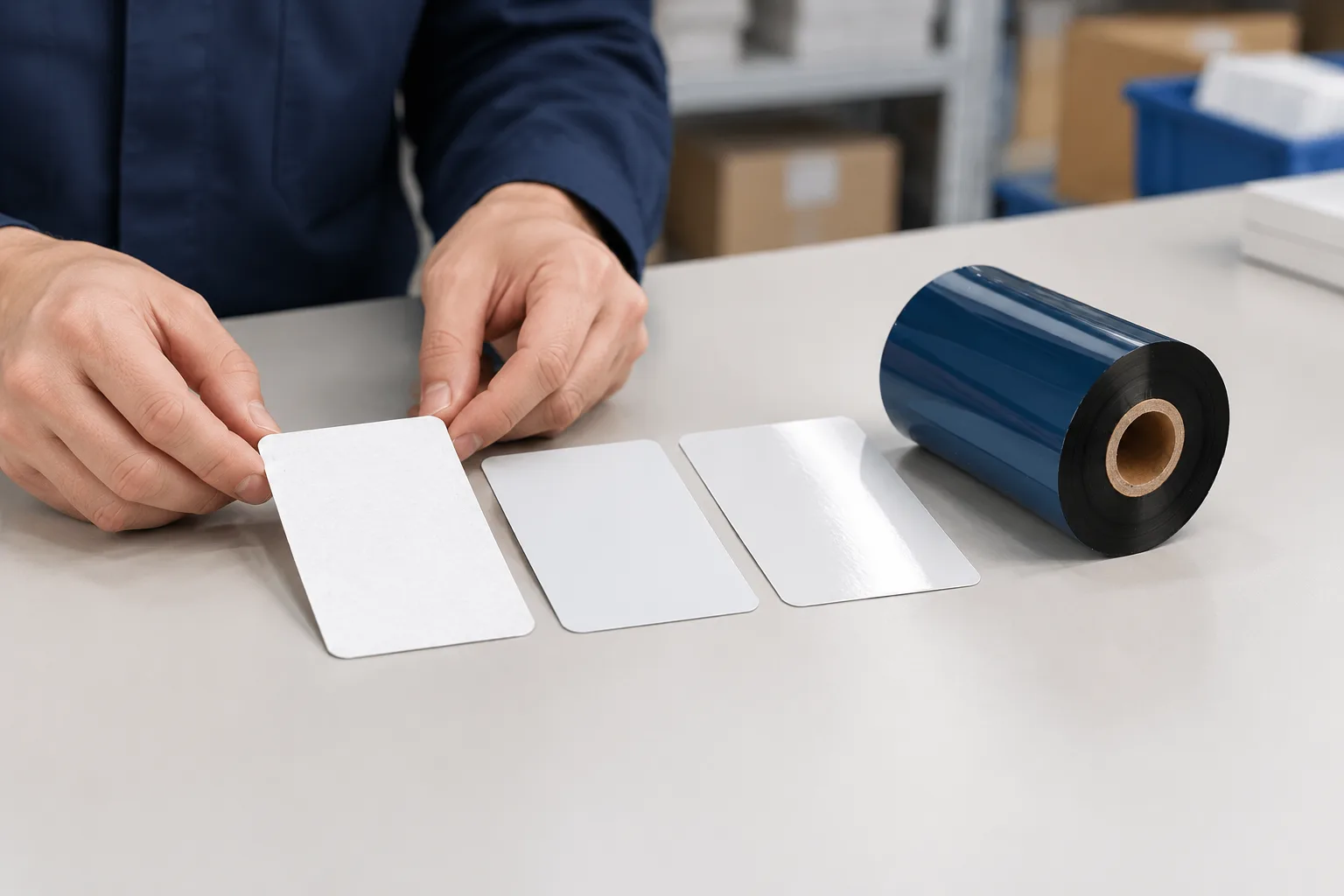
Wax, wax/resin and resin ribbons suit different printable surfaces, so select a candidate from the actual label finish before adjusting printer settings. Coated-paper shipping labels can start with wax or wax/resin; wax/resin offers enhanced durability compared with wax. For synthetic stock, distinguish matte from gloss rather than ordering by PET or PP alone.
- Select the surface match. Use the starting points in the evidence table below. If your current paper-label print lacks the required handling resistance, include a compatible wax/resin candidate in the trial. For film, ask for compatibility with the precise coating and finish.
- Confirm the physical fit. Check ribbon formulation, width, core and roll length against the printer and label. Confirm CSI or CSO orientation as required by the machine. Do not substitute a near-edge ribbon for a flat-head application based only on matching roll dimensions.
- Print the final artwork. Use the production label stock and intended printer. Include the actual barcode size and information layout rather than judging a demonstration image supplied on a different material.
- Record the trial settings. Start from the instructions applicable to that printer and consumable combination. Record speed and darkness with each sample, and change one trial variable at a time so you can compare the result.
The supplied material does not establish one darkness or speed setting for every logistics printer. Treat those settings as part of your local qualification. Keep the current combination as a comparison sample when changing supplier, so the purchasing decision rests on the same artwork, equipment and application conditions.
Check the printed label on its actual package
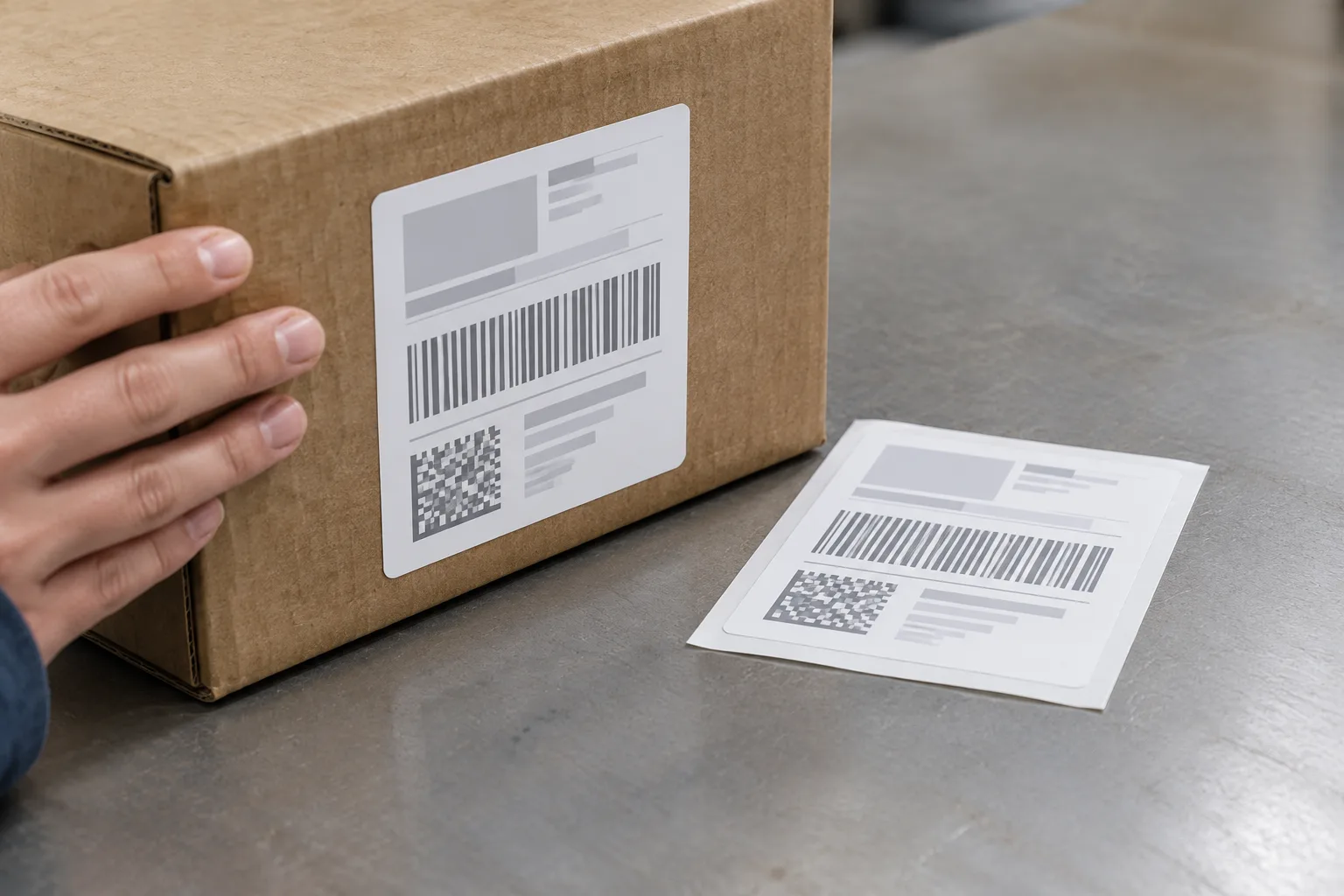
Qualification must use the production substrate and the intended printed construction before release. Apply trial labels to the actual package material, then evaluate both print legibility and attachment under the conditions defined for the route. Include temperature changes or chemical contact when those exposures belong to the application.
First, compare the printed text and decoded data with the approved label information. Then check the final artwork at its actual printed size. Resizing a barcode is a reason to verify the final print again; a previous result from a different layout should not stand in for that check.
Use a scanner to check decoding and a barcode verifier when assessing print quality against the customer's specified requirements. A scanner can decode marginal symbols, while a verification grade describes how closely the printed barcode meets the relevant quality standard. Set acceptance from the receiving customer's specification rather than assigning a universal grade to every shipment.
Retain an unexposed sample and compare it with labels after the planned handling and exposure. Record whether the text remains readable, whether barcode quality meets the agreed requirement, and whether the label remains attached. Define any exposure duration and pass criteria with the application owner; the supplied sources do not provide a universal rubbing count or shipping-life threshold. Approve the tested combination only for the conditions represented by that trial.
Use the failed check to choose the next trial
A ribbon-to-surface mismatch is rarely corrected by darkness adjustment alone. If a sample fails, identify which requirement failed before replacing the entire consumable set. Keep the failed sample and its settings with the trial record so the next comparison has a clear starting point.
- If the fresh print is poor: recheck the selected ribbon against the actual label coating and printhead architecture. Confirm the loaded rolls match the approved specification before comparing settings.
- If the image loses legibility during handling: return to the required exposure and the surface-compatible ribbon candidates. Trial the alternative on the same stock and package; do not assume a ribbon category guarantees the result.
- If attachment fails: review the label construction and package surface with the label supplier. Adhesion qualification belongs to that combination, so keep it separate from the decision about printed-image resistance.
- If barcode quality fails: compare the final artwork and verification result with the receiving requirement. Reprint and repeat the failed check after the relevant correction.
For a supplier change, retain the exact stock reference, ribbon reference, roll specification, printer model, artwork and settings used for approval. Your next step is to print that documented combination on the intended package and complete the checks before ordering the production quantity.
Data and Evidence
The supplied selection guidance provides candidate material matches, while application trials establish whether a particular combination meets your logistics requirement.
| Label surface or condition | Candidate ribbon | What to verify |
|---|---|---|
| Coated paper and shipping labels | Wax or wax/resin | Print quality and handling resistance on the actual stock |
| Matte PP or matte PET | Wax/resin | Compatibility with the precise matte surface |
| Gloss PET | Resin | Transfer and durability on the precise gloss surface |
| Freezer stock | Resin or wax/resin on a qualified cold-rated construction | The complete label construction under the intended cold conditions |
Selection references: Coated paper, cartons, shipping labels; Matte synthetics such as matte PP and matte PET; Gloss PET, polyimide, vinyl, chemical drums; Freezer and cryogenic stock. Application references: Ribbon performance; production substrate; adhesion. These material matches are trial starting points, not measured shipping-lifetime claims for COLORFULTTR products.
Frequently Asked Questions
How do I choose ribbon for coated-paper logistics labels?
Use wax or wax/resin as the initial candidates for coated paper. Where rubbing is part of the route, trial wax/resin and validate the printed label on the actual package.
Can I use the same ribbon on matte PET and gloss PET logistics labels?
Do not approve both finishes from the material name alone. The supplied selection guidance lists wax/resin for matte PET and resin for gloss PET; qualify each actual surface separately.
Does a successful warehouse scan prove a shipping barcode is acceptable?
A successful scan confirms that reader decoded the symbol. Check print quality against the receiving customer's requirements and retain verification results for the final printed label.
Related Products & Guides
Recommended products for this industry
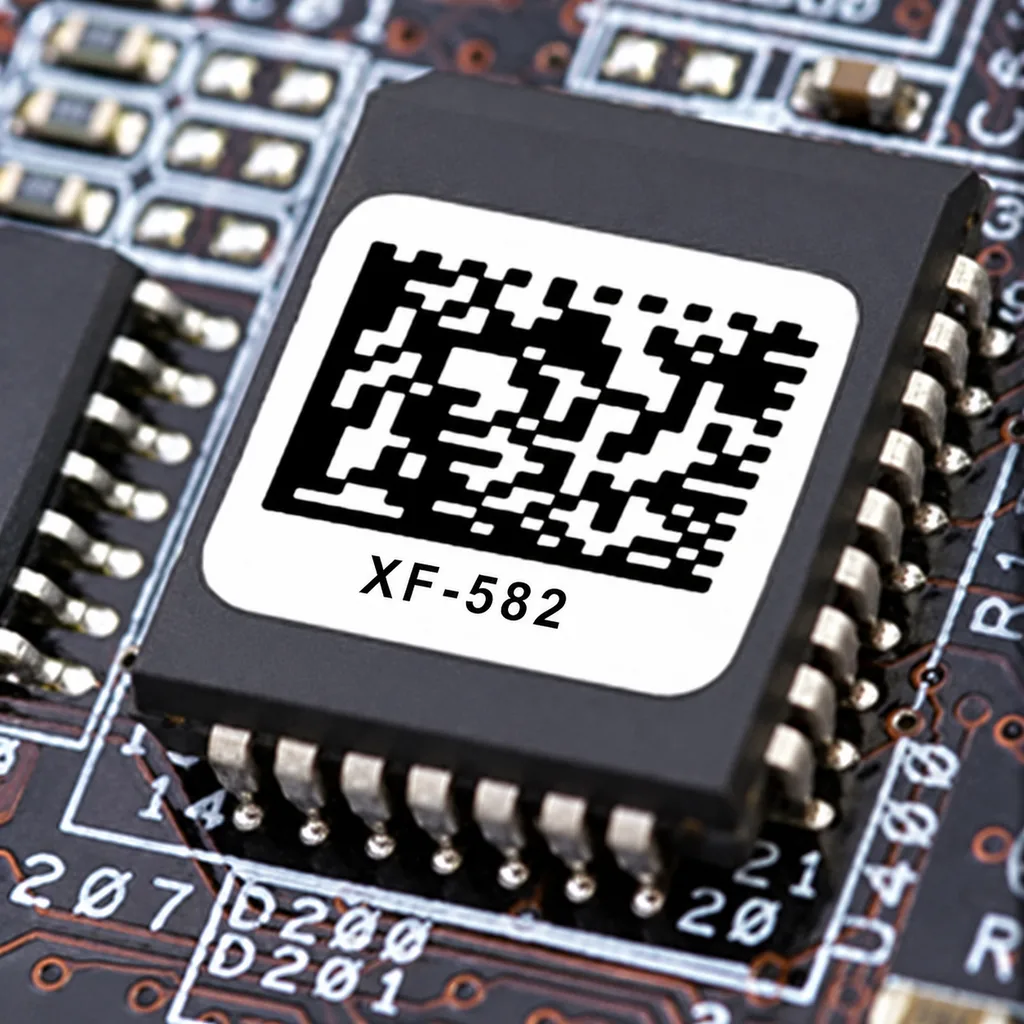
CL-582 High-Temperature Polyimide Labels for Printed Circuit Board Traceability
CL-582 is a high-temperature polyimide (PI) label material for printed circuit board (PCB) and sensitive electronic component process control and product traceability. It has a gloss white coating, a listed thickness of 2mil and an acrylic adhesive. The source identifies wave soldering and reflow soldering as applications. Selection requires confirmation of the actual heat exposure and chemical conditions: the listed temperature range has no specified exposure duration, and solvent resistance is qualitative.
View details
CL-Z213 Near-Edge Wax-Resin Thermal Transfer Ribbon for Barcode Labels
An enhanced black near-edge wax-resin thermal transfer ribbon for near-edge barcode printers and low- to medium-speed thermal transfer overprinting (TTO). Listed applications include retail labels, warehousing, garment tags and packaging identification. Match the printer, actual print medium and operating speed before selection: print quality and image durability can vary with the printer and substrate.
View details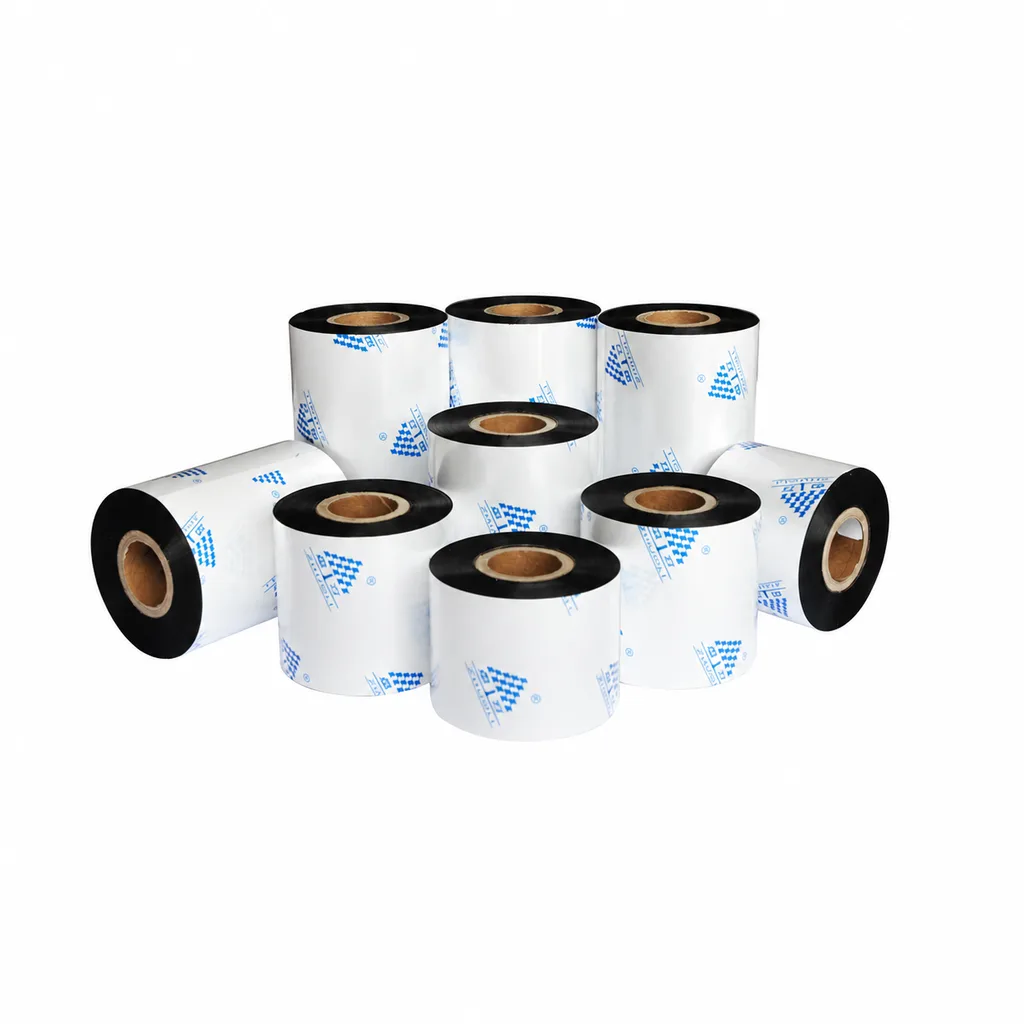
Near-Edge Wax-Resin Thermal Transfer Ribbon CL-Z212 for Barcode Labels
CL-Z212 is a general-purpose black wax-resin thermal transfer ribbon primarily for near-edge barcode printers, with use also described for low- to medium-speed thermal transfer overprinting (TTO). Listed applications include retail labels, garment tags, warehouse identification and packaging printing. Select according to printer type, actual printing speed and substrate: recommended conditions list near-edge printing at ≤10 inches per second (ips) and TTO at ≤20 ips. Print quality and image durability can vary with the printer and printing material, so trial printing on the intended substrate is necessary for selection.
View details
3-inch mobile printer
These lightweight and cost-effective 3-inch mobile printers enable accurate receipt and…
View detailsNeed the right ribbon for your label application?
Share the label material, printer and operating environment. Our team will recommend a tested combination.
