
High-Temperature Aluminum Marking Explained: Two Heat Events, Not One
Request a solution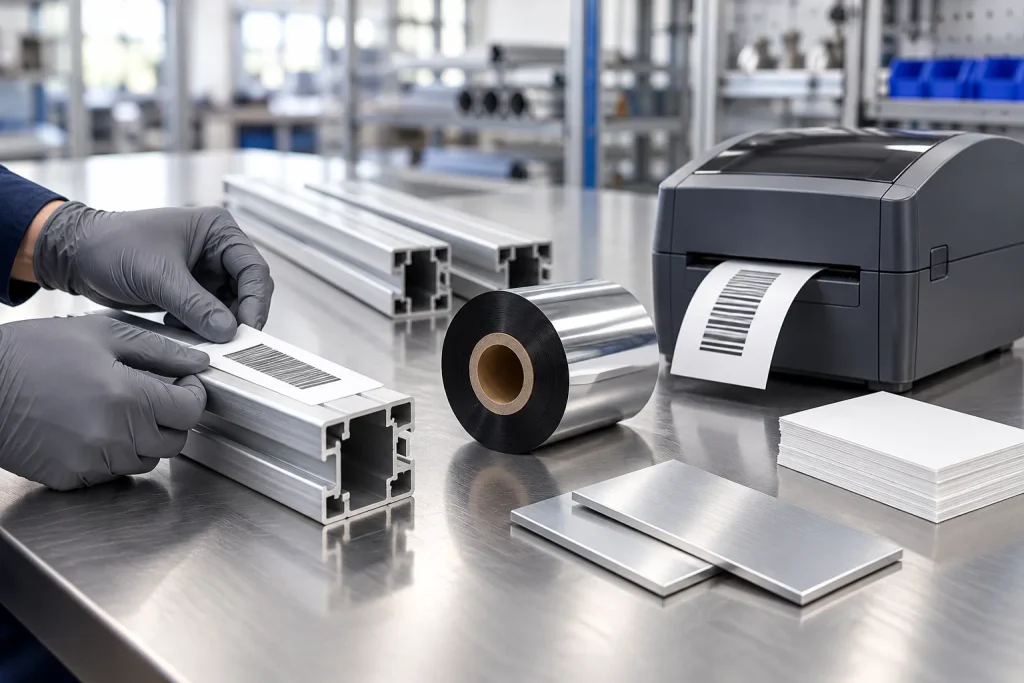
- Original TTR manufacturer since 2013
- Automated coating and slitting
- IQC / IPQC / OQC control
- ANSI barcode grade testing
- -20°C to 120°C environmental testing
- Batch-level traceability
- ANSI barcode grade
- Batch traceability
- RoHS / REACH compliance
- SGS and MSDS documents on request
This explainer is for B2B buyers and print-shop technical leads who meet the phrase high-temperature aluminum marking while choosing thermal transfer consumables. The term covers two different heat events: applying a mark while the aluminum surface is hot, and keeping a mark readable through heat treatment after marking. Each event rules out different consumables, so name your heat event first, then match the carrier and ribbon chemistry to it and verify the result on your own material, not on a catalog rating.
Key Takeaways
- High-temperature aluminum marking spans two situations: marks applied to a hot aluminum surface, and marks on parts that must survive later heat treatment.
- Documented failure modes exist for both: inks and paints often evaporate before reaching a hot product, and after tempering the marking can be barely legible.
- Thermal transfer melts ribbon ink onto a receiver label or film, so a ribbon-based aluminum job means printing a heat-rated label or tag and applying it; full resin ribbons match the synthetic films in those constructions.
- Aluminum parts can carry their own heat limits: compressed-gas aluminum cylinders must not be exposed above 265ºF (130ºC) and must be condemned after exposure above 350ºF (175ºC) under CGA C-6.1.
- A temperature figure in a supplier listing is a starting point, not an acceptance standard, because adhesion changes with temperature cycling and must be approved on your own material stack.
What High-Temperature Aluminum Marking Actually Means
High-temperature aluminum marking is the application of identification — serial numbers, batch codes, barcodes, or traceability marks — to aluminum that is hot when marked or that will be heated after marking. Both conditions are real in aluminum production: the high surface temperatures and the subsequent heat treatment of aluminum products are a recognized challenge for marking aluminum. The trade splits the two moments by application temperature: a mark can be applied to hot or to cold surfaces — hot application versus cold application.
The split matters because the failure modes are different. When the aluminum surface is already hot, liquid inks and paints often evaporate before they reach the product. When the part is marked cold and then heat-treated, the marking after tempering can be barely readable. One keyword, opposite timing — a consumable that handles one situation gives you no promise for the other.
For label-based marking, the print method is a separate choice again, because a printable topcoat can accept thermal transfer, laser, or inkjet printing. The decision is three questions: which heat event the part faces, which carrier can take that heat, and which print method puts a readable code on that carrier.
How It Differs From Adjacent Concepts
High-temperature aluminum marking differs from heat-resistant labeling, direct laser marking, and hot foil stamping in where the heat sits and what you end up buying.
The carriers differ first. A serial number can ride on each individual product as a label, a laser marking, a Data Matrix code, or an RFID tag. Laser marking works the metal directly: UV laser marking minimizes thermal impact and creates high-contrast, permanent marks while preserving material integrity, which matters when the part must not absorb extra heat. Labels take the opposite route: the code sits on a material chosen to survive the environment.
Thermal transfer heat sits at the printhead, not on the part: a thermal transfer printer melts ribbon ink onto the label underneath. The nickname "hot stamping ribbon" adds confusion — hot foil stamping is a separate finishing process that presses foil with a heated die for decorative metallic finishes. Neither phrase means a ribbon prints onto hot aluminum.
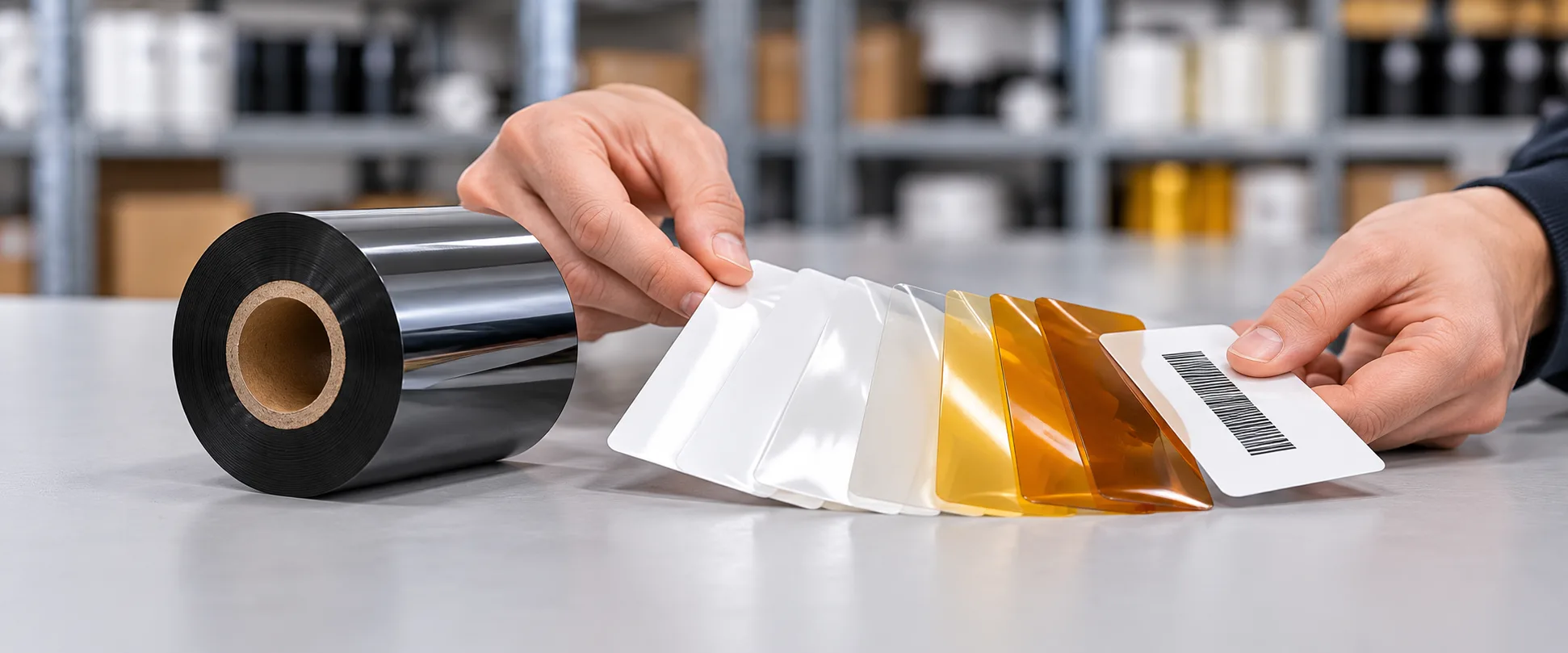
"Heat-resistant" on a ribbon describes the printed mark, not the printing surface. Ribbon classes map to label materials: wax ribbons suit porous and coated paper and work best in short-term or indoor use with minimal exposure to heat; full resin ribbons suit demanding synthetic films such as polyester, polyimide, and vinyl — the film families behind heat-rated label constructions. Heat-resistant labeling in general is wider: polyimide labels keep barcode legibility and adhesion through wave soldering and reflow ovens, an electronics heat event, not aluminum processing.
| Concept | Where the heat is | What you actually choose |
|---|---|---|
| High-temperature aluminum marking | On the aluminum part, at marking or during later heat treatment | Carrier and print method rated for that heat event |
| Heat-resistant labeling, e.g. polyimide | In a later process such as wave soldering or reflow | Label construction plus a resin-class ribbon |
| Hot foil stamping | In a heated die that presses foil | Foil and die setup for a decorative finish |
| Thermal transfer, known as hot stamping ribbon | At the printhead, melting ink onto a receiver | Ribbon class matched to the label material |
Where the Heat Comes From
Heat enters an aluminum marking job from three directions: the surface temperature of the part when it reaches the marking station, the heat treatment applied after marking, and the energy the marking process itself deposits.
Incoming heat is the hot-application case: parts straight from forming or heat treatment arrive with high surface temperatures, and any ink-based method fights evaporation at contact. Downstream heat is the cold-application case: a room-temperature mark then has to survive tempering or annealing, after which conventional marking can be barely legible.
The marking process adds its own heat, and laser marking lets you steer it: increasing the marking speed reduces the energy density delivered to the material, and UV marking minimizes thermal impact when the aluminum must keep its material integrity.
The part itself can also set a ceiling: in compressed-gas service, high temperatures adversely affect a cylinder's mechanical properties, and the rules are explicit. Do not expose any aluminum cylinder to temperatures above 265ºF (130ºC); any aluminum cylinder exposed above 350ºF (175ºC) must be condemned and removed from service (CGA C-6.1); and any cylinder exposed to the direct action of fire must be removed from service (49 CFR 173.34). For a heat-sensitive aluminum product, the heat a marking method deposits is a product-safety variable, not only a legibility variable.
What a High-Temperature Rating Does Not Tell You
A temperature number in a marking-product listing does not by itself prove that the mark will survive your process.
Catalog figures describe the product, not your part. In one industrial-label catalog, an aluminum-foil label listing carries a 260 Degrees rating for industrial steel adhesive use, and a polyimide tag listing carries 500 Degrees for marking threaded steel. Those numbers are the supplier's rating for that product in that use, stated in a title without the test conditions behind the figure — none is an acceptance standard for your parts.
The keyword does not tell you the method, either. The same catalog lists both printable label and tag stock and a metal aluminum plate for steel plants described as printable for laser engraving, so aluminum marking products can be print-and-apply media or laser-ready plates. Read which one a listing describes before comparing prices.
Two more limits apply after you shortlist. Facestock alone does not decide adhesion: temperature cycling, chemical contact, and surface energy all change it, so approve samples made from the same material stack and applied to the same surface. Ribbon class alone does not decide durability: ribbon performance belongs to the complete printed construction, so validate any combination on your own facestock, printer, and settings before release. And the cylinder thresholds above do not transfer — they are compressed-gas rules, cited as proof that aluminum products carry product-specific heat limits.
Your next step fits one sentence: write down the highest temperature your mark must survive and whether it happens at marking or afterward, then ask suppliers to quote against exactly that with samples on your own material.
Data and Evidence
The figures below are the heat numbers and limits that appear in the sources behind this article; set them against your own process window.
| Evidence point | Figure as stated | Condition or use stated in the source |
|---|---|---|
| Aluminum cylinder handling ceiling | 265ºF (130ºC) | Do not expose any aluminum cylinder above it |
| Aluminum cylinder condemnation | above 350ºF (175ºC) | Condemn and remove from service (CGA C-6.1) |
| Fire-exposed cylinder | not quantified | Remove from service; heat adversely affects mechanical properties (49 CFR 173.34) |
| Aluminum-foil label listing | 260 Degrees | Industrial steel adhesive use, per listing title |
| Polyimide tag listing | 500 Degrees | Steel listing for threaded steel, per listing title |
| Ribbon class | Materials it is stated to suit | Position on heat exposure |
|---|---|---|
| Wax | Porous and coated paper | Short-term or indoor use with minimal heat, abrasion, or chemicals |
| Wax-resin | Coated paper and selected synthetics | Between wax and full resin |
| Full resin | Demanding synthetic films: polyester, polyimide, vinyl | The class matched to heat-rated synthetic label stocks |
Source names: the cylinder, laser, thermal transfer, and label records above come from verified internal fact assets; the 260 Degrees and 500 Degrees examples come from the company special-label product list (特殊标签产品清单 20260811). CGA C-6.1 and 49 CFR 173.34 appear as named in those records.
Frequently Asked Questions
Does high-temperature aluminum marking mean marking aluminum while it is hot, or a mark that survives later heat?
Both meanings are in use, and the trade names the split: a mark can be applied to hot or to cold surfaces, called hot and cold application. Identify which heat event your parts face before choosing anything, because the failure modes differ — inks can evaporate before they reach a hot surface, while a cold-applied mark can be barely legible after heat treatment.
Can a thermal transfer ribbon print directly onto an aluminum part?
Thermal transfer works by melting ribbon ink onto a receiver — the label or film underneath — so the ribbon-based route to aluminum marking is to print a heat-rated label or tag and apply it to the part. A mark in the metal itself is direct laser marking, a different process with its own heat input.
Why do resin ribbons carry heat-resistance claims if they never touch hot metal?
The heat resistance describes how the printed image endures on its label. Full resin ribbons match demanding synthetic films such as polyester, polyimide, and vinyl — the films behind heat-rated label constructions — while wax ribbons stay with paper in short-term indoor use where heat exposure is minimal. The nickname hot stamping ribbon refers to printhead heat, not to printing hot parts.
Do the 265ºF (130ºC) and 350ºF (175ºC) aluminum limits apply to every aluminum marking job?
No — those figures govern compressed-gas cylinders: do not exceed 265ºF, condemn above 350ºF (CGA C-6.1), and remove any fire-exposed cylinder from service (49 CFR 173.34). They show that aluminum products can carry strict, product-specific heat limits; check the limit that governs your own part separately.
Recommended products for this industry

Aluminum Foil High-Temperature Label
Coated aluminum label for metal processing, heat treatment and high-temperature part…
View details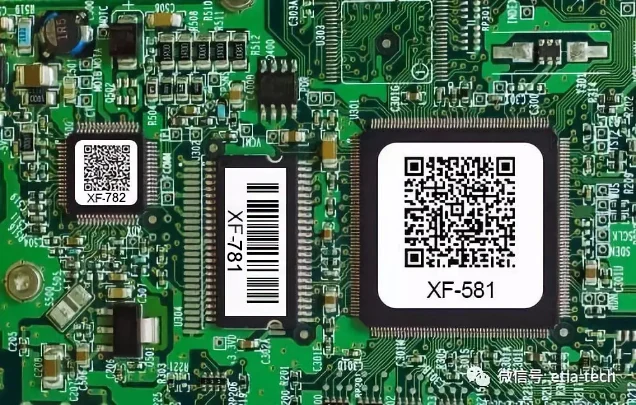
Anti-Static High-Temperature Polyimide Label
Anti-static polyimide label for ESD-sensitive electronics assembly and high-temperature…
View details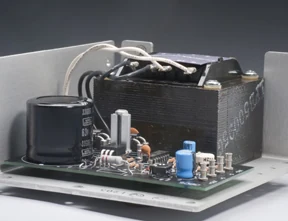
Black High-Temperature Polyimide Label
Matte-black polyimide label for high-contrast codes on dark electronics and industrial…
View details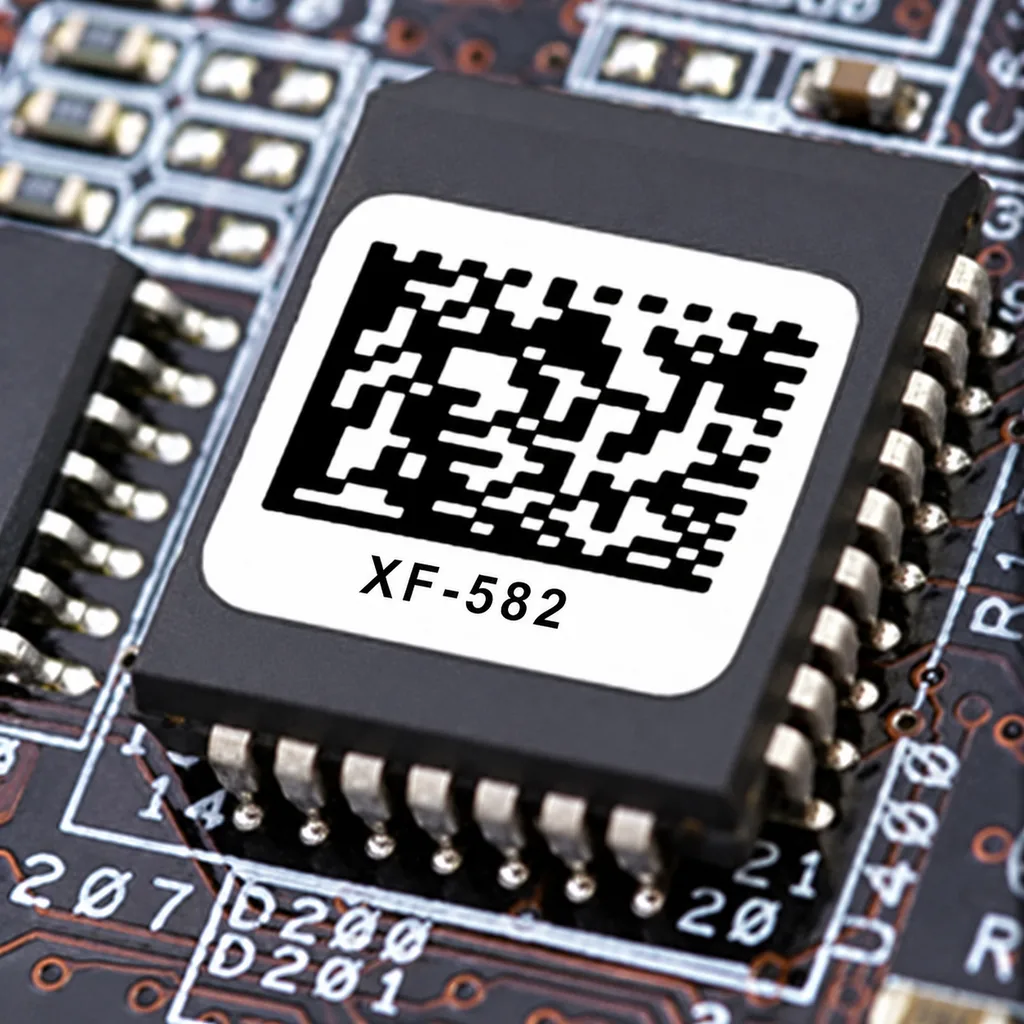
CL-582 High-Temperature Polyimide Labels for Printed Circuit Board Traceability
CL-582 is a high-temperature polyimide (PI) label material for printed circuit board (PCB) and sensitive electronic component process control and product traceability. It has a gloss white coating, a listed thickness of 2mil and an acrylic adhesive. The source identifies wave soldering and reflow soldering as applications. Selection requires confirmation of the actual heat exposure and chemical conditions: the listed temperature range has no specified exposure duration, and solvent resistance is qualitative.
View detailsNeed the right ribbon for your label application?
Share the label material, printer and operating environment. Our team will recommend a tested combination.
