
High-Resistance Marking on Aluminum: What It Means and How Each Method Achieves It
Request a solution- Original TTR manufacturer since 2013
- Automated coating and slitting
- IQC / IPQC / OQC control
- ANSI barcode grade testing
- -20°C to 120°C environmental testing
- Batch-level traceability
- ANSI barcode grade
- Batch traceability
- RoHS / REACH compliance
- SGS and MSDS documents on request
This explainer defines high-resistance marking on aluminum for B2B buyers and print-room technical leads who meet the term in specifications and supplier talks. It separates the routes that create durable results — surface lasers, photosensitive anodized aluminum and thermal-transfer labels — and the conditions each assumes. Company facts come from Colorfulttr product documentation; the qualifying step for any route is a sample built from the same material stack.
Key Takeaways
- High-resistance marking on aluminum means the mark stays readable against named threats — heat, abrasion, chemicals or weather — not against everything.
- Aluminum is harder to mark than it looks: in processes involving high surface temperatures or subsequent heat treatment, those conditions challenge marking.
- A laser material-removal process removes a top layer such as anodizing or paint to expose bare aluminum; photosensitive anodized aluminum instead seals a silver-halide image inside the anodic layer.
- On the label route, face material, ribbon ink and adhesive each set their own limit — full resin ribbons generally suit demanding synthetic films such as polyester.
- Confirm any method with samples from the same material stack, applied to the same surface and exposed to your real process conditions.
What High-Resistance Marking on Aluminum Means
High-resistance marking on aluminum is any mark — text, a serial number, a barcode or a Data Matrix code — applied to an aluminum part or surface and engineered to stay readable under the threats your process actually contains: heat, abrasion, chemicals or outdoor exposure. The word resistance always points at named threats. A mark that survives a tempering furnace can still fail under years of street weather, so a specification should name the threats, not just the word durable.
Aluminum is harder to mark than it looks, for a concrete reason. In applications involving high surface temperatures or subsequent heat treatment, these conditions challenge marking on the metal. Conventional inks and paints often evaporate before they even reach the product, or the inscription is barely legible after tempering. That is why suppliers offer inks that survive tempering and paints rated for high surface temperatures, and why laser and embedded-image methods exist as alternatives.
In practice, high-resistance marking on aluminum can take several forms: the surface layer itself carries the image (laser marking, photosensitive anodized aluminum), a printed nameplate or tag carries the data on the part (thermal-transfer labels on metal plates or film). The sections below show how they differ.
How Laser, Ink and Label Methods Differ on Aluminum
In laser material removal, the laser selectively removes the top material layer — such as anodizing or paint — and exposes the underlying aluminum as the readable mark. Fiber lasers serve particularly small, high-resolution markings.
Photosensitive anodized aluminum keeps the layer and puts the image inside it. In this process a silver halide image is embedded within the hard anodic layer of the aluminum, so the image sits protected beneath the surface rather than on top of it. Metalphoto specifies its photosensitive anodized aluminum nameplates for extreme heat, long-term weather and UV exposure, salt spray, abrasion and industrial solvents.
The label route moves the printing problem from the part to a nameplate. In thermal transfer, the printhead applies heat and pressure to move ink from a ribbon onto the label face, and that ink is wax, resin or a wax-resin blend. This is where Colorfulttr enters: as a manufacturer focused on thermal transfer ribbon development and production, it supplies the ribbon side — full resin ribbons specified for abrasion, heat and corrosion resistance. Match the ribbon class to the face and the threats: wax ribbons are generally suited to porous and coated paper, while full resin ribbons suit demanding synthetic films such as polyester, polyimide and vinyl. Share the face material and working conditions, and the ribbon grade can be selected against them.
What High-Resistance Marking Does Not Guarantee
In laser marking, the result depends not on the laser source alone, but on how alloy composition, surface condition and process parameters work together. Increasing the marking speed reduces the density of the energy delivered by the laser.
Temperature cuts both ways. The temperature the surface holds at the moment of marking must be taken into account, because printing on hot aluminum is a different task from marking a cold part. On the label route, standard paper labels with standard adhesives soften and release under sustained heat above their rated temperature, while temperature cycling, chemical contact and surface energy all change adhesion.
So the honest test of high resistance is your own line. Approve samples built from the same material stack, applied to the same surface, and exposed to the same heat, chemicals and handling the part will actually see.
Data and Evidence
The three routes differ in where the mark sits — created by removing a coating to expose aluminum, sealed inside the anodic layer, or printed on an attached nameplate — and the table below consolidates their mechanisms, durability sources and conditions. By route: the laser, ink and process-condition entries (layer removal, fiber-laser use, alloy and parameter dependence, speed and energy density, surface temperature, tempering inks) reflect the cited marking-technology sources; the Metalphoto entries reflect the manufacturer's published specifications for photosensitive anodized aluminum; the ribbon-selection and label-behavior entries reflect the cited ribbon and label references; company-side entries reflect Colorfulttr product documentation (the 2025 product matrix and printer media specifications).
| Route | How the mark is created | Where durability comes from | Key condition to check |
|---|---|---|---|
| Laser material removal | In this process the laser removes the anodizing or paint layer and exposes bare aluminum | The cited source describes layer removal only and states no durability basis | Alloy, surface condition and parameters decide contrast; higher speed lowers energy density |
| Metalphoto photosensitive anodized aluminum | A silver halide image is embedded inside the hard anodic layer | The image sits beneath the surface, specified for heat, weather, UV, salt spray, abrasion and solvents | Requires anodized photosensitive stock as the nameplate material |
| Thermal-transfer label | Printhead heat and pressure move wax, wax-resin or resin ink onto the face | Colorfulttr specifies full resin ribbons for abrasion, heat and corrosion resistance | Face material, ribbon class and adhesive must each match the temperature and chemicals |
Whatever route carries the data, a serial number can sit on each individual product as a label, a laser marking, a Data Matrix code or an RFID tag; the decision is which carrier survives your process. Colorfulttr supports the label branch of that decision with resin-grade ribbons; samples are the qualifying step before any batch commitment.
Frequently Asked Questions
What does high resistance actually mean for a mark on aluminum?
It means the mark stays readable against the specific threats named in your specification — heat, abrasion, chemicals or weather. On the laser route, the alloy, the surface condition and the process parameters decide the result; on the label route, the face material, ribbon class and adhesive set their own limits — so confirm with samples from the same material stack before approving a batch.
Can anodized aluminum be marked, or does the anodic layer have to go?
Both routes exist. A laser can selectively remove the anodized layer to expose bare aluminum as the mark, while photosensitive anodized aluminum keeps the layer and seals a silver-halide image inside it.
Can we mark aluminum parts directly instead of applying labels?
Yes, when the resulting mark survives your process. Inks that withstand tempering and paints suitable for high surface temperatures are available for marking aluminum products.
Recommended products for this industry

Aluminum Foil High-Temperature Label
Coated aluminum label for metal processing, heat treatment and high-temperature part…
View details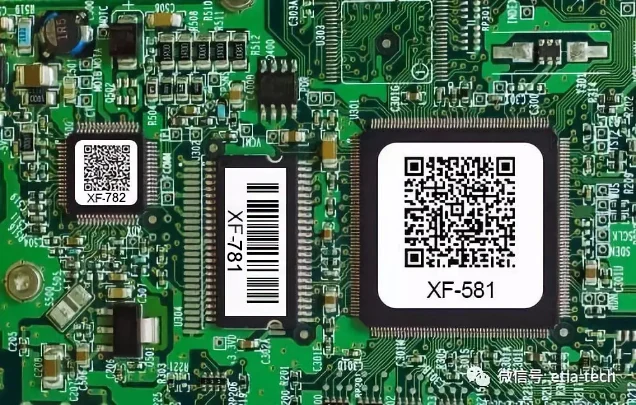
Anti-Static High-Temperature Polyimide Label
Anti-static polyimide label for ESD-sensitive electronics assembly and high-temperature…
View details
Black High-Temperature Polyimide Label
Matte-black polyimide label for high-contrast codes on dark electronics and industrial…
View details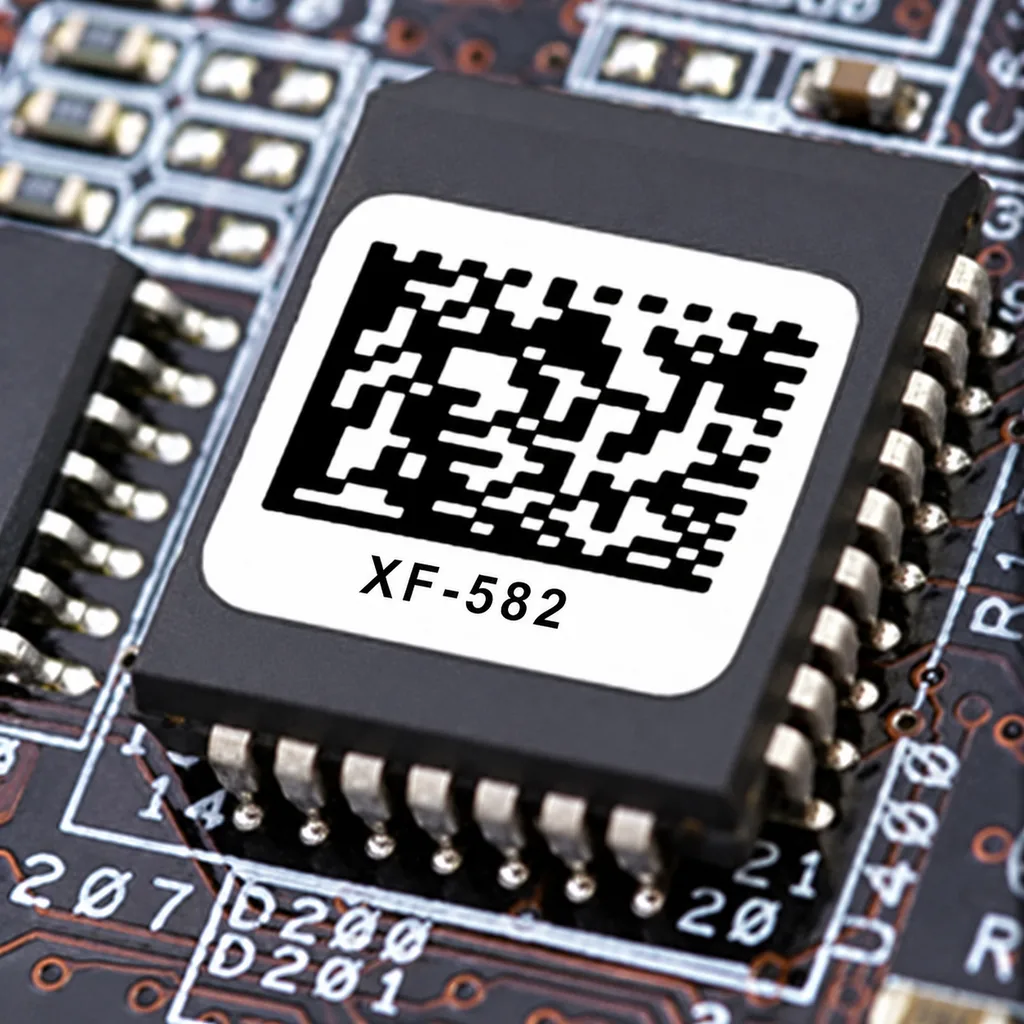
CL-582 High-Temperature Polyimide Labels for Printed Circuit Board Traceability
CL-582 is a high-temperature polyimide (PI) label material for printed circuit board (PCB) and sensitive electronic component process control and product traceability. It has a gloss white coating, a listed thickness of 2mil and an acrylic adhesive. The source identifies wave soldering and reflow soldering as applications. Selection requires confirmation of the actual heat exposure and chemical conditions: the listed temperature range has no specified exposure duration, and solvent resistance is qualitative.
View detailsNeed the right ribbon for your label application?
Share the label material, printer and operating environment. Our team will recommend a tested combination.
