
Permanent Marking on Industrial Aluminum: What It Is, How It Works, and What It Does Not Prove
Request a solution
- Original TTR manufacturer since 2013
- Automated coating and slitting
- IQC / IPQC / OQC control
- ANSI barcode grade testing
- -20°C to 120°C environmental testing
- Batch-level traceability
- ANSI barcode grade
- Batch traceability
- RoHS / REACH compliance
- SGS and MSDS documents on request
Key Takeaways
- Permanent marking on industrial aluminum means the mark stays legible for the part's working life, not only until the next process step.
- One laser material-removal method selectively removes anodizing or paint to expose the aluminum underneath.
- The marking result depends on alloy composition, surface condition and process parameters together, never on the laser source alone.
- A permanent mark carries identity; by itself it proves neither origin nor authenticity.
What Permanent Marking Means on Industrial Aluminum
Permanent marking on industrial aluminum is identification that becomes part of the part — fixed into the metal or bonded onto it — and stays readable for the part's working life, not only until the next process step. Global industries rely on permanent identifiers to authenticate products, verify origin and meet rigorous industrial compliance requirements across automotive, aerospace, medical and electronics sectors. In practice, a serial number is an example of identification content. It may be applied by laser or carried on a label or RFID tag, and a Data Matrix code can encode that content.
In aluminum production the purpose is concrete. A reliable marking supports traceability and identification of aluminum products such as ingots, rolled bars, press bolts, plates, strips and castings. Where a label carries the identification, industrial labels most often identify the equipment or product and communicate critical safety information clearly.

How Laser, Ink and Heat Create Permanent Marks on Aluminum
One laser material-removal method selectively removes a top layer, such as anodizing or paint, exposing the underlying aluminum. Pulsed lasers are favored in most industrial applications, and a fiber laser is the tool chosen for particularly small and high-resolution markings. UV laser marking minimizes thermal impact and can create high-contrast marks; verify mark durability and material integrity on the actual part.
The settings, not the machine name, decide the outcome. The marking result depends not on the laser source alone, but on how alloy composition, surface condition and process parameters work together. Increasing the marking speed reduces the density of the energy delivered by the laser, so a speed change is a parameter change and must be re-tuned. Laser markings can withstand high temperatures; verify the result on the actual part and process.
High surface temperatures and the subsequent heat treatment of aluminum products are a recognized challenge for aluminum marking: ordinary inks and paints often evaporate before they reach the product, or the marking is barely legible after tempering. Specialized solutions exist for exactly this problem: inks that survive tempering and paints suited to marking aluminum products at high surface temperatures. Marking can also be applied to hot or to cold surfaces, known as cold or hot application.
The specific Ceracode ink fixes the mark inside the oven: it consists of heat-resistant ceramic particles and a glass component, and the melting glass ensures that the marking is fixed to the metal while remaining easy to read.

When a Label Is the Permanent Mark: Surfaces, Adhesives and Ribbons
A permanent mark can also live on a separate carrier rather than in the metal itself. Identification options include adhesive paper or film labels, molded surface impressions, shrink sleeves and RFID identifiers. These are different forms of marking or identification. For an adhesive printed label, assess both the adhesive bond and the print on the carrier.
The surface decides the adhesive. If labels are going onto painted or powder-coated equipment, or any surface that feels slightly waxy or slick, a standard permanent adhesive may not create a sufficient bond. And if the labeled parts get hot in use, in transit or in storage, the adhesive needs to be rated for that temperature range.
The ribbon chemistry decides the print. The ribbon coating — wax, wax-resin or resin — determines print durability, substrate compatibility and resistance to heat, chemicals and abrasion. Full resin ribbons are the formulation matched to demanding synthetic films such as polyester, polyimide and vinyl.
This is also where Colorfulttr connects to aluminum identification. Shenzhen Colorfulttr Technology Co., Ltd. is a manufacturing company focused on thermal transfer ribbon research, production and sales; in its current product matrix, full-resin ribbons are positioned for high-speed printing with resistance to friction, heat and corrosion. If the plan is a metal-look PET label on aluminum assemblies, the practical next step is testing a resin ribbon and label combination on your own surface and temperature range.
What a Permanent Mark Does Not Prove
A permanent mark records identity; it does not certify origin or authenticity just by existing. A reflective or colour-changing surface does not by itself establish a product's origin, so a distinctive look is not verification. In the same way, a QR that opens a webpage differs from an identity assigned to an individual unit and checked by a verification service.
Treat proven settings as unproven on new parts: a recipe that works on one aluminum part must be re-validated on the production substrate, not on a test panel. A mark that has survived tempering has demonstrated that heat step only — later processes need their own check.
Data and Evidence
The table summarizes the routes above: how each mark is formed, where it lives, and the condition most worth verifying on your parts.
| Marking route | How the mark is formed | Where the mark lives | Key condition to verify |
|---|---|---|---|
| Laser marking | One material-removal method removes anodizing or paint; UV marking minimizes thermal impact | At the marked surface; removal may expose underlying aluminum | Alloy, surface and parameters interact — retest per part; legibility after the full heat chain |
| High-temperature inks and paints | Applied to hot or cold aluminum; formulations survive tempering and high surface temperatures | In the ink or paint layer bonded to the surface | Legibility after tempering; point in the process where the mark is applied |
| Ceracode ceramic-glass ink, oven-fired | Melting glass fixes the marking to the metal in the oven | On the metal, fixed by melting glass | Readability after the oven cycle |
| Thermal transfer label with resin ribbon | Resin ink is transferred from the ribbon to a film label | On an adhesive carrier bonded to the part | Adhesive bond on painted or powder-coated aluminum; temperature rating; ISO 15415 grade for printed 2D codes |
Verification separates the routes as much as materials do. Validate on the production substrate rather than a substitute panel, and for printed Data Matrix or QR codes, ISO 15415 is the standard that establishes how the print quality of 2D bar code symbols is assessed. Fact statements come from Colorfulttr's verified fact library — entries on pulsed and UV lasers, laser marking of aluminum, heat-treatment marking, label adhesives and ribbon chemistry — plus Colorfulttr's product matrix; product statements reflect catalog positioning, not measurements on your parts.
Frequently Asked Questions
Is laser marking on industrial aluminum really permanent?
It depends on the alloy, surface condition, process parameters and subsequent conditions. Confirm legibility on the actual part after its complete process chain.
What is the difference between direct marking and a label on aluminum parts?
Direct marking forms a mark on the part or its surface layer. An adhesive label is a separate carrier bonded to the part. On painted or powder-coated surfaces, a standard permanent adhesive may not bond sufficiently, so verify the bond and temperature rating. Ribbon chemistry affects print durability.
Related Products & Guides
Recommended products for this industry

Aluminum Foil High-Temperature Label
Coated aluminum label for metal processing, heat treatment and high-temperature part…
View details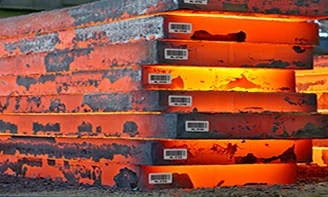
Heat-Applied Aluminum Identification Label
Heat-applied aluminum label for hot metal surfaces and processes where pressure-sensitive…
View details
4-inch lightweight industrial printer
Industrial printers are engineered for lightweight construction, straightforward…
View details
Acid and Alkali Resistant Label
Chemical-resistant label construction for acid baths, paint-stripping solutions, alkali…
View detailsNeed the right ribbon for your label application?
Share the label material, printer and operating environment. Our team will recommend a tested combination.
