
Marcaje Duradero en Aluminio: What Durable Marking on Aluminum Means and How the Main Methods Differ
Request a solution
- Original TTR manufacturer since 2013
- Automated coating and slitting
- IQC / IPQC / OQC control
- ANSI barcode grade testing
- -20°C to 120°C environmental testing
- Batch-level traceability
- ANSI barcode grade
- Batch traceability
- RoHS / REACH compliance
- SGS and MSDS documents on request
Key Takeaways
- Durable marking on aluminum is identification that must survive heat, abrasion, chemicals and handling for traceability and compliance, not a decorative print.
- Laser marking works directly on the surface: it can selectively remove a top layer such as anodizing or paint and expose the aluminum beneath.
- Thermal transfer prints onto a receiving substrate — a label facestock is the standard case — and the label's durability comes from the ribbon coating, facestock and adhesive acting as one construction.
- High surface temperatures and downstream heat treatment are a documented challenge for marking aluminum, so the method must match the process the part passes through.
- ANSI/ISO barcode grades assess symbol quality, not durability — Grade A is the best grade, a scanner will still read marginal symbols that a verifier would fail, and durability is confirmed against the part's actual exposures.
What Durable Marking on Aluminum Means
Durable marking on aluminum (marcaje duradero en aluminio) is identification — serial numbers, batch numbers, barcodes and Data Matrix codes — that must stay readable on the part through its working life. Global industries rely on such permanent identifiers to authenticate products, verify origin and meet industrial compliance requirements across automotive, aerospace, medical and electronics. A serial number can be carried by a label, a laser marking, a Data Matrix code or an RFID tag, so the buyer's real question is which carrier survives the part's actual conditions. A batch number likewise stays with the product for its whole lifecycle, including after it leaves the factory.
Those conditions are demanding in two ways. High temperatures are a recognized challenge for markings on aluminum, and high surface temperatures combined with downstream heat treatment are a further challenge when marking aluminum products. Outdoors, labels must withstand UV, dirt and impact while remaining legible and attached. For manufacturers shipping industrial products or hardware overseas, a marking that fades is a compliance and safety matter, not a cosmetic one.
"Durable" is therefore always conditional: a mark is durable only against the exposures it was chosen and tested for. The sections below separate what each method physically does to the part from what it cannot promise, and they close with how durability is verified — against the actual exposures and acceptance requirements the part will face, with barcode grading applied only to scannable symbols where it applies.
How Direct Laser Marking Works on Aluminum
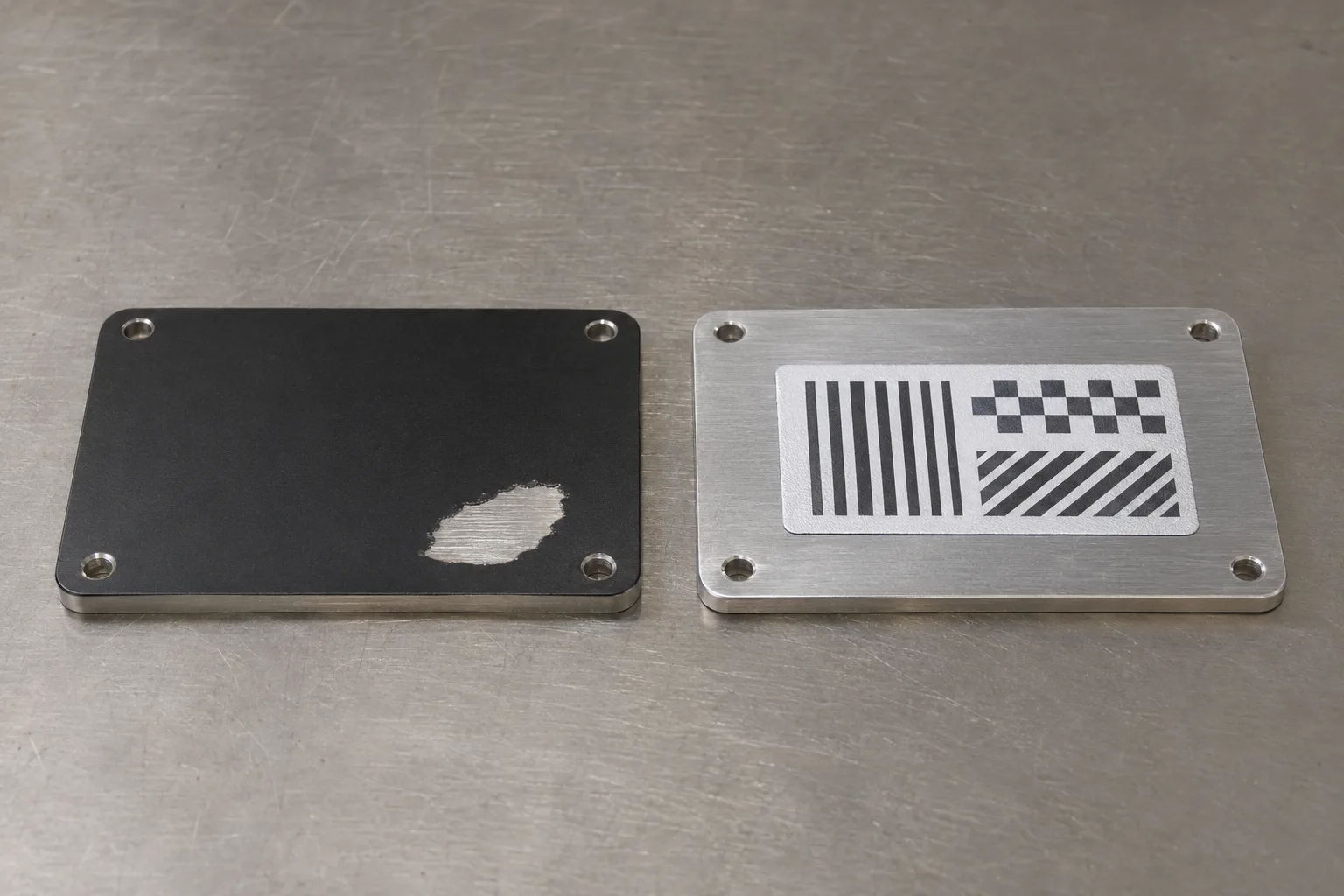
Laser marking acts directly on the aluminum surface. In the material-removal mechanism, the laser selectively removes the top material layer, such as anodizing or paint, exposing the underlying aluminum. Laser marking also withstands high temperatures.
Machine choice and parameters decide the result. A fiber laser is used for especially small and high-resolution markings, while UV laser marking minimizes thermal impact and creates high-contrast, permanent marks that preserve material integrity for demanding traceability. The result depends not on the laser source alone but on how alloy composition, surface condition and process parameters work together — and increasing the marking speed reduces the energy density the laser delivers.
Aluminum that passes through tempering or similar heat treatment is a special case, because the marking must survive the furnace, not just the workshop. Tested solutions exist for these heat cases, as two distinct groups: inks that survive tempering, and colors suitable for marking aluminum products at high surface temperatures; in oven-cured processes, the melting glass fixes the marking to the metal while it stays easy to read. These high-temperature ink routes work beside laser marking, not instead of it.
How Thermal Transfer Produces Durable Labels for Aluminum Parts
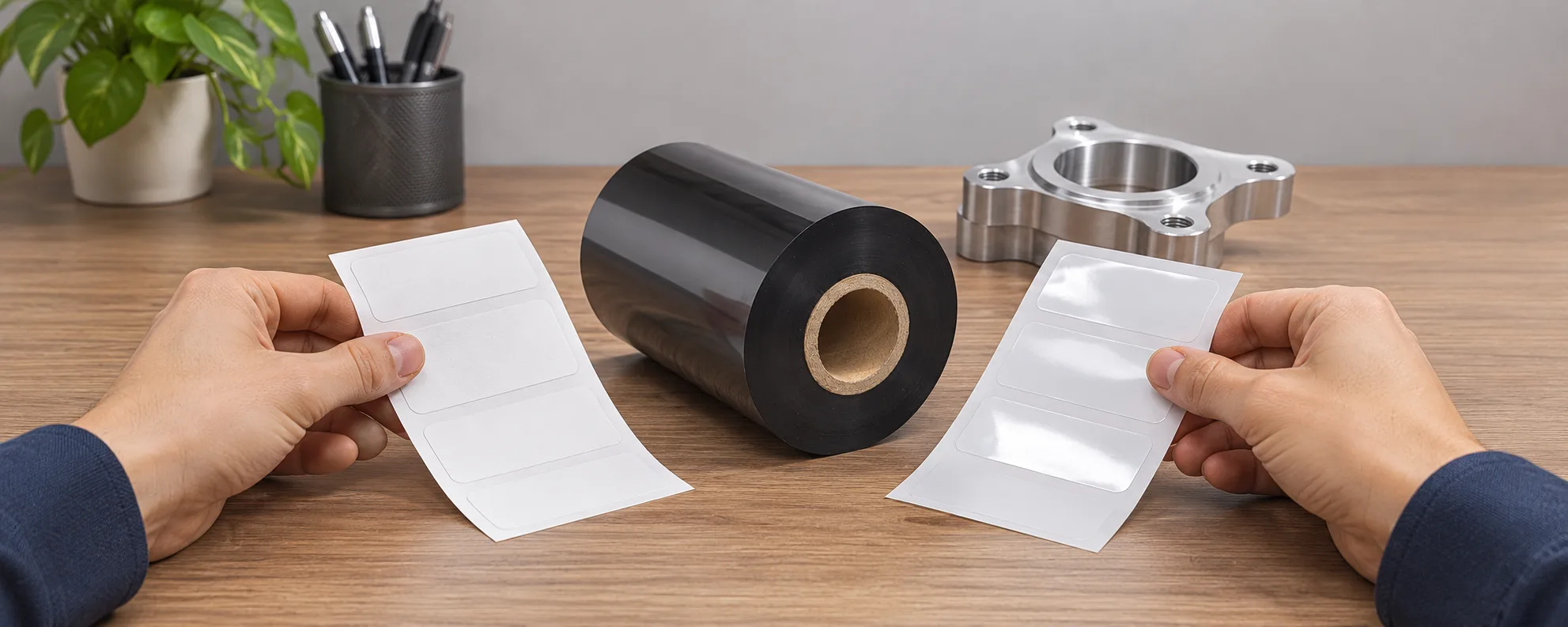
Thermal transfer printing is a method where heat is used to transfer ink from a ribbon onto a substrate. A printhead heats resistive dots against the back of the ribbon, and the released ink transfers onto the label underneath. The ribbon itself is a polyester film coated on one side with wax, resin or blended ink and on the other with a lubricating layer that protects the printhead. In the standard route, the printed label is then applied to the part, so the marking on it is a layered construction: facestock, printed image and adhesive; dedicated aluminum-plate nameplate products described in product listings as directly printable by thermal transfer also exist, for markings that must sit on the metal itself.
Inside that construction, the ribbon coating — wax, wax-resin or resin — determines print durability, substrate compatibility and resistance to heat, chemicals and abrasion. The three ribbon types are full wax, wax-resin blend and full resin. Wax inks anchor into porous paper fiber, while resin formulations adhere strongly to compatible synthetic surfaces — the ribbon-to-facestock pairing is a compatibility question to resolve and test for each application. Wax ribbons suit short-term or indoor use with minimal abrasion, heat or chemicals; resin ribbons demand more heat and pressure and a compatible printhead; and mismatched ribbon and substrate combinations frequently cause smudging.
Two further conditions decide whether the label route counts as durable on aluminum. On painted or powder-coated surfaces, or any surface that feels slightly waxy or slick, a standard permanent adhesive may not create a sufficient bond, so check the adhesive against the specific aluminum surface — bare, anodized or coated — before release. And where a facestock carries a printable topcoat, that topcoat accepts thermal transfer, laser or inkjet printing, helping the printed image anchor properly.
This is where Colorfulttr fits the topic. Shenzhen Colorfulttr Technology Co., Ltd. has focused on thermal transfer ribbon development, production and sales since 22 January 2013, covering wax, wax-resin, resin, wash-care resin, TTO and card-ribbon lines, with an in-house chain from raw material and coating through slitting to finished rolls. Quality checks cover print density and clarity along with rub, scratch and chemical resistance. Standard ribbon samples (110 mm × 10 m for bar-code use, width slittable to requirement) let you test on your own printer first; state your printer model, label facestock and aluminum surface condition when you inquire, then validate the complete printed construction before release.
Direct Marking Versus Printed Labels: The Difference That Matters
Direct laser marking and thermal transfer labels differ in what the mark physically is. In the material-removal mechanism, the laser selectively removes the top layer of the aluminum surface — such as anodizing or paint — exposing the metal beneath. The thermal transfer mark lives in a printed layer bonded to the part, so its durability is the durability of the whole construction — and ribbon performance belongs to the complete printed construction, which is why any combination must be validated on your own facestock, printer and settings before release.
That difference drives trade-offs, not a universal winner. Laser marking withstands high temperatures, and printed labels readily carry variable data and barcodes graded for scanning — but neither trait assigns the jobs by itself. The routes are not exclusive: a serial number can be carried by a label, a laser marking, a Data Matrix code or an RFID tag, so permanent identity and per-shipment data can sit on different carriers, with each combination matched to the part's actual conditions and validated before release.
Data and Evidence
Each marking route on aluminum derives durability from a different physical mechanism, and the table below puts those mechanisms side by side.
| Marking route | How it works on aluminum | Where durability comes from | Key conditions to check |
|---|---|---|---|
| Fiber or UV laser (direct) | In the material-removal mechanism, the laser removes the top layer such as anodizing or paint and exposes the aluminum; UV marking minimizes thermal impact | The aluminum exposed where the top layer was removed | Depends on alloy composition, surface condition and process parameters; higher speed lowers energy density |
| Thermal transfer label | Printhead releases ink from a ribbon onto a label facestock applied to the part | Ribbon coating, facestock and adhesive as one construction | Match ribbon coating to facestock compatibility, e.g. resin formulations adhere strongly to compatible synthetics; adhesive must suit the part's actual surface; validate before release |
| High-temperature ink marking | Two distinct tested solutions: inks that survive tempering, and colors suited to marking aluminum at high surface temperatures; in oven-cured processes, melting glass fixes the marking to the metal | Ink chemistry cured onto the surface | For parts passing post-heat treatment; needs process-specific testing |
Two evidence sets apply to scanning quality. Thermal label printers usually print at 203, 300 or 600 dpi, which limits how small a barcode or Data Matrix symbol can be. ANSI/ISO verification puts print quality on a letter scale — A, B, C, D or F, with Grade A the best grade — and ISO 15415 extends grading to 2D symbols including Data Matrix and QR codes. A scanner is not a verifier: it applies image processing and will read marginal symbols that a verifier would fail, so a failed grade and a scanner's successful read are two different judgments. And these grades assess symbol quality at verification — they do not by themselves demonstrate durability over the part's life, which is confirmed by testing against the actual exposures and acceptance requirements the part will face.
Source note: Colorfulttr facts — founding date, ribbon lines, in-house production chain, quality checks and sample sizes — come from the company's own knowledge-base records collected for this topic (company profile, ribbon product records and quality checklist). The reference to aluminum-plate nameplates directly printable by thermal transfer comes from a third-party product listing collected for this topic, not from Colorfulttr records. Marking-method facts — laser mechanisms, thermal transfer printing, ribbon types, adhesives, topcoats and barcode verification, including ANSI/ISO A–F grading and ISO 15415 — come from verified industry technical documentation collected for this topic; each claim in this article is bound to its source record with the original wording kept.
Frequently Asked Questions
Is laser marking on aluminum more durable than a thermal transfer label?
There is no single winner — the two routes are durable in different ways. In the material-removal mechanism, laser marking selectively removes the top layer of the aluminum surface, such as anodizing or paint, and exposes the metal beneath, and laser marking withstands high temperatures. A thermal transfer label's durability comes from the ribbon coating, facestock and adhesive acting as one construction, and it must be validated on your own facestock, printer and settings before release. Which route fits is decided by the part's actual conditions rather than a rule of thumb — weigh laser marking's high-temperature resistance and a label's variable, scannable data against what the part actually passes through, and validate before release.
Can a thermal transfer ribbon print directly onto an aluminum plate?
Thermal transfer prints onto a receiving substrate, and a label facestock is the standard case; dedicated aluminum-plate nameplate products described in product listings as directly printable by thermal transfer also exist, for markings that must sit on the metal itself. Printability depends on the receiving material — where a material carries a printable topcoat, that topcoat accepts thermal transfer printing. Confirm printability with a sample run on your own printer and material before ordering volume.
How do I verify that a marking on an aluminum part will stay readable?
Use two separate checks. For scannable symbols, grade the print with a verifier, not a scanner: ANSI/ISO verification scores barcodes on a letter scale from A to F with Grade A the best, ISO 15415 covers 2D symbols such as Data Matrix and QR codes, and one successful scan is not evidence of print quality, because a scanner applies image processing and will still read marginal symbols that a verifier would fail — a failed grade and what a scanner will read are two different judgments. Durability over the part's life is a separate question: validate ribbon, facestock, adhesive and printer settings — or the laser process — on your own equipment against the actual exposures and acceptance requirements the part will face, before release.
Recommended products for this industry

Aluminum Foil High-Temperature Label
Coated aluminum label for metal processing, heat treatment and high-temperature part…
View details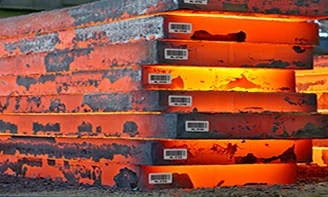
Heat-Applied Aluminum Identification Label
Heat-applied aluminum label for hot metal surfaces and processes where pressure-sensitive…
View details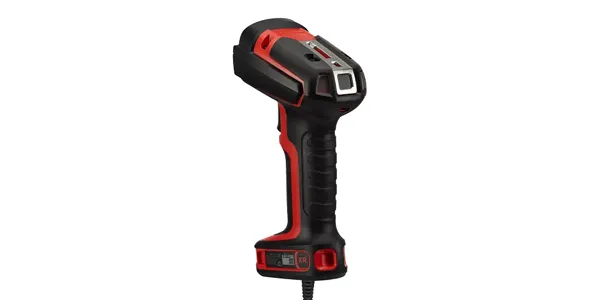
Rugged and durable handheld devices
Delivering exceptional scanning performance, outstanding durability and a supremely…
View details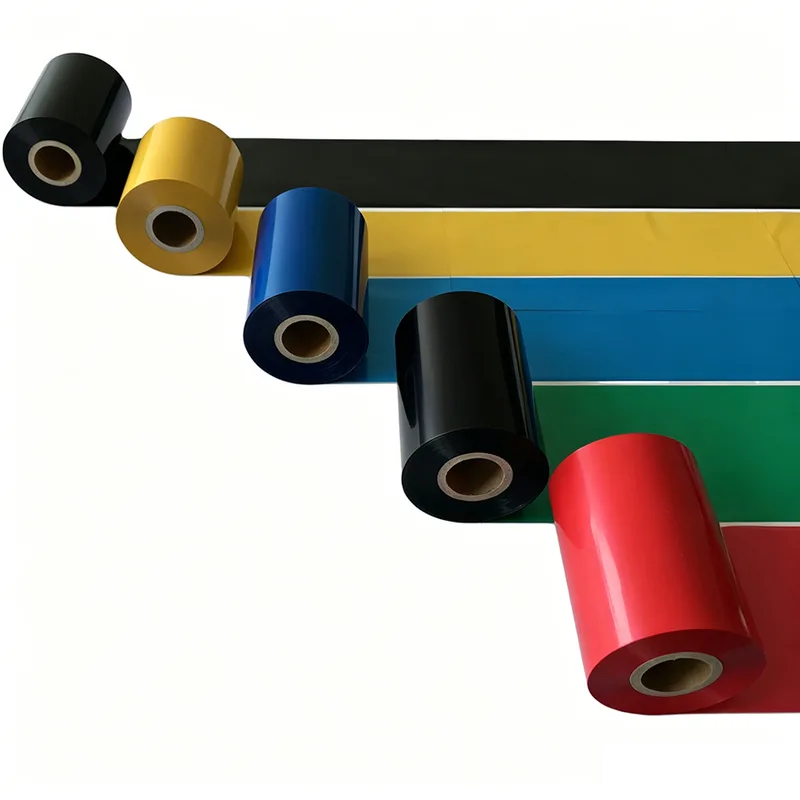
Thermal Coding Ribbon for Tire Position Marking CL-0080D
A thermal coding ribbon for tire position marking, available with red, white or yellow ink. Select it with the printer and printing surface in mind: print quality and image durability may vary with their types.
View detailsNeed the right ribbon for your label application?
Share the label material, printer and operating environment. Our team will recommend a tested combination.
