Which Marking Holds Up at High Temperatures? Wax, Resin, Laser, and Label Materials Explained
Request a solution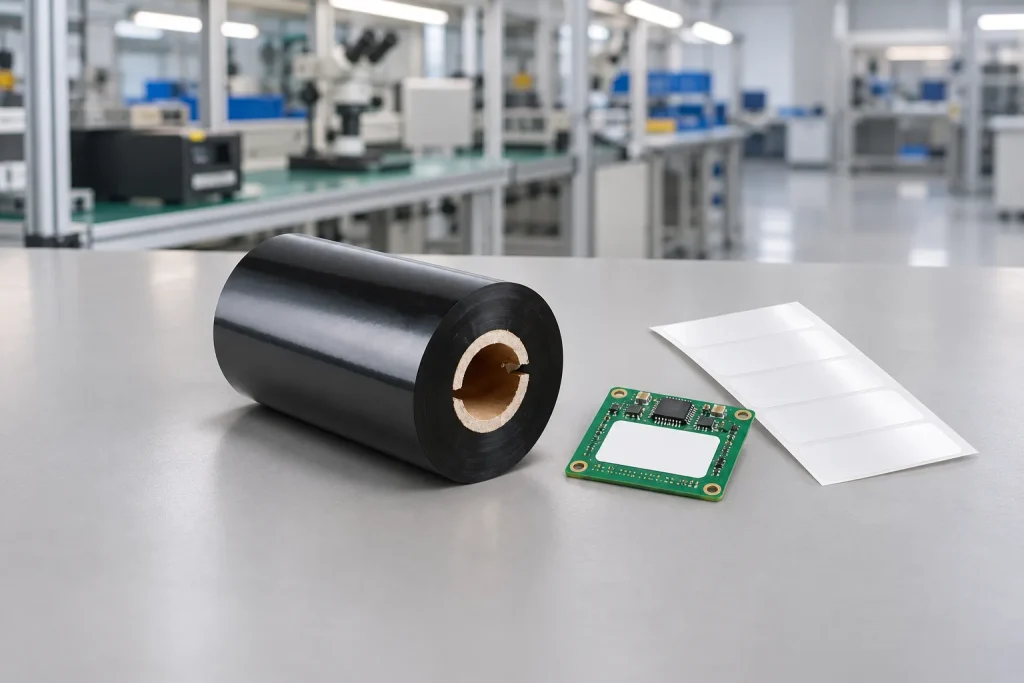
- Original TTR manufacturer since 2013
- Automated coating and slitting
- IQC / IPQC / OQC control
- ANSI barcode grade testing
- -20°C to 120°C environmental testing
- Batch-level traceability
- ANSI barcode grade
- Batch traceability
- RoHS / REACH compliance
- SGS and MSDS documents on request
This explainer is written for B2B buyers and printing-plant technical teams who need product marks that stay readable when things get hot. It gathers the heat evidence actually present in the sources quoted here: supplier guidance on what each ribbon class is designed for, Colorfulttr's manufacturer statements in its catalog and CL-series TDS overview record, a polyimide label engineered for reflow and wave soldering, a Fraunhofer IKTS research ink reported to withstand over 1,000 ºC in an oven, and how laser codes form on anodized or painted aluminum. It also states plainly where heat-resistance comparisons between marking options are missing, because smudge resistance and printing conditions are not heat ratings. For printed labels, survival depends jointly on ink chemistry, label facestock, and adhesive, so each statement below keeps its documented condition attached. Test any choice on samples of your own material stack before approving a batch.
Key Takeaways
- For a printed label, check the ink, facestock, and adhesive together.
- Wax ribbons are generally suited to porous and coated paper, while full resin ribbons suit demanding films such as polyester, polyimide, and vinyl.
- If labels sit on equipment, containers, or products that get hot in use, in transit, or in storage, the adhesive needs to be rated for that temperature range.
- In Colorfulttr's CL-series TDS overview record (a manufacturer statement), the mixed-base TTO ribbon CL926 is noted as less heat-resistant than pure resin.
- The general ribbon classes are quoted here for pairing and durability, not heat-resistance rankings; the only heat comparison in the quoted sources is that manufacturer's TDS overview note.
- Colorfulttr offers a polyimide label engineered for PCB traceability through reflow and wave soldering; validate the specific label in your process.
- Laser marking can form codes on anodized or painted aluminum; validate the mark under the intended heat conditions.
What Holding Up at High Temperature Means for a Mark
A printed label holds up at high temperature only when two things survive together: the ink layer that carries the code and the label material and adhesive that keep it in place. Thermal transfer printing works because heat from the printhead melts ink from the ribbon onto the label. The answer to which marking holds up is rarely a single product: it is a pairing of ink chemistry and surface.
For printed labels, consider a full resin ribbon on a compatible heat-rated synthetic facestock and validate the complete combination. Laser marking and ceramic inks take other routes to a heat-resistant mark. The sections below explain each option and the conditions that make it work.
How Wax, Wax-Resin and Full Resin Ribbons Differ
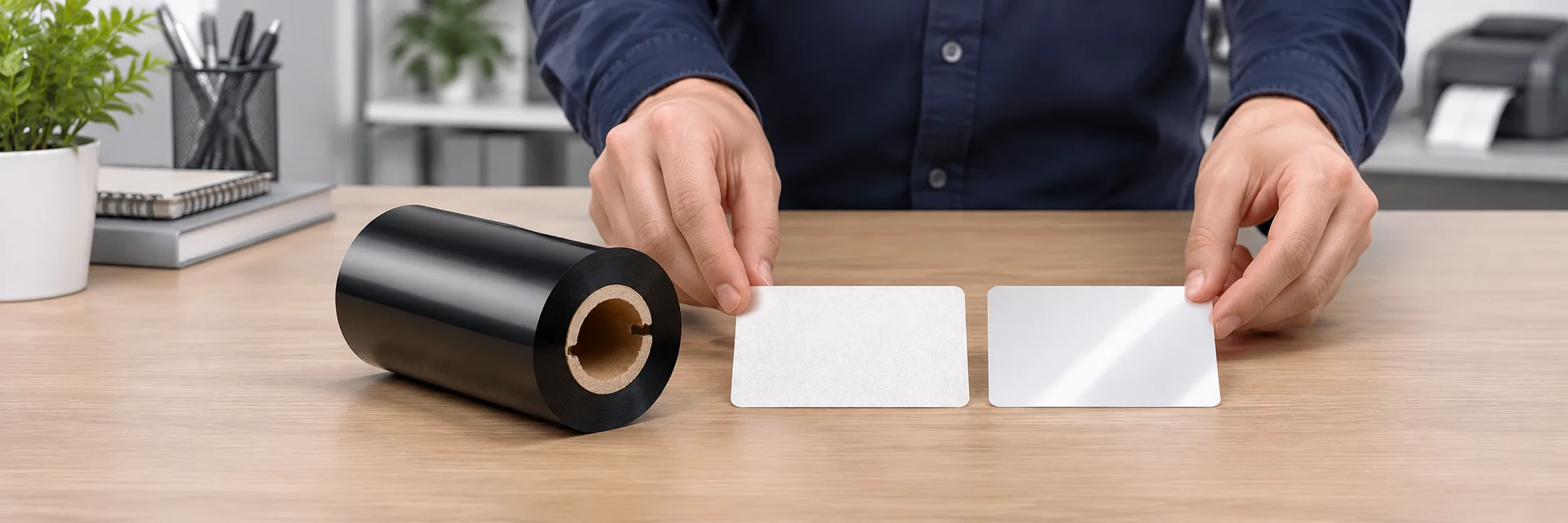
Thermal transfer ribbons come in three classes, full wax, wax-resin blend, and full resin, and the choice depends on the application and material. Supplier guidance is consistent about the split: wax ribbons are generally suited to porous and coated paper, wax-resin to coated paper and selected synthetics, and full resin to demanding synthetic films such as polyester, polyimide, and vinyl. The reason sits at the surface itself. Wax inks generally anchor into porous paper fiber, while resin formulations are designed to adhere strongly to compatible synthetic surfaces.
Wax earns its place on cost and speed: it is the most economical option, designed for high-speed printing on paper labels. The trade-off is durability, since wax prints may not offer the same level of resistance to smudging or scratching as the other ribbon types. Wax-resin ribbons sit in the middle, offering a blend of wax and resin that provides enhanced durability compared with wax ribbons.
Full resin is the class built for endurance. Resin ribbons provide excellent print quality and are ideal for applications that demand long-lasting durability, such as asset tracking labels or chemical drum labels. One specification detail matters here: resin ribbons require a higher level of heat and pressure during printing, so they suit printers equipped with compatible printheads. Note that these statements cover durability and printing conditions, not a measured heat-resistance rating. Colorfulttr adds manufacturer statements of its own: the full resin range in its catalog is listed for friction, heat, and corrosion resistance, and the manufacturer's TDS overview record for the CL-series lists good high-temperature performance and notes that the mixed-base TTO ribbon CL926 is less heat-resistant than pure resin.
When the Label Facestock and Adhesive Decide Survival
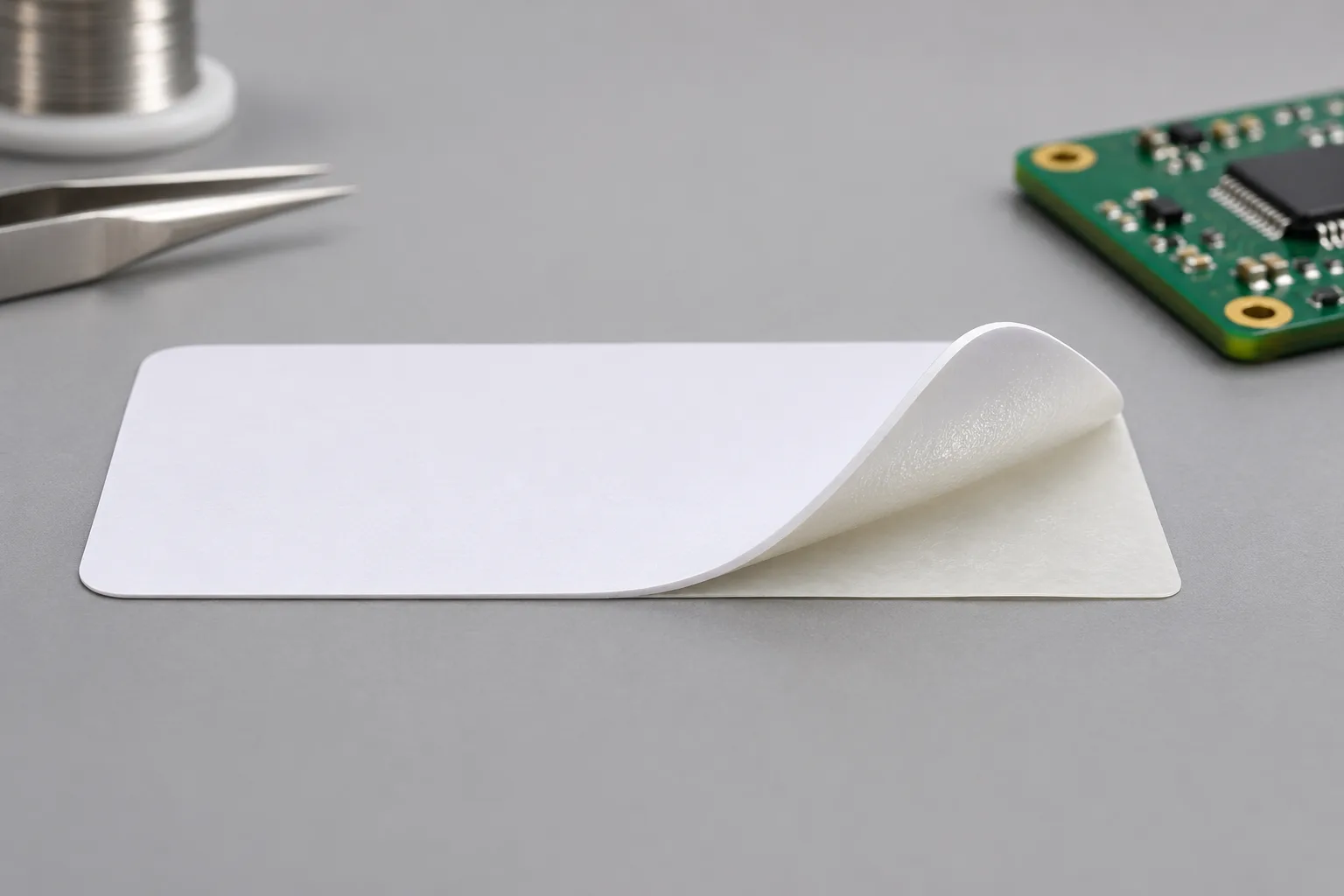
The ink is only half of the marking, and the label under it can fail first. If labels sit on equipment, containers, or products that get hot in use, in transit, or in storage, the adhesive needs to be rated for that temperature range.
Facestock choice matters. Polyimide is an option for PCB traceability through reflow and wave soldering when the specific label is engineered for that process. Check its rating and test the complete label under the actual conditions.
Colorfulttr lists products for these applications. For electronics, the company offers a gloss-white high-temperature polyimide label engineered for PCB traceability through reflow and wave soldering processes. If you are weighing film thickness and ribbon pairing for a specific job, the guide to choosing a polyimide label for high-temperature barcode printing goes deeper.
Laser and Ceramic Marks, and What a Surviving Mark Cannot Prove
On anodized or painted aluminum the laser selectively removes the top material layer, such as anodizing or paint, exposing the underlying aluminum as the code. The result is not automatic, because the marking result depends not on the laser source alone, but on how alloy composition, surface condition, and process parameters work together.
For the hottest processes, inks can be engineered instead of avoided. Researchers at the Fraunhofer Institute for Ceramic Technologies and Systems IKTS have developed an ink that can withstand temperatures of over 1,000 ºC in the oven without being damaged. In a separate source, the Ceracode ceramic coding ink is described as consisting of heat-resistant ceramic particles and a glass component. The sources quoted here do not state that the Fraunhofer ink and Ceracode are the same product, so read them as two separate records.
One caution belongs in every heat discussion: a legible mark does not certify the marked object. The mark only reports what survived on the surface; whether the object itself may stay in service after heat exposure is decided by the rules and standards that govern that object, not by its marking.
Data and Evidence
The table below separates the heat evidence actually quoted in this article from the heat comparisons the sources do not provide. Each row names the source type — supplier guidance, manufacturer statement, or research report — and the typical pairing is listed as supplier guidance, not as a heat rating. No ranking between marking options is implied beyond what a quoted source states.
| Marking option | Heat evidence quoted in this article | Heat comparison gap | Typical pairing (not a heat rating) |
|---|---|---|---|
| Wax ribbon | None quoted; the sources document cost, print speed, and that smudge and scratch resistance may not match the other ribbon types | No heat-resistance comparison against other ribbon classes in the quoted sources | High-speed printing on paper labels |
| Wax-resin ribbon | None quoted; documented as more durable than wax in general use | No heat-resistance comparison quoted | Coated paper and selected synthetics |
| Full resin ribbon | None quoted from the general supplier guidance; durability and printhead requirements are not heat ratings | No heat-resistance comparison quoted | Polyester, polyimide, and vinyl films |
| Colorfulttr full resin range | Manufacturer catalog statement: listed for friction, heat, and corrosion resistance | Manufacturer's own statement; no independent test quoted | High-speed printing per the manufacturer catalog |
| Colorfulttr CL-series ribbons | Manufacturer TDS overview record: good high-temperature performance | Manufacturer's own statement; no independent test quoted | Check the specific grade in the TDS overview record before specifying |
| Colorfulttr CL926 mixed-base TTO ribbon | Manufacturer TDS overview record: less heat-resistant than pure resin | Manufacturer's own statement; no independent test quoted | Mixed-base TTO ribbon; see the TDS overview record for documented applications |
| Colorfulttr polyimide label | Manufacturer product page: engineered for PCB traceability through reflow and wave soldering | Validate the specific label under the actual process conditions | PCB traceability |
| Laser marking | None quantified; the documented behavior is code formation by removing the top layer on anodized or painted aluminum | Heat survival of the mark is not rated in the quoted sources; test on the actual part | Anodized or painted aluminum surfaces |
| Fraunhofer IKTS research ink | Research report: withstands over 1,000 ºC in an oven without damage | Research-stage result; the quoted sources do not compare it with any ribbon class | Research ink; verify the intended process |
Verification is part of the evidence, not an afterthought. Temperature cycling, chemical contact, and surface energy all change adhesion, so approve samples made from the same material stack and applied to the same surface. The temperature numbers quoted here are the documented ones — several are manufacturer statements rather than independent tests — and a rating for one product is a starting point rather than a guarantee for your batch.
Frequently Asked Questions
Can wax ribbons survive high-temperature environments?
Wax ribbons are the most economical option, designed for high-speed printing on paper labels, and their prints may not offer the same resistance to smudging and scratching as other ribbon types. The sources quoted in this article document cost, print speed, and smudge and scratch resistance for wax ribbons, not a heat-resistance rating or a heat comparison against other ribbon classes. Which ribbon class suits a hot application depends on the temperature conditions and the surface involved, so validate the candidate ribbon and label pairing on samples of your own material stack before approving a batch.
Does laser marking hold up at high temperatures?
On anodized or painted aluminum the laser selectively removes the top material layer, such as anodizing or paint, exposing the underlying aluminum as the code. The marking result depends not on the laser source alone, but on how alloy composition, surface condition, and process parameters work together, so test on your own parts. Test the mark under the actual temperature and exposure time.
If the marking is still readable after heat exposure, can the part stay in service?
Not on the word of the mark alone. A legible mark does not certify the marked object, and whether the part may stay in service after heat exposure is decided by the rules and standards that govern the object itself, not by its marking. Judge the object by its own rule first, then re-mark the part if it stays in use.
Related Products & Guides
- High-Temperature Polyimide Electronics Label for PCB Traceability
- Thermal Transfer Ribbon: Wax vs Resin by Material and Use
- High-Temperature Aluminum Marking: Two Heat Events Explained
Recommended products for this industry

Aluminum Foil High-Temperature Label
Coated aluminum label for metal processing, heat treatment and high-temperature part…
View details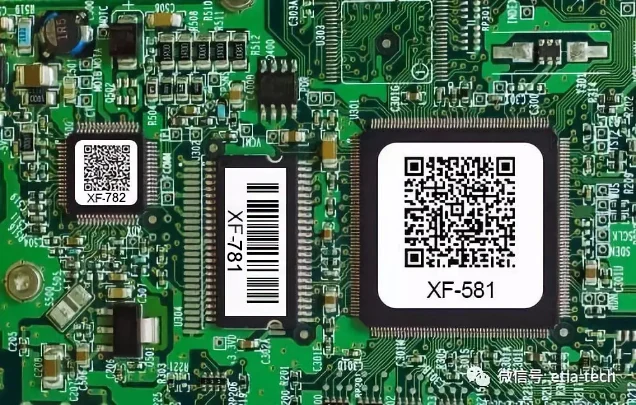
Anti-Static High-Temperature Polyimide Label
Anti-static polyimide label for ESD-sensitive electronics assembly and high-temperature…
View details
Black High-Temperature Polyimide Label
Matte-black polyimide label for high-contrast codes on dark electronics and industrial…
View details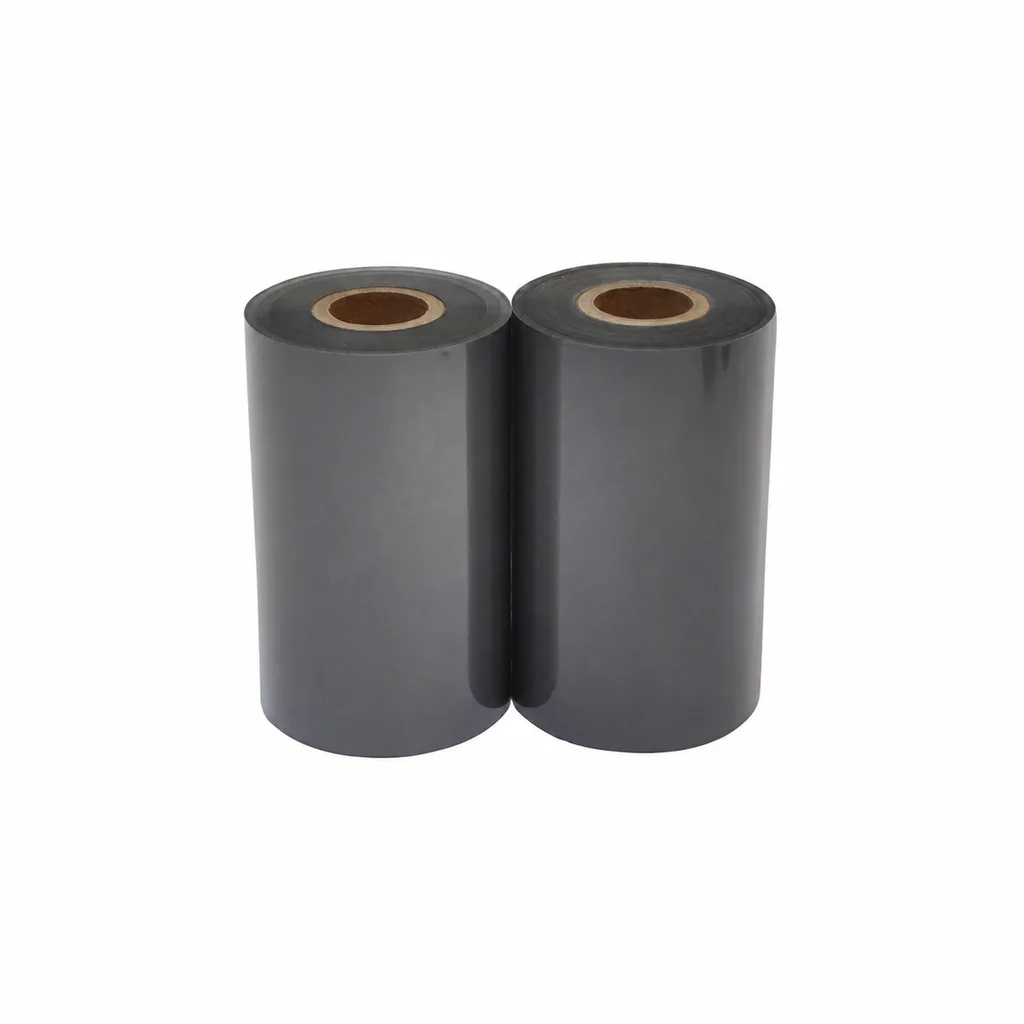
Black Resin Thermal Transfer Ribbon for Label Printing - CL-Z373
CL-Z373 is a black resin thermal transfer ribbon for label printing with desktop or industrial flat-head barcode printers at speeds of ≤6 ips (inches per second). Listed applications include electronics processing, tire identification, automotive manufacturing, pharmaceutical packaging, cosmetic labels and outdoor identification. Selection depends on the actual label material, printer and exposure conditions. Fine-line, small-character and resistance results were obtained on coated paper; print quality and image durability may vary with the printer and print substrate.
View detailsNeed the right ribbon for your label application?
Share the label material, printer and operating environment. Our team will recommend a tested combination.
