
- Original TTR manufacturer since 2013
- Automated coating and slitting
- IQC / IPQC / OQC control
- ANSI barcode grade testing
- -20°C to 120°C environmental testing
- Batch-level traceability
- ANSI barcode grade
- Batch traceability
- RoHS / REACH compliance
- SGS and MSDS documents on request
Industrial labels identify equipment or products and convey critical safety information. For buyers printing their own labels, the material, printing system and expected exposure determine the proposed combination to evaluate. Separate the label's purpose from its material and printing method, then verify the result on production stock and the actual printer.
Key Takeaways
- Industrial labels commonly identify equipment or products and communicate critical safety information.
- Thermal transfer uses a ribbon, while direct thermal uses specially treated material without a ribbon.
- Wax, wax-resin and full resin are the three general thermal transfer ribbon families.
- Ribbon performance requires validation with the actual facestock, printer and settings.
Understand what industrial labels describe
Industrial labels most frequently identify equipment or products and communicate critical safety information clearly. This purpose gives the category its practical meaning: start with what someone needs to identify or understand, then define the conditions in which that information must remain usable.
For a buyer searching for endüstriyel etiketler, the useful distinction is between an application description and a manufacturing specification. Treat industrial label as the starting point for a discussion, rather than a complete description of the consumables to load into a printer. Ask what the label identifies, what information it carries and what exposure the application requires.
Labels used in manufacturing and warehousing may identify parts, track inventory or warn about hazardous equipment while facing oil, dust and rough handling. These examples explain why durability matters, but they do not establish one material or ribbon for every factory application.
If a drawing or supplier calls the item a technical label, request the underlying specification before comparing it with an industrial label. Compare the required information, material and service conditions directly; do not approve a substitution on the strength of either name. This keeps the decision focused on the label you will print and use.
Separate label stock, ribbon and printing method
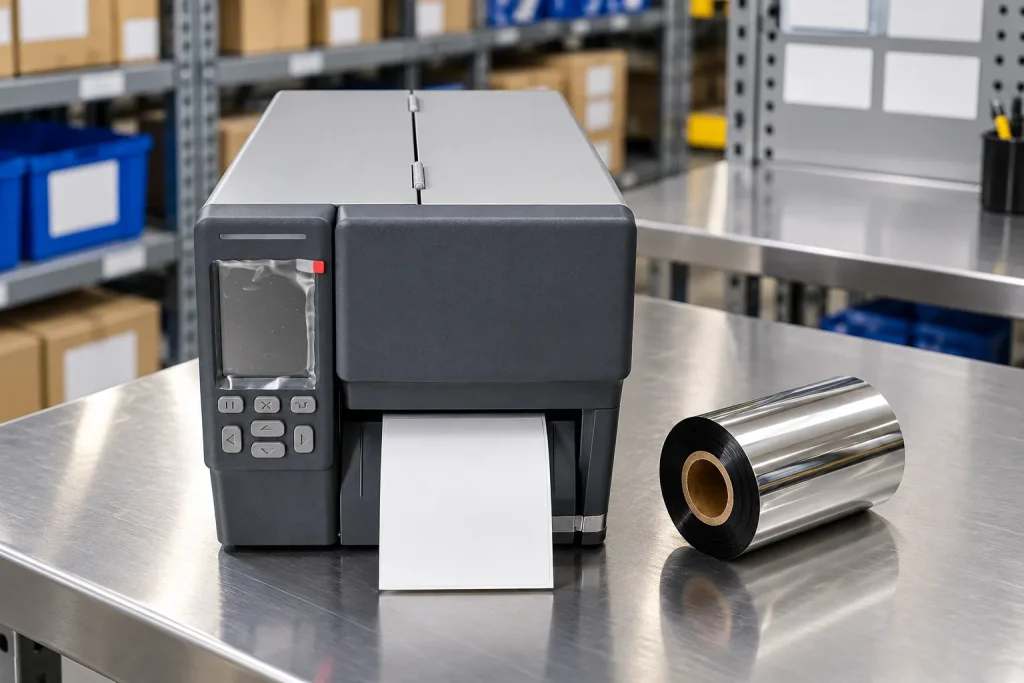
Thermal transfer printing uses printhead heat to transfer ribbon ink onto a label, whereas direct thermal printing heats specially treated label material directly. The label is the receiving material; the ribbon supplies the transferred ink in the thermal transfer process. They play different roles in the printed result.
This distinction matters when you already own a printer. The general term thermal printer can describe either direct thermal or thermal transfer equipment. Before discussing a replacement ribbon, establish the printing method in use. A direct thermal job does not become a ribbon selection problem merely because its labels serve an industrial purpose.
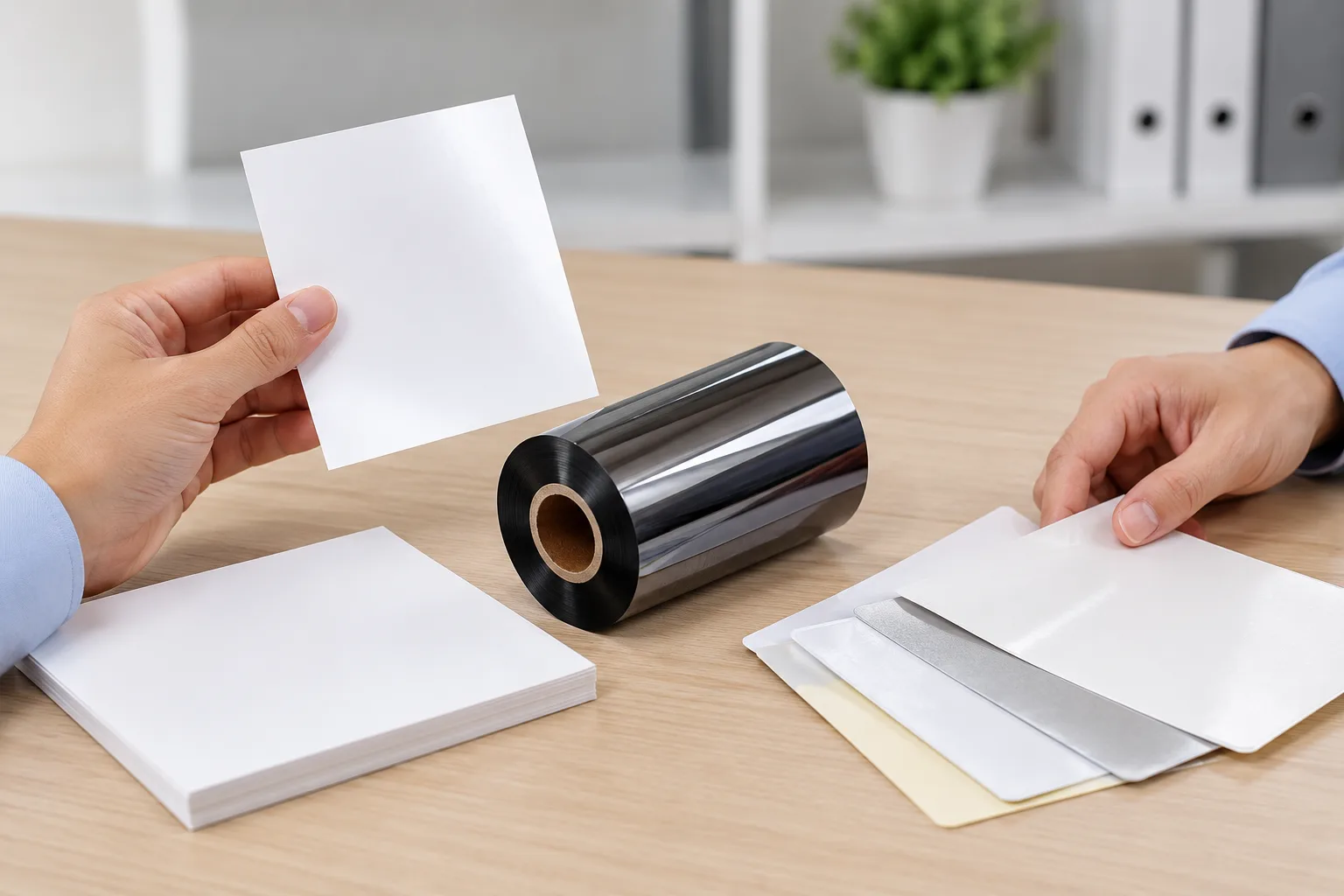
For thermal transfer jobs, distinguish the facestock, the surface being printed, from the ink formulation. The three general ribbon families are full wax, wax-resin blend and full resin. Those names describe the ribbon formulation, rather than the label's industrial function or the printer's complete compatibility requirements.
The facestock is a starting point, but the final choice also depends on ribbon formulation, printer architecture, print settings and required durability. When switching suppliers, record these items separately. A proposed ribbon carrying the same family name still needs evaluation with your label stock and printer; retain the current combination as a comparison sample.

Explain where durability comes from before interpreting claims
Ribbon performance belongs to the complete printed construction, so buyers should validate the combination on their own facestock, printer and settings before release. A material name or ribbon family helps narrow the discussion, but it does not replace evidence for the intended application.
Wax-resin ribbons combine wax and resin and offer enhanced durability compared with wax ribbons. General material guidance associates wax with porous and coated paper, wax-resin with coated paper and selected synthetics, and full resin with demanding synthetic films such as polyester, polyimide and vinyl. Use these associations to identify candidates, with compatibility confirmed for the particular stock.
For an adhesive label, keeping the image readable and keeping the label attached are separate questions to evaluate. Temperature cycling, chemical contact and surface energy affect adhesion. Approve samples using the same material construction and application surface as the intended job, rather than relying only on a ribbon description.
The word industrial therefore supplies no numerical temperature limit, chemical exposure duration or service-life guarantee. Likewise, a durability improvement over wax does not establish a particular resistance threshold. Ask for evidence tied to the proposed construction and your exposure conditions. Avoid turning a general formulation comparison into an acceptance limit for a finished label.
Data and Evidence
Ribbon matching starts with ink formulation, width, core size and roll length in relation to the printer and label material. The comparison below separates supported general guidance from the application evidence you should request; it gives no universal printer settings or finished-label resistance limits.
| Question | Supported distinction | Evidence to request or produce |
|---|---|---|
| Which thermal process is running? | Thermal transfer needs a ribbon; direct thermal uses treated material without one. | Confirm the active printer mode and the stock specified for it. |
| Which ribbon family is a candidate? | Wax generally suits paper; wax-resin suits coated paper and selected synthetics; resin suits demanding synthetic films. | Identify the actual facestock and validate the proposed formulation on it. |
| Will the ribbon fit the job? | Formulation, width, core size and roll length need matching. | Compare the proposed roll specification with the exact printer requirements. |
| Will the printed label remain usable? | Print performance depends on the construction; adhesion also depends on exposure and application surface. | Evaluate production samples under the conditions required for the application. |
Source basis: Industrial labels supports the purpose of the category; Wax ribbons and Wax-resin ribbons support the general formulation comparisons; Ribbon performance and adhesion support validation of the printed construction. The printer-mode distinction is also documented in 公司打印机介质兼容性与材质规格(已审第一方来源).
For your next print trial, prepare one record containing the printer model and mode, facestock identity, proposed ribbon specification, settings and required exposure conditions. Print on production stock, record the result and compare it with the agreed requirement before releasing the combination. If it fails, keep the result linked to that combination and review the material, formulation and settings rather than accepting another product solely because it is called industrial.
Frequently Asked Questions
Does an industrial label require an industrial thermal transfer printer?
The label category describes an identification or safety purpose, while the printing method and equipment require separate specification. Establish the actual stock, process and printer compatibility before choosing consumables.
Can I approve a replacement wax-resin ribbon from its family name alone?
No. Validate the replacement on your own facestock, printer and settings. The family name provides general formulation guidance but does not establish performance for your printed construction.
What evidence should I request for industrial labels exposed to chemicals?
Request evidence for the proposed printed construction under the required chemical exposure conditions. For adhesive labels, evaluate attachment on the actual application surface as well as the printed image.
Related Products & Guides
Recommended products for this industry

Acid and Alkali Resistant Label
Chemical-resistant label construction for acid baths, paint-stripping solutions, alkali…
View details
Aluminum Foil High-Temperature Label
Coated aluminum label for metal processing, heat treatment and high-temperature part…
View details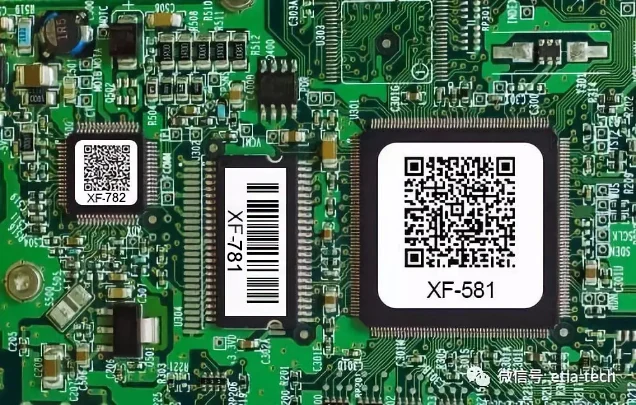
Anti-Static High-Temperature Polyimide Label
Anti-static polyimide label for ESD-sensitive electronics assembly and high-temperature…
View details
Antistatic Polyimide Labels for PCB Process Tracking — CL-782
CL-782 is a white gloss polyimide (PI) label material for printed circuit board (PCB) and sensitive-component process control and product traceability in electronics manufacturing. It is described for wave soldering and reflow soldering applications, with a listed temperature range of -40-300℃, an antistatic value of ≥10^(8)Ω and ≤10^(11)Ω, and a peel voltage below 100 volts. Selection should account for the actual thermal cycle and chemical exposure; the supplied information does not specify exposure durations or chemical test conditions.
View detailsNeed the right ribbon for your label application?
Share the label material, printer and operating environment. Our team will recommend a tested combination.
