
Industrial Identification Labels (Étiquette d'Identification Industrielle): What the Term Means, Where Its Boundaries Run, and What It Does Not Tell You
Request a solution
- Original TTR manufacturer since 2013
- Automated coating and slitting
- IQC / IPQC / OQC control
- ANSI barcode grade testing
- -20°C to 120°C environmental testing
- Batch-level traceability
- ANSI barcode grade
- Batch traceability
- RoHS / REACH compliance
- SGS and MSDS documents on request
Key Takeaways
- An industrial identification label carries stable identity data — a part number, serial number, asset number, or batch reference — so staff and scanners can track one specific item through production, storage, and service life.
- Date coding is a neighboring task, not an identification label: TTO and hot stamp coding ribbons print variable expiry and batch data directly on packaging film or cartons on the production line.
- The label stock sets the ribbon family: wax for paper, wax/resin hybrid for synthetic stock under moderate scratch and moisture exposure, full resin for permanent identification on synthetic materials.
- Brand, color-coding, and warning labels rely on color ribbons and repeat the same visual message on every item instead of distinguishing one item from the next.
- Catalog statements describe ribbon families and their typical applications; they do not verify how a printed label will behave on your printer, settings, and stock.
What the Term Means: A Label That Carries Item-Level Identity
An industrial identification label is a label whose primary job is to carry stable identity data — a part number, serial number, asset number, or batch reference — that stays attached to one specific item through manufacturing, storage, and service life. The French phrase translates word for word, and the operative word is identification: the label answers which exact item this is, not when it was made or whose brand it carries.
In practice, the label appears wherever a factory must track items rather than decorate them. The wax/resin hybrid family lists manufacturing work-in-process (WIP) labels and asset tracking among its applications, alongside pharmaceutical product labels, medical device labeling, and apparel hang tags. The full resin family carries the tougher end of the same job: automotive VIN and parts labels, electronics PCB and component marking, outdoor asset tags, chemical container labeling, and permanent product identification. These labels usually carry the identity as printed text and barcodes so that both people and scanners on the line can read it.
The label itself is produced by thermal transfer printing: a ribbon melts ink onto the label stock inside the printer. A buyer who starts from this term therefore ends up choosing ribbons: the concept decides the data, and the label stock decides the consumable.
Where the Boundary Runs: Neighboring Print Tasks the Term Does Not Cover
Date coding on packaging film, hot stamp date coding, brand and color labeling, and general shipping labels are the four print tasks closest to industrial identification labels, and each uses a different ribbon family for a different purpose.
Date and batch coding lives on the package, not on a label. TTO (Thermal Transfer Overprinter) ribbons run on near-edge print heads and print expiry dates and batch numbers directly onto flexible packaging films at line speed, while hot stamp coding ribbons do the same job on contact coders. The code changes with every production run and marks a production moment, so a specification asking for an étiquette d'identification industrielle is asking for something else, even though both feed traceability.
Brand, color, and warning labeling communicates a fixed meaning. Color ribbons serve brand identification, color coding, and warning labels, where the printed content repeats identically on every item — a logo, a color code, a warning symbol — rather than data that identifies one item. They come in wax, hybrid, and resin bases, so durability scales along the same ladder.
Shipping and warehouse labels are the closest cousin. Wax ribbons serve logistics and shipping labels, warehouse inventory labels, outer carton shipping marks, and general purpose barcode labels. They carry barcodes and look like identification, but they mark a shipment or storage position for a transit life on paper, where extreme durability is not required. When an identification label must survive the production environment itself — handling, cleaning agents, outdoor storage — the stock moves to synthetics and the ribbon moves up to hybrid or resin.
Why the Label Stock Decides the Ribbon Family Behind the Label
Thermal transfer printing melts ink from a ribbon onto the label stock, so the stock — paper or synthetic — determines which ribbon family prints it well, and the catalog families map cleanly onto identification uses.
Paper identification labels pair with wax ribbons, the most economical thermal transfer option, chosen for print density on paper and for high-volume general purpose work where extreme durability is not required. Synthetic label stock moves the choice to a wax/resin hybrid: hybrids balance print quality and durability, target applications with moderate scratch and moisture exposure, and perform well on synthetic materials, which is why WIP labels and asset tracking sit in their application list. The permanent end of identification — parts that face chemicals, heat, or weather — moves to full resin, the family specified for resisting scratching, chemicals, high temperatures, and outdoor exposure on synthetic materials, with long-term outdoor UV resistance among its stated features.
The match runs at family level and stays condition-dependent: a hybrid covers moderate exposure, and resin covers the aggressive end on synthetics. Within a family, the exact product depends on your printer and the exposure the finished label will face.
What the Term Does Not Tell You
Knowing that a label is an industrial identification label tells you its job, but it does not tell you which ribbon to order, how your printer should be set, or how the print will behave in your environment.
The term does not fix the consumable. The same part number or serial number prints with wax on paper, with a hybrid on synthetic stock, or with resin on a permanent synthetic label; the stock and the exposure make the choice, not the concept.
The term does not transfer catalog claims to your labels. A catalog lists typical applications and family-level capabilities — resin for outdoor exposure, hybrids for moderate scratch and moisture resistance — as descriptions of the ribbon family, not as test results on your label stock. The resin family's outdoor and chemical resistance assumes permanent identification on synthetic materials, so the stock still has to match the ribbon.
The term does not set your acceptance standard either. Print darkness, speed, and print quality interact with your printer and your stock, so workable settings and finished-label readability have to be established by test printing on your own machine. Scan the printed barcodes and check the print under the real exposure — handling, cleaning agents, temperature — before a full batch runs.
Data and Evidence
The table below gathers how the two COLORFULTTR ribbon catalogs assign ribbon families to identification-type uses and to the neighboring print tasks described above.
| Print task | Data it carries | Ribbon family | Typical applications listed |
|---|---|---|---|
| Identification, general purpose | Stable item identity as text and barcodes | Wax | General purpose barcode labels, warehouse inventory labels, office and administrative labeling |
| Identification, WIP and assets | Item and batch identity | Wax/resin hybrid | Manufacturing WIP labels, asset tracking, pharmaceutical product labels, medical device labeling |
| Identification, permanent | Part, serial, and VIN-level identity | Full resin | Automotive VIN and parts labels, electronics PCB and component marking, outdoor asset tags, chemical container labeling |
| Date and batch coding | Variable expiry, lot, and production data | TTO near-edge; hot stamp coding | Food and beverage date coding, pharmaceutical blister packaging, batch and lot number printing |
| Brand, color, and warning labeling | Fixed visual meaning | Color ribbons in wax, hybrid, or resin base | Brand identification, color coding, warning labels |
| Shipping and logistics labeling | Transit identity | Wax | Logistics and shipping labels, outer carton shipping marks |
Application lists in the table are the catalogs' typical uses for each ribbon family, not test results on any specific label stock. To turn them into a decision:
- List the stock each identification label in your plant runs on — paper, synthetic, or a specialty material.
- Match the stock and its exposure to a ribbon family using the table: wax for paper, hybrid for synthetics under moderate exposure, resin for permanent identification on synthetics.
- Request samples of that ribbon family and test print on your own printer with the stock you actually use.
- Scan-test the printed barcodes and check print survival under real handling and cleaning conditions before ordering volume.
Facts in this guide come from the COLORFULTTR wax and wax-resin product catalog and the COLORFULTTR resin, TTO and color ribbon product catalog.
Frequently Asked Questions
What is the difference between an industrial identification label and date coding on packaging film?
An identification label is an applied label that carries stable data — a part number, serial number, asset number, or batch reference — staying with one item. Date coding uses TTO near-edge ribbons or hot stamp coding ribbons to print variable expiry dates and batch numbers directly on the packaging film or carton on the production line; the code changes every run and is not a label.
Which thermal transfer ribbon family suits asset tracking labels on synthetic label stock?
Wax/resin hybrid ribbons are the catalog family for asset tracking and manufacturing WIP labels: they balance print quality and durability, handle moderate scratch and moisture exposure, and perform well on synthetic materials. When the label must survive chemicals, heat, or outdoor exposure as permanent identification, move up to full resin.
Can I print every identification label in my plant with one wax ribbon?
No. Wax ribbons deliver their print density on paper labels and suit general purpose uses where extreme durability is not required. Identification labels on synthetic stock call for a wax/resin hybrid, and labels facing chemicals, heat, or weather call for full resin, so a single wax ribbon does not reach synthetic or permanent outdoor identification uses.
How do I verify a catalog durability claim before running a production batch?
Treat the catalog as a shortlist of ribbon families, then test: print the candidate ribbon on your own printer with the label stock you use, scan-test the barcodes, and check the print under your real handling, cleaning, and temperature conditions. Catalog statements describe a ribbon family's typical applications, not results on your stock.
Do brand, color-coded, and warning labels count as industrial identification labels?
They are neighbors, not the same concept. Color ribbons print brand identification, color coding, and warning labels where the content repeats identically on every item; an industrial identification label carries data that distinguishes one specific item, such as a serial number, asset number, or batch reference.
Related Products & Guides
Recommended products for this industry
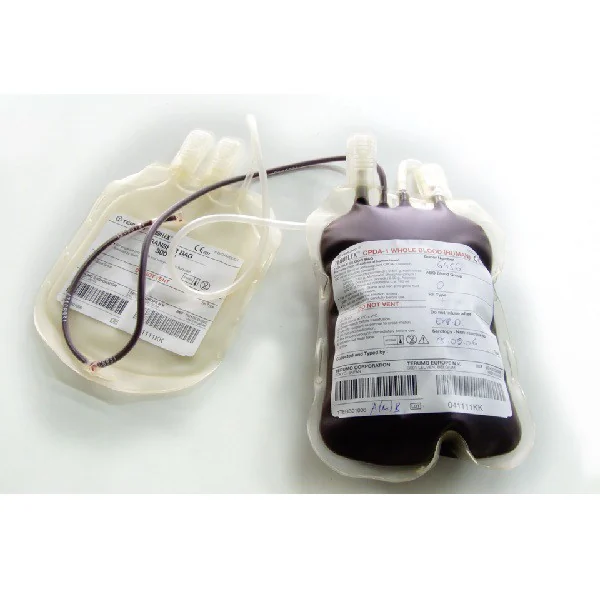
Blood Bag Identification Label
Cold-storage label for blood bags and transfusion containers where traceability remains…
View details
Cable Wrap and Outdoor Identification Label
Vinyl cable-wrap label for outdoor cables, harnesses and power infrastructure exposed to…
View details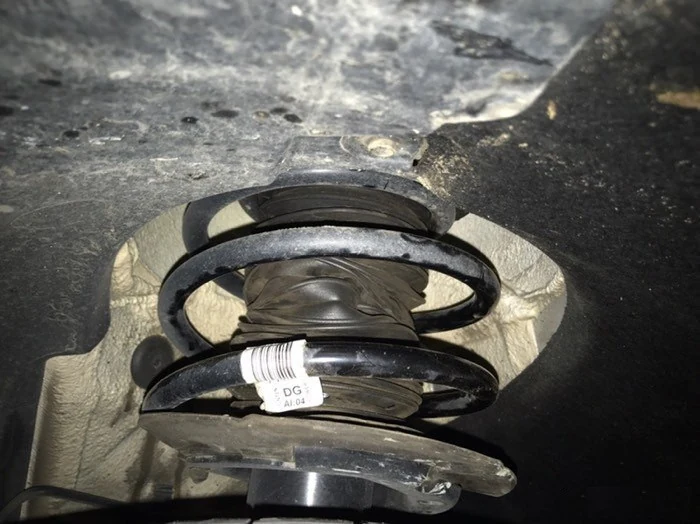
Chemical-Resistant PET Identification Label
Durable PET label for asset, rating-plate and component identification exposed to oils…
View details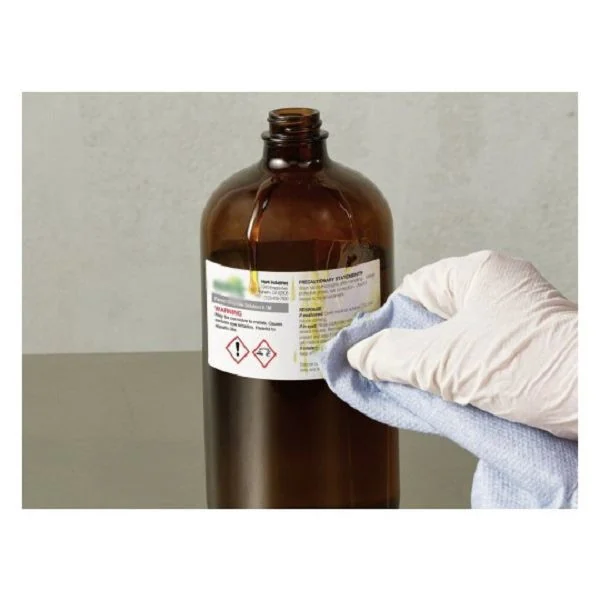
GHS Chemical Identification Label
Chemical-resistant label facestock for GHS hazard communication on containers, drums and…
View detailsNeed the right ribbon for your label application?
Share the label material, printer and operating environment. Our team will recommend a tested combination.
