

- Original TTR manufacturer since 2013
- Automated coating and slitting
- IQC / IPQC / OQC control
- ANSI barcode grade testing
- -20°C to 120°C environmental testing
- Batch-level traceability
- ANSI barcode grade
- Batch traceability
- RoHS / REACH compliance
- SGS and MSDS documents on request
Thermal transfer ribbon manufacturers make the consumable that supplies ink for thermal transfer printing. For buyers and print managers, manufacturing origin, ribbon family and application suitability are separate questions. Understand who makes the ribbon and what product is proposed, then verify its fit with the printer and its performance on the actual receiving material.
Key Takeaways
- Ribbon production includes formulation, coating, slitting and preparation of finished rolls.
- Wax, wax-resin and resin describe broad ribbon families rather than a manufacturer's identity.
- Thermal transfer printing uses ribbon, while direct thermal printing uses direct thermal paper without ribbon.
- Performance requires validation with the actual label stock, printer and settings.
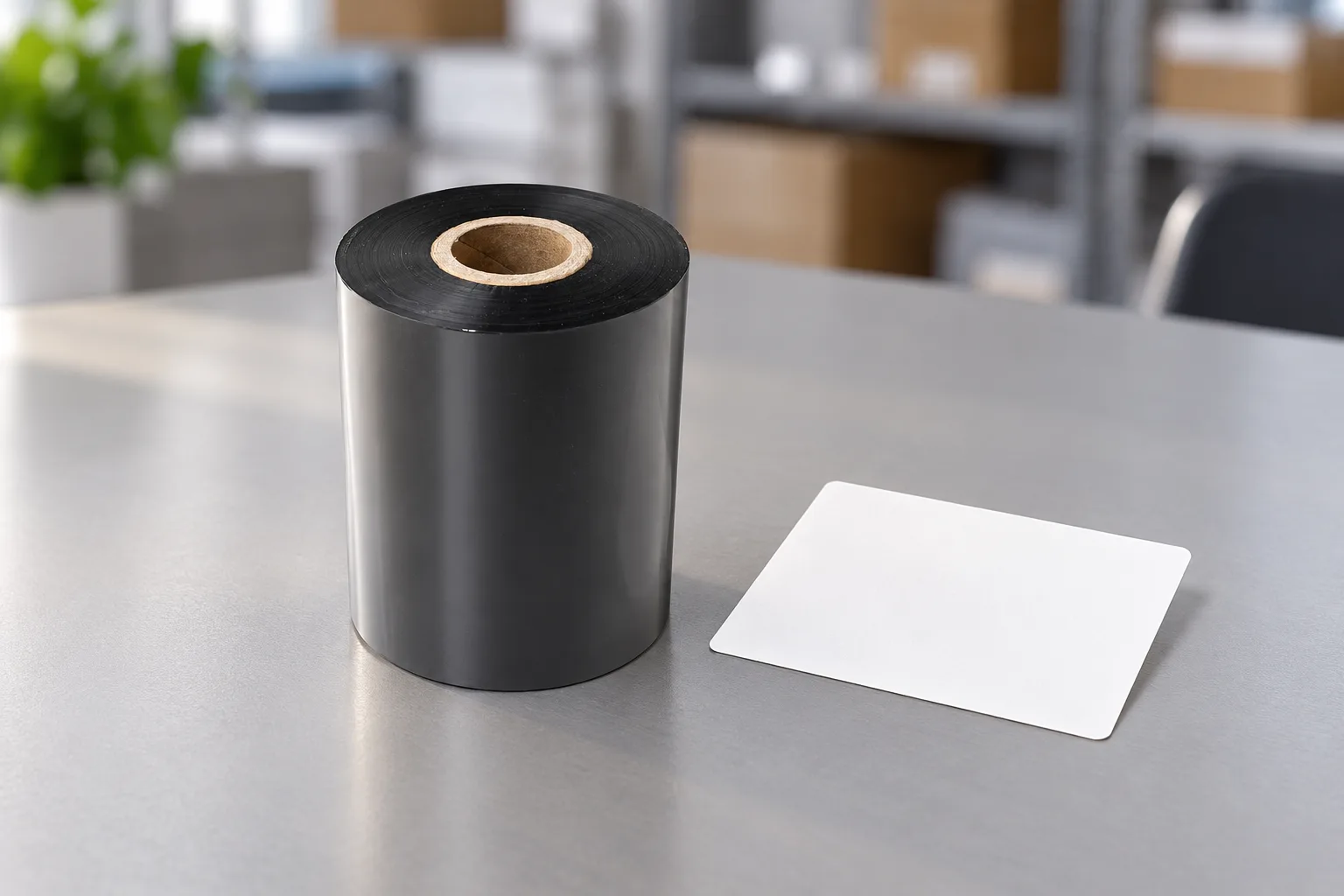
Understand what thermal transfer ribbon manufacturers make
Thermal transfer ribbon manufacturers produce the ink-bearing consumable used to print information onto a separate receiving material. The ribbon typically uses polyester film with wax, resin or mixed ink on one side and a lubricating coating on the reverse. Printhead heat and pressure transfer the image from the ribbon to the label.
This distinction matters when a discussion moves between ribbon, label stock and finished labels. The ribbon supplies transferable ink; the stock receives the image. If your team prints in-house, describe these as separate items when discussing a material change or a replacement consumable.
COLORFULTTR's company profile describes ribbon research, production and sales, with a production chain covering raw materials, coating, slitting and finished products. Its production document also identifies formulation and development as parts of the process. This illustrates what a manufacturing role can cover without assuming that every business using the term performs exactly the same work.
Keep manufacturer and supplier separate in your records: use the first for the production role and the second for the business supplying the order. Ask which company performs each stage rather than treating a sales description as a complete account of where the roll comes from. That question clarifies responsibility before any purchasing decision.
Separate ribbon families from printing methods
Wax, wax-resin and resin are the three broad thermal transfer ribbon families described in the supplied ribbon reference. Their names identify ink categories; they do not identify a factory, printer model or approved combination with your label stock. Use the family name to understand the description, then identify the specific grade and application.
A product range can place application categories alongside those families. COLORFULTTR's company profile lists wash-care resin, TTO and card ribbons as well as wax, mixed and resin products. Read these categories according to what they describe: formulation, intended use or printing system. Avoid interpreting every menu category as a separate basic ink chemistry.
The printing method is another distinction. Thermal transfer mode requires ribbon, whereas direct thermal mode uses direct thermal paper without ribbon. Establish the mode your job uses before interpreting a compatibility statement. A discussion about ribbon grade cannot resolve a job specified for direct thermal printing.
TTO, or Thermal Transfer Overprinting, applies codes to flexible packaging using a thermal printhead and wax-resin or resin ribbon. The company's compatibility document excludes its TTO near-edge ribbons from its JT desktop and Q light-industrial printers. Treat this as an equipment boundary and identify the printing system before comparing consumables across those applications.

See where differences between finished rolls originate
Ribbon manufacture includes coating film and converting it into finished rolls. COLORFULTTR's production document describes width control during slitting, tension control and keeping rewound ribbon flat and parallel to its core. These are separate production concerns from selecting a wax or resin formulation.
This explains why a useful description needs more than a family name. Ask for the grade, intended receiving material and finished-roll construction as separate information. When considering a supplier change, place the current consumable's description alongside the proposed replacement so the comparison stays tied to one printing job.
The production document lists neutral, branded, blank and customer-specific packaging options, while the company profile states that OEM/ODM production is supported. Treat packaging as identification to clarify, rather than your sole evidence of who made a particular ribbon. Ask for the manufacturer and grade explicitly when those details matter to your records.
These descriptions explain production activities, rather than measuring the roll in your hand. A description of coating or slitting equipment does not establish the printed result on your material. Keep evidence of the production role separate from evidence of application performance, especially when a proposed replacement is described as equivalent to an existing consumable.
Know what a manufacturer claim cannot establish
A manufacturer's identity does not establish performance for every ribbon and label combination. The supplied performance reference places validation on the complete printed construction, using the buyer's own stock, printer and settings. A factory description answers a different question from an application trial.
The JT desktop compatibility document, for example, lists wax, enhanced wax, mixed and resin ribbons. That establishes listed family support for the stated equipment; it does not select a particular grade for a particular label. Likewise, an intended-material description is a starting point for verification rather than a result from your production line.
Use the distinction to decide what evidence to request next:
- If the manufacturing role is unclear, ask who coats, slits and prepares the finished ribbon.
- If the product description is unclear, identify its formulation family, grade and intended material.
- If compatibility is unclear, compare the proposed roll with the exact printer requirements.
- If performance is unclear, agree the required result and validate the combination on your own setup.
When a trial misses the agreed requirement, retain the ribbon identification, material details and settings with the result. Use that record to discuss the next candidate or test condition. Avoid approving a replacement solely because its manufacturer or broad ribbon family matches the previous description.
Data and Evidence
The company documents support specific production and compatibility statements, while the performance reference identifies where application validation belongs. The table separates these evidence types so a manufacturing description is not mistaken for a completed print trial.
| Evidence | Supported scope | Verification |
|---|---|---|
| Production description | Formulation, coating, slitting and finished-roll preparation are described. | Clarify who performs each stage for the proposed product. |
| TTO exclusion | The company's TTO near-edge ribbons are excluded from its JT desktop and Q light-industrial ranges. | Resolve the printer-system distinction before comparing grades. |
| Application validation | Performance belongs to the complete printed construction. | Test with the actual stock, printer and settings, against an agreed requirement. |
Production statements draw on 公司简介-2025 and 生产工艺与品质-2025. Equipment examples come from 公司打印机介质兼容性与材质规格(已审第一方来源). The validation principle comes from the supplied Ribbon performance reference.
Your next step is to create an identification sheet for one existing printing job: printer, label material, current ribbon grade and roll construction, plus the result the print must achieve. Use it to separate questions about manufacturing origin from questions requiring a compatibility check or application trial.
Frequently Asked Questions
Does OEM packaging identify the original thermal transfer ribbon manufacturer?
Packaging alone should not identify the manufacturer in your records. COLORFULTTR describes OEM/ODM support and several packaging options, so ask for the production company and ribbon grade explicitly.
Does a JT452 or JT453 accepting resin ribbon mean any resin grade is approved?
No. The compatibility document lists resin as a supported family, while performance still requires validation with the actual label stock, printer and settings.
Do I need ribbon for a direct thermal paper printing job?
Direct thermal mode uses direct thermal paper without ribbon. Confirm the required printing mode before comparing ribbon products.
Related Products & Guides
Recommended products for this industry
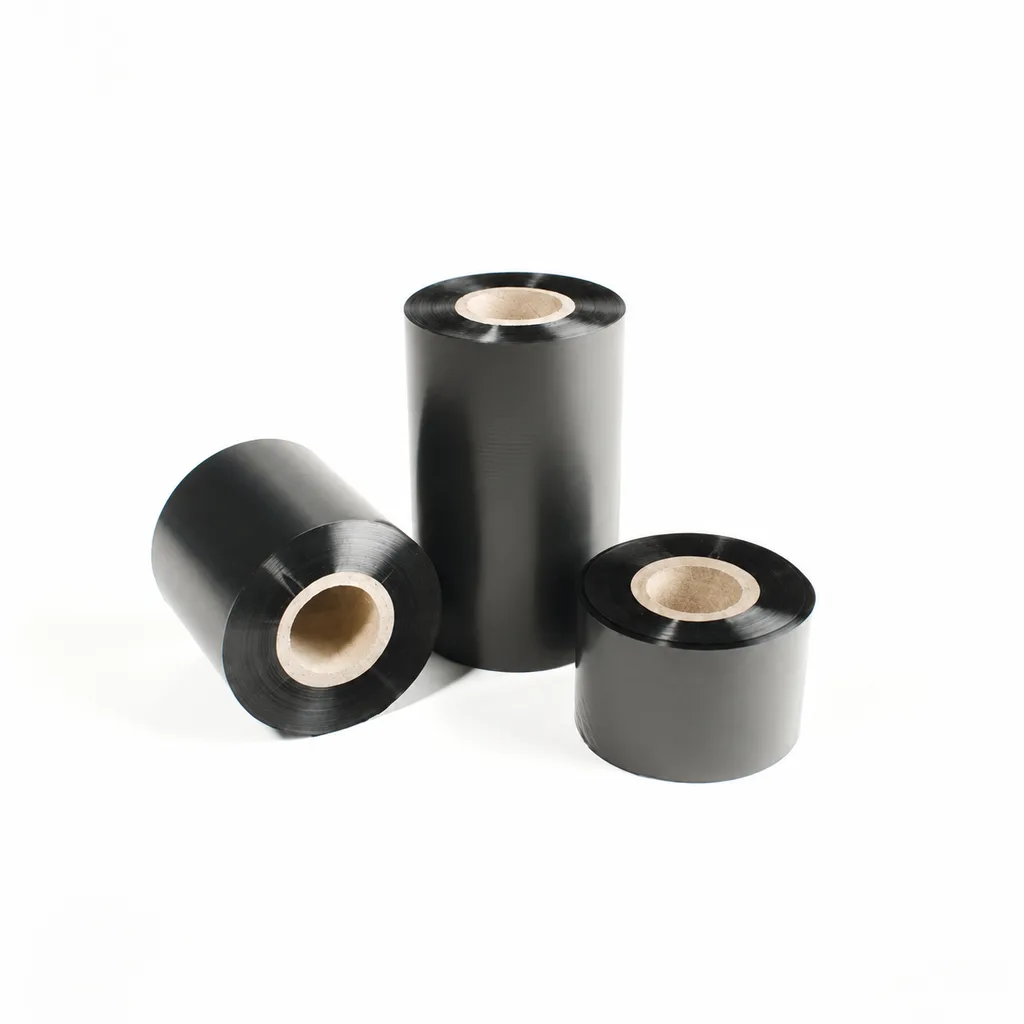
CL-Z112 Enhanced Wax Thermal Transfer Ribbon for Paper Labels and Tags
An enhanced wax thermal transfer ribbon with black ink for paper labels and tags used in retail, warehousing and logistics. It is specified for flat-head printing on desktop or industrial barcode printers at ≤8 inches per second (ips). Select it by checking the actual label material, printer configuration and handling conditions: image-quality, rub-resistance and cold-chamber results were obtained on coated paper, and print quality and image durability may vary with the printer and print medium.
View details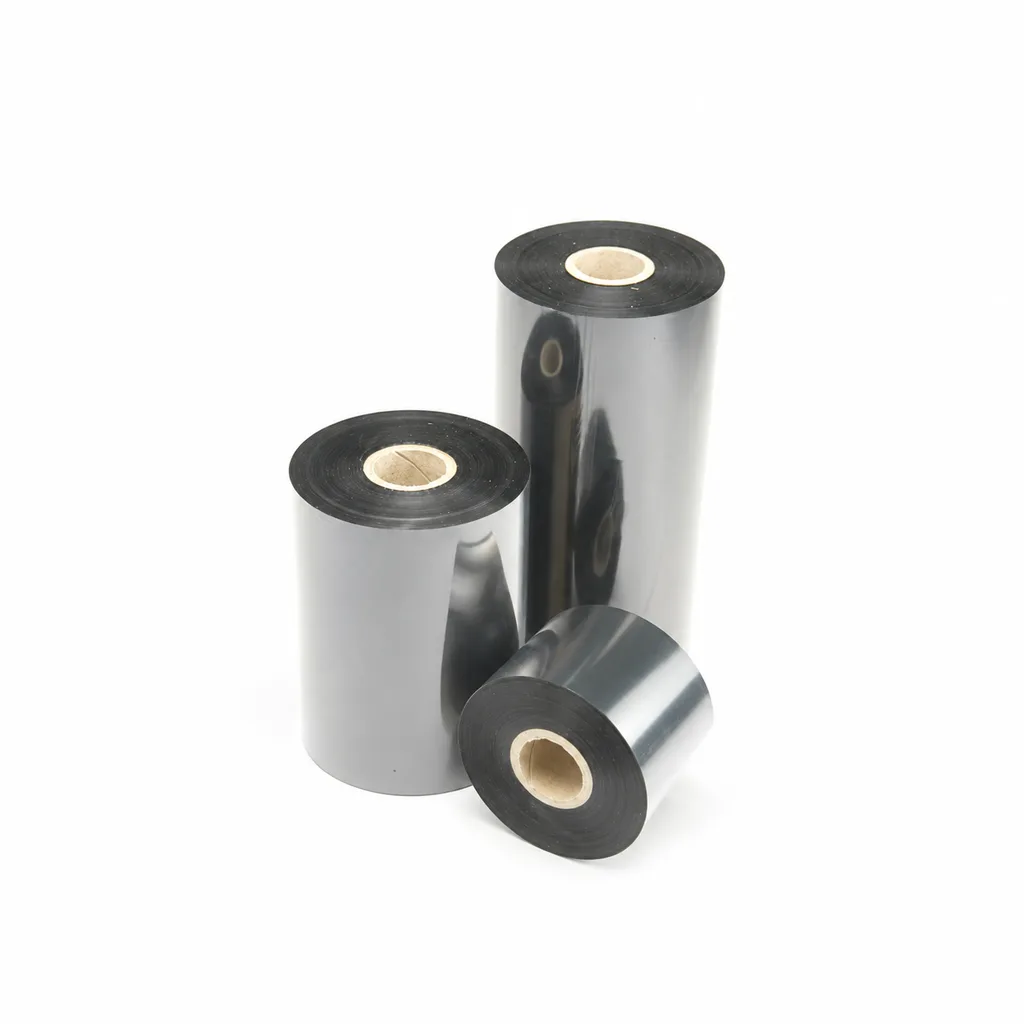
CL-Z203 Wax-Resin Thermal Transfer Ribbon for Barcode Labels
A black wax-resin thermal transfer ribbon for flat-head printing, with listed applications including retail, warehousing, logistics and garment tags. Select it against your actual label material and desktop or industrial barcode printer at speeds ≤6 ips (inches per second). Fine-line, small-text and durability results were obtained on coated paper; print quality and image durability may vary with the printer and printing substrate.
View details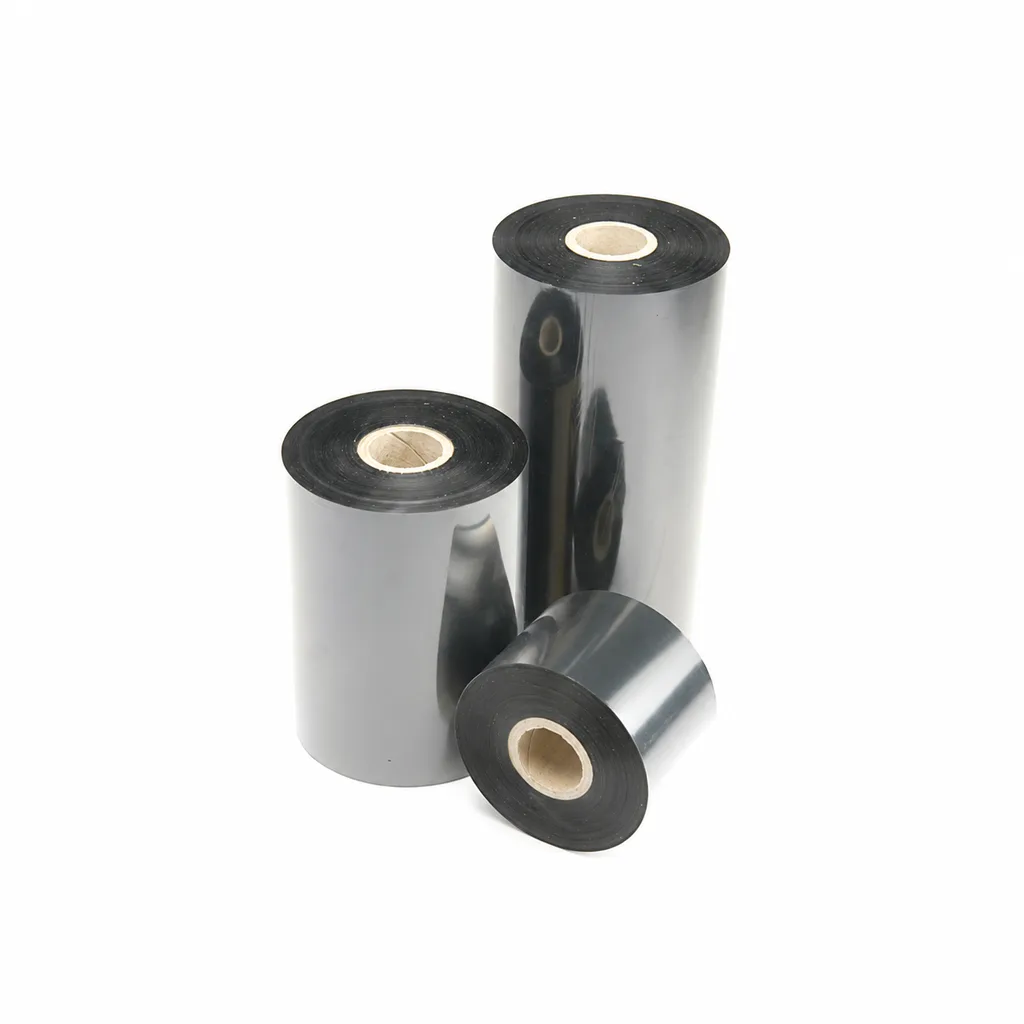
CL-Z213 Near-Edge Wax-Resin Thermal Transfer Ribbon for Barcode Labels
An enhanced black near-edge wax-resin thermal transfer ribbon for near-edge barcode printers and low- to medium-speed thermal transfer overprinting (TTO). Listed applications include retail labels, warehousing, garment tags and packaging identification. Match the printer, actual print medium and operating speed before selection: print quality and image durability can vary with the printer and substrate.
View details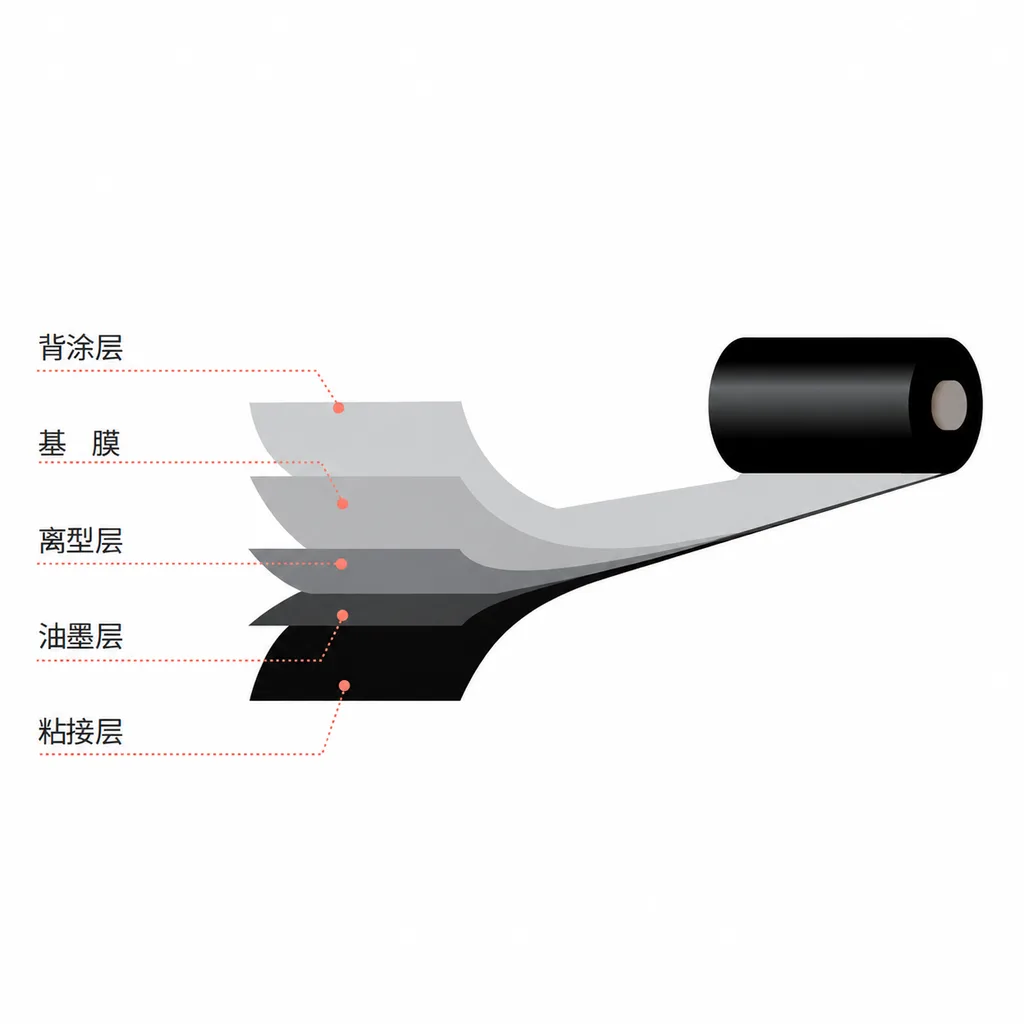
CL-Z312 Resin Thermal Transfer Ribbon for Packaging Printing
CL-Z312 is a black, general-purpose resin ribbon for thermal transfer overprinting (TTO), with packaging and retail label applications listed in the product information. Its abrasion, alcohol and oil resistance data were obtained on polyethylene terephthalate (PET). Select it against your actual packaging material, printer and production speed: print quality and image durability can vary with the printer and substrate, and the material chart percentages are not defined as pass rates.
View detailsNeed the right ribbon for your label application?
Share the label material, printer and operating environment. Our team will recommend a tested combination.
