
- Original TTR manufacturer since 2013
- Automated coating and slitting
- IQC / IPQC / OQC control
- ANSI barcode grade testing
- -20°C to 120°C environmental testing
- Batch-level traceability
- ANSI barcode grade
- Batch traceability
- RoHS / REACH compliance
- SGS and MSDS documents on request
For buyers planning in-house product identification, a hologram security label provides an optical feature for physical inspection. Its security role depends on a specified check against an authorised reference, rather than appearance alone. Assess removal evidence and individual-product verification separately, then confirm the exact label construction before selecting printing consumables.
Key Takeaways
- A hologram security label supports physical inspection through defined optical features.
- A reflective or colour-changing surface alone does not establish a product’s origin.
- Optical inspection, evidence of removal and individual-product verification answer different questions.
- A QR code that opens a webpage is different from an individual identity checked by a verification service.
- Agree the expected visible evidence and the user’s response before testing a sample.
What makes a hologram label a security feature?
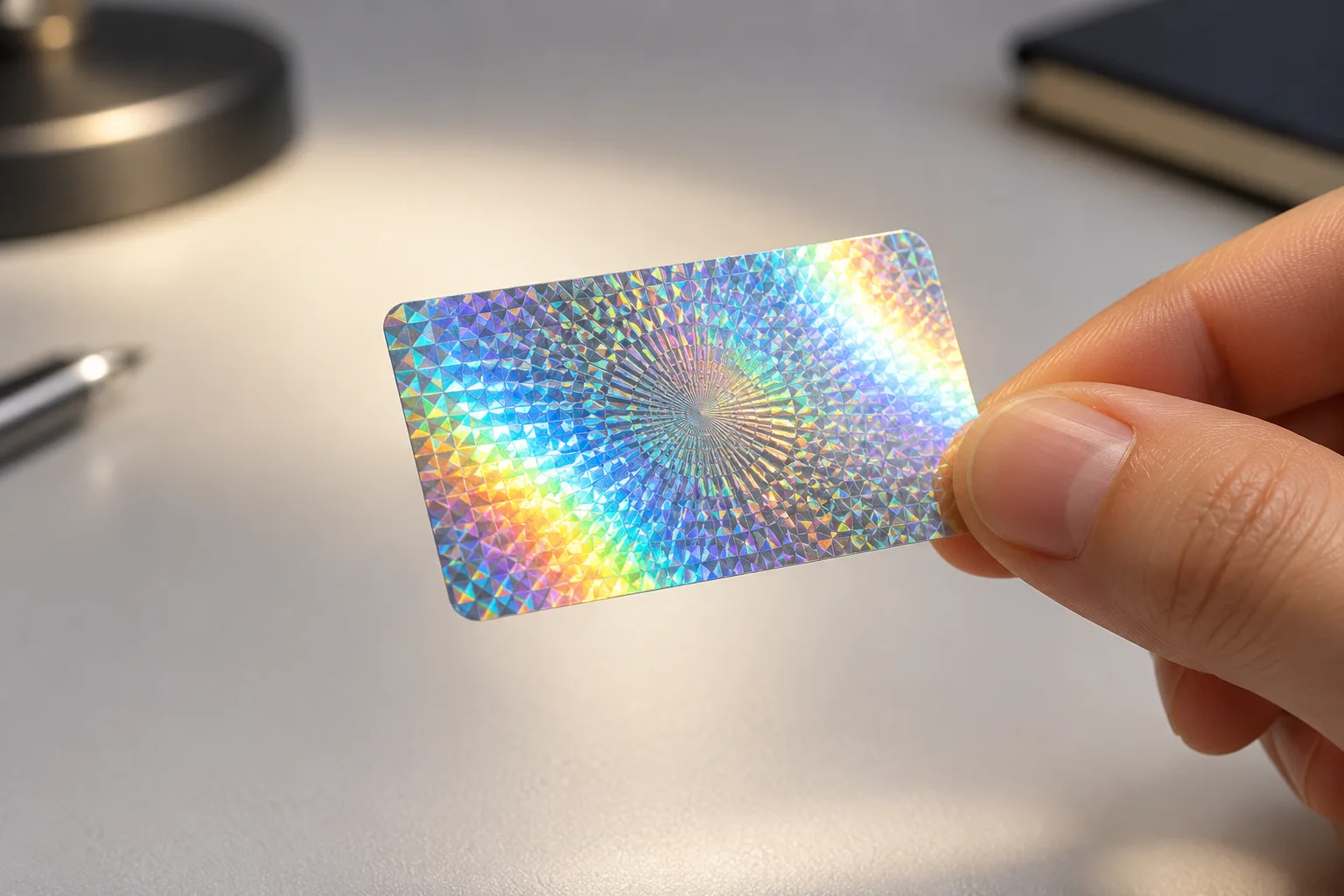
A hologram security label supports physical inspection through defined optical features. The useful question is therefore not simply whether the label looks holographic, but what the person inspecting it should recognise. A security application defines the feature, an authorised reference and the person responsible for checking it.
This separates decorative appearance from a controlled security process. A reflective or colour-changing surface does not, on its own, establish where a product came from. Treat the appearance as something to inspect within a defined procedure, rather than a complete answer to the question of authenticity.
For a buyer or print-room manager, a useful starting brief has three parts: the feature to inspect, the reference used for comparison and the person who makes the decision. Write those parts down before discussing how to add your own product information. If the brief says only “holographic sticker,” ask for the inspection requirement to be made specific.
The Holostik technical-selection material supplied for this article makes this distinction between optical appearance and authentication. It supports a limited, practical conclusion: a hologram can contribute to an inspection process, but the appearance is not an authenticity guarantee by itself. Do not turn that limited role into a promise that every product carrying the label must be genuine.
Separate optical checks, removal evidence and product identity
Holostik’s OVD portfolio describes VOID, partial-transfer and destructive structures, while its holographic-security material also describes QR and serial-number options. These are separate subjects to define in a label brief. The optical feature concerns physical inspection; the removal requirement concerns the evidence expected after opening or removal; the identity requirement concerns what is checked for an individual product.
A general request for an anti-tamper seal does not specify which optical feature someone should inspect. Similarly, a request for a hologram does not specify the required evidence after removal. If both functions matter, include both requirements explicitly instead of relying on one product name to describe the entire job.
The same care applies to QR. A code that opens a webpage differs from an identity assigned to an individual unit and checked by a verification service. When discussing in-house printing, decide whether the printed information is intended to direct a reader to information or participate in an individual-product check. Do not describe the first arrangement as the second.
Start with the risk you actually need to address. The supplied material identifies reuse of original packaging, copying a valid code and unauthorised supply-chain movement as problems requiring different controls. Use those distinctions to keep the brief focused: state the problem, identify the check and define the expected response. Adding more named features without explaining their role does not complete that brief.
Keep your in-house printing requirement distinct from security approval
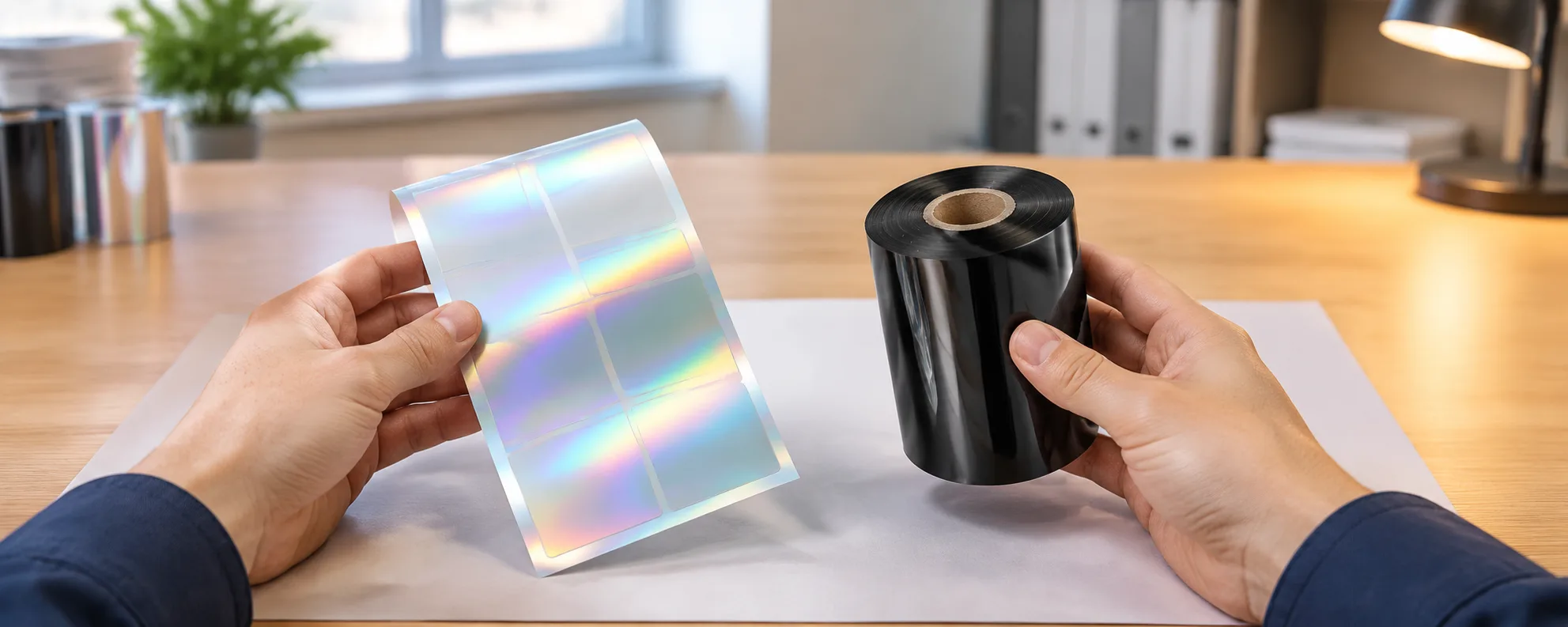
A preliminary assessment is not final engineering approval, and family-level representation does not automatically confirm every construction. For a team that intends to print its own identification, the practical next step is to define the exact stock and proposed printed information before approving a consumable combination. Keep the printing decision attached to that construction rather than the broad word “hologram.”
Use the following sequence as a review brief. It follows the supplied workflow of requirement definition, technical review, manufacturer coordination, a sample or application trial where needed, and a confirmed commercial specification.
- Define the job. State what your team plans to print and which optical, removal or identity checks the finished label must support.
- Request a technical review. Identify the proposed label construction and the printing equipment and consumables you intend to use. Ask for construction-specific confirmation rather than approval of a product family.
- Agree the sample decision. Record the visible evidence you expect and what the user should do when the result differs from the reference.
- Confirm the specification. Complete the manufacturer coordination and any agreed application trial before treating the preliminary proposal as approved.
For a ribbon discussion, bring the proposed label stock and intended print requirement together. This is a request for a specific assessment, not a claim that a particular ribbon grade or printer is already approved for holographic stock. Keep any approval tied to the combination reviewed.
Data and Evidence
The supplied evidence distinguishes defined optical inspection from appearance alone and lists removal-evidence structures and QR or serial-number options. It does not provide a universal printer setting or a numeric acceptance threshold for this application. The table turns those supported distinctions into questions for your specification review.
| Subject | What the evidence supports | What to confirm for your application |
|---|---|---|
| Optical inspection | A defined feature, an authorised reference and an identified checker form the security check. | Which feature will be compared, against which reference, and by whom? |
| Removal evidence | Holostik’s portfolio describes VOID, partial-transfer and destructive structures. | What visible result is expected after opening or removal, and what should the user do? |
| Product identity | A webpage-opening QR differs from an individual identity checked by a verification service. | Is the intended function information access or individual-unit verification? |
| Construction approval | Family-level representation does not confirm every construction. | Has the exact proposed construction completed the required review? |
The optical, removal and identity distinctions above come from the supplied Holostik technical-selection and OVD portfolio material. The review sequence comes from the supplied workflow statement; it should not be read as a promise of a particular supplier’s manufacturing or printing service.
Prepare one review sheet containing the intended printed information, the proposed label construction, the inspection reference and the expected removal evidence. Use that sheet to obtain construction-specific confirmation and define any sample trial before choosing the final printing consumables.
Frequently Asked Questions
Does a colour-changing hologram security label prove that a product is genuine?
No. A reflective or colour-changing surface does not establish origin by itself. The security application needs a defined feature, an authorised reference and an identified checker.
Does a QR code on a holographic label verify each individual product?
Not necessarily. A QR code that opens a webpage differs from an identity assigned to an individual unit and checked by a verification service.
Which removal-evidence options should I discuss for a hologram security label?
Holostik’s OVD portfolio describes VOID, partial-transfer and destructive structures. Agree the expected visible evidence and the user’s response before testing a sample.
Recommended products for this industry
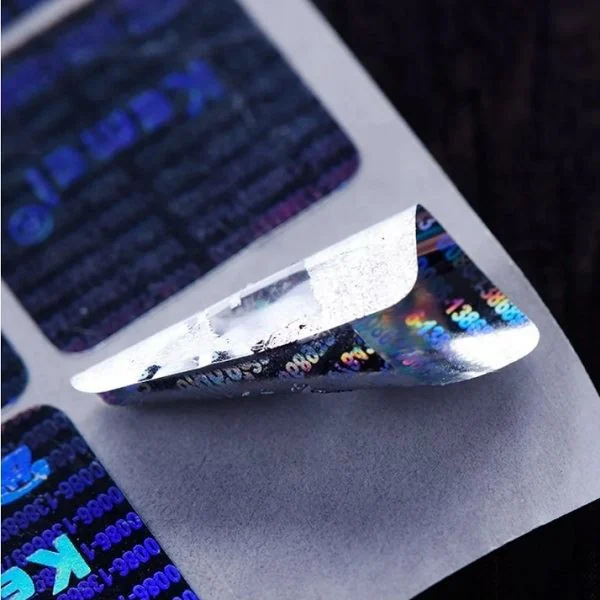
Hologram Security Label
Reflective holographic security label with visual authentication for brand protection and…
View details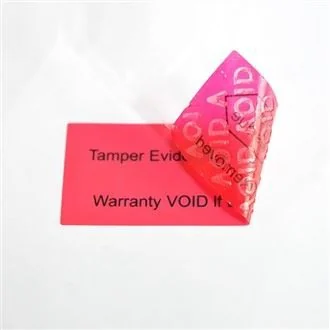
VOID Tamper Evident Security Label
Security label that reveals a tamper message when lifted, helping protect equipment…
View details
Acid and Alkali Resistant Label
Chemical-resistant label construction for acid baths, paint-stripping solutions, alkali…
View details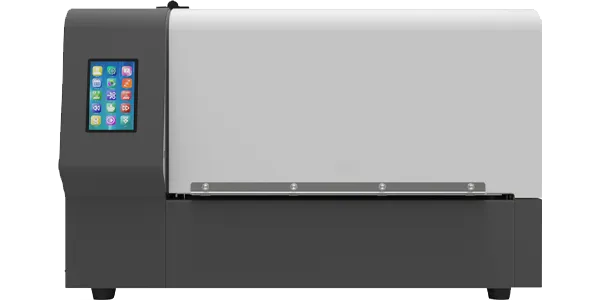
AL10-D Dual-Colour Label Printer
It can enhance industry productivity, optimise supply chain management, reduce…
View detailsNeed the right ribbon for your label application?
Share the label material, printer and operating environment. Our team will recommend a tested combination.
