
Flag Label Explained: What It Is, How It Works, and How It Differs from Similar Labels
Request a solution
- Original TTR manufacturer since 2013
- Automated coating and slitting
- IQC / IPQC / OQC control
- ANSI barcode grade testing
- -20°C to 120°C environmental testing
- Batch-level traceability
- ANSI barcode grade
- Batch traceability
- RoHS / REACH compliance
- SGS and MSDS documents on request
Key Takeaways
- A flag label folds adhesive face to adhesive face around a cable and leaves a projecting reading face, so the marking can be read without turning the cable.
- Printer-maker guidance describes cable and wire flags as a leading solution for smaller outer diameter (O/D) wires and cables, where a flat wrap leaves little printable area.
- A wrap-around label follows the cable surface, a hang tag hangs from garments, and shipping or retail tags sit flat on packages — none of these is a flag label.
- The flag shape does not fix the print method: Colorfulttr's P-Type Flag Cable Label is printed on A4 laser sheets, while roll-fed cable labels are printed by thermal transfer with ribbon.
- Recognition such as a UL969 listing depends on documented facestock, adhesive and print-system recognition, not on the flag shape.
What a Flag Label Is and Where Buyers Meet It
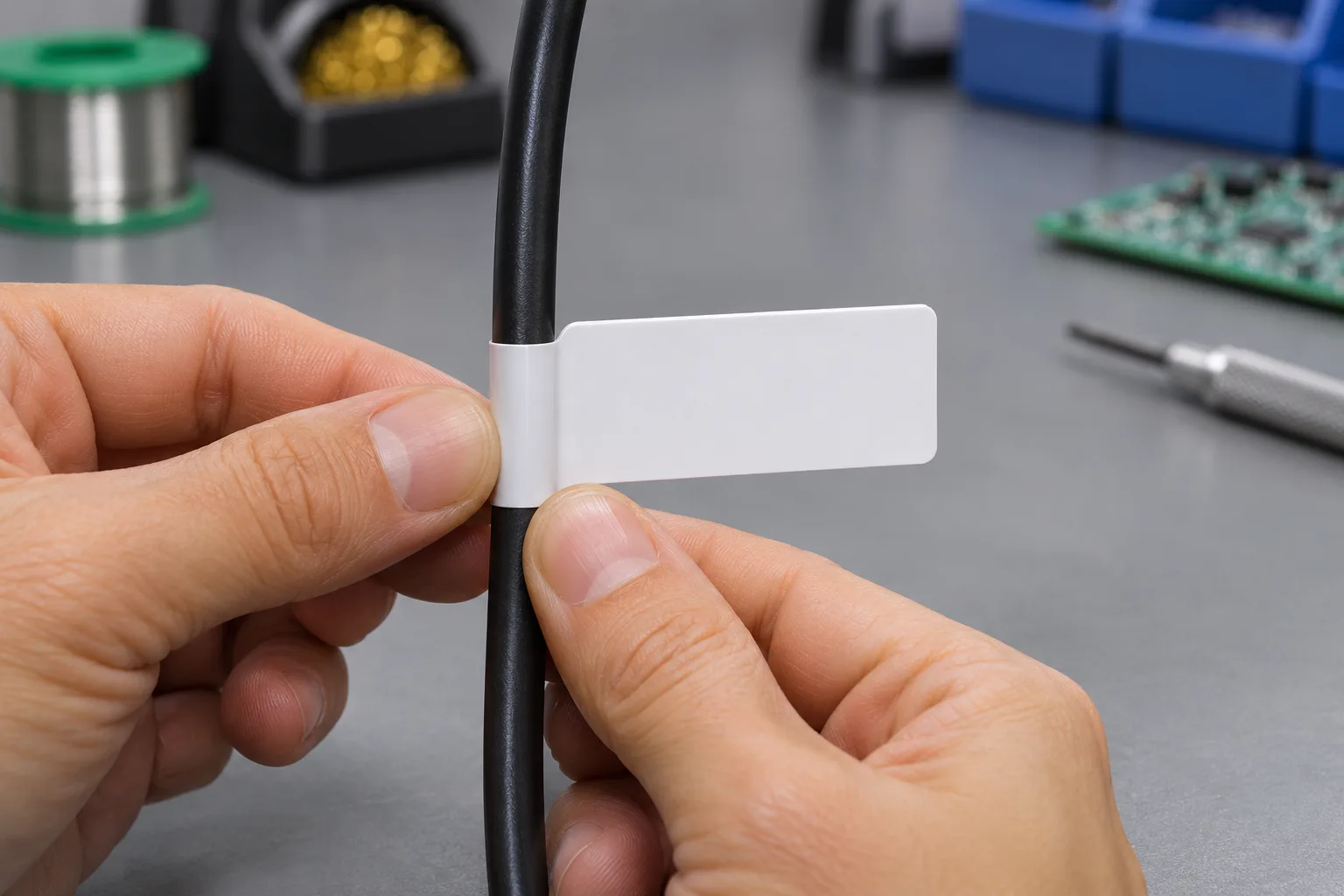
A flag label is a self-adhesive identification label that wraps around a wire or cable, bonds to itself, and leaves a flat printed panel standing off the cable like a small flag. Public wire-labeling guides define the format by this fold: a flag label folds adhesive face to adhesive face around the cable, leaving a projecting reading face. Buyers meet the term wherever cables must be told apart quickly — power and communication cabling, automotive harnesses, electronics production, and panels or cabinets where cables run close together.
The format earns its keep on crowded bundles. Guides from printer makers describe cable and wire flags as a leading solution for labeling smaller outer diameter (O/D) wires and cables, because a thin round surface gives a flat wrap little room for legible text. Colorfulttr carries the flag format in its special industrial labels range: the P-Type Flag Cable Label is a flag-shaped cable label built for A4 laser printing and fast visual identification of dense cable bundles.
How a Flag Label Attaches and Stays Readable
The flag format attaches by wrapping rather than by lying flat on a surface. The label loops around the cable, its adhesive zones meet face to face and bond to each other, and the printed part extends beyond the cable as the reading face. Because the bonded section grips the cable while the panel stands clear of it, one line of text stays visible along a bundle without rotating each cable to find it.
Suppliers describe this behavior in product terms. In Colorfulttr's special label list, an automotive cable label is specified as a winding flag type with no opening, no curling and strong sticking — the label winds around the cable, stays closed, and keeps the flag flat instead of peeling at the edges. Like other pressure-sensitive products, a finished label is a layered structure rather than a single film, so face material, adhesive and print all affect how the flag behaves after installation.
After installation, keep the system honest with a simple check — review the printed label impression periodically for degradation instead of assuming the first good print lasts forever.
How a Flag Label Differs from Wrap-Around Labels, Hang Tags and Shipping Labels
The nearest neighbor of the flag label is the wrap-around cable label, and the dividing line is the finished shape on the cable. A wrap-around label follows the cable surface and conforms to its diameter, which protects the print but asks the reader to turn the cable; a flag label leaves a projecting reading face that reads at a glance.
Two other terms are often confused with flag labels but belong to different product families. A hangtag is a garment item: on a typical ready-made garment, a sewn-in care label, a size label, a brand logo, an outer hangtag, a price label and a barcode label each carry separate information, and the hangtag hangs from the product instead of adhering to a cable. Flat applied labels — the world of shipping labels, retail tags and product labeling — sit on packaging or product surfaces; they never need to wrap a round object or project from one. When a supplier says flag label, the object is a round cable and the geometry is a standing panel.
What the Flag Shape Does Not Tell You About Printing and Compliance
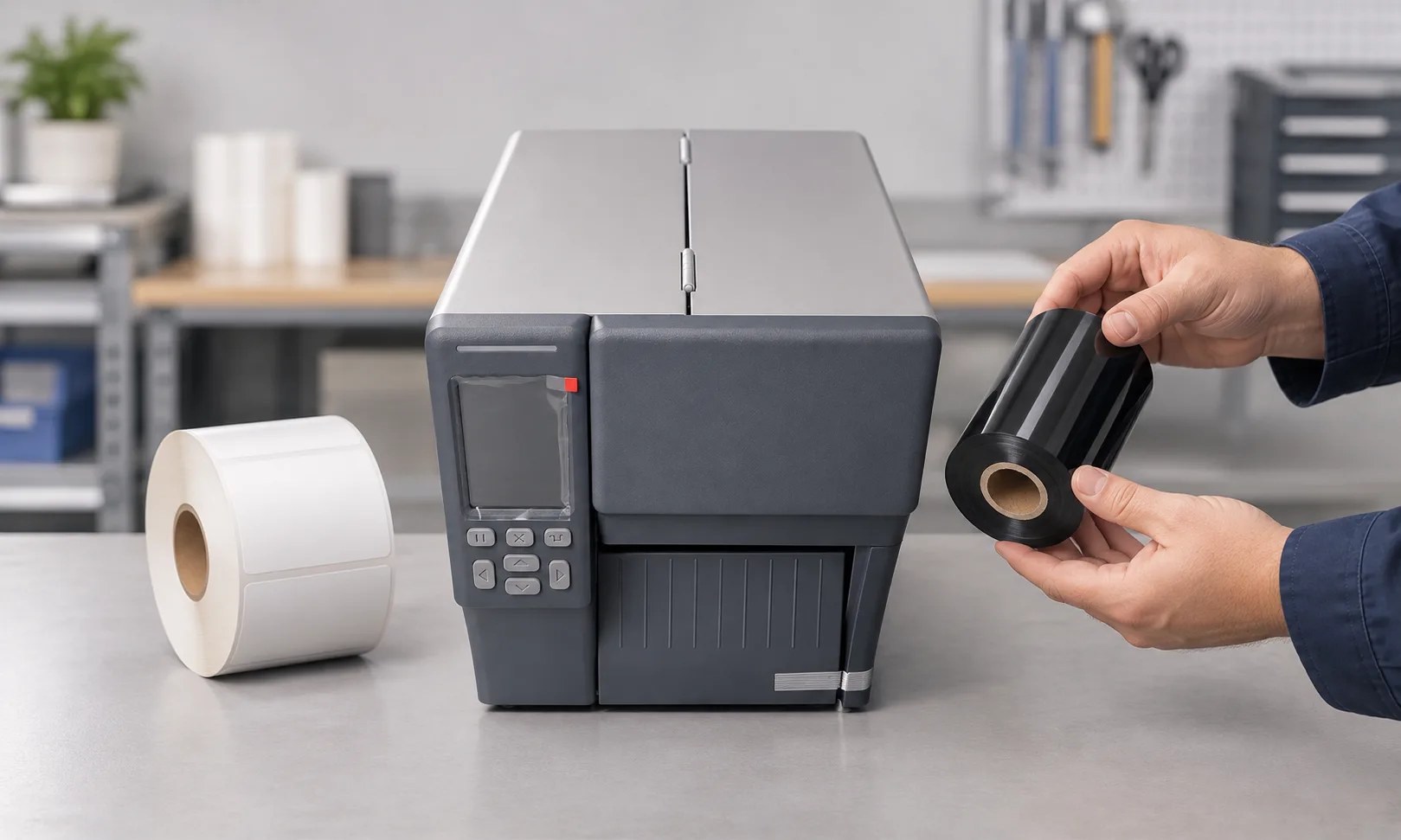
The flag shape fixes the geometry of the label, not its material, its print method or its compliance status. Laser printing is one route: the P-Type Flag Cable Label is built for A4 sheets, which suits workplaces that already run A4 laser printers. Roll-fed routes use thermal transfer: in thermal transfer printing the printer needs a ribbon and the print is durable, while direct thermal printing uses heat-sensitive paper and no ribbon. Cable marking ribbons are an established ribbon category, and each ribbon type suits specific label materials and environmental conditions — paper label stock pairs with low-cost, high-volume printing, while the right ribbon for a cable flag follows the label stock and the environment the cable will work in.
Because both routes coexist, state the print method instead of inferring it from the shape. Colorfulttr covers both sides of the choice: the company is a thermal transfer ribbon materials factory and thermal transfer identification solutions provider serving global B2B buyers since 2013, supplying ribbon, labels, hot stamping foil and identification equipment. Its light-industrial printer specifications list self-adhesive labels, hang tags and tickets among supported thermal transfer media, and for any medium not on a printer's supported list the working rule is to test before promising compatibility.
Compliance claims follow the same logic. A UL969 label is accepted because the facestock, adhesive and print system are recognized under a valid PGDQ2 file, so the evaluation starts with what a supplier can document — not with the label's shape. Ask for the recognition documents, the ribbon-and-label combination that was evaluated, and a sample run on your own printer and cables before committing a batch.
Data and Evidence
The table contrasts the flag label with the label types it is most often mistaken for, using the finished shape on the product as the dividing line.
| Label format | Shape on the product | Typical use | How it is read |
|---|---|---|---|
| Flag label | Folds adhesive face to adhesive face; projecting reading face | Small-OD wires and dense cable bundles | Read at a glance without turning the cable |
| Wrap-around cable label | Follows the cable surface | Durable marking along the cable | Turn the cable to read the full text |
| Hang tag | Hangs from the product | Garment brand, price and care information | Read as a flat card away from the product |
| Flat applied label | Sits flat on a package or product | Shipping labels, retail tags, product labeling | Read flat on the surface |
Conditions to verify before ordering: the product's intended print method (A4 laser sheet for the P-Type flag label; thermal transfer ribbon for roll-fed cable labels), the cable diameter range the label must wrap, the ribbon type matched to the label stock and environment, and the compliance documents covering the exact facestock, adhesive and print combination. Compiled from Colorfulttr product data and public wire-labeling guides by Brother and Wiromac.
Frequently Asked Questions
Can flag labels be printed with a laser printer?
Yes, when the product is designed for it. Colorfulttr's P-Type Flag Cable Label is a flag-shaped cable label built for A4 laser printing, while roll-fed cable labels run on thermal transfer printers with ribbon. Check the product's intended print method before ordering.
Are flag labels suitable for thin cables and dense bundles?
Yes. Public cable-labeling guides describe wire flags as a leading solution for smaller outer diameter wires and cables, and the P-Type flag label targets fast visual identification of dense cable bundles. For a specific cable diameter, confirm the label's wrap length with the supplier first.
Is a flag label the same as a wrap-around cable label?
No. A flag label folds adhesive face to adhesive face around the cable and leaves a projecting reading face, while a wrap-around label follows the cable surface. Choose between them by finished shape, cable diameter, label stock and readability.
Recommended products for this industry
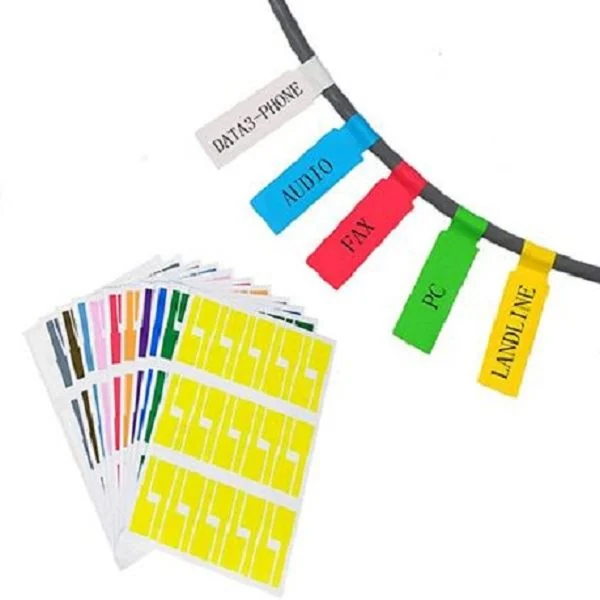
P-Type Flag Cable Label
Flag-shaped cable label for A4 laser printing and fast visual identification of dense…
View details
Acid and Alkali Resistant Label
Chemical-resistant label construction for acid baths, paint-stripping solutions, alkali…
View details
Aluminum Foil High-Temperature Label
Coated aluminum label for metal processing, heat treatment and high-temperature part…
View details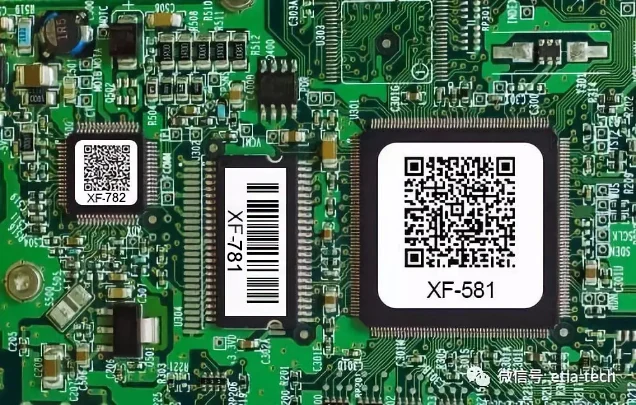
Anti-Static High-Temperature Polyimide Label
Anti-static polyimide label for ESD-sensitive electronics assembly and high-temperature…
View detailsNeed the right ribbon for your label application?
Share the label material, printer and operating environment. Our team will recommend a tested combination.
