
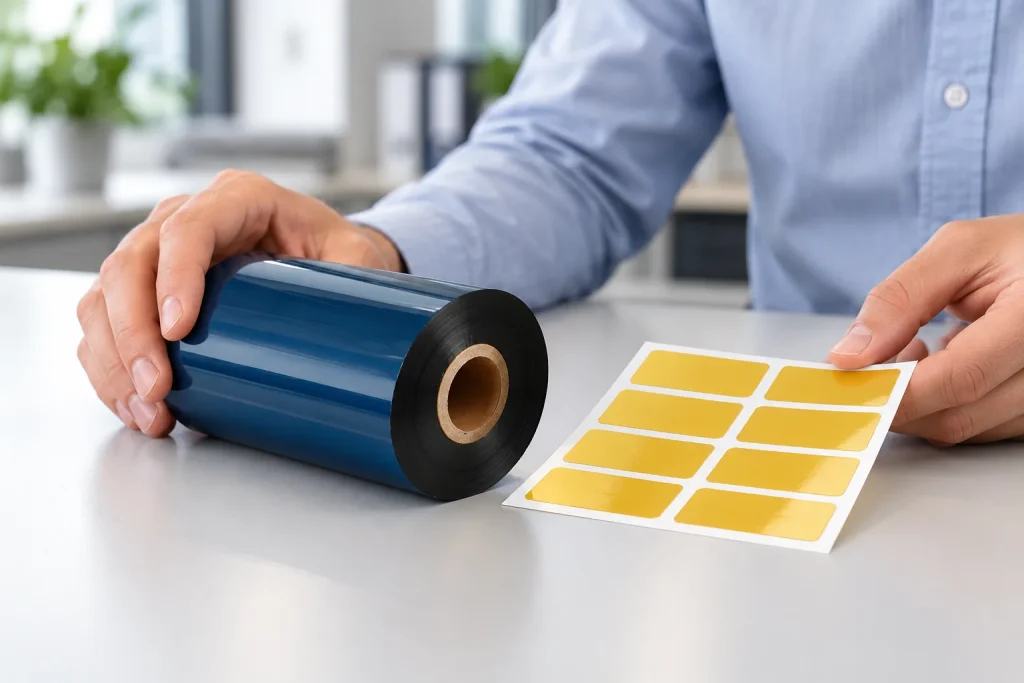
- Original TTR manufacturer since 2013
- Automated coating and slitting
- IQC / IPQC / OQC control
- ANSI barcode grade testing
- -20°C to 120°C environmental testing
- Batch-level traceability
- ANSI barcode grade
- Batch traceability
- RoHS / REACH compliance
- SGS and MSDS documents on request
For buyers interpreting “étiquette polyimide,” the useful distinction is between a film material, a film brand, and a complete printable label. Polyimide describes the substrate; Kapton identifies a DuPont brand of that film. Use the exact construction and printing documentation to establish application limits, then check representative printed samples rather than treating the name as a performance specification.
Key Takeaways
- Polyimide labels use a thin, flexible film associated with thermal stability and chemical resistance.
- Kapton is a DuPont brand of polyimide film, while polyimide is the material category.
- The film, printable topcoat, and pressure-sensitive adhesive have different roles in the label construction.
- Full resin ribbons are a relevant starting category for thermal transfer printing on polyimide films.
Understand what the polyimide name identifies
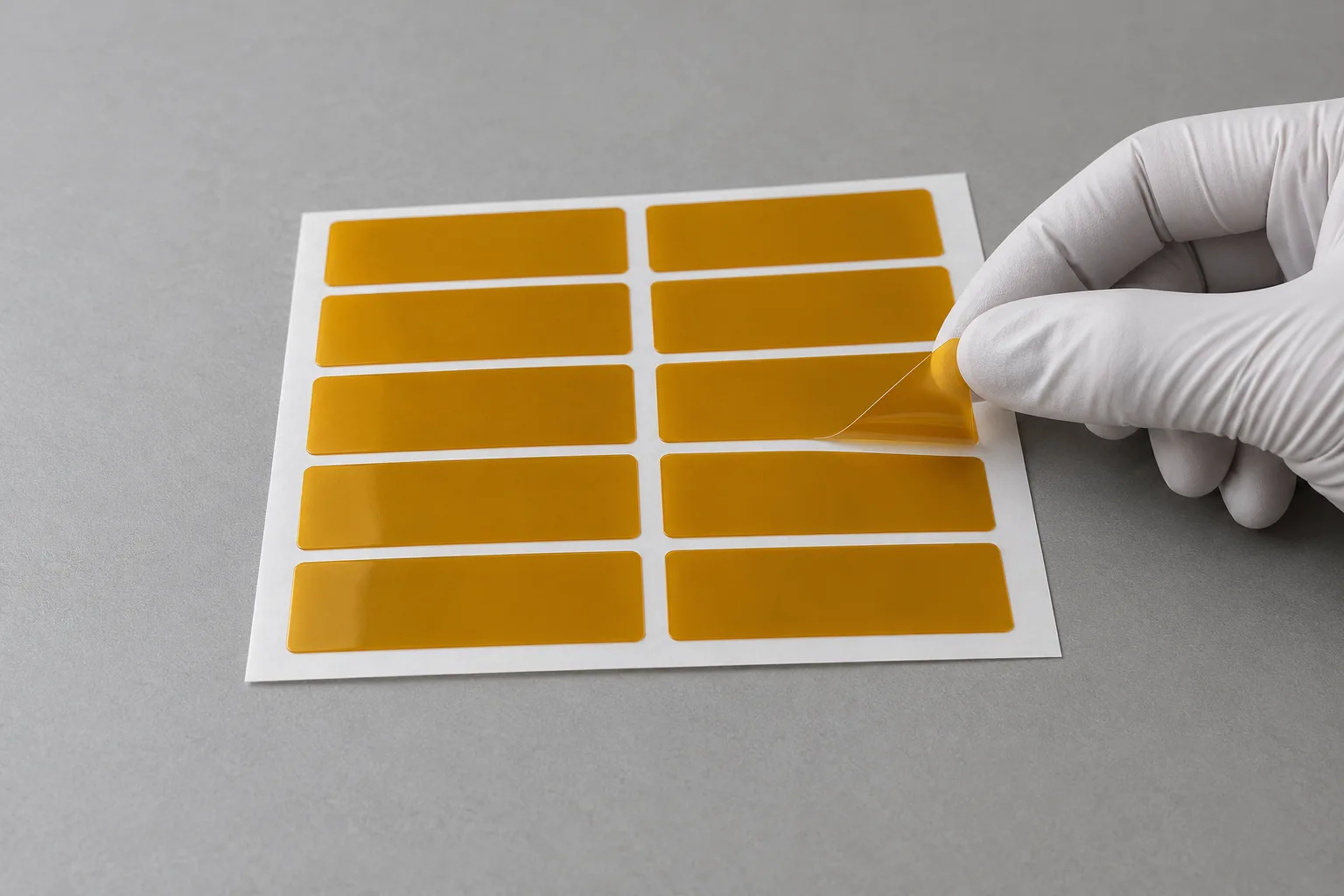
An étiquette polyimide is a label identified by its polyimide film substrate, rather than by a complete printing or application specification. The material is described as thin and flexible, with strong thermal stability and chemical resistance. Those properties explain its relevance when a buyer encounters demanding manufacturing conditions, but they do not provide a numerical rating for a particular label.
Separate three parts when reading a description. The substrate is the film that forms the label body. A printable topcoat provides the surface that accepts printing. The pressure-sensitive adhesive provides the bonding layer; the supplied construction description identifies silicone or acrylic-based adhesives as typical options for high-temperature bonding. These are roles within a construction, not a statement that every product uses the same formulation.
This distinction helps when an existing specification says only “polyimide label.” Ask whether that wording identifies a material family or an exact approved product. For an in-house printing project, record the label reference alongside its printable surface and adhesive information. Keep the ribbon reference separately so that the label stock and the printing consumable remain identifiable.
The material name therefore answers the first question—what film family is involved. It leaves the application question open: which documented construction and printed combination meets the intended use? Resolve that question before treating two similarly named label rolls as equivalent.
Distinguish Kapton branding from a material requirement
Kapton is a brand name for polyimide film manufactured by DuPont, whereas polyimide names the material category. The supplied references note that “Kapton labels” and “polyimide labels” are often used interchangeably in practice. That explains the wording a buyer may encounter; it does not establish the film identity of an individual supplier’s label.
If a drawing requires a named film brand, request explicit identification of that film in the proposed construction. If the requirement is instead for a polyimide substrate with documented application performance, keep those requirements explicit. Avoid silently changing a brand requirement into a material requirement, or adding a brand restriction where the specification does not contain one.
Likewise, distinguish a material description from a statement about the whole finished label. A film brand does not supply the missing adhesive reference or identify the printable coating. Keep these details together when reviewing a supplier change so that the comparison concerns the actual construction, rather than similar wording in two quotations.
For a practical terminology check, mark each phrase in the specification as a material name, brand name, construction detail, or application requirement. Leave any unanswered item visible. This gives the technical reviewer a short list of precise questions and prevents a familiar name from standing in for information that has not yet been supplied.
Separate heat resistance from printing compatibility
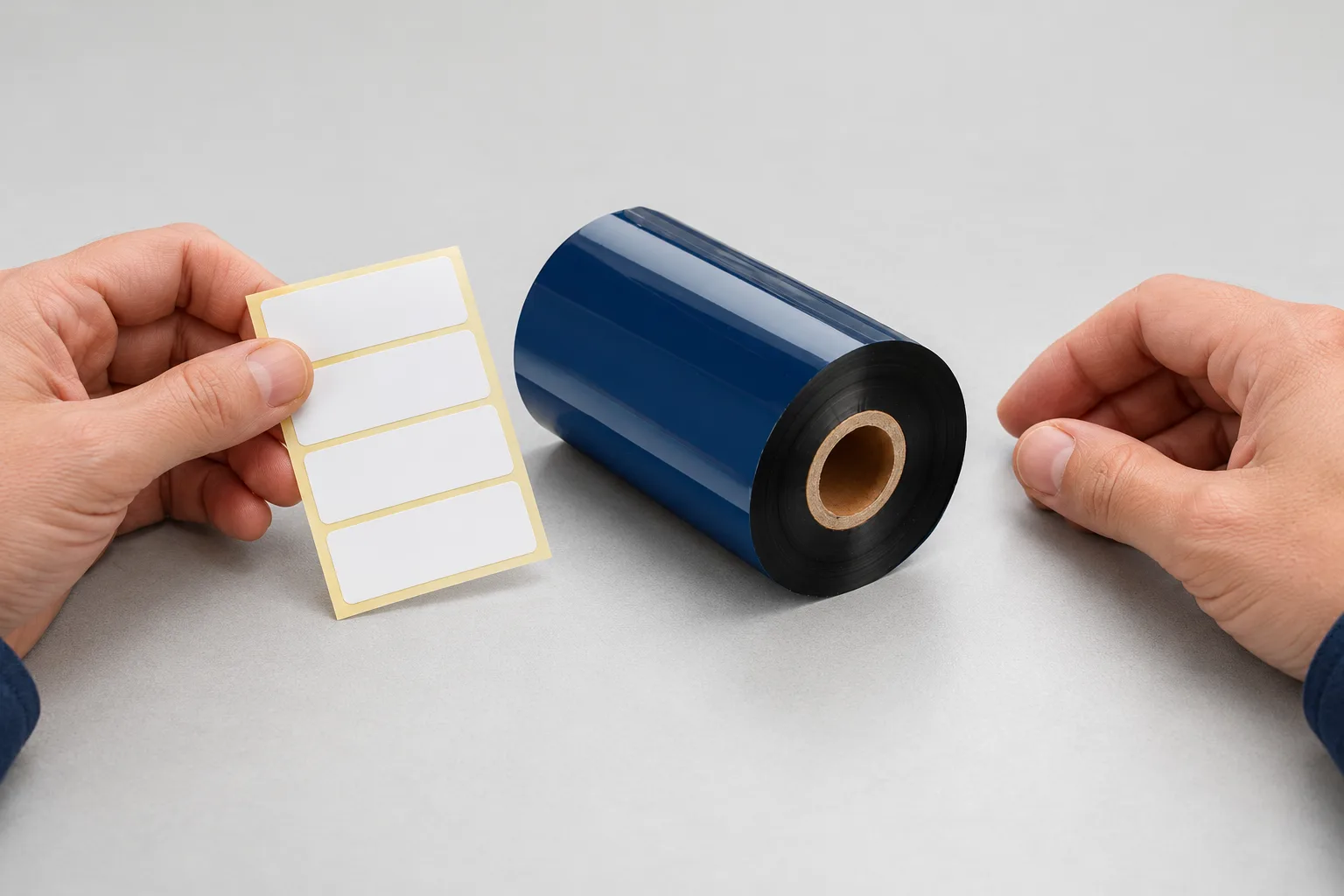
Full resin ribbons are described as suitable for demanding synthetic films including polyimide, polyester, and vinyl. That makes resin a relevant ribbon category to investigate for thermal transfer printing on polyimide label stock. It is a starting point for matching consumables, rather than an approval of every resin ribbon against every printable surface.
The printable topcoat matters because it is the layer that accepts the image. The supplied topcoat reference lists thermal transfer, laser, and inkjet printing, but it does not identify which method an unspecified commercial label supports. Ask for the printing method supported by the exact stock before choosing consumables. For thermal transfer printing, then review the proposed ribbon with that stock and the intended printer.
Keep two heat questions separate during that review. One concerns the label’s exposure during use or processing. The other concerns the conditions needed to print the image. The resin-ribbon reference describes higher heat and pressure requirements during printing and the need for compatible printheads; it supplies no universal printer setting. Do not convert a label service-temperature statement into a printer darkness or speed setting.
When changing suppliers, retain a record of the label construction, ribbon, printer, and intended application conditions. Ask the supplier to identify the proposed combination clearly. This keeps the discussion focused on producing and retaining the required information on your own equipment, rather than selecting a material solely because it carries a high-temperature description.
Data and Evidence
The supplied polyimide references establish material identity and general construction roles, but do not provide an operating-temperature rating for an identified label reference. The table separates the supported distinctions from the information to request for an application review.
| Item | What the evidence establishes | What to verify for your application |
|---|---|---|
| Polyimide film | A thin, flexible substrate with thermal stability and chemical resistance. | The exact stock reference and its documented exposure limits. |
| Kapton | A DuPont brand of polyimide film. | Film identification when the specification requires that brand. |
| Printable topcoat | The layer that accepts printing. | The supported print method for the proposed stock. |
| Pressure-sensitive adhesive | Silicone or acrylic-based types are described for high-temperature bonding. | The adhesive used and the intended application surface. |
| Full resin ribbon | A relevant category for demanding films including polyimide. | The proposed ribbon, label surface, and printer combination. |
Source descriptions used here are Polyimide labels, Kapton, Printable topcoat, Pressure-sensitive adhesive, and Wax ribbons. These support the distinctions above; they are not a product-specific test report or a COLORFULTTR application approval.
For validation, use samples with the same material stack and the same application surface as the intended job. The adhesion reference states that temperature cycling, chemical contact, and surface energy change adhesion. Define the visible evidence and the response to an unacceptable result before running the trial. Review print readability and label attachment as separate observations, and record the conditions used without inventing a universal pass threshold.
Your next step is to obtain the exact label construction and proposed ribbon references, put the intended exposure conditions beside them, and agree a representative printing and application trial. If a rating or construction detail remains unspecified, keep that item open rather than filling it with a value inferred from “polyimide” or “Kapton.”
Frequently Asked Questions
Does an étiquette polyimide have to use DuPont Kapton film?
Polyimide is the material name; Kapton is a DuPont brand of polyimide film. If the brand matters to your specification, request explicit film identification rather than relying on an interchangeable label description.
Does the name polyimide label specify a maximum operating temperature?
No numerical operating limit follows from the material name alone. Request the temperature and exposure conditions for the exact label construction and printed system you intend to use.
Can I use a resin ribbon to print polyimide labels in-house?
Full resin ribbons are a relevant category for polyimide films. Confirm the printable coating and the printer’s requirements, then evaluate the actual label and ribbon combination before approving it.
Related Products & Guides
Recommended products for this industry

CL-581 Polyimide Label Material for PCB Process Tracking
A white gloss polyimide (PI) label material with a listed thickness of 1mil and an acrylic adhesive, intended for printed circuit board (PCB) and sensitive-component process control and product traceability in electronics manufacturing. The product description includes wave soldering and reflow soldering applications. Selection requires checking the actual heat exposure, cleaning conditions and printing process; the listed temperature range alone does not establish suitability for a particular production cycle.
View details
Anti-Static High-Temperature Polyimide Label
Anti-static polyimide label for ESD-sensitive electronics assembly and high-temperature…
View details
Antistatic Polyimide Labels for PCB Process Tracking — CL-782
CL-782 is a white gloss polyimide (PI) label material for printed circuit board (PCB) and sensitive-component process control and product traceability in electronics manufacturing. It is described for wave soldering and reflow soldering applications, with a listed temperature range of -40-300℃, an antistatic value of ≥10^(8)Ω and ≤10^(11)Ω, and a peel voltage below 100 volts. Selection should account for the actual thermal cycle and chemical exposure; the supplied information does not specify exposure durations or chemical test conditions.
View details
Black High-Temperature Polyimide Label
Matte-black polyimide label for high-contrast codes on dark electronics and industrial…
View detailsNeed the right ribbon for your label application?
Share the label material, printer and operating environment. Our team will recommend a tested combination.
