
What Is a Polyimide Label (Polyimid-Etikett)? Definition, Differences, and What the Term Does Not Tell You
Request a solution
- Original TTR manufacturer since 2013
- Automated coating and slitting
- IQC / IPQC / OQC control
- ANSI barcode grade testing
- -20°C to 120°C environmental testing
- Batch-level traceability
- ANSI barcode grade
- Batch traceability
- RoHS / REACH compliance
- SGS and MSDS documents on request
This guide answers one question for buyers and print-shop leads who specify thermal transfer consumables: what a polyimide label, or Polyimid-Etikett, actually is. It is a label built on polyimide (PI) film facestock, chosen for permanent identification on synthetic materials such as PCB and component marking. The term names the facestock polymer only, so it carries no temperature rating, adhesive type or ribbon grade. Read those from the label and ribbon datasheets, then qualify one printed sample on your own printer.
Key Takeaways
- A Polyimid-Etikett is defined by its facestock: polyimide film plus an adhesive and a release liner, converted into a printable label.
- The word polyimide describes the label material only and sets no temperature rating, adhesive chemistry or certification.
- For printing on synthetic facestocks, the COLORFULTTR catalog assigns resin ribbons to electronics PCB and component marking and to permanent identification on synthetic materials.
- A polyimide label is not the same product as polyimide film or tape, which arrives without a printable topcoat, adhesive and liner.
- Match ribbon width, core and ink-side orientation to your printer, then confirm the result with your own rub, solvent and heat checks.
What a Polyimid-Etikett Is in Label Construction Terms
A Polyimid-Etikett is a label whose facestock is polyimide (PI) film, converted with a pressure-sensitive adhesive and a release liner so it can be printed, die-cut and applied as a finished label. Etikett is simply the German word for label, so the English polyimide label and the French étiquette polyimide term explained point at the same construction. What changes between suppliers is the film grade, the topcoat and the adhesive, not the meaning of the term.
Three layers decide how the label behaves. The facestock carries the printed image and absorbs the heat, solvents and abrasion of the end use. The topcoat is the surface your ribbon prints on, and it is the layer that decides whether a ribbon anchors at all. The adhesive decides whether the label stays on the substrate once the temperature rises.
Polyimide facestock is specified where a general-purpose film facestock is not rated for the conditions, typically sustained heat, aggressive solvents or long outdoor exposure. Buyers meet the term most often in electronics, where the COLORFULTTR catalog assigns resin ribbons to electronics PCB and component marking. Treat the term as a starting point for a specification, never as the specification itself: the temperature range, film thickness and adhesive type come from the label datasheet. If you want the wider category first, start with what industrial labels are and how they are classified.
How a Polyimide Label Differs From PET, PVC and Polyimide Film
PET, PVC and polyimide labels differ in the facestock polymer, and that polymer is what you are really buying. PET covers a wide band of durable label work, PP and PVC cover cost-sensitive and conformable uses, and polyimide sits at the demanding end where heat and chemicals drive the choice. Compare the two datasheets side by side instead of swapping a polyimide label into a PET application on the strength of the name.
The facestock does not fix the adhesive. One polyimide film grade can be paired with several adhesives, and in practice the adhesive sets the working temperature ceiling of the finished label more often than the film does. Two Polyimid-Etiketten with the same film can therefore behave very differently on the same part.
Polyimide film and polyimide tape are the base material. A polyimide label adds a printable topcoat, an adhesive and a liner, and it comes in rolls sized for label printers. Film or tape on its own is not a printable label construction, and a quotation for film is not interchangeable with a quotation for Polyimid-Etiketten, even though both name the same polymer.
Which Ribbon Prints a Polyimide Label, and How to Verify It on Your Line
A polyimide facestock is printed with a resin ribbon, and the pairing still has to be qualified on your own printer and process. Before ordering, collect three things: the label datasheet with facestock, topcoat, adhesive and service temperature; your printer model with its required ribbon width, core and ink-side orientation; and the conditions the printed label must survive.
- Read the facestock and topcoat from the label datasheet. Ribbon selection follows the surface you print on, not the name of the label.
- Choose the ribbon grade by end use. COLORFULTTR resin ribbons are made with 100% resin-based ink and carry the highest level of durability in the catalog, and they are the grade assigned to permanent identification on synthetic materials and to electronics PCB and component marking.
- Match the ribbon to the printer mechanically: ribbon width, core size and ink-side orientation before you compare prices between suppliers.
- Print a test roll at your normal speed and energy setting, then run the checks your application needs, such as a rub test, a solvent wipe and heat exposure at the temperature the part actually reaches.
The combination passes when the image survives the rub and solvent wipe without smearing, small text and barcodes still scan, and the label stays flat after heat exposure. If the image rubs off, the ribbon grade or the energy setting does not suit that topcoat; confirm a resin grade and retest at a higher energy or lower speed. If you see voids or missing edges, check ink-side orientation, printhead energy distribution and media flatness. If the label lifts or curls, the adhesive is the constraint, so ask the label supplier for an adhesive matched to the substrate and temperature rather than changing the ribbon. Treat catalog values as category guidance: they are not machine settings for your printer and not an acceptance criterion for an incoming batch. For the wider process, see how industrial labels are printed with thermal transfer.
Next step: send your printer model, the label datasheet and the conditions the label must survive, and request the matching resin ribbon TDS plus one sample roll to run through your own checks.
What the Term Polyimid-Etikett Does Not Tell You
Buying by name is the main risk here, because the term carries none of the numbers a specification needs. Ask for the TDS of both the label and the ribbon, compare them against your own conditions, and qualify one roll before committing to a batch.
- No temperature rating: continuous and peak service temperatures come from the whole construction, mainly the adhesive.
- No adhesive chemistry, film thickness or liner specification.
- No compliance status: the word polyimide implies no UL, ANSI or food-contact approval, which are separate documents.
- No printer or ribbon compatibility, and no guaranteed print durability.
- No performance data for your line: catalog application lists say where a category is used, not how it performed in your process.
Data and Evidence
The COLORFULTTR product catalog covers resin, TTO and color ribbons. The two categories below are the ones that matter when you decide how a polyimide label gets printed; every cell is a catalog statement, not a measured result on your line.
| Ribbon category | What the catalog states | Catalog applications |
|---|---|---|
| Resin ribbons | Made with 100% resin-based ink, offering the highest level of durability; resist scratching, chemicals, high temperatures and outdoor exposure; maximum scratch and abrasion resistance, excellent chemical and solvent resistance, extreme temperature performance, superior adhesion to synthetic materials, long-term outdoor UV resistance | Automotive VIN and parts labels; electronics PCB and component marking; outdoor asset tags; chemical container labeling; permanent product identification |
| TTO near-edge ribbons | Formulated for near-edge print head technology used in flexible packaging date coding; high-speed coding up to 1000mm/s; food contact compliant options; excellent print quality on films | Food and beverage date coding; pharmaceutical blister packaging; flexible film coding; batch and lot number printing; high-speed production lines |
Source: COLORFULTTR resin, TTO and color ribbon product catalog. One caution from the same catalog: performance values such as ips/OD listed under the retired marketing code series were never TDS-verified and must not be mapped onto the current digital code series. Quote and compare digital-series codes, and ask for the matching TDS before you accept a substitute.
Frequently Asked Questions
What temperature can a polyimide label withstand?
No number comes with the term. The limit is set by the whole label construction, above all the adhesive, and only the label datasheet gives it. On the printing side, COLORFULTTR resin ribbons are listed for extreme temperature performance, but the label limit and the ribbon limit are two separate specifications.
Do polyimide labels need a resin ribbon, or will a cheaper grade print them?
Start with resin. Resin ribbons are made with 100% resin-based ink and offer the highest level of durability in the catalog, and they are the grade assigned to permanent identification on synthetic materials and to electronics PCB and component marking. If your process is milder, confirm any cheaper grade against the label topcoat with a printed sample before you switch.
Can I print polyimide labels on a TTO near-edge printer?
TTO ribbons are formulated for near-edge print heads used in flexible packaging date coding, such as food and beverage coding and pharmaceutical blister packaging at up to 1000mm/s, not for durable label facestocks. Synthetic label facestocks are the application the catalog reserves for resin ribbons. If your line only has near-edge heads, have the label and ribbon combination tested before you commit.
What should I check before switching polyimide label or ribbon suppliers?
Match the facestock and topcoat, the ribbon width, core and ink-side orientation, and the adhesive to your substrate and temperature. Then print one sample roll and repeat your rub, solvent and heat checks. Do not carry catalog values such as ips/OD from retired marketing codes over to the current digital series without a TDS.
Recommended products for this industry
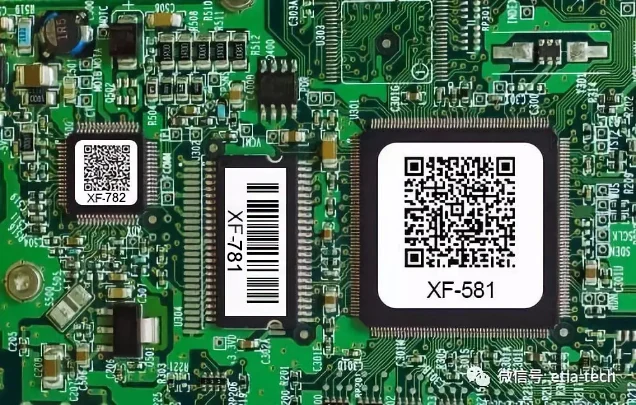
Anti-Static High-Temperature Polyimide Label
Anti-static polyimide label for ESD-sensitive electronics assembly and high-temperature…
View details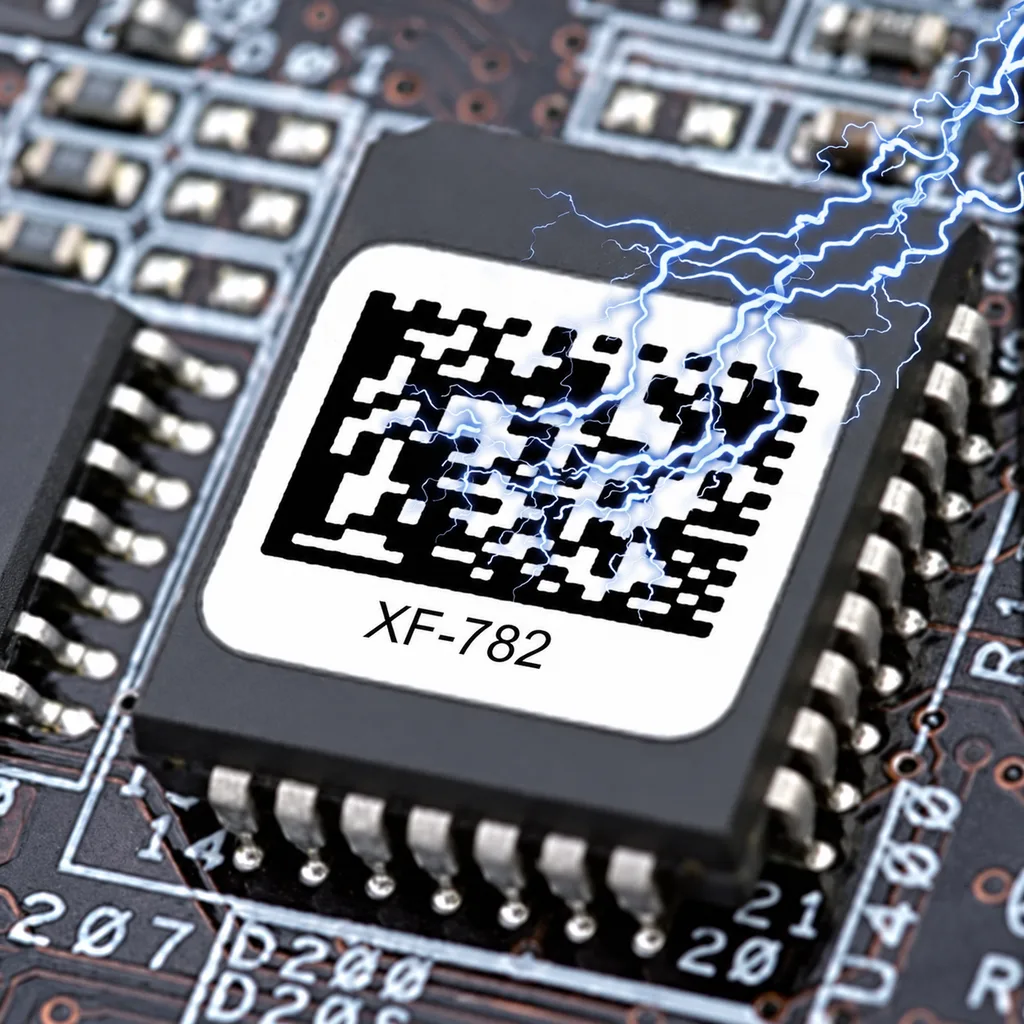
Antistatic Polyimide Labels for PCB Process Tracking — CL-782
CL-782 is a white gloss polyimide (PI) label material for printed circuit board (PCB) and sensitive-component process control and product traceability in electronics manufacturing. It is described for wave soldering and reflow soldering applications, with a listed temperature range of -40-300℃, an antistatic value of ≥10^(8)Ω and ≤10^(11)Ω, and a peel voltage below 100 volts. Selection should account for the actual thermal cycle and chemical exposure; the supplied information does not specify exposure durations or chemical test conditions.
View details
Black High-Temperature Polyimide Label
Matte-black polyimide label for high-contrast codes on dark electronics and industrial…
View details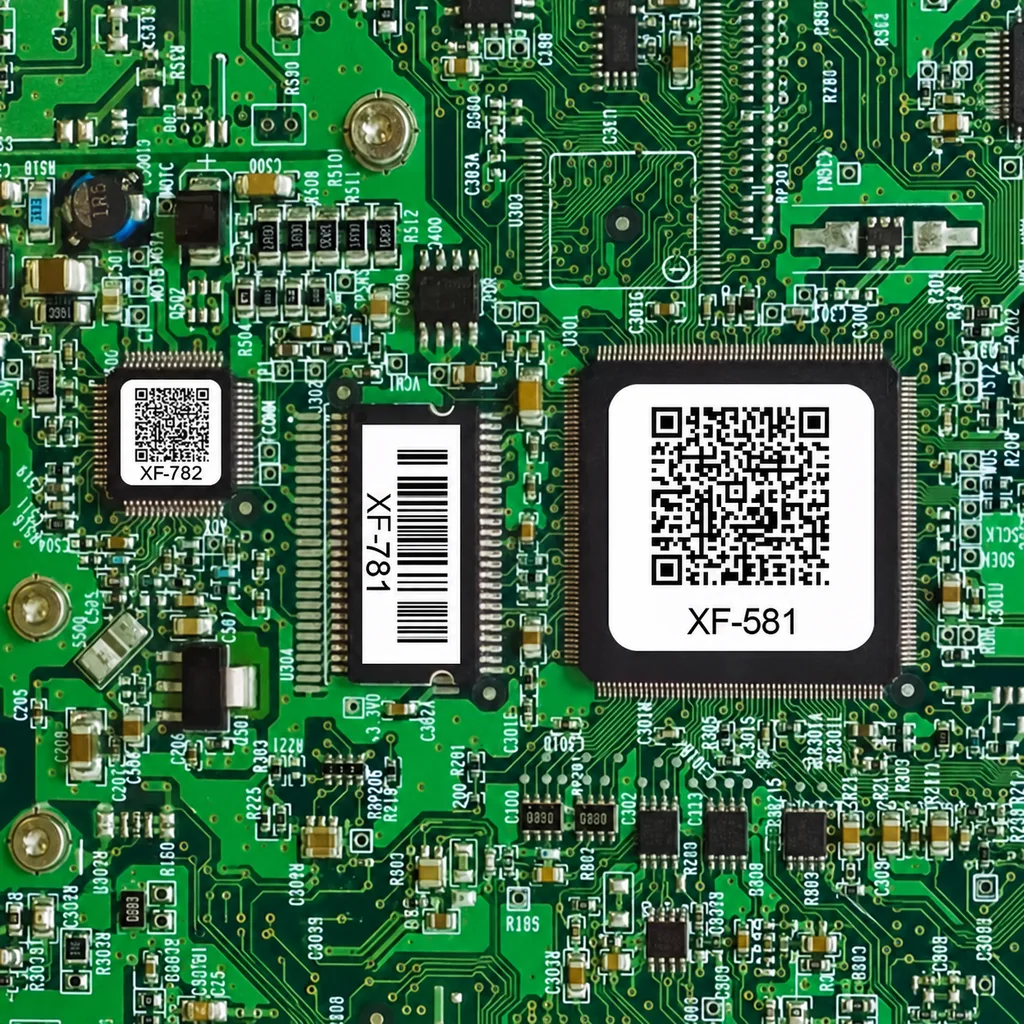
CL-581 Polyimide Label Material for PCB Process Tracking
A white gloss polyimide (PI) label material with a listed thickness of 1mil and an acrylic adhesive, intended for printed circuit board (PCB) and sensitive-component process control and product traceability in electronics manufacturing. The product description includes wave soldering and reflow soldering applications. Selection requires checking the actual heat exposure, cleaning conditions and printing process; the listed temperature range alone does not establish suitability for a particular production cycle.
View detailsNeed the right ribbon for your label application?
Share the label material, printer and operating environment. Our team will recommend a tested combination.
