
What Is a Barcode Printer Ribbon? How It Works, the Three Formulations, and What a Ribbon Listing Cannot Tell You
Request a solution
- Original TTR manufacturer since 2013
- Automated coating and slitting
- IQC / IPQC / OQC control
- ANSI barcode grade testing
- -20°C to 120°C environmental testing
- Batch-level traceability
- ANSI barcode grade
- Batch traceability
- RoHS / REACH compliance
- SGS and MSDS documents on request
Key Takeaways
- A barcode printer ribbon is the ink carrier of thermal transfer printing: the print head melts the ribbon's ink coating onto the label to form the code.
- Wax is the most economical formulation and delivers excellent print density on paper labels for general purpose applications.
- Wax-resin hybrids add moderate scratch and moisture resistance and perform well on synthetic materials.
- Resin carries the highest durability — scratch, chemical, heat and outdoor resistance — for permanent identification on synthetic materials.
- TTO and hot stamp coding ribbons are adjacent families built for near-edge overprinters or contact coders rather than flat head barcode printers; color ribbons stay within standard thermal transfer printing for single-color work.
What a Barcode Printer Ribbon Is and How It Prints
A barcode printer ribbon is the consumable ink carrier that a thermal transfer printer heats so its ink melts onto a label and forms barcodes, text and other markings. The print head supplies the heat; the ribbon supplies the ink. Where the head heats the ribbon, the coating melts and transfers to the label at that point. This heat-melt-transfer step is what the term "thermal transfer" refers to, and it is why the ribbon, not the printer, determines the ink chemistry of the printed code.
The packaging side of the same technology describes the transfer step plainly: a Thermal Transfer Overprinter (TTO) prints onto flexible packaging by melting a coating of ribbon so that it stays glued to the material once applied. Flat head barcode label printers run the same heat-melt-bond sequence on label stocks instead of loose packaging film, which is why the two machines share one consumable category but not one consumable.
The word "ribbon" therefore names a family of products, not a single item. Within barcode printing, ribbons differ by ink formulation — wax, wax-resin hybrid or resin — and that formulation sets how durable the print is and which label stocks the ink bonds to. Adjacent ribbons differ by head geometry or by purpose: TTO ribbons for near-edge coders, color ribbons for single-color branding work within standard thermal transfer printing, and hot stamp coding ribbons for contact coders.
How Wax, Wax-Resin and Resin Ribbons Differ
Thermal transfer ribbons for barcode printing come in three core ink formulations — wax, wax-resin hybrid and resin — and each has its own durability level and label-material range. Choosing among them is the first real decision a barcode ribbon buyer makes, and it is a materials decision more than a printer decision.
Wax ribbons are the most economical thermal transfer option, featuring high sensitivity and excellent print density on paper labels. That combination makes them the default for general purpose applications where extreme durability is not required; typical uses are logistics and shipping labels and warehouse inventory labels. Wax's strengths are described on paper label surfaces, so when durability demands rise, buyers move up to the other two formulations rather than pushing wax beyond its role.
Wax-resin hybrid ribbons combine the best properties of wax and resin, offering balanced print quality and durability. They are perfect for applications requiring moderate scratch and moisture resistance, show good performance on synthetic materials, and remain versatile across a wide range of label stocks. Typical jobs include pharmaceutical product labels, apparel hang tags and manufacturing WIP labels — work where plain wax is too fragile but full resin is more than the application needs.
Resin ribbons are made with 100% resin-based ink, offering the highest level of durability in the family. They resist scratching, chemicals, high temperatures and outdoor exposure, which positions them for permanent identification on synthetic materials, where they bring superior adhesion. Automotive VIN and parts labels and electronics PCB and component marking are typical applications. Note the condition attached to that durability: it is stated for synthetic label stocks, not for everyday paper. For a deeper comparison of the two ends of this range, see the wax ribbon vs resin ribbon selection guide.
How Barcode Printer Ribbons Differ from Adjacent Ribbon Families
Barcode printer ribbons sit inside a wider thermal transfer ribbon family whose members target different print head and machine types. Three neighbors cause most of the confusion in sourcing conversations.
TTO ribbons are the closest neighbor. TTO stands for Thermal Transfer Overprinter — a coder that prints dates, batch numbers and other codes onto flexible packaging films at production speed. TTO ribbons are specially formulated for near-edge print head technology used in flexible packaging date coding, and the geometry difference is physical, not marketing: the distance between where an image is printed and where the ribbon and receiver separate from each other is significantly shorter than on flathead printers. A ribbon formulated for one head geometry is not automatically suited to the other, so confirm your printer's head type before comparing prices. The details are covered in what a TTO ribbon is and how near edge overprinting works.
Color ribbons are the second neighbor, and they stay inside standard thermal transfer printing. They provide single-color thermal transfer printing in a wide range of colors for brand identification, color coding and warning labels, and they are available in wax, hybrid and resin bases to match durability requirements. Each ribbon prints one color, so a two-color label means two ribbons.
Hot stamp coding ribbons sound similar but belong to a different machine class. They are made for contact coders and roller coders on packaging lines, printing expiry dates and batch numbers on packaging surfaces. If your machine is a barcode label printer, its consumable comes from the flat head families described above, not from the hot stamp coding range.
What a Ribbon Listing Cannot Tell You
A formulation name on a ribbon listing cannot tell you whether that ribbon will print well on your specific printer and label combination. Five gaps show up repeatedly in B2B sourcing:
- Head type gates compatibility. Flat head label printers and near-edge TTO coders use differently formulated ribbons, and the two geometries separate ribbon from receiver at different points in the print path. Match the ribbon to the head first and the price second.
- Durability assumes a matched substrate. Resin's permanent-identification positioning is stated for synthetic materials; hybrid's moderate resistance is a middle band across many label stocks; wax's density claims are about paper labels. The label material is half of every durability statement.
- Catalog values are starting points, not settings. Recommended ranges describe a formulation family, not your individual printer. Darkness and speed still need tuning on the machine that will actually run the job.
- Adjacent ribbons are not drop-ins. A TTO ribbon, a hot stamp coding ribbon and a flat head barcode ribbon share the word "ribbon" but not the print head they feed.
- One ribbon prints one color. Multi-color label designs mean selecting color ribbons per color, in the base your durability requires.
None of this should slow sourcing down; it is the checklist that makes sourcing accurate. Confirm the head type, match the formulation to the label material, then test before committing to volume.
Data and Evidence
The formulation facts used in this guide come from the COLORFULTTR wax and wax-resin product catalog and the COLORFULTTR resin, TTO and color ribbon product catalog; the near-edge geometry fact comes from a verified industry fact record. The table consolidates the comparison.
| Formulation | Ink base | Durability positioning | Label materials | Typical applications |
|---|---|---|---|---|
| Wax | Wax | Most economical; general purpose where extreme durability is not required | Paper labels | Logistics and shipping labels; warehouse inventory labels |
| Wax-resin hybrid | Wax and resin blend | Moderate scratch and moisture resistance | Wide range of label stocks, good performance on synthetic materials | Pharmaceutical product labels; apparel hang tags; manufacturing WIP labels |
| Resin | 100% resin-based ink | Highest durability; resists scratching, chemicals, high temperatures, outdoor exposure | Synthetic materials | Automotive VIN and parts labels; electronics PCB and component marking |
To turn this table into a purchase decision, verify in three steps:
- Confirm the printer's head type — flat head label printer or near-edge/TTO coder — before comparing any ribbon.
- Match the formulation to the label material: wax for paper shipping and inventory work, hybrid for mixed stocks needing moderate resistance, resin for permanent identification on synthetics.
- Test print on your own printer with your own label batch, checking scan reliability and smudge behavior, before committing to a volume order.
Frequently Asked Questions
What is the difference between a barcode printer ribbon and a TTO ribbon?
A barcode printer ribbon is built for flat head label printers printing barcodes on label stock. TTO ribbons are specially formulated for the near-edge print heads of thermal transfer overprinters coding flexible packaging films, and the ribbon-receiver separation distance is significantly shorter on near-edge machines than on flathead printers — so confirm your head type before ordering.
Which ribbon formulation should I use for shipping and warehouse labels?
Wax. It is the most economical thermal transfer option and delivers excellent print density on paper labels, which matches general purpose applications where extreme durability is not required — the exact profile of logistics, shipping and inventory labels.
Can one ribbon handle both paper labels and synthetic materials?
Often, yes: wax-resin hybrids are versatile across a wide range of label stocks and show good performance on synthetic materials while keeping moderate scratch and moisture resistance. For permanent identification on synthetic materials, resin is the formulation positioned for that job.
Can I print barcodes in a color other than black?
Yes, with color ribbons. They provide single-color thermal transfer printing in a wide range of colors for brand identification, color coding and warning labels, and they are available in wax, hybrid and resin bases to match your durability requirements. Each ribbon prints one color.
Recommended products for this industry
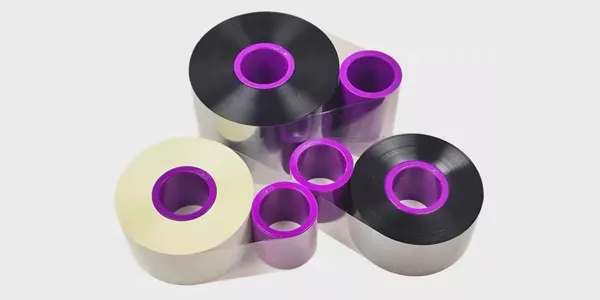
TTO Barcode Printer Thermal Transfer Colour Ribbon High-Speed Customisation
This TTO thermal transfer ribbon is suitable for a variety of label materials across…
View details
3-inch mobile printer
These lightweight and cost-effective 3-inch mobile printers enable accurate receipt and…
View details
4-inch lightweight industrial printer
Industrial printers are engineered for lightweight construction, straightforward…
View details
AL05-A Temporary Number Plate Printer
It can enhance industry productivity, optimise supply chain management, reduce…
View detailsNeed the right ribbon for your label application?
Share the label material, printer and operating environment. Our team will recommend a tested combination.
