
Wax Ribbon Selection Guide: When to Choose Wax, Wax-Resin, or Resin Ribbons
Request a solution
- Original TTR manufacturer since 2013
- Automated coating and slitting
- IQC / IPQC / OQC control
- ANSI barcode grade testing
- -20°C to 120°C environmental testing
- Batch-level traceability
- ANSI barcode grade
- Batch traceability
- RoHS / REACH compliance
- SGS and MSDS documents on request
Key Takeaways
- Wax ribbons are the most economical ribbon type and are designed for high-speed printing on paper labels.
- Paper labels are the most common wax-ribbon application, and porous or coated paper gives the best ink anchoring.
- On glossy plastic, a wax ribbon almost certainly smudges because the ink cannot adhere to the surface.
- Wax-resin adds durability for coated paper and selected synthetics; full resin handles polyester, polyimide, and vinyl films.
- TTO printing on flexible packaging requires wax-resin or resin ribbons — wax-only ink layers are not suitable.
Choose a Wax Ribbon for Paper Labels and Cost-Driven, High-Speed Runs
A wax ribbon is the most economical of the three thermal transfer ribbon types, and it is designed for high-speed printing on paper labels. The construction is shared across the category: a polyester film coated on the label side with ink, which the printhead melts onto the label. What changes is the ink — full wax, wax-resin, or pure resin — and a full wax coating typically needs the lowest melting temperature of the three.
That low melting point is what makes wax fast. Wax ribbons print at low temperature, and supplier data records label printing at up to 254 mm/s, which suits long runs of everyday labels.
Use wax for general-purpose work: product labels, logistics labels, general carton labeling, retail price labeling, and tracking labels, all on paper stock. Paper labels are the most common application for wax ribbons, and the ink anchors best on porous or coated paper. If your labels live indoors and cost per roll matters more than years of abrasion and weather resistance, start here.
Know the Limits of Wax Before You Commit
Wax ribbons trade durability for cost: their prints may not resist smudging and scratching as well as the other ribbon types, and glossy plastic is effectively off-limits. The soft wax that melts easily also stays vulnerable after printing, so labels that get rubbed in transit or handled daily show wear sooner. Wax remains a cost-effective choice for standard indoor labeling with good print quality, but its durability has a clear ceiling.
Substrate is the hard wall. On a glossy plastic substrate, the wax ink cannot properly adhere and smudging is almost certain, and the same struggle appears on synthetics such as polyester or polypropylene. Keep wax on porous and coated paper. When the label must survive moisture, rubbing, or a synthetic surface, treat that as the signal to move up a tier rather than a printer setting to tweak.
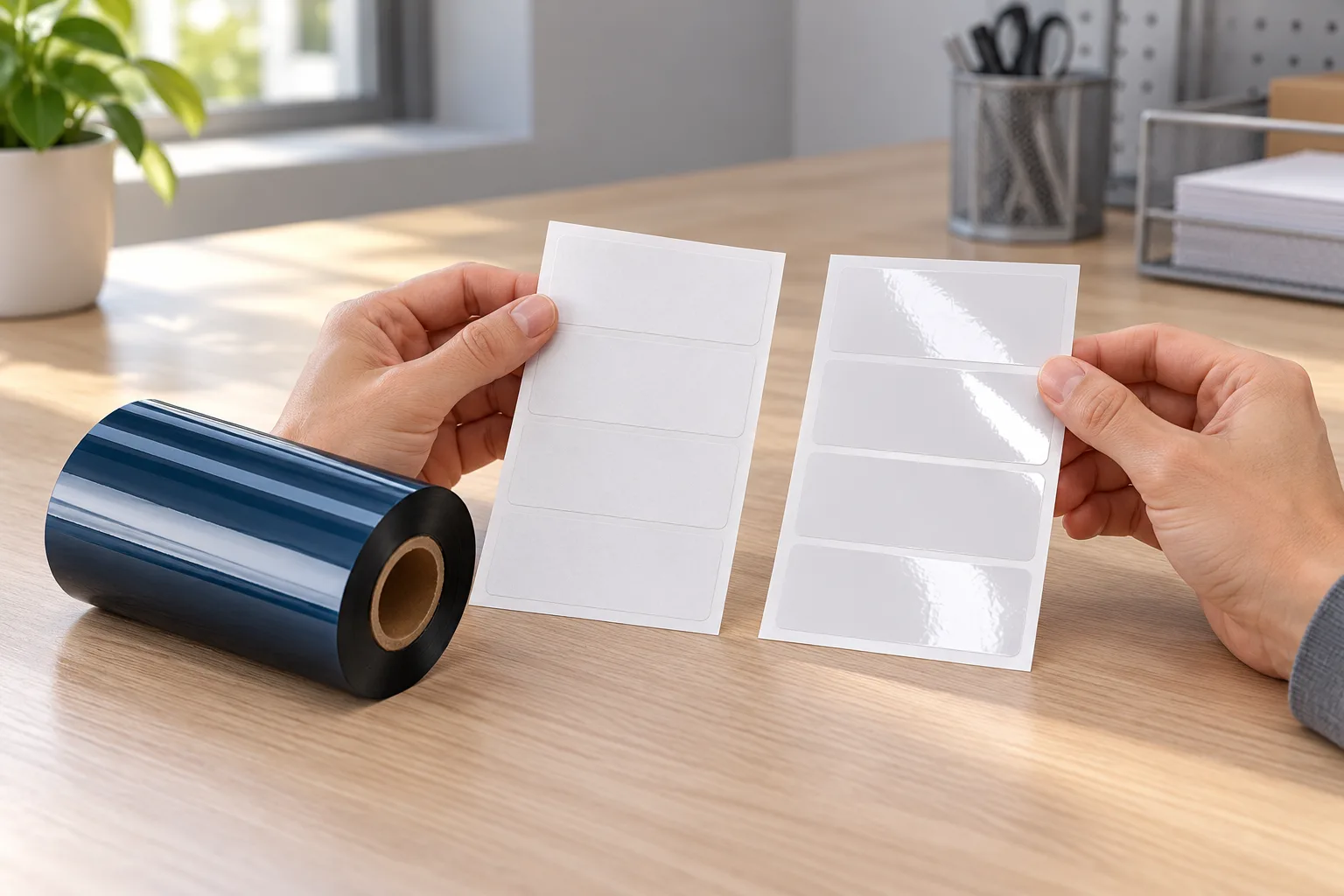
Step Up to Wax-Resin or Full Resin for Harder Conditions
Wax-resin ribbons blend wax and resin for enhanced durability compared with wax ribbons, and full resin ribbons serve the most demanding synthetic films. Wax-resin is the middle tier and the usual next step: it is aimed mainly at coated paper and some film labels, and it prints durable, clear barcodes, text, and graphics on glossy or matte paper.
The blend earns its keep through chemistry. The wax component helps the ink bridge uneven material surfaces, while the resin part locks the pigment down, so the finished print resists abrasion, heat, solvents, and other chemicals far better than wax. Plan on medium heat settings at the printer, and expect a mid-range price — hybrid ribbons sell moderate durability and wide substrate fit at the midpoint of the market. For in-line printing directly onto packaging, wax-resin is the first choice.
Full resin is the durability ceiling. Resin prints withstand mechanical and chemical damage far better than wax prints, and pure resin delivers maximum longevity at premium prices on demanding films such as polyester, polyimide, and vinyl. Pick the tier by substrate first, then by the harshest condition the label must survive — and accept that price rises with durability.
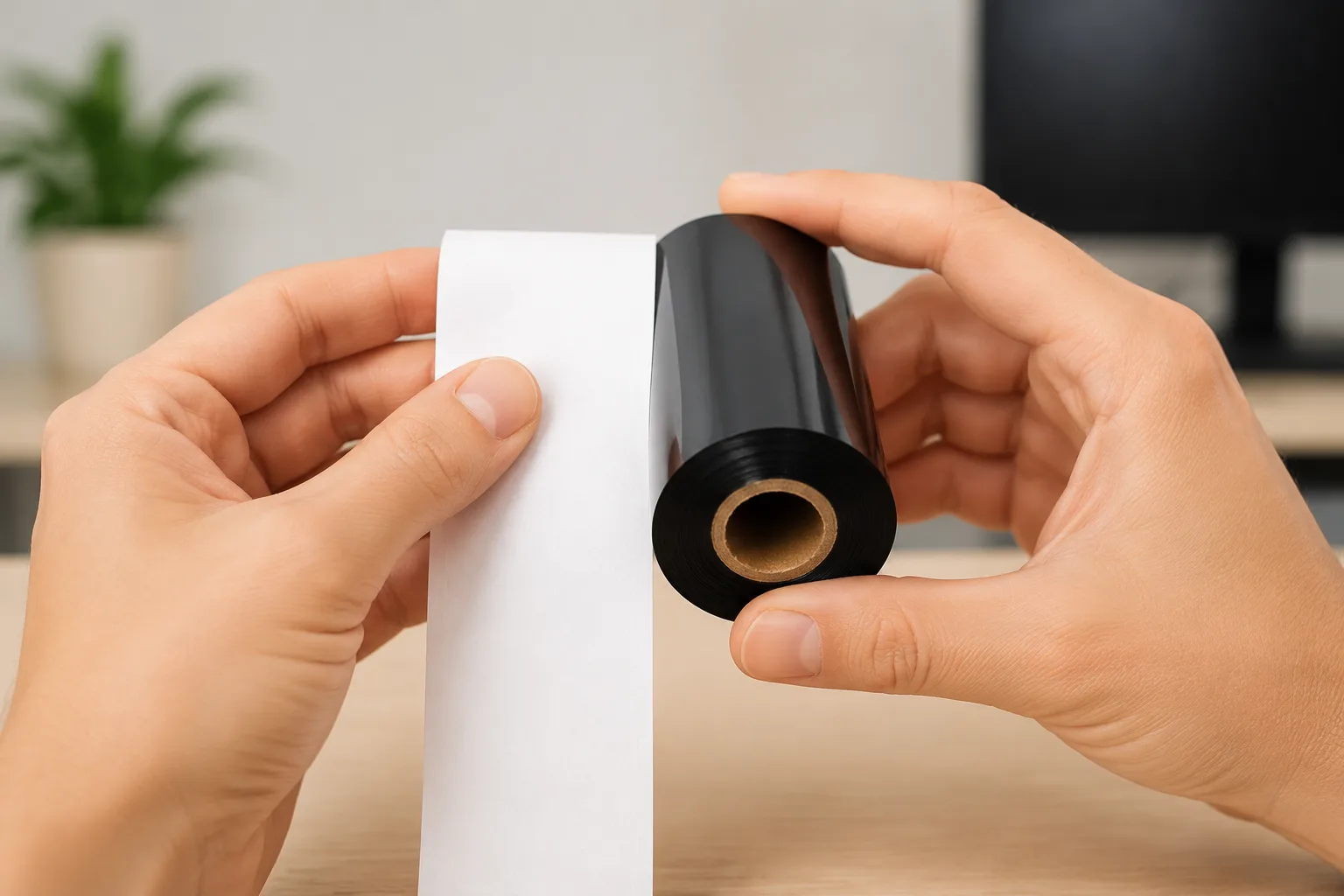
Check Width, Roll Length, Core, and Winding Before You Order
Four physical specifications decide whether a ribbon will run in your printer: width, roll length, core size, and winding direction. The ribbon should be wider than the label to provide full coverage, and it must be at least as wide as the label you print — common widths are 25, 33, 40, 50, 60, 83, 110, 125, 165, and 220 mm. Roll length follows the printer class: desktop printers accept 74 m or 110 m rolls, while industrial printers accept 300, 360, or 450 m rolls.
Core size and winding vary by model, so check them against your printer. For example, TSC's TE Series takes shorter ribbons on a 0.5-inch core and 300m ribbons on a 1-inch core, and ribbons are supplied ink-side-in or ink-side-out.
One application needs an explicit exception. Thermal Transfer Overprinting (TTO) applies codes to flexible packaging with a thermal printhead and a wax-resin or resin ribbon, so ribbons with a wax-only ink layer are not suitable for TTO applications. TTO runs in-line at speeds around 20 IPS, and its ribbons are formulated to release ink at those speeds while printing dates, lot numbers, and barcodes onto films such as PP, PET, aluminium, paper, and Tyvek. For food and hygiene packaging, TTO wax-resin ribbons are the most common choice.
- Measure your label width and order a ribbon at least that wide.
- Match roll length to your printer class — desktop or industrial.
- Check which core size your spindle takes.
- Confirm whether your printer needs ink-side-in or ink-side-out winding.
- Printing film packaging with TTO? Select wax-resin or resin, never wax-only.
Data and Evidence
The selection figures below come from the verified sources behind this guide. Treat them as starting points to confirm on your own printer and label stock, not as universal settings for every machine or as acceptance criteria for a whole label batch.
| Ribbon type | Best-fit substrates | Durability and price position | Recorded temperature |
|---|---|---|---|
| Full wax | Porous and coated paper | Most economical; lowest resistance to smudging and scratching | 20-25°C typically optimal on paper |
| Wax-resin | Coated paper, some films, glossy or matte paper | Mid-range price; enhanced durability over wax | 25-30°C generally required |
| Full resin | Demanding synthetic films: polyester, polyimide, vinyl | Premium price; maximum longevity | 30-35°C may be needed for proper transfer |
Speed follows the same order. Wax prints at low temperature and supports the fastest runs, recorded at up to 254 mm/s, while resin needs more heat and dwell time for proper transfer, which slows printing down.
Verify the choice on your own line before committing to volume:
- Print a short batch on your production label stock, not on a different sample material.
- Check the print the way the label will be used — scan the barcode with your own scanner and rub the printed surface as real handling would.
- If smudging or scratching appears, move up one tier — wax to wax-resin, wax-resin to resin — and print the batch again.
- Record the winning ribbon's width, length, core, and winding in your purchasing notes so reorders match exactly.
Next step: order one sample roll in your label width, run the four checks above on your production stock, and use the result to size your first bulk order.
Frequently Asked Questions
Can a wax ribbon print on polypropylene or polyester synthetic labels?
Not reliably. Wax ink struggles to adhere to synthetic substrates such as polyester or polypropylene, and on glossy plastic it almost certainly smudges. Use a wax-resin ribbon for selected synthetics, and full resin for demanding films such as polyester, polyimide, and vinyl.
Is a wax ribbon suitable for TTO date and barcode coding on flexible packaging?
No. Ribbons with a wax-only ink layer are not suitable for TTO applications; a thermal transfer overprinter applies codes with a wax-resin or resin ribbon. For food and hygiene packaging, TTO wax-resin ribbons are the most common choice.
How fast can a wax ribbon print compared with a resin ribbon?
Wax is the faster type. Its low printing temperature supports high-speed printing, recorded at up to 254 mm/s, while resin needs more heat and dwell time for proper transfer, which slows printing down.
What does a wax ribbon cost compared with wax-resin and resin ribbons?
Wax is the most economical of the three types. Wax-resin hybrids sit at a mid-range price point with moderate durability, and pure resin ribbons carry premium prices for maximum longevity.
Recommended products for this industry
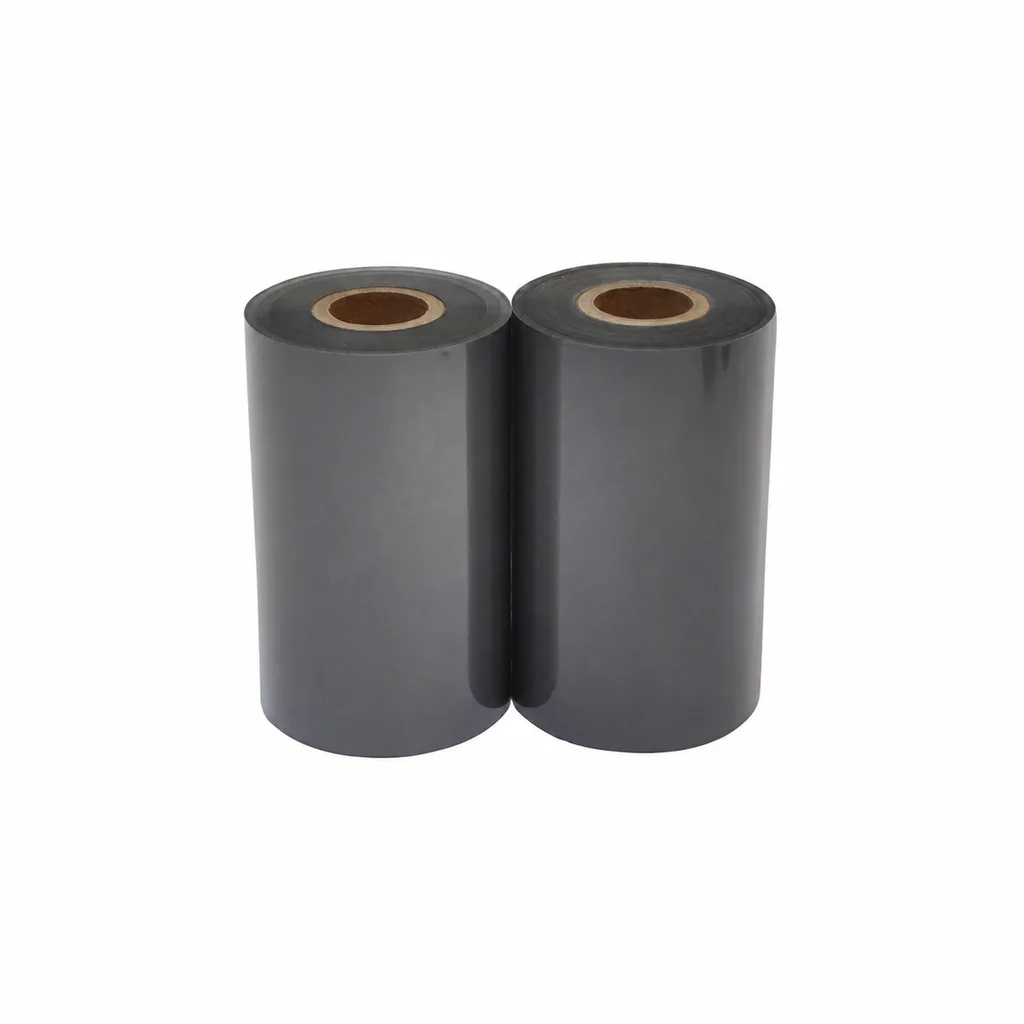
Black Resin Thermal Transfer Ribbon for Label Printing - CL-Z373
CL-Z373 is a black resin thermal transfer ribbon for label printing with desktop or industrial flat-head barcode printers at speeds of ≤6 ips (inches per second). Listed applications include electronics processing, tire identification, automotive manufacturing, pharmaceutical packaging, cosmetic labels and outdoor identification. Selection depends on the actual label material, printer and exposure conditions. Fine-line, small-character and resistance results were obtained on coated paper; print quality and image durability may vary with the printer and print substrate.
View details
Brother Compatible Label Ribbons (TZe Series)
This Brother-compatible label ribbon (TZe series) is manufactured using high-quality…
View details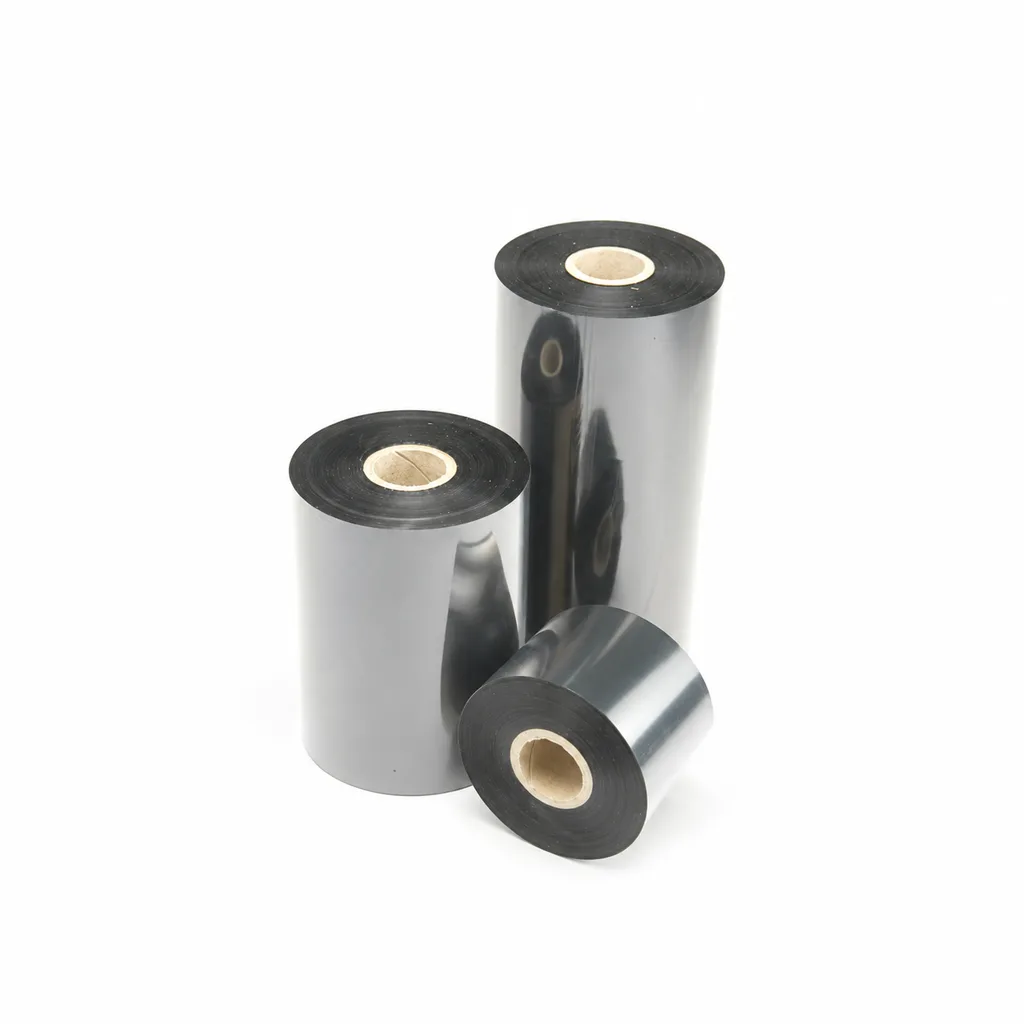
CL-Z203 Wax-Resin Thermal Transfer Ribbon for Barcode Labels
A black wax-resin thermal transfer ribbon for flat-head printing, with listed applications including retail, warehousing, logistics and garment tags. Select it against your actual label material and desktop or industrial barcode printer at speeds ≤6 ips (inches per second). Fine-line, small-text and durability results were obtained on coated paper; print quality and image durability may vary with the printer and printing substrate.
View details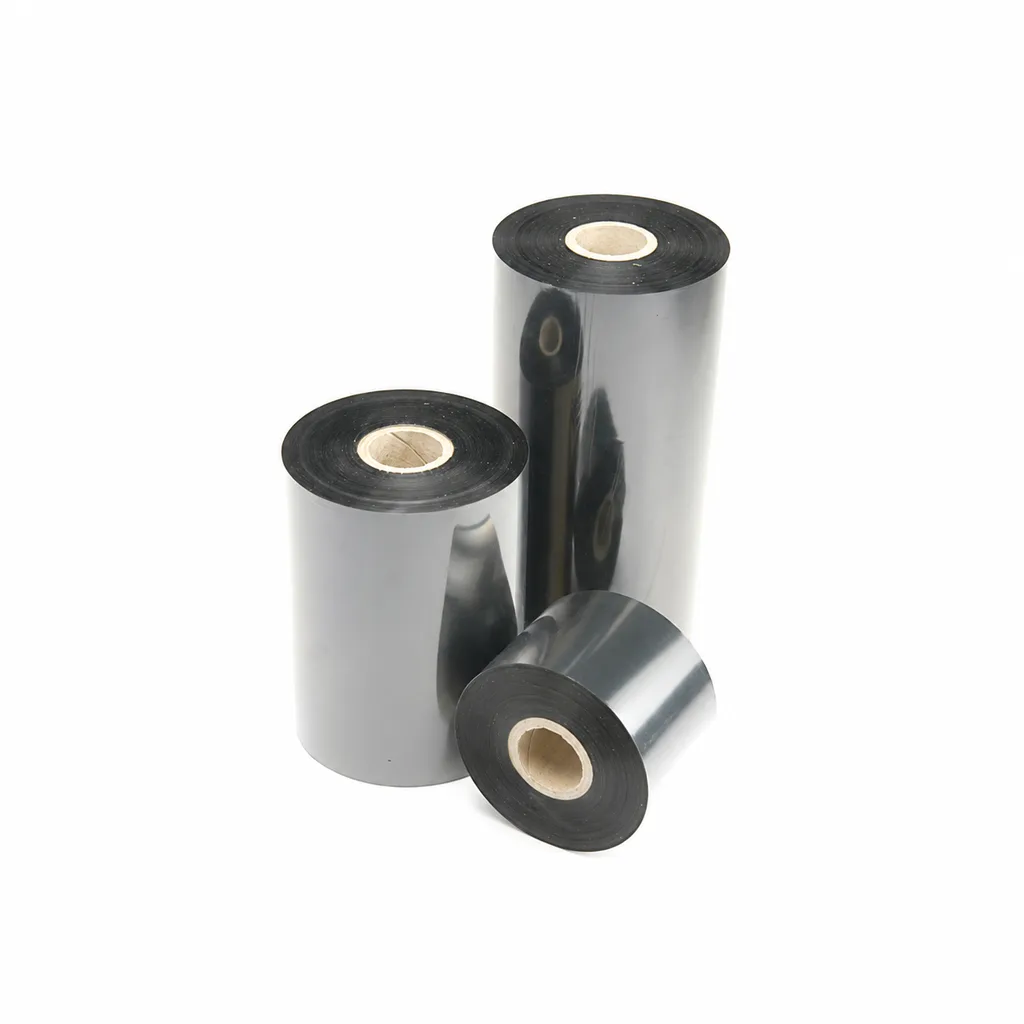
CL-Z213 Near-Edge Wax-Resin Thermal Transfer Ribbon for Barcode Labels
An enhanced black near-edge wax-resin thermal transfer ribbon for near-edge barcode printers and low- to medium-speed thermal transfer overprinting (TTO). Listed applications include retail labels, warehousing, garment tags and packaging identification. Match the printer, actual print medium and operating speed before selection: print quality and image durability can vary with the printer and substrate.
View detailsNeed the right ribbon for your label application?
Share the label material, printer and operating environment. Our team will recommend a tested combination.
