
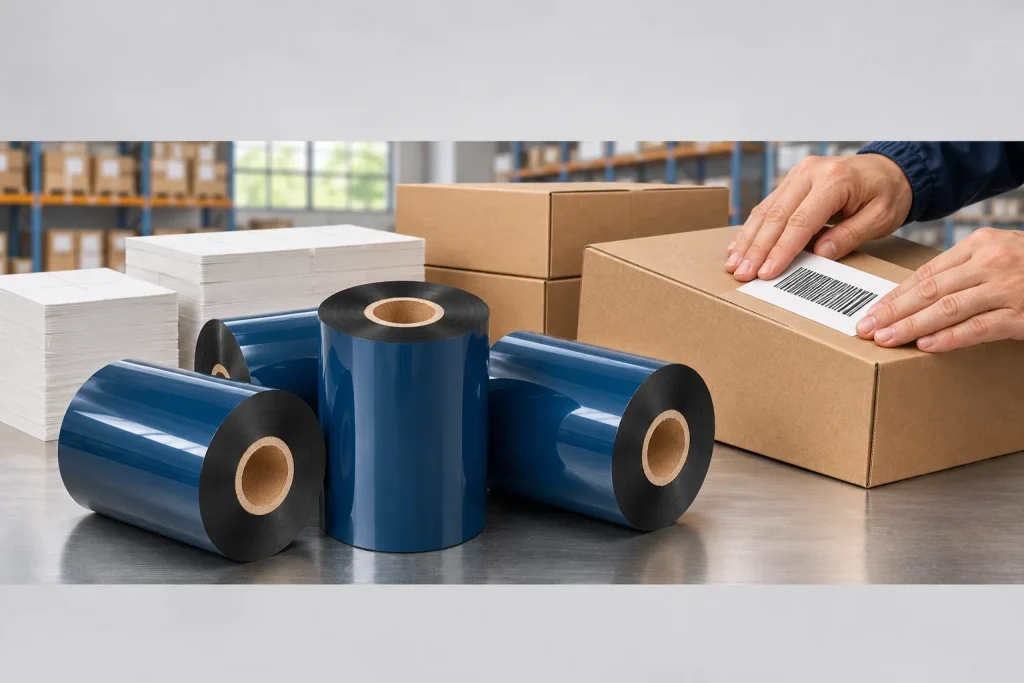
- Original TTR manufacturer since 2013
- Automated coating and slitting
- IQC / IPQC / OQC control
- ANSI barcode grade testing
- -20°C to 120°C environmental testing
- Batch-level traceability
- ANSI barcode grade
- Batch traceability
- RoHS / REACH compliance
- SGS and MSDS documents on request
A wax thermal transfer ribbon is a starting point for barcode labels printed on paper. Choose the roll to fit the printer and verify the printed label in its intended use before approving an order.
Key Takeaways
- Wax ribbons are commonly used with paper labels for dispatch and warehouse work.
- Ribbon width and winding must match the label and printer.
- Test the complete ribbon and label combination in its intended application.
Choose the Ribbon for Your Label and Use
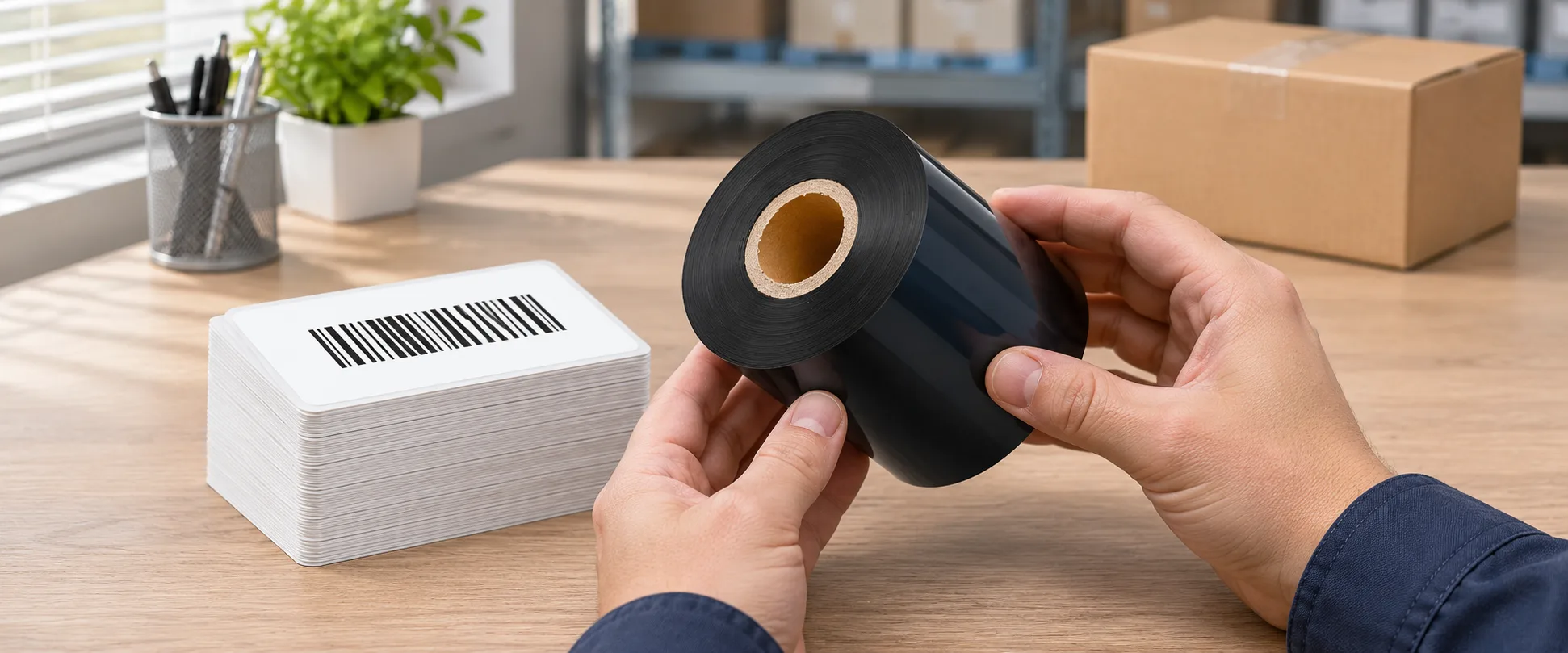
A wax barcode band is a wax thermal transfer ribbon used to print barcode labels. Start with wax for paper labels used in dispatch, warehouse or carton work, then check whether the printed result meets your handling requirements. The common ribbon grades are wax, wax resin and resin; this guide focuses on choosing wax.
Identify the actual label material before asking for a ribbon. A paper label for a carton has different demands from a synthetic label exposed to chemicals or weather. For repeated handling or greater abrasion, consider wax resin; for synthetic labels exposed to chemicals, heat or prolonged outdoor conditions, consider resin. These are starting points, not proof that a particular combination will pass your test.
Do not assume all wax formulations have identical compatibility. Check the specific ribbon documentation and test your own stock before making a decision.
Check Roll Size and Printer Compatibility
The ribbon must fit the printer as well as cover the label. Choose a width at least as wide as the label and no wider than the maximum ribbon width accepted by the printer. A slightly wider ribbon is common; confirm the actual roll dimensions against the printer specifications before ordering.
Check the core size, roll length and coating direction against your printer documentation. A ribbon can have its ink coating wound on the inside or outside, and the required direction depends on the printer. For example, Zebra’s 105SL guide specifies outside-coated ribbon for that model; other printers may differ.
When requesting a quote, give the supplier the printer model, label material and dimensions, expected print speed and the conditions the label must withstand. Include the current roll details if available. Ask for the proposed ribbon’s data sheet and verify the size and winding rather than relying on the word wax alone.
Print and Evaluate a Sample Before Ordering
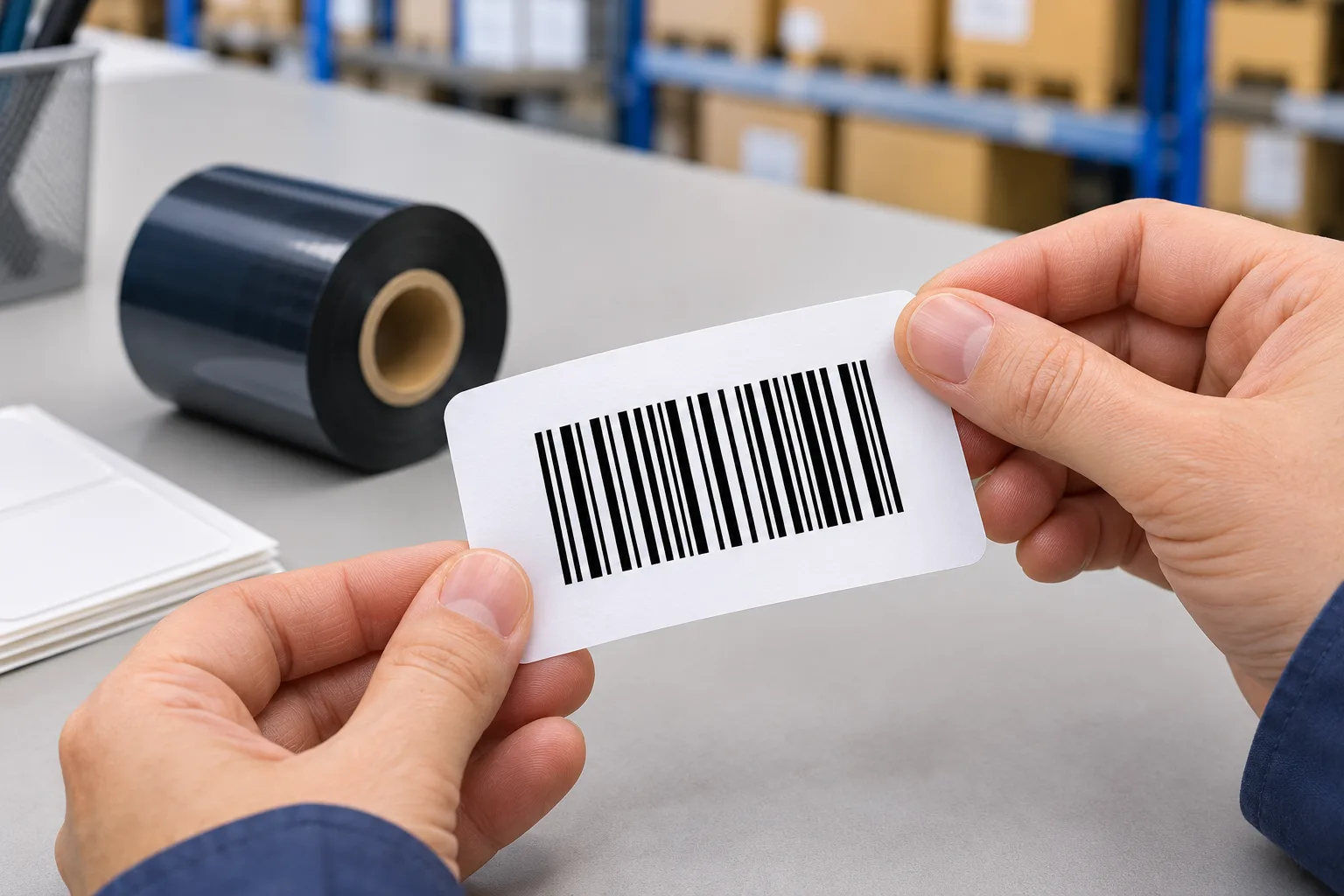
A sample test checks the actual printer, ribbon and label combination before a volume purchase. Print representative barcodes on the intended stock and check them with the scanners used in the workflow. Examine the result after the handling and exposure the label is expected to encounter.
If the print does not meet the application’s needs, review the material and ribbon grade together, then check roll fit and winding against the printer instructions. Ask for another suitable sample and repeat the evaluation before approving the order. A visual check alone does not establish that the label will perform throughout its intended use.
Keep the approved ribbon and label specifications with the order information so the same combination can be identified later. IDENTCO recommends testing its material in the actual application to determine whether it meets requirements; that recommendation concerns the application rather than a universal guarantee.
Data and Evidence
The source guidance connects each buying decision to a specific condition. CDM Labels recommends wax for paper dispatch and carton labels.
| Decision | Evidence and check |
|---|---|
| Material | Start with paper for general-purpose wax; check the chosen product’s compatibility. |
| Width | Cover the label and stay within the printer’s accepted width. |
| Winding | Match the coated side to the printer’s specification. |
| Approval | Test the actual materials under the intended application conditions. |
Frequently Asked Questions
Can wax ribbon print on synthetic labels?
Compatibility depends on the ribbon and label combination. Check the product data and test your material.
How wide should a wax barcode ribbon be?
Choose a ribbon at least as wide as the label and within the printer’s accepted ribbon width. A slightly wider roll is common.
Does a direct thermal label need wax ribbon?
No. Direct thermal media does not require ribbon; thermal transfer media does.
Recommended products for this industry
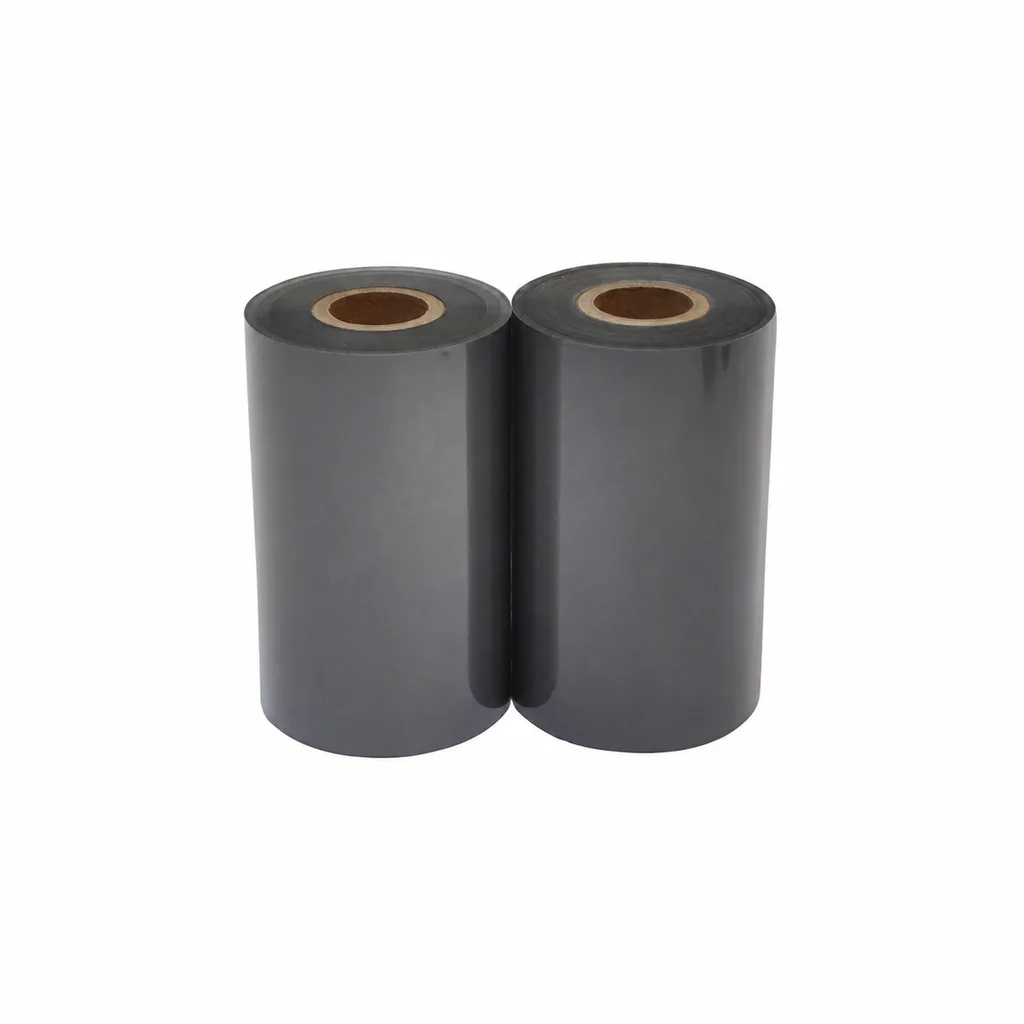
Black Resin Thermal Transfer Ribbon for Label Printing - CL-Z373
CL-Z373 is a black resin thermal transfer ribbon for label printing with desktop or industrial flat-head barcode printers at speeds of ≤6 ips (inches per second). Listed applications include electronics processing, tire identification, automotive manufacturing, pharmaceutical packaging, cosmetic labels and outdoor identification. Selection depends on the actual label material, printer and exposure conditions. Fine-line, small-character and resistance results were obtained on coated paper; print quality and image durability may vary with the printer and print substrate.
View details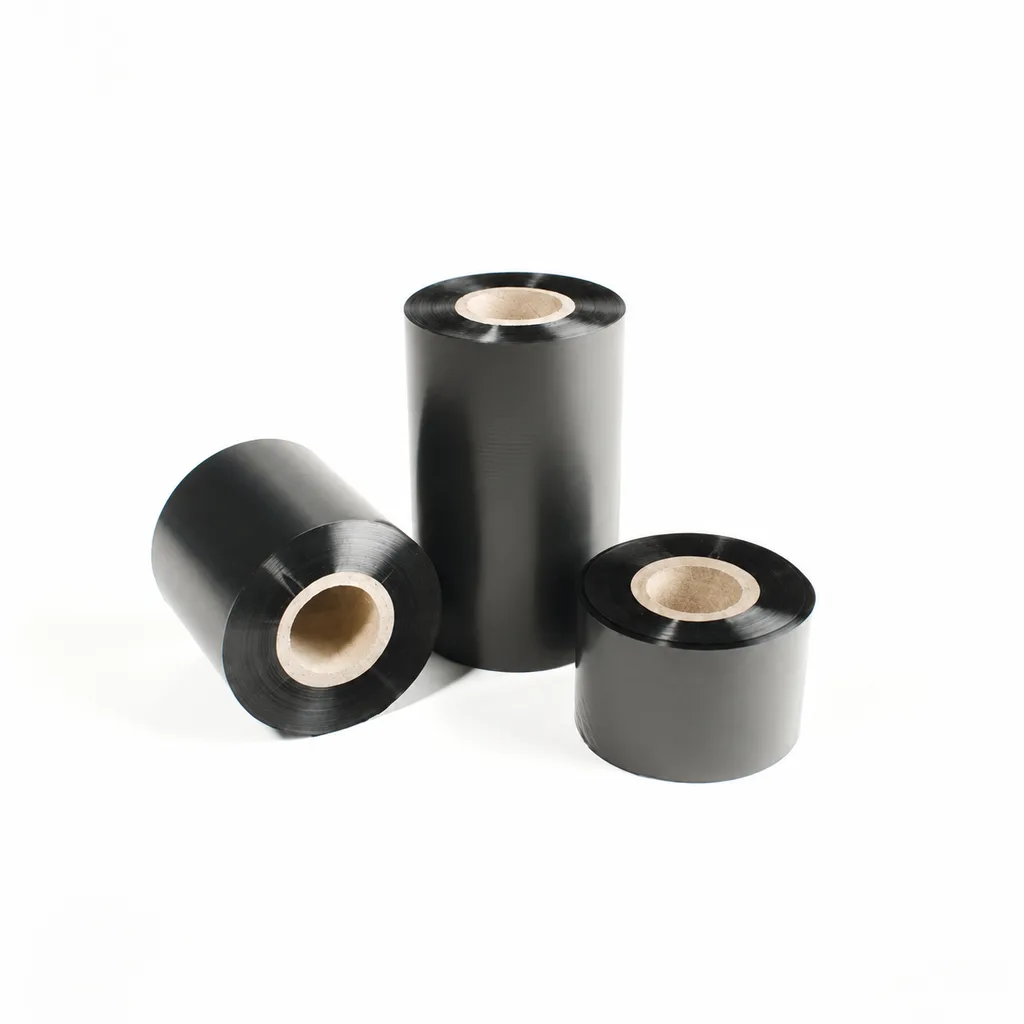
CL-Z112 Enhanced Wax Thermal Transfer Ribbon for Paper Labels and Tags
An enhanced wax thermal transfer ribbon with black ink for paper labels and tags used in retail, warehousing and logistics. It is specified for flat-head printing on desktop or industrial barcode printers at ≤8 inches per second (ips). Select it by checking the actual label material, printer configuration and handling conditions: image-quality, rub-resistance and cold-chamber results were obtained on coated paper, and print quality and image durability may vary with the printer and print medium.
View details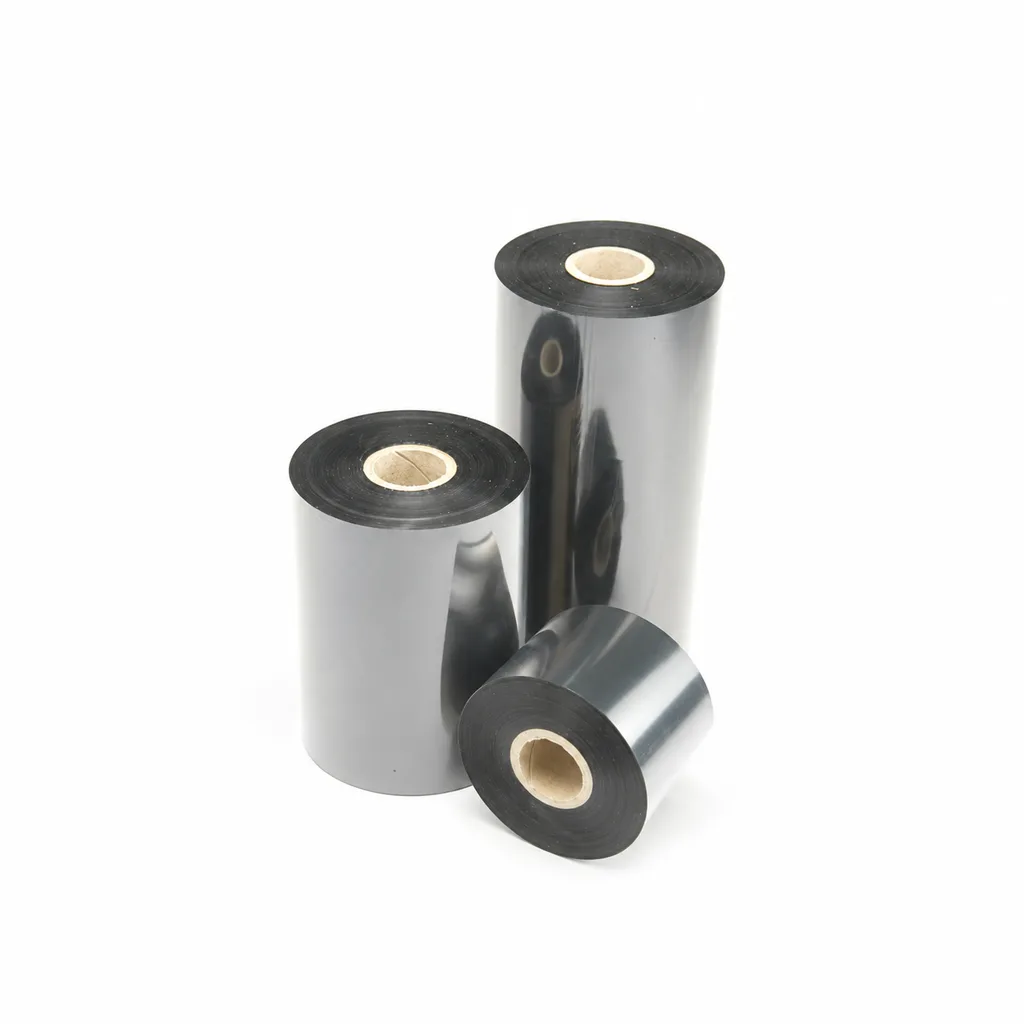
CL-Z203 Wax-Resin Thermal Transfer Ribbon for Barcode Labels
A black wax-resin thermal transfer ribbon for flat-head printing, with listed applications including retail, warehousing, logistics and garment tags. Select it against your actual label material and desktop or industrial barcode printer at speeds ≤6 ips (inches per second). Fine-line, small-text and durability results were obtained on coated paper; print quality and image durability may vary with the printer and printing substrate.
View details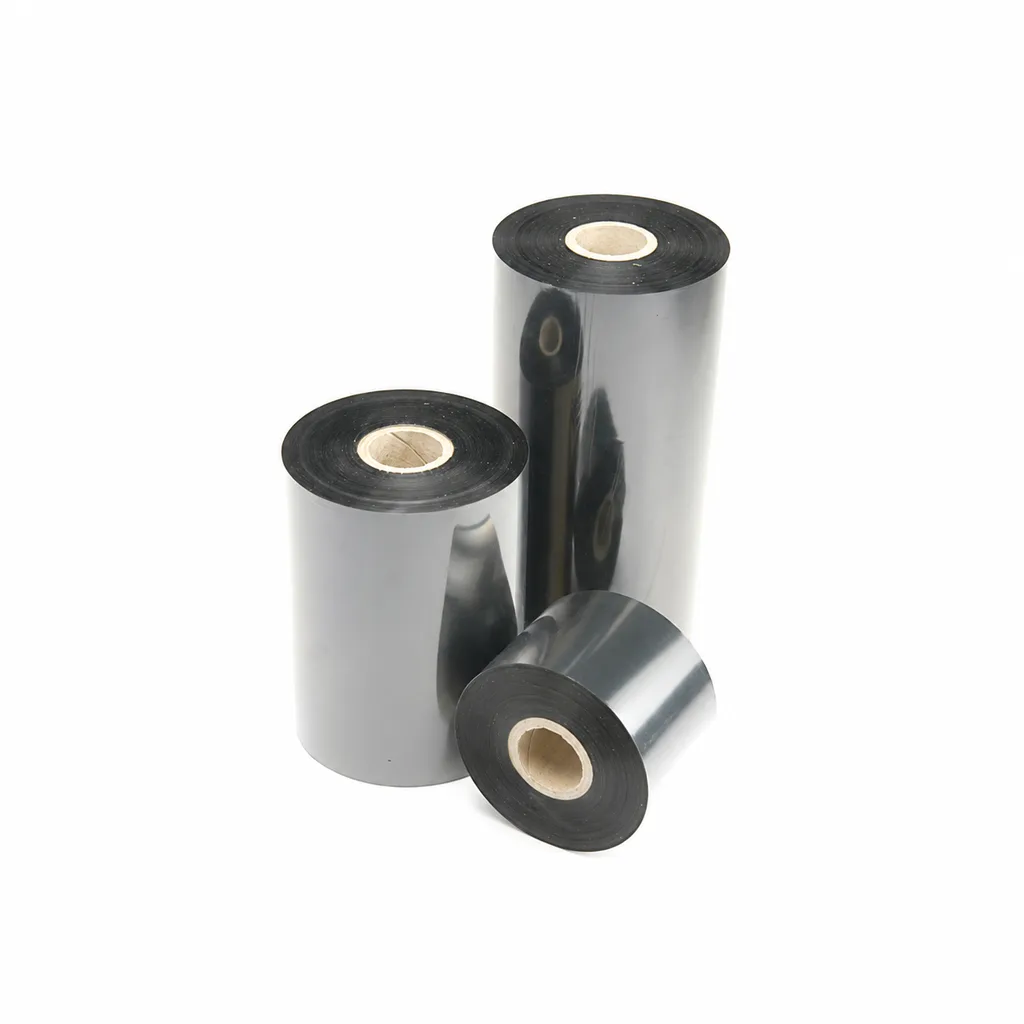
CL-Z213 Near-Edge Wax-Resin Thermal Transfer Ribbon for Barcode Labels
An enhanced black near-edge wax-resin thermal transfer ribbon for near-edge barcode printers and low- to medium-speed thermal transfer overprinting (TTO). Listed applications include retail labels, warehousing, garment tags and packaging identification. Match the printer, actual print medium and operating speed before selection: print quality and image durability can vary with the printer and substrate.
View detailsNeed the right ribbon for your label application?
Share the label material, printer and operating environment. Our team will recommend a tested combination.
