
TTO Printer Customization: A Buyer's Guide to Specs, Integration, and Ribbon Matching
Request a solution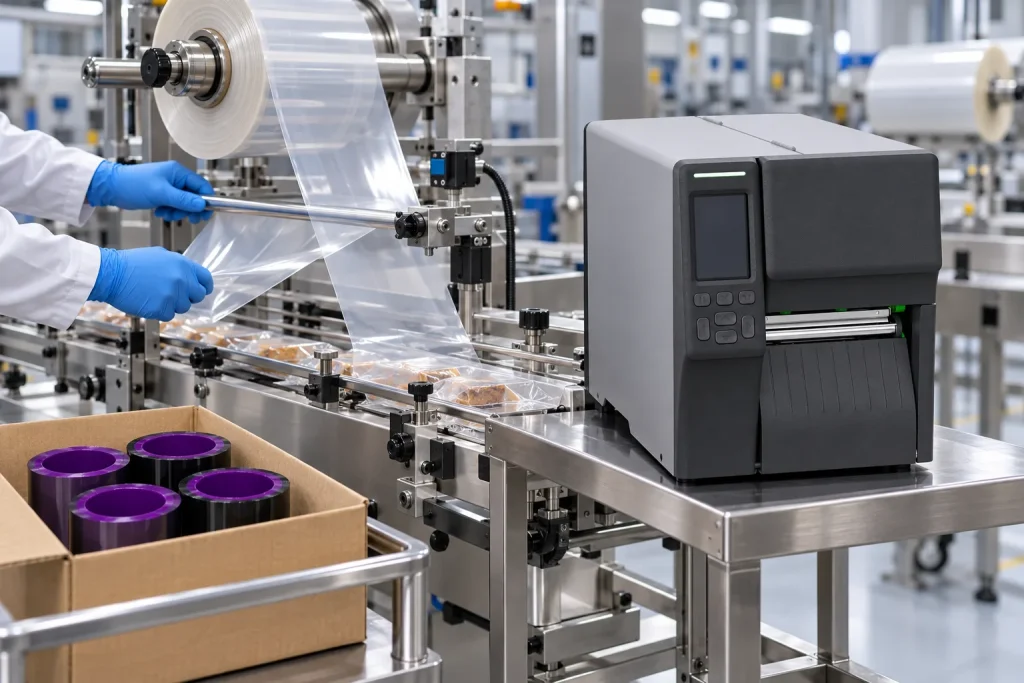
- Original TTR manufacturer since 2013
- Automated coating and slitting
- IQC / IPQC / OQC control
- ANSI barcode grade testing
- -20°C to 120°C environmental testing
- Batch-level traceability
- ANSI barcode grade
- Batch traceability
- RoHS / REACH compliance
- SGS and MSDS documents on request
Key Takeaways
- Customization spans hardware configuration, software and line integration, and the ribbon plan — decide all three, not just the machine.
- TTO was developed specifically for flexible materials and prints variable barcodes, text, graphics, and logos directly onto films and labels.
- As a contact process, TTO suits flexible packaging only, and barcode printing speeds are typically restricted to about 800 mm/s.
- Ribbon roll length and ribbon-saving options drive changeover cost, so put ribbon supply and match testing into the purchase contract.
- Accept a customization deal only after proofing on your production film at production speed, with scan-grade results documented.
What "TTO Printer Customization" Actually Covers
A thermal transfer overprinter (TTO) is a digital printing technology developed specifically for use with flexible materials, offered as an alternative to hot stampers and other traditional analog printing methods. The printer works by melting a coating from a ribbon so the printed mark stays glued to the film — which is why any customization conversation must include the ribbon, not just the machine.
In buyer conversations, "customization" mixes three different scopes. Buyers who confuse them end up comparing quotes for different things.
Scope 1: OEM or ODM machine sourcing
Rebranding a manufacturer's platform under your own brand matters mainly to distributors and equipment agents. Most end users do not need a new machine design; they need the right configuration of a proven platform.
Scope 2: hardware configuration
This is the layer most quotes cover: print width, continuous or intermittent printing mode, ribbon roll capacity, and options such as ribbon-saving kits. These choices drive both purchase price and running cost, and they are detailed in the rest of this guide.
Scope 3: software, data, and line integration
The least visible layer decides day-to-day value: message editing and template management, synchronization with the host machine, and the feed of variable data such as dates and batch numbers. Treat these as deliverables written into the proposal, not free extras.
A practical order for the whole decision: define your line scenario first, choose parameters second, and verify the supplier and consumables last. That is the structure this guide follows.
Match the Printer and Its Data to Your Packaging Line
Your host machine and printed content determine the printer's mounting, printing mode, and data requirements before any hardware specification matters.
TTO printers integrate with packaging and processing equipment such as labellers, tray sealers, flow wrappers, VFFS, HFFS, and baggers, and vendors describe them running on both vertical and horizontal form-fill-seal lines. They are commonly used across the food, beverage, pharmaceuticals, and cosmetics industries, so references on your machine type are usually available if you ask for them.
On content, the technology prints real-time and variable data, machine-readable codes, texts, graphics, and logos onto flexible films and labels, with the speed and precision that data-embedded barcodes and QR codes need.
Confirm these line constraints before asking for a quote
- Installation space and the position of the print window on your host machine.
- Printing mode: continuous printing for continuously moving film, intermittent printing for stop-and-go machines.
- Line speed against the barcode limit: contact printing restricts linear speeds to about 800 mm/s when printing barcodes.
- How often your line can stop for a ribbon change, which sets the ribbon roll length you should request.
- The exact film you print on — check the material before purchasing, because the process bonds to the film surface.
Data and software requirements to specify
List the message templates and interface languages your operators use, who may edit or approve them, and which production system supplies the variable data. Then name the party responsible for commissioning the communication link between printer and host machine. Suppliers can deliver all of this, but only if it appears in the requirement list you send them.
Hardware Specs and Ribbon Matching That Decide Print Quality
Four decisions determine whether a customized TTO printer meets your code-quality requirements: print width, resolution, ribbon capacity, and the ribbon-film match.
Print width comes first because TTO printheads are fixed width, pressing onto the film over a driven platen roller. Size the head to your widest print content: a narrower printhead cuts off part of the design, and a much wider one raises machine and ribbon cost on every print.
Resolution follows your smallest code. Printheads are often 203 dpi (8 dots per mm) or 300 dpi (12 dots per mm), with 300 dpi the typical packaging choice that prints directly onto packaging media; some manufacturers now build 600 dpi printers for very small barcodes in the electronics industries. Choose by the scan grade your codes must reach, not by the biggest number on the datasheet.
Ribbon capacity is the running-cost decision. Configurations combining continuous and intermittent printing, long ribbon roll lengths, and ribbon-saving technology maximize uptime, reduce changeovers, and deliver a low total cost of ownership — every avoided ribbon change is production that keeps running.
Ribbon matching belongs in the machine decision
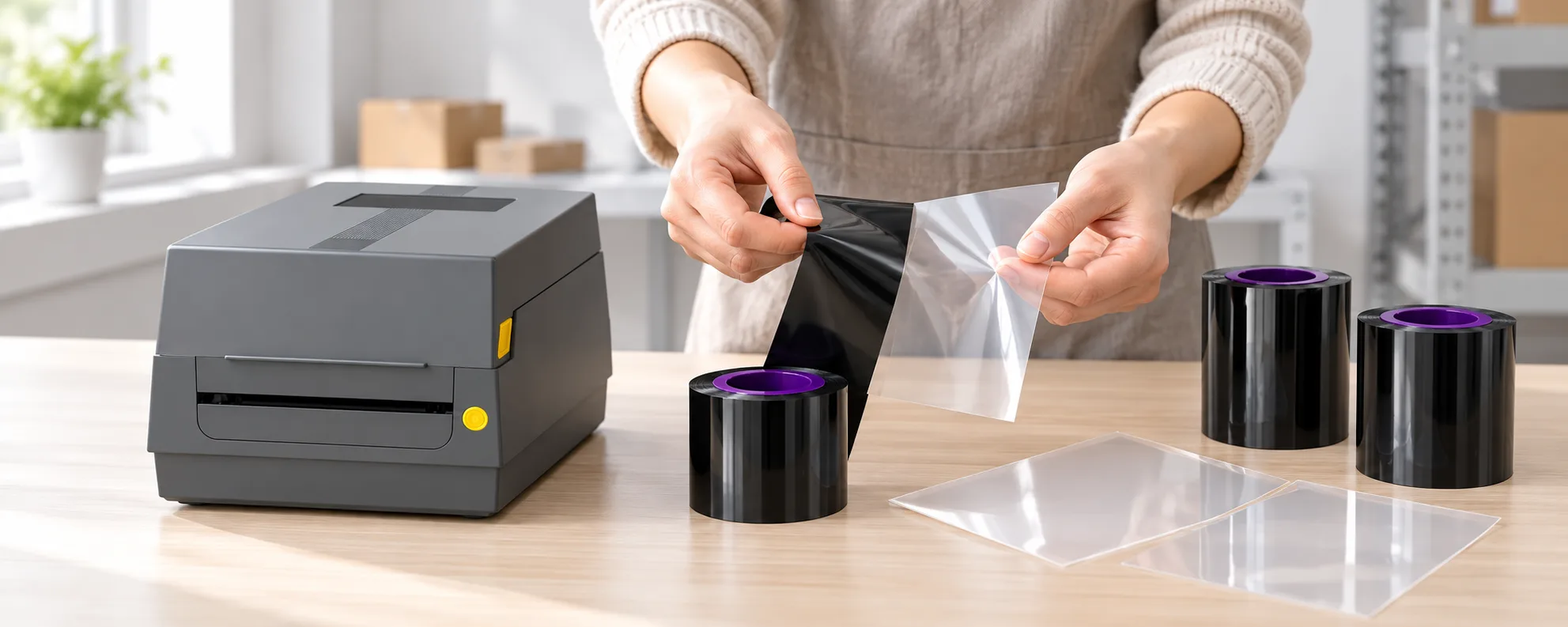
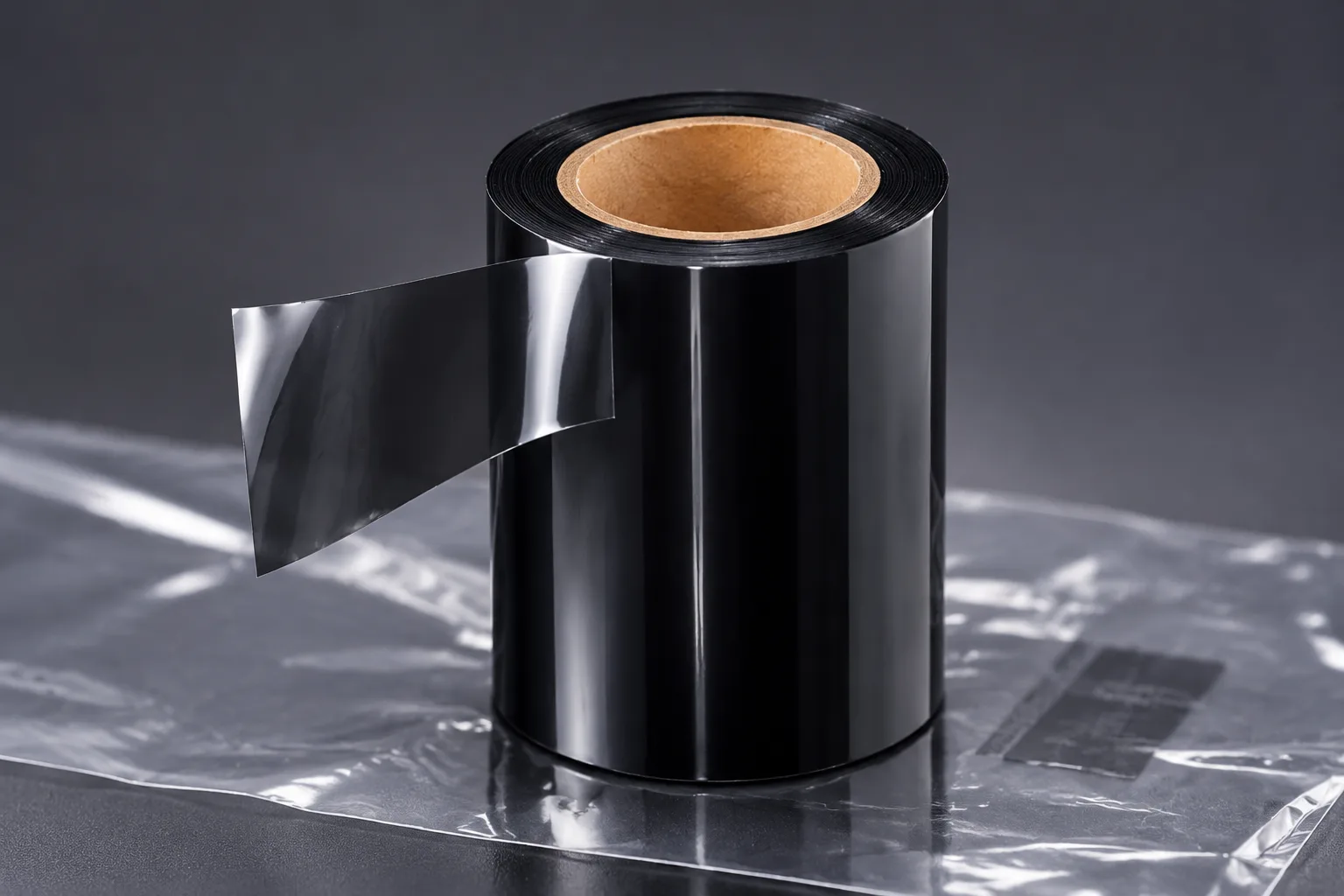
A TTO ribbon is a very thin polyester film coated with a wax, wax-resin, or pure resin ink, and TTO uses a near-edge printhead rather than the flat heads more common elsewhere in thermal transfer printing. The ribbon you order must therefore match the printhead type and the surface of your film, including any coating. As a thermal transfer ribbon manufacturer, we treat a TTO printer as fully customized only when the ribbon specification has been matched to the customer's film and proven on the machine — hardware price alone understates the real running decision. Ask every bidder for a match test on your actual film, not a generic sample.
How to Evaluate a Customization Supplier and Accept the Machine
Score TTO printer customization suppliers on proofing capability, comparable line references, and consumables continuity before you compare prices.
Markem-Imaje has pioneered thermal transfer products for over three decades, and brands such as Domino and ID Technology position their TTO lines around integration with packaging equipment. Proven platforms are therefore easy to find; what varies is how quickly a supplier responds to a non-standard request. Make customization responsiveness a scored criterion, not a sales conversation.
Evaluation dimensions that predict a smooth project
- Proofing on your film, with a written match report.
- References on the same host machine type and speed range.
- Spare parts and ribbon supply continuity over the years you will run the line.
- Service response time in your region.
- Documentation and operator training as contractual deliverables.
A six-step path from requirement to delivery
- Write the requirement list: host machine, print content, film, line speed, data sources.
- Collect proposals and quotes against that list.
- Run ribbon-film proofing and review the match report.
- Test on your machine at production speed.
- Trial a small batch through normal production shifts.
- Deliver in bulk with contract terms covering training, spares, and ribbons.
Acceptance checks that protect the purchase
Sign a parameter confirmation sheet, attach the ribbon match test report, and watch the supplier demonstrate communication commissioning, alarm behavior, and printing recovery after a power or ribbon interruption. Check barcode scan grades on the production film at production speed, then close the contract with training and spare-parts terms included. Acceptance is where a customization deal either becomes an asset or a dispute.
Data and Evidence
The table consolidates the specifications and limits that matter in a TTO customization decision, the conditions attached to each, and how to verify them on your own line.
| Decision factor | What the evidence shows | Condition or limit | How to verify |
|---|---|---|---|
| Print resolution | 203 dpi (8 dots per mm) or 300 dpi (12 dots per mm) printheads are common; 600 dpi models exist for very small barcodes | 300 dpi is the typical packaging choice; 600 dpi targets very small electronics barcodes | Scan-grade test on your film at line speed |
| Print speed | Linear speeds are typically restricted to about 800 mm/s when printing barcodes | Contact process: flexible packaging only | Timed print test at production speed |
| Host machines | Labellers, tray sealers, flow wrappers, VFFS, HFFS, and baggers; vertical and horizontal form-fill-seal; continuous and intermittent modes | Integration quality varies by machine builder and mode | Commissioning run on your host machine |
| Ribbon system | Polyester film coated with wax, wax-resin, or pure resin ink; near-edge printhead in TTO | Coating must match your film surface and the printhead type | Ribbon match test report on the final film |
| Ribbon supply | Long ribbon roll lengths and ribbon-saving technology raise uptime and cut changeovers | Benefit depends on your changeover tolerance | Estimate changeovers per shift at quote stage |
Treat every figure above as a claim to reproduce on your line rather than a promise to accept: run each verification on the film you actually buy, at the speed you actually run, and file the results with the acceptance documents.
Frequently Asked Questions
What can actually be customized on a TTO printer?
Three scopes: hardware configuration such as print width, printing mode, and ribbon capacity; software and line integration such as message templates, variable data, and host-machine synchronization; and the consumables plan, meaning the ribbon specification matched to your film. Most buyers need configuration and integration, not a new machine design.
How should I choose print width and ribbon roll length when customizing a TTO printer?
Size the print width to your widest content, because TTO printheads are fixed width and a narrower head cuts off part of the design. For ribbon, weigh roll length against how often your line can stop for a changeover — long ribbon roll lengths and ribbon-saving technology are what vendors cite for uptime and lower running cost.
Do I have to use original-brand ribbons in a customized TTO printer?
What matters is documented compatibility: the ribbon must suit the printer's near-edge printhead and pass a match test on your actual film, and the contract should state how ribbon choice affects warranty and service.
What proofing and on-machine tests should I run before ordering a customized TTO printer?
Print on your production film at production speed, then check adhesion, rub resistance, and barcode scan grade, adding frozen-storage or retort tests if your packs face those conditions. On the machine, require a communication and alarm check plus a demonstration of printing recovery after an interruption.
Which materials and line speeds work with a customized TTO printer?
TTO is a contact process for flexible packaging films and labels, and linear print speeds are typically restricted to about 800 mm/s when printing barcodes. Check the exact material with the supplier before purchasing, because the print depends on melted ribbon coating bonding to that surface.
Recommended products for this industry
Brother Compatible Label Ribbons (TZe Series)
This Brother-compatible label ribbon (TZe series) is manufactured using high-quality…
View details
CL-Z364 Thermal Transfer Ribbon for Wash-Care Labels
An economical black thermal transfer ribbon for wash-care label printing on flat-head desktop or industrial barcode printers at ≤4 ips (inches per second). The documented materials include satin ribbon, nylon-coated ribbon and thermoplastic polyurethane (TPU). Select it against your actual label material, printer and washing process: print quality and image durability can vary with the printer and printing substrate.
View details
Full-colour card printer ribbon YMCKO
Compatible with Seaory S20/S21/S22/S22K card printers, supporting high-definition…
View details
TTO Barcode Printer Thermal Transfer Colour Ribbon High-Speed Customisation
This TTO thermal transfer ribbon is suitable for a variety of label materials across…
View detailsNeed the right ribbon for your label application?
Share the label material, printer and operating environment. Our team will recommend a tested combination.
