
Thermotransfer-Bänder: How to Choose Wax, Wax-Resin or Resin Ribbon
Request a solution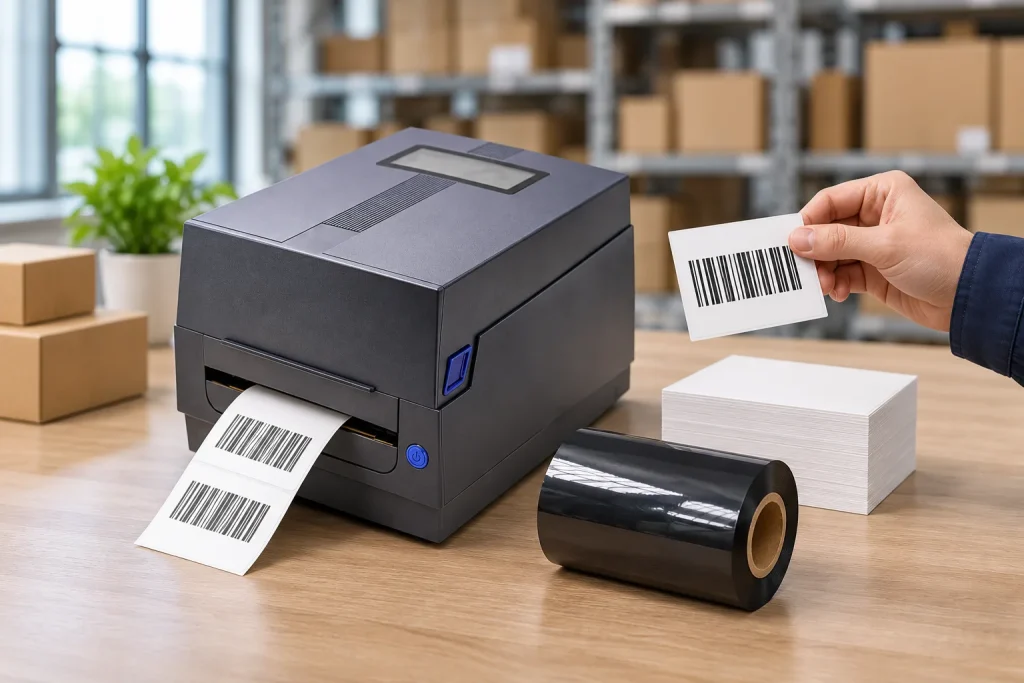
- Original TTR manufacturer since 2013
- Automated coating and slitting
- IQC / IPQC / OQC control
- ANSI barcode grade testing
- -20°C to 120°C environmental testing
- Batch-level traceability
- ANSI barcode grade
- Batch traceability
- RoHS / REACH compliance
- SGS and MSDS documents on request
Buyers comparing thermotransfer-bänder (thermal transfer ribbons) for their own label printers need one decision first: match the ribbon grade to the label stock and to the conditions the printed label must survive. Wax suits paper labels kept indoors with light handling, wax-resin serves paper labels that face wear and matte synthetic films, and resin is reserved for gloss synthetics and labels that meet chemicals or harsh industrial conditions. A fingernail scratch test on a freshly printed label confirms within minutes whether a grade bonds to the material. That check proves bonding only and does not predict chemical or outdoor resistance.
Key Takeaways
- Choose by two inputs: the label stock you print on and the environment the applied label will live in.
- Wax bonds properly to paper only; on polyester or polypropylene it smears or rubs off within hours.
- Wax-resin prints on paper and matte synthetics with better scratch and moisture resistance than wax, at a somewhat higher cost.
- Resin requires more heat and costs more per roll, and it is the grade that transfers cleanly on gloss synthetics.
- A fingernail scratch test confirms bonding in minutes but says nothing about chemical or outdoor resistance.
Match the Ribbon Grade to the Label Stock and Its Environment
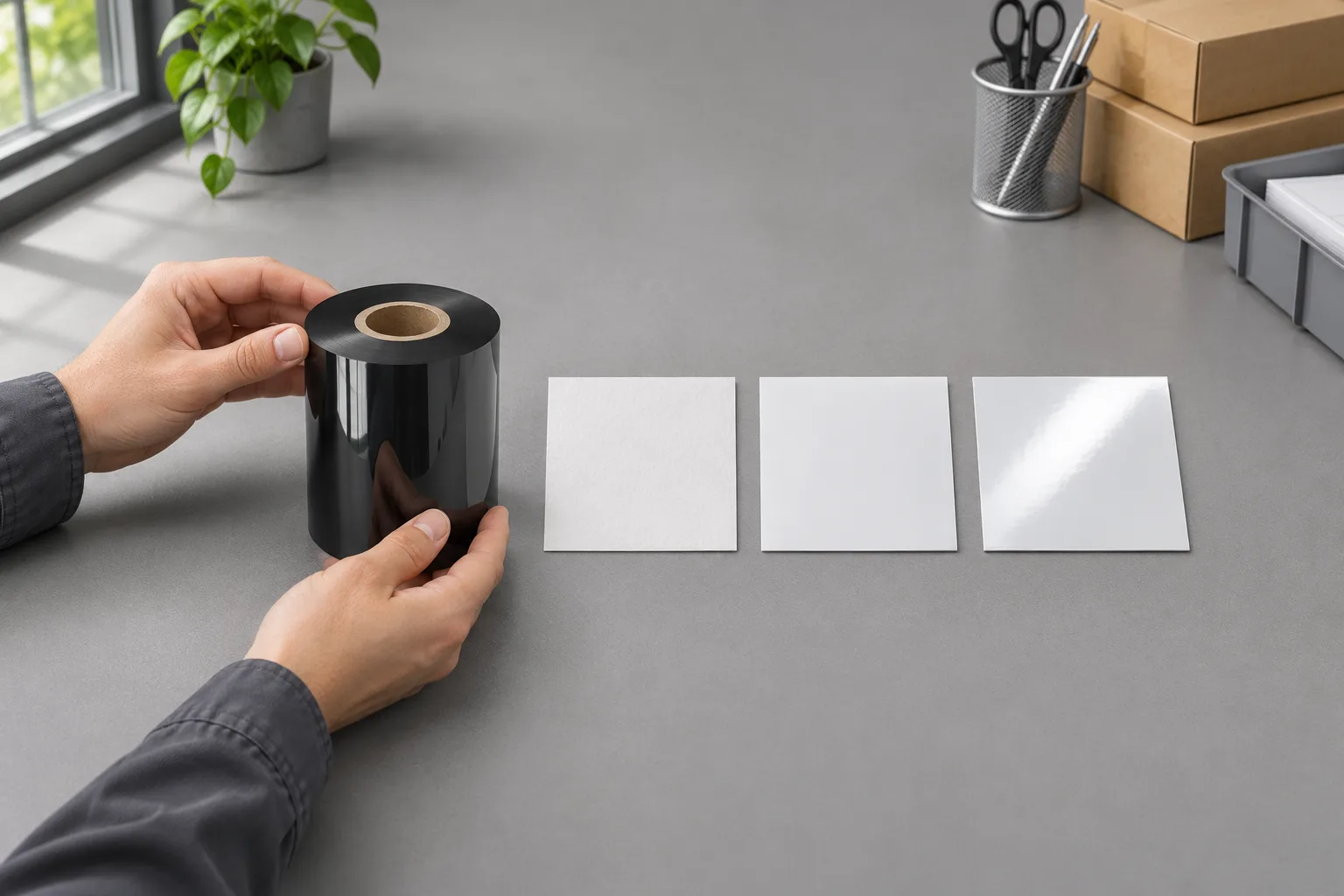
Three ribbon grades exist for thermal transfer printing: wax, wax-resin and full resin. The right grade follows from two inputs: the label stock you print on and the environment the applied label will live in.
Wax is the economical grade for general-purpose printing on paper. It is the least expensive option and works well for standard paper labels in everyday environments. Its limit is durability: wax print scratches easily, holds up poorly against moisture, chemicals and prolonged outdoor exposure, and only works properly on paper label stock. On polyester or polypropylene the wax ink does not bond and smears off within hours, so synthetic labels rule wax out.
Wax-resin blends the two ink chemistries and sits in the middle: noticeably better scratch and moisture resistance than wax, a wider range of usable label materials and a somewhat higher cost. Choose it for paper labels that will see some wear, and for matte synthetic stocks such as polypropylene or matte polyester, where the wax-resin ink bonds in a way standard wax does not. A move from paper to matte synthetic labels therefore means a ribbon change at the same time: wax has to move up to at least wax-resin.
Resin is the grade for gloss synthetics and harsh conditions. Its resin-based ink requires more heat and bonds differently to the label, giving an image significantly more resistant to chemicals, abrasion, extreme temperatures and UV exposure than wax or wax-resin. It costs more per roll and is not meant for everyday shipping labels; it earns its price on labels such as chemical drums in contact with solvents or outdoor asset tags in direct sun. On gloss polyester and gloss polypropylene it is the grade that transfers cleanly where wax-resin does not.
Check Ribbon Width and Print Settings Before You Order
A ribbon narrower than your label leaves blank areas, because the section of the label beyond the ribbon width prints without any ink transfer. Order ribbon at least as wide as your label; many operations size it slightly wider to ensure full coverage.
Print settings then have to follow the grade. A RONSU selection guide gives temperature settings of 65°C for wax, 80°C for wax-resin and 95°C for resin, with faster speeds possible for wax and slower speeds often necessary for complete resin transfer. Treat these figures as starting points from one guide rather than universal settings. Extra darkness only adds heat: resin on paper at the darkness needed for good transfer puts more heat through the printhead than necessary, accelerating wear without any benefit to label quality.
Values on a data sheet belong to the one product they describe, so compare sheets for the exact ribbon rather than the grade name. Link Solutions, for example, publishes a resin ribbon sheet that lists a polyester carrier, a melting point of 82°C and heat resistance of at least 180°C for that ribbon, while Avery Dennison's compatibility guide describes one uncoated transfer vellum (spec AA004) as printable at speeds of up to 150 mm/s but low in weather and chemical resistance. The label stock and the ribbon each bring their own limits to the pairing.
Colorfulttr is a manufacturer of thermal transfer ribbons, so the grade and width you settle on are consumables you buy and run on your own printers. A grade name on a quotation is not proof of a match: state the label material, printer model, print speed and the conditions the label must survive when you ask for a price, then test a sample before approving a full order.
Print a Sample and Read the Scratch Test
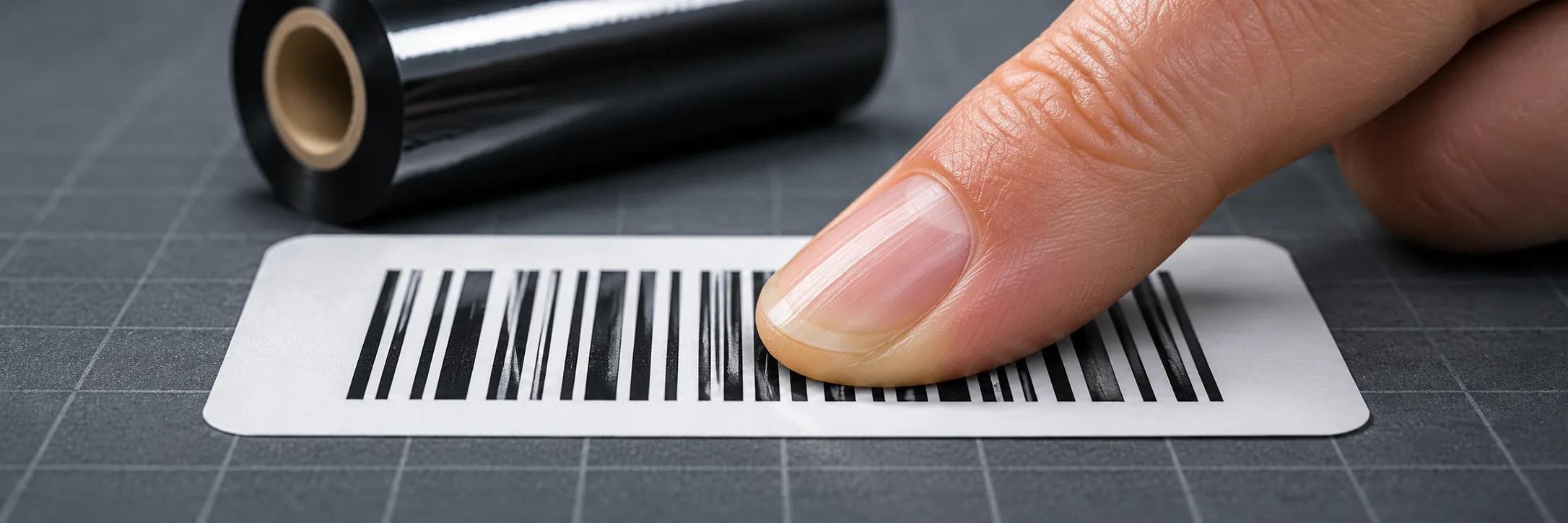
A fingernail scratch test on a freshly printed label shows within minutes whether a ribbon grade bonds to your label material.
- Print a label with the candidate ribbon on the label stock you actually use, then let it sit for a couple of minutes to cool and set.
- Run a fingernail firmly across the printed barcode or text, pressing and dragging rather than brushing lightly.
- Read the result: an image that holds clean with no transfer to the fingernail means the ribbon is bonding correctly and the grade suits that material.
A smear points to two different causes, and they need different fixes. If the ink comes off on the fingernail as a powdery residue, the ribbon is not bonding to the label surface at all: the grade and the label material are mismatched, reducing darkness will not fix it, and switching to the correct grade will. If the image smears but no ink lifts off, the darkness setting may be too high and the ink is melting without fully bonding, so reduce the darkness and reprint.
The test has one clear limit. It does not tell you whether the ribbon will survive chemical exposure or prolonged outdoor use, so a label bound for solvents or weather still needs a resin grade chosen for that exposure. The test does tell you immediately whether the ribbon and label chemistry are compatible, which is the most common mismatch in any thermal transfer setup.
Data and Evidence
The table condenses the grade choice; the temperatures are starting values from the RONSU guide, not settings for every printer.
| Grade | Label stock it bonds to | Durability of the print | Cost position | Starting temperature |
|---|---|---|---|---|
| Wax | Paper labels only | Scratches easily; poor resistance to moisture, chemicals and prolonged outdoor exposure | Least expensive | 65°C |
| Wax-resin | Paper labels and matte synthetics (polypropylene, matte polyester) | Noticeably better scratch and moisture resistance than wax | A bit more than wax | 80°C |
| Resin | Gloss synthetics such as gloss polyester and gloss polypropylene | Significantly more resistant to chemicals, abrasion, extreme temperatures and UV exposure | Costs more per roll | 95°C |
Two further conditions complete the picture. Faster speeds are possible for wax ribbons, while slower speeds are often necessary for complete resin transfer. Resin on paper is technically possible but not recommended for most situations, because resin requires a higher darkness setting than wax or wax-resin to transfer cleanly to paper.
Frequently Asked Questions
Can I use a resin ribbon on paper labels?
Technically yes, but it is not recommended for most situations. Resin needs a higher darkness setting than wax or wax-resin to transfer cleanly to paper, and that extra heat accelerates printhead wear without any benefit to label quality. Check whether a wax-resin already meets the durability need before paying for resin.
Which ribbon grade do I need for polyester or polypropylene labels?
Use wax-resin on matte polypropylene or matte polyester, and full resin on gloss polyester or gloss polypropylene, where wax-resin does not transfer cleanly. Wax does not bond properly to synthetic labels and smears or rubs off within hours.
What temperature should I start with when changing ribbon grade?
One manufacturer's guide gives 65°C for wax, 80°C for wax-resin and 95°C for resin. Treat these as starting points, not universal settings: faster speeds are possible with wax, while resin often needs slower speeds for complete transfer.
My label smears after printing. Is it the ribbon grade or the darkness setting?
Do the scratch test. Ink that comes off on your fingernail as a powdery residue means the ribbon is not bonding to the label surface, a mismatch between grade and material that reducing darkness will not fix; switch grade. A smear without that lift suggests the darkness is too high; reduce the darkness and reprint.
Recommended products for this industry
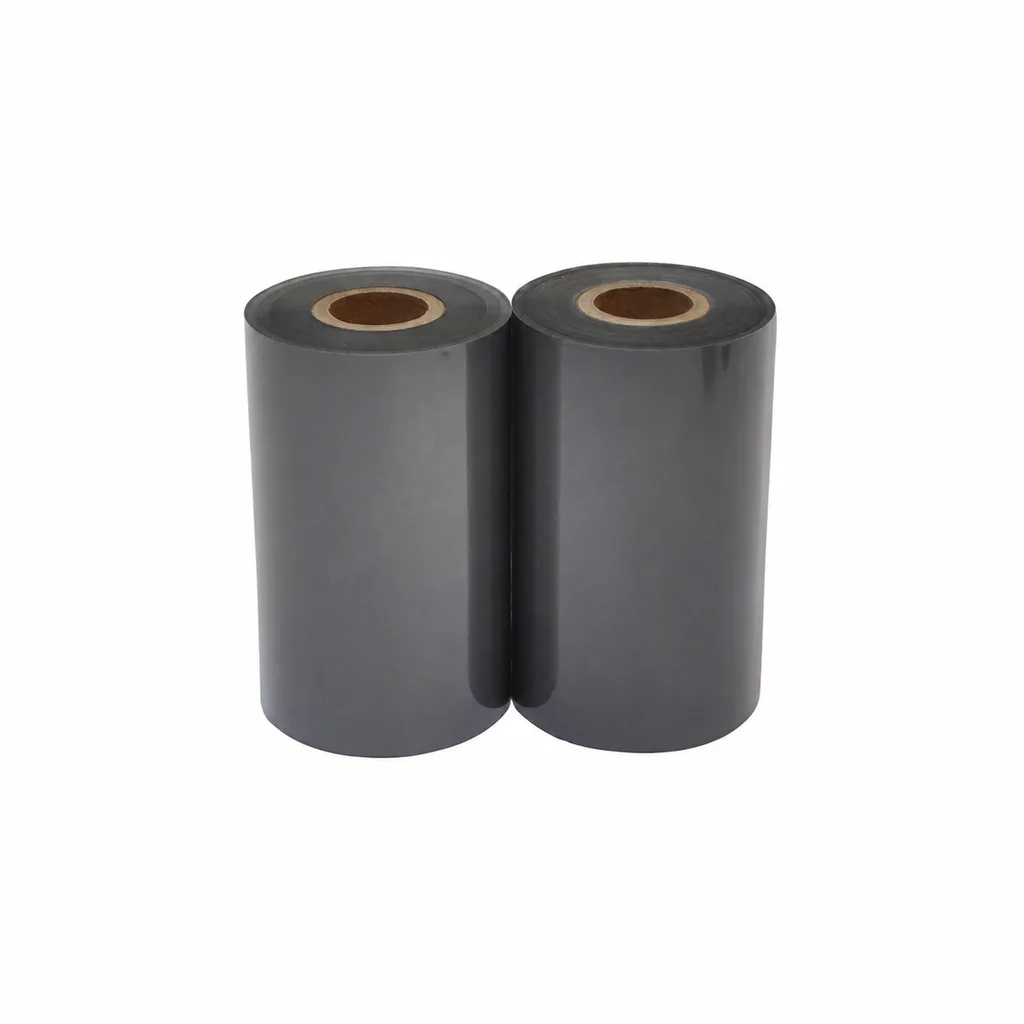
Black Resin Thermal Transfer Ribbon for Label Printing - CL-Z373
CL-Z373 is a black resin thermal transfer ribbon for label printing with desktop or industrial flat-head barcode printers at speeds of ≤6 ips (inches per second). Listed applications include electronics processing, tire identification, automotive manufacturing, pharmaceutical packaging, cosmetic labels and outdoor identification. Selection depends on the actual label material, printer and exposure conditions. Fine-line, small-character and resistance results were obtained on coated paper; print quality and image durability may vary with the printer and print substrate.
View details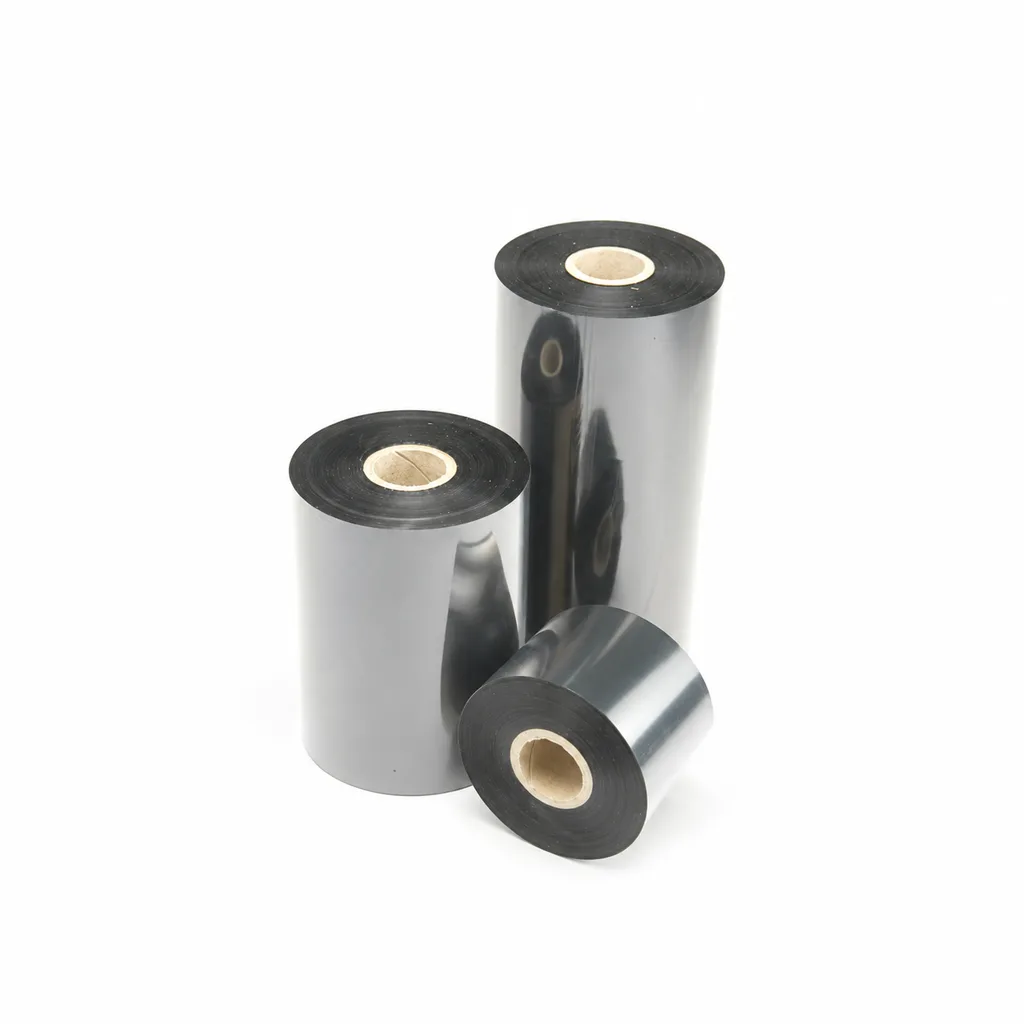
CL-Z203 Wax-Resin Thermal Transfer Ribbon for Barcode Labels
A black wax-resin thermal transfer ribbon for flat-head printing, with listed applications including retail, warehousing, logistics and garment tags. Select it against your actual label material and desktop or industrial barcode printer at speeds ≤6 ips (inches per second). Fine-line, small-text and durability results were obtained on coated paper; print quality and image durability may vary with the printer and printing substrate.
View details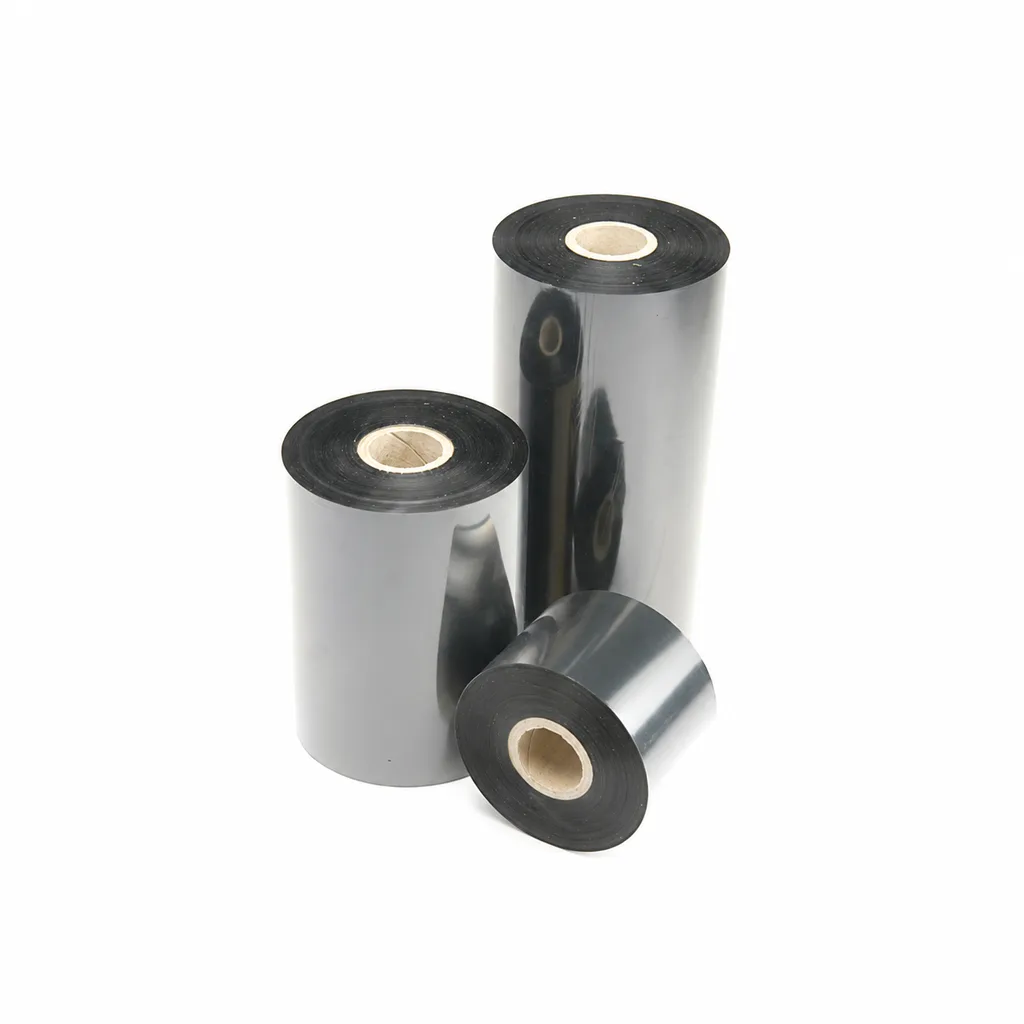
CL-Z213 Near-Edge Wax-Resin Thermal Transfer Ribbon for Barcode Labels
An enhanced black near-edge wax-resin thermal transfer ribbon for near-edge barcode printers and low- to medium-speed thermal transfer overprinting (TTO). Listed applications include retail labels, warehousing, garment tags and packaging identification. Match the printer, actual print medium and operating speed before selection: print quality and image durability can vary with the printer and substrate.
View details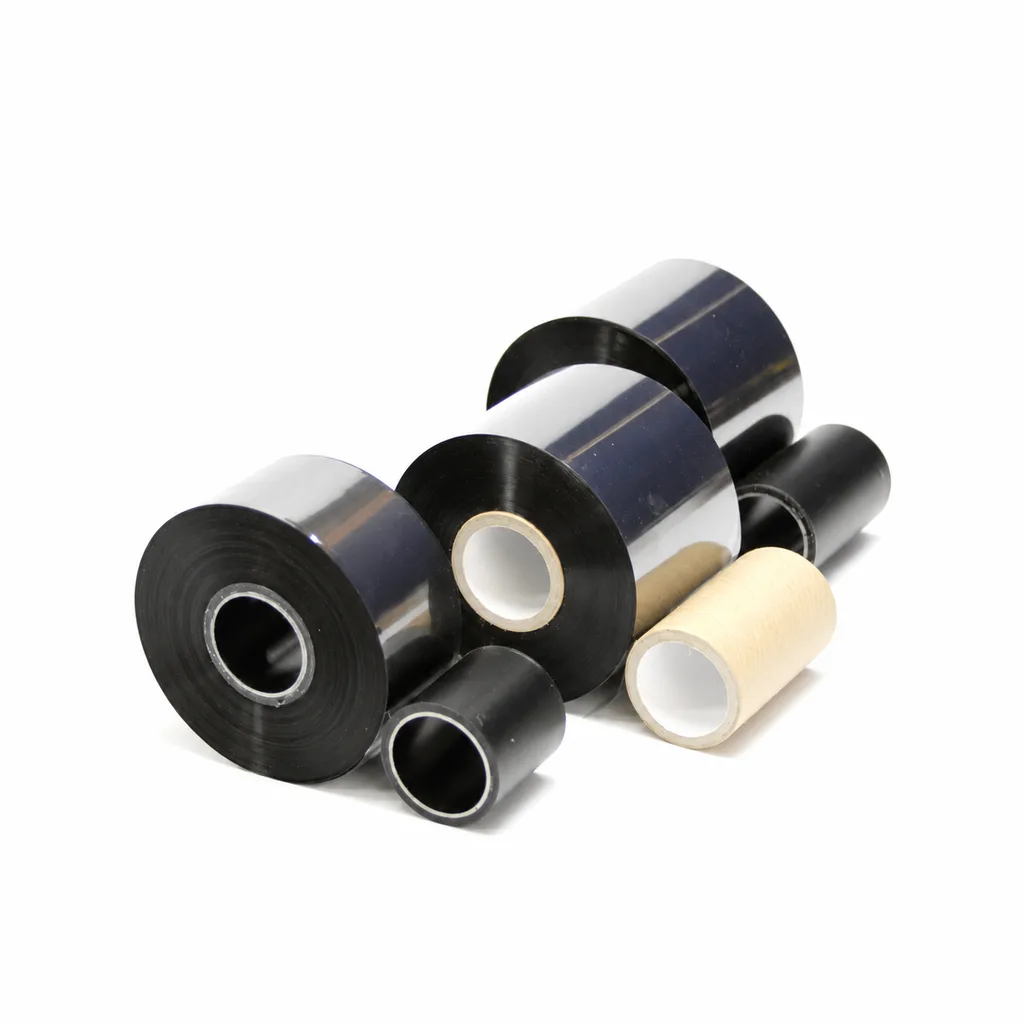
CL-Z215 Wax-Resin Thermal Transfer Ribbon for Packaging and Barcode Printing
CL-Z215 is a black, general-purpose wax-resin thermal transfer ribbon for thermal transfer overprinting (TTO) and near-edge barcode printers. Listed applications include retail labels, prepackaging, food packaging, pharmaceutical packaging, hot packaging and the frozen-food sector. Select it against your actual printer, printing material and required speed, then confirm print quality and image durability on that combination. The stated speed limits and durability results apply only within the documented conditions; they are not universal compatibility or long-term temperature guarantees.
View detailsNeed the right ribbon for your label application?
Share the label material, printer and operating environment. Our team will recommend a tested combination.
