

- Original TTR manufacturer since 2013
- Automated coating and slitting
- IQC / IPQC / OQC control
- ANSI barcode grade testing
- -20°C to 120°C environmental testing
- Batch-level traceability
- ANSI barcode grade
- Batch traceability
- RoHS / REACH compliance
- SGS and MSDS documents on request
Key Takeaways
- A thermal transfer ribbon is an ink carrier used with a thermal transfer printer.
- Direct thermal printing uses heat-sensitive material without a ribbon.
- Wax, wax/resin and resin describe ribbon material categories; TTO describes a printing application.
- Flat-head and near-edge descriptions identify different printer-head contexts in the cited product examples.
- A ribbon category does not by itself establish the result on a particular printer and material.
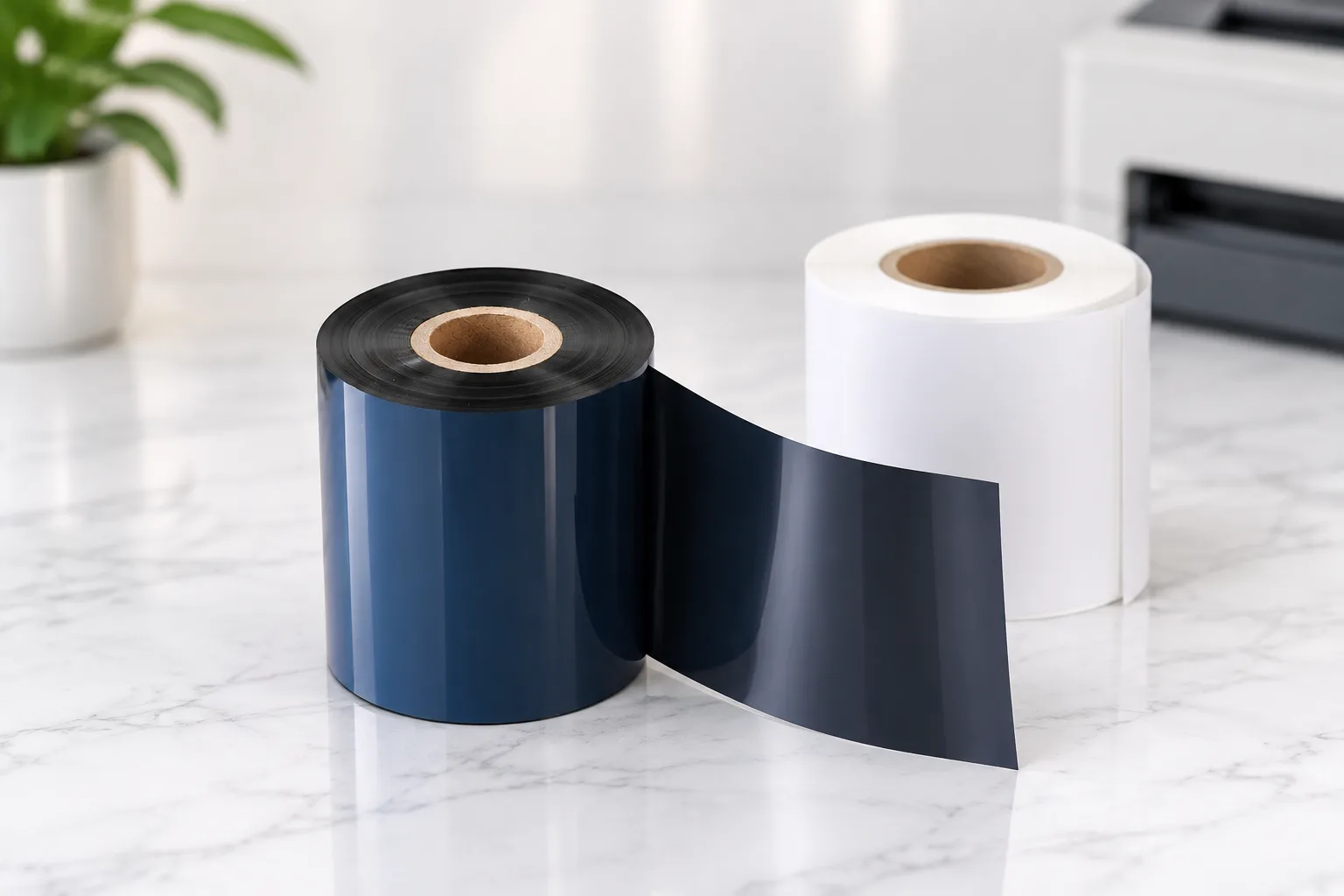
What a thermal transfer ribbon does
A thermal transfer ribbon (热转印色带) is a carrier for ink used to make an image on a receiving material. It consists of a thin film coated on one side with wax-based, resin-based or mixed wax/resin ink. The film and ink are parts of the ribbon; the label or packaging that receives the image is a separate material.
During printing, the printhead heats the ribbon and ink transfers to the receiving surface. Heated elements on the head act on the back of the ribbon, releasing ink onto the label underneath. This is why the word “transfer” matters: the printed image comes from the ribbon’s ink rather than being the ribbon itself.
Thermal transfer is one way to print labels, and thermal transfer overprinting (TTO) applies the process to coding flexible packaging or labels. The product matrix describes TTO uses such as printing production dates and batch numbers. The same broad transfer principle therefore appears in different applications, but the application name does not specify every characteristic of the ribbon.
These descriptions draw on Thermal Transfer Ribbon - 经核验事实资产(内部), polyester or other high-density thin film - 经核验事实资产(内部), printhead - 经核验事实资产(内部) and the company’s product matrix, 公司现行产品矩阵(2026-10-02校订).

How ribbon materials and printing methods differ
Wax, wax/resin and resin identify material categories, while thermal transfer and direct thermal identify printing methods. These terms answer different questions: one names the ribbon material, and the other describes how an image is made.
In the company product matrix, wax ribbons are described for materials including coated paper and label paper; mixed ribbons are listed for paper, PVC and other media. Resin and wash-care resin appear as separate categories, with wash-care applications including garment care labels. These are descriptions of the listed categories and applications, not a promise that every ribbon in a category works on every surface.
Direct thermal printing uses heat-sensitive material without a ribbon, whereas thermal transfer uses a ribbon. A printer described simply as “thermal” can refer to either method, so the word alone does not tell a reader whether ribbon is used. The distinction is about the print method, not the colour or material category of a ribbon.
TTO is a thermal transfer overprinting application, not another name for wax or resin. A TTO ribbon can itself have a material designation: the cited CL926 product data identifies it as a mixed-base ribbon for near-edge equipment. Source: 公司打印机介质兼容性与材质规格(已审第一方来源) and 公司碳带TDS与原始规格入口.
What head type and product names can tell you
Flat-head and near-edge describe different head contexts in the cited ribbon data. The distinction sits alongside the ink category: a material name describes one aspect of a ribbon, while the head designation describes the equipment context associated with a product.
The company TDS overview identifies CL507 and CL807A as flat-head resin ribbons and CL926 as a near-edge TTO mixed-base ribbon. It lists the first two for printers including Zebra and SATO, and CL926 for coders including Videojet, DOMINO and Markem Imaje. These are examples from specific product information, not a blanket statement about every model sold under those brands.
A product name or category can orient a conversation, but it does not demonstrate a complete match for a particular printer and receiving material. Similarly, a claim about a ribbon’s general material category does not establish a durability result for a finished label. Read the named product’s data in the context of the actual printer, media and intended use.
Data and Evidence
The following examples show what the cited company documents actually describe and the limits of each description.
| Example | What the source describes | What it does not establish |
|---|---|---|
| Wax ribbon category | Lists coated paper and label paper among applicable media. | Compatibility with every paper or printer. |
| Wash-care resin | Lists garment care labels among applications. | A washing result for an unspecified label and process. |
| CL926 | Mixed-base, near-edge TTO ribbon; the TDS overview lists flexible packaging bags as recommended media. | Compatibility with every near-edge printer or packaging film. |
Sources: 公司现行产品矩阵(2026-10-02校订) and 公司碳带TDS与原始规格入口. The TDS overview states that its information is a general guide to material performance. To take the explanation further, compare the named ribbon’s documentation with the printer and receiving material involved in the intended application.
Frequently Asked Questions
Does direct thermal printing use a thermal transfer ribbon?
No. Direct thermal printing uses heat-sensitive material without a ribbon; thermal transfer printing uses a ribbon.
Is a TTO ribbon the same as a flat-head barcode ribbon?
TTO describes a thermal transfer overprinting application. In the cited product data, CL926 is a near-edge TTO ribbon, while CL507 and CL807A are flat-head ribbons; the names alone do not establish interchangeability.
Does a resin ribbon guarantee a washable print on any label?
No. Resin is a material category, while wash-care resin is described for particular uses. A category name alone does not establish the result on a specific label.
Related Products & Guides
Recommended products for this industry
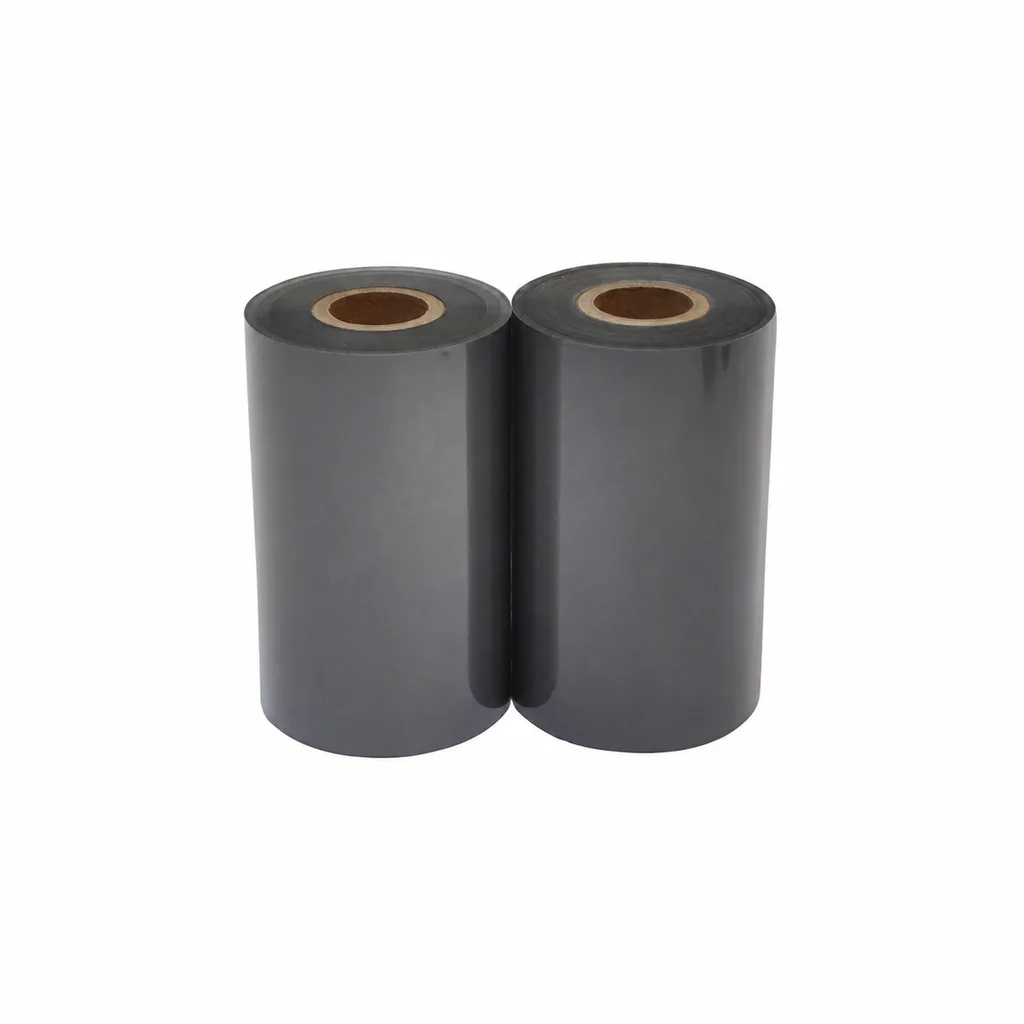
Black Resin Thermal Transfer Ribbon for Label Printing - CL-Z373
CL-Z373 is a black resin thermal transfer ribbon for label printing with desktop or industrial flat-head barcode printers at speeds of ≤6 ips (inches per second). Listed applications include electronics processing, tire identification, automotive manufacturing, pharmaceutical packaging, cosmetic labels and outdoor identification. Selection depends on the actual label material, printer and exposure conditions. Fine-line, small-character and resistance results were obtained on coated paper; print quality and image durability may vary with the printer and print substrate.
View details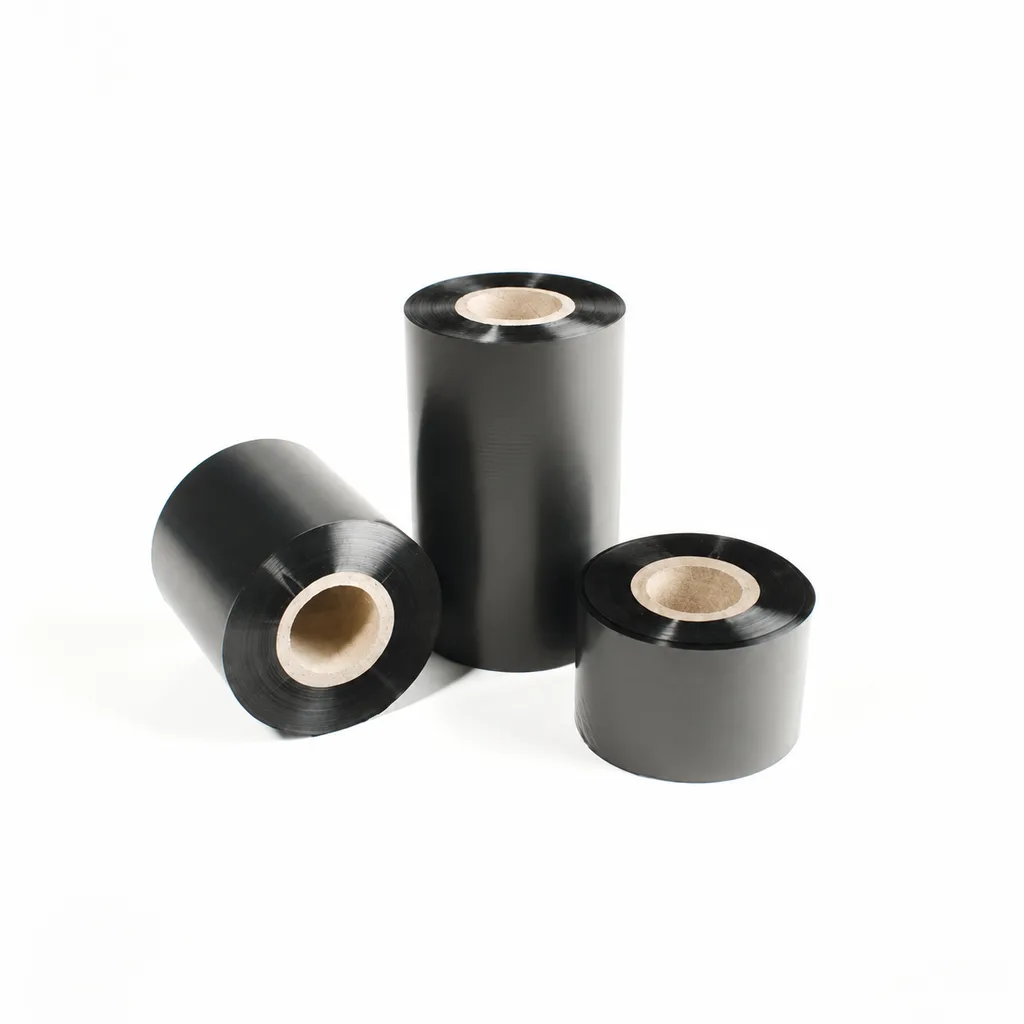
CL-Z112 Enhanced Wax Thermal Transfer Ribbon for Paper Labels and Tags
An enhanced wax thermal transfer ribbon with black ink for paper labels and tags used in retail, warehousing and logistics. It is specified for flat-head printing on desktop or industrial barcode printers at ≤8 inches per second (ips). Select it by checking the actual label material, printer configuration and handling conditions: image-quality, rub-resistance and cold-chamber results were obtained on coated paper, and print quality and image durability may vary with the printer and print medium.
View details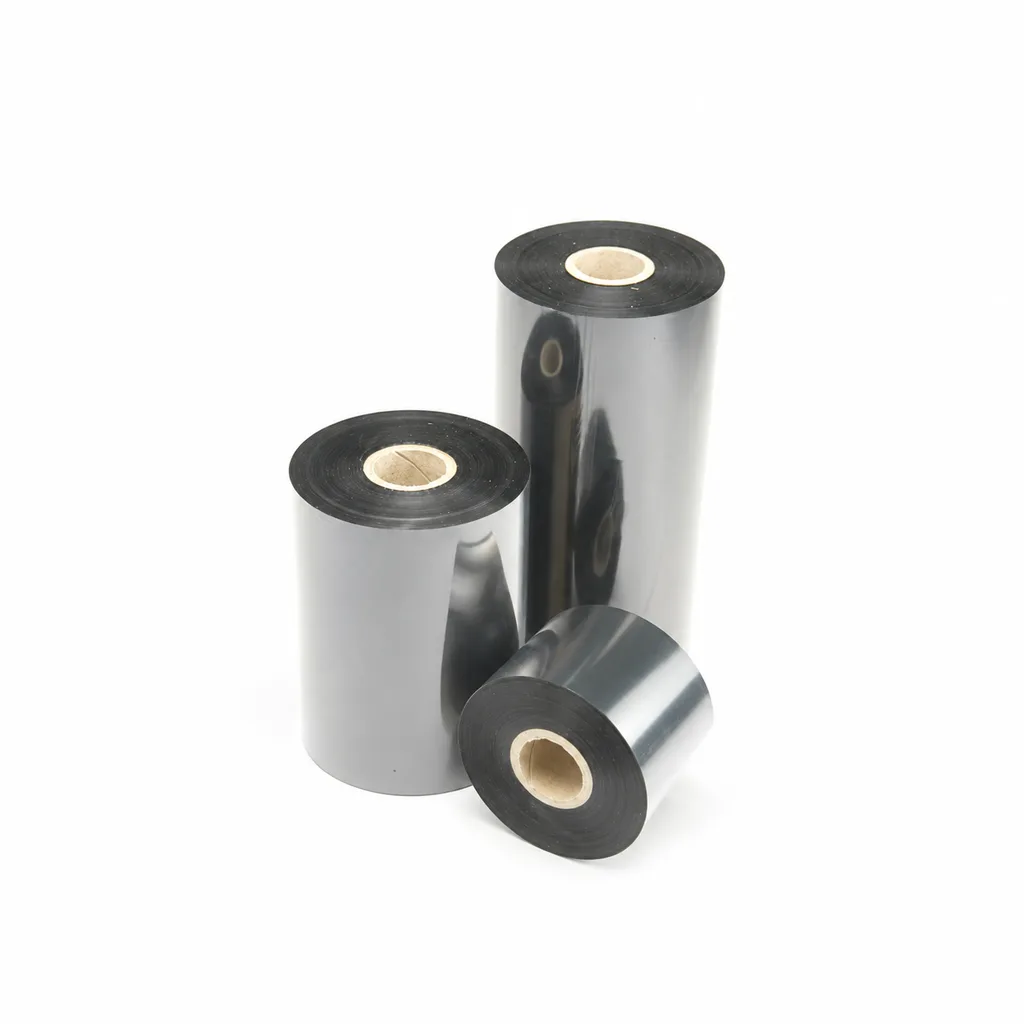
CL-Z203 Wax-Resin Thermal Transfer Ribbon for Barcode Labels
A black wax-resin thermal transfer ribbon for flat-head printing, with listed applications including retail, warehousing, logistics and garment tags. Select it against your actual label material and desktop or industrial barcode printer at speeds ≤6 ips (inches per second). Fine-line, small-text and durability results were obtained on coated paper; print quality and image durability may vary with the printer and printing substrate.
View details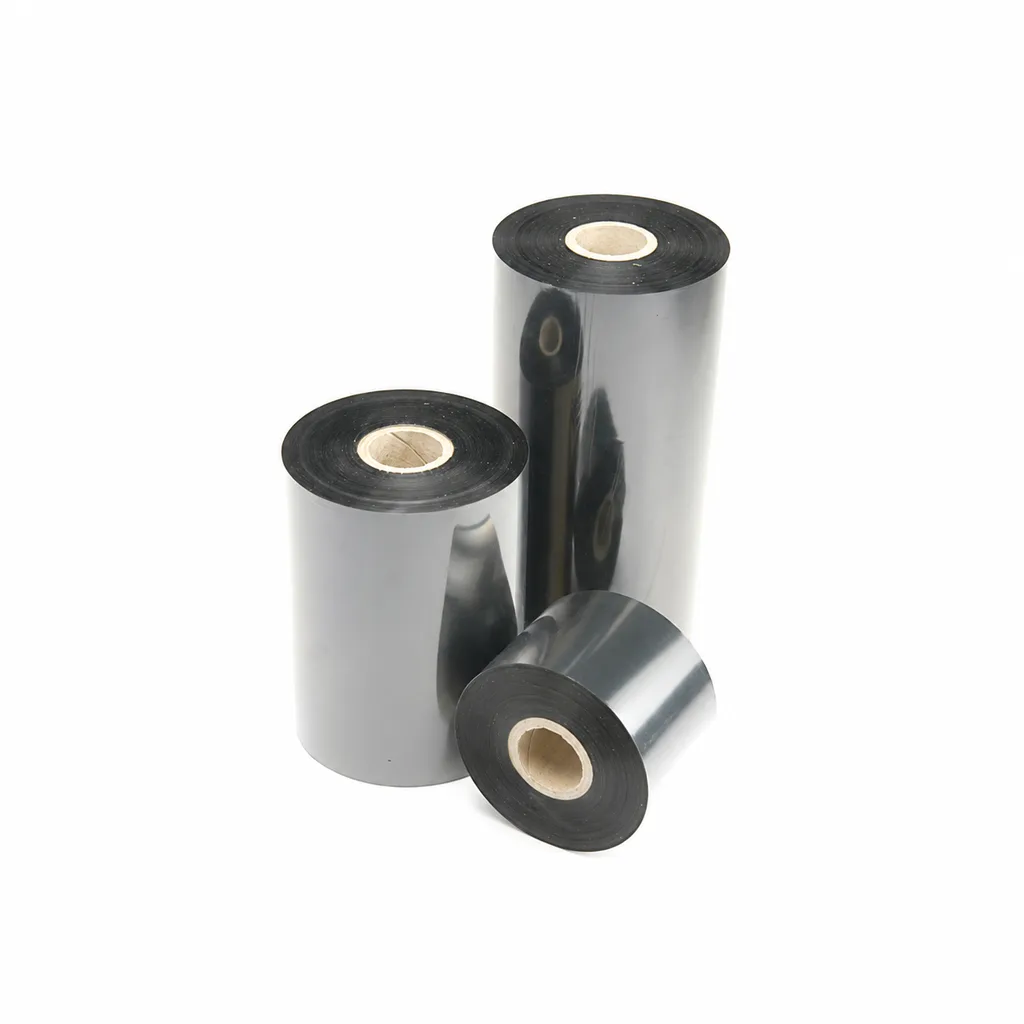
CL-Z213 Near-Edge Wax-Resin Thermal Transfer Ribbon for Barcode Labels
An enhanced black near-edge wax-resin thermal transfer ribbon for near-edge barcode printers and low- to medium-speed thermal transfer overprinting (TTO). Listed applications include retail labels, warehousing, garment tags and packaging identification. Match the printer, actual print medium and operating speed before selection: print quality and image durability can vary with the printer and substrate.
View detailsNeed the right ribbon for your label application?
Share the label material, printer and operating environment. Our team will recommend a tested combination.
