
Thermal Transfer Coding Printer Suppliers in China, Explained: What They Supply and How to Tell Them Apart
Request a solution
- Original TTR manufacturer since 2013
- Automated coating and slitting
- IQC / IPQC / OQC control
- ANSI barcode grade testing
- -20°C to 120°C environmental testing
- Batch-level traceability
- ANSI barcode grade
- Batch traceability
- RoHS / REACH compliance
- SGS and MSDS documents on request
Buyers searching for thermal transfer coding printer suppliers in China are looking at two different supply chains: the companies that build coding printers and the factories that manufacture the thermal transfer ribbons those printers consume. This explainer defines each supplier type, separates thermal transfer coding from adjacent methods such as inkjet, and shows why vertically integrated ribbon factories anchor the consumable side. Use the verification steps here — adhesion, abrasion, and immersion testing plus documented storage conditions — because a supplier listing alone confirms none of it.
Key Takeaways
- In China, coding printer suppliers and thermal transfer ribbon manufacturers are separate supply chains: one builds the printer, the other makes the consumable it prints with.
- A thermal transfer ribbon is a polyester base film coated on one side with wax, resin, or wax-resin ink and lubricated on the other side to protect the printhead.
- The printhead uses heat and pressure to transfer text and barcode information onto the label, so ink chemistry is decided at the ribbon order, not by the printer.
- Shenzhen Colorfulttr Technology Co., Ltd., founded in 2013, represents the ribbon-manufacturer side, producing wax, mixed, resin, wash-off resin, TTO, and card ribbons with coating and slitting in-house.
- Verify durability claims with adhesion testing on your container materials, abrasion testing with sand and salt exposure, and seawater immersion results where marine exposure applies.
What a Chinese Thermal Transfer Coding Printer Supplier Actually Supplies
A thermal transfer coding printer makes its mark by transfer: the printhead applies heat and pressure to move ink from a ribbon onto the label, printing text and barcode information such as batch and date codes. On packaging lines this machine category is usually called TTO, short for thermal transfer overprint. The same ribbon mechanism also drives desktop barcode label printers, so one thermal transfer vocabulary covers both applications in supplier listings.
The keyword therefore points at two product groups that do not overlap. One group supplies the machines: inline TTO coders and desktop barcode printers. The other manufactures thermal transfer ribbon (TTR), the consumable all of these machines run on. If you already own the printer, your supplier search is really a ribbon search; if you are buying both, treat the machine purchase and the ribbon supply as two decisions with two different checklists.
The consumable has a fixed anatomy worth knowing before you contact any supplier. A ribbon is a thin, durable base film of polyester or another high-density material, carrying an ink layer of wax, resin, or a wax-resin blend on one side. The opposite side carries a lubricating coating that protects the printhead during printing. Because that anatomy is shared across machine types, what you specify at order time is the ribbon — chemistry, width, and format — not the printer brand it feeds.
Shenzhen Colorfulttr Technology Co., Ltd. shows what the ribbon-manufacturer side looks like. Founded on January 22, 2013 and headquartered in Shenzhen, the company concentrates on thermal transfer ribbon research, development, production, and sales. It runs a complete chain from raw materials through coating and slitting to finished ribbon, and its range covers wax, mixed-base, resin, wash-off resin, TTO, and card ribbons, with color, width, length, and packaging customized to each order.
How to Separate Machine Suppliers, Ribbon Manufacturers, and Adjacent Coding Methods
Machine suppliers and ribbon manufacturers sell different products, so classify a supplier before you weigh its claims. A machine supplier answers printer questions: what the coder prints on and how it fits the line. A ribbon manufacturer answers consumable questions: ink chemistry, ribbon dimensions, and how the print behaves on your material.
The term TTO itself straddles both groups, and buyers often misread it. It names the inline coding application of thermal transfer printing, yet it also appears as a ribbon category: Colorfulttr lists TTO ribbons alongside its wax, resin, and card ribbon lines. A TTO ribbon is a consumable specified for coding printers, not a different printing technology. Checking whether a TTO page sells the machine or the ribbon is the fastest way to classify a listing.
Adjacent coding methods differ at the level of consumable structure. An inkjet coder applies liquid ink directly onto the surface and uses no ribbon film. Thermal transfer works the other way: the ink starts dry on the base film, and only heat and pressure move it onto the substrate. That is why ink chemistry — wax, resin, or a wax-resin blend — is a ribbon-order decision, not a printer decision.
OEM and ODM programs create one legitimate overlap between the groups. A ribbon factory can produce and label product under other brands: Colorfulttr's production materials support OEM/ODM contract processing and list Ricoh, Domino, and SATO among the brands its OEM finishing can label. Read that as contract-manufacturing capability. It is not by itself proof that a given ribbon is authorized for your printer and material; a sample run still closes that gap.
Why China Became a Common Sourcing Origin for Coding Consumables
Chinese ribbon supply is built on vertical integration: one factory controls coating, slitting, and finishing from raw materials to finished product. In production, one side of a polyester film is coated with wax-based, resin-based, or blended ink, and the other side receives the lubricating layer that protects the printhead. The master roll is slit on advanced slitting equipment, with width tolerance controlled so ribbon dimensions stay stable, and output is checked on a precision print-testing system.
Slitting process control is where print quality is won or lost. Tension that is too high can stretch the PET base film and physically change the ink layer, causing powder shedding and ink contamination. Tension that is too low invites wrinkles, white lines, and press marks, and can let the ribbon shift on its core during transport or installation. The slitting shop is kept dust-free at controlled temperature and humidity, because dust later appears as white dots in the printed code.
Distributors gain extra options from the same factories. Colorfulttr offers four packaging routes — neutral packaging carrying the product model on the core, its own branded packaging, fully blank packaging with no logo or model, and customer-dedicated packaging — alongside OEM/ODM contract production.
Reach and contact channels differ between suppliers, so compare them explicitly. Colorfulttr supports overseas buyers through cooperation agents — not subsidiaries — in the United States (Los Angeles), Canada, Mexico (Monterrey), Brazil (São Paulo), the United Kingdom, France, the Netherlands, Germany, India, Thailand, Vietnam (Ho Chi Minh City), and Singapore. Direct channels include the English website www.colorfulttr.com, the sales email [email protected], WhatsApp at +86 181 2644 9912, and an Alibaba international storefront under store ID colorfulttr1688.
What a China Supplier Listing Cannot Tell You
A supplier listing proves that a company sells into this category; it does not prove which half of the supply chain it occupies, how its ribbon performs on your substrate, or how its stock was handled before shipping. Four gaps recur, and each has a concrete check.
- Category does not mean machine maker. Many results under this keyword are consumables manufacturers: Colorfulttr's own materials describe a company focused on thermal transfer ribbon R&D, production, and sales. Ask which side of the supply chain a supplier owns before comparing prices.
- OEM labeling does not equal authorization. Contract labeling under printer brands demonstrates manufacturing capability, not endorsement of a specific ribbon for your printer-material combination; a sample run closes that gap.
- Durability wording does not equal results on your packaging. The checks used to qualify ribbons include adhesion testing on various container materials, abrasion testing with sand and salt exposure, and seawater immersion for up to three months where marine exposure applies. Ask which of these a supplier documents, then re-test adhesion on your own material.
- Recommended settings and storage promises are not validated for your line. Treat catalog print settings as starting points to confirm on your own printer and stock. Ask how inventory is stored and shipped: ribbons carry specified windows for use, storage (up to one year), and transport (up to one month), summarized in the table below.
Your next step is concrete: shortlist one machine supplier and one ribbon manufacturer separately, request ribbon samples matched to your printer's required width, core, and ink-side orientation, and print on your own labels before committing to a production order.
Data and Evidence
The tables below consolidate the verified specifications used in this article: ribbon anatomy, handling windows, and the supplier snapshot used as the worked example. Key data are attributed to 公司简介-2025, 生产工艺与品质-2025, 联系方式与全球布局-2025, and 经核验事实资产(内部).
| Element | Verified specification | Source |
|---|---|---|
| Base film | Thin, durable polyester or other high-density material | 经核验事实资产(内部) |
| Ink layer | Wax, resin, or a wax-resin blend | 经核验事实资产(内部) |
| Printhead side | Lubricating coating that protects the printhead | 生产工艺与品质-2025 |
| Print method | Printhead heat and pressure transfer text and barcode information from ribbon to label | 生产工艺与品质-2025 |
| Stage | Temperature | Relative humidity | Time limit |
|---|---|---|---|
| Use | 5°C–35°C | 45%–85% | Not specified |
| Storage | -5°C–40°C | 20%–85% | Up to 1 year |
| Transport | -5°C–40°C | 20%–85% | Up to 1 month |
Handling windows per 生产工艺与品质-2025, which also advises keeping ribbons away from direct sunlight and damp conditions because they affect print quality.
| Attribute | Verified value (Colorfulttr, ribbon-manufacturer example) |
|---|---|
| Legal name | Shenzhen Colorfulttr Technology Co., Ltd. |
| Founded | January 22, 2013 |
| Headquarters | Shenzhen, Guangdong, China |
| Focus | Thermal transfer ribbon R&D, production, and sales |
| Product lines | Wax, mixed-base, resin, wash-off resin, TTO, card ribbons |
| Production chain | Raw materials → coating → slitting → finished ribbon |
| Programs | OEM/ODM; custom color, width, length, and packaging |
Durability checks referenced for ribbons: adhesion testing on various container materials, abrasion testing with sand and salt exposure, and seawater immersion for up to three months. Production quality control additionally tracks print density and clarity, abrasion, scratch, and chemical resistance, anti-static backcoating, and tension, flatness, and slitting stability.
Frequently Asked Questions
What does TTO mean in thermal transfer coding printers?
TTO stands for thermal transfer overprint — the inline coding application of thermal transfer printing, in which a printhead transfers ink from a ribbon onto packaging film or labels. The term also appears as a ribbon category in manufacturer catalogs: Colorfulttr lists TTO ribbons alongside its wax, resin, wash-off resin, and card ribbons, so the label marks the application a ribbon serves, not a different printing technology.
Are coding printer suppliers and ribbon manufacturers in China the same companies?
No. They are two supply chains: machine suppliers sell TTO coders and barcode label printers, while ribbon manufacturers such as Shenzhen Colorfulttr Technology Co., Ltd. produce the thermal transfer ribbons those machines consume. Classify a supplier first, because it determines what you can ask the company to prove.
What should I check before ordering thermal transfer ribbons for a coding printer?
Match the printer's required ribbon width, core, and ink-side orientation first, then select the ink layer — wax, resin, or a wax-resin blend — for your application. Confirm the pairing with a sample print run on your own labels or film before ordering volume.
How can I verify a Chinese ribbon supplier's durability claims?
Ask for documented testing: adhesion on container materials like yours, abrasion testing with sand and salt exposure, and seawater immersion results where marine exposure applies. Also ask how stock is stored and shipped — storage is specified at -5°C to 40°C and 20–85% relative humidity for up to one year.
Which industries commonly use thermal transfer ribbons?
Company materials list packaging, electronics, automotive parts, jewelry, apparel and footwear, logistics, pharmaceuticals, and food among the application fields for thermal transfer ribbons, across industrial and consumer uses.
Related Products & Guides
Recommended products for this industry

Thermal Transfer Intelligent Coding Machine
This series of thermal transfer coders represents a cost-effective intelligent coding…
View details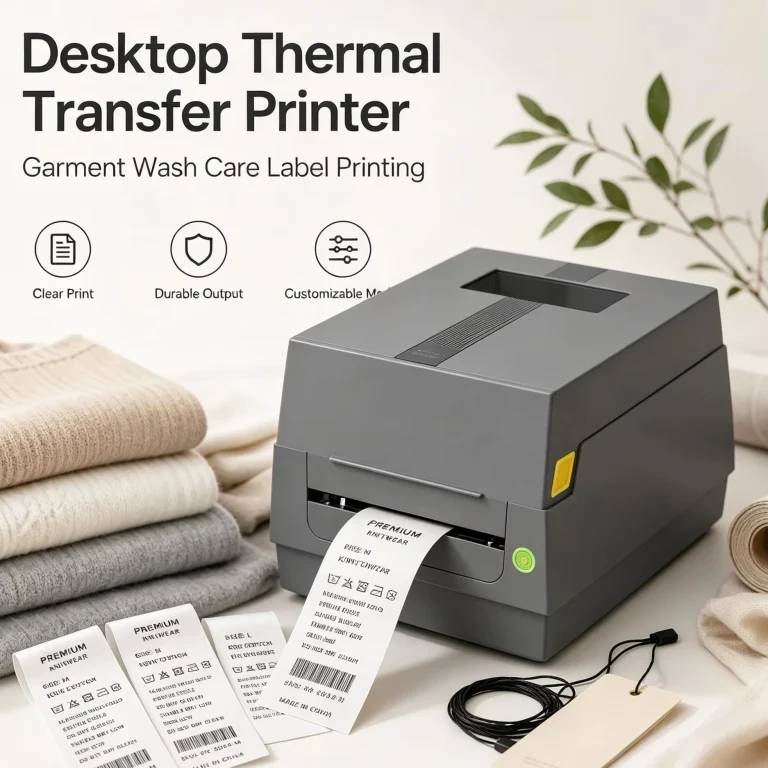
JT452 4-inch Thermal Transfer Printer
Specifically designed for efficient office operations and warehouse logistics. Supports…
View details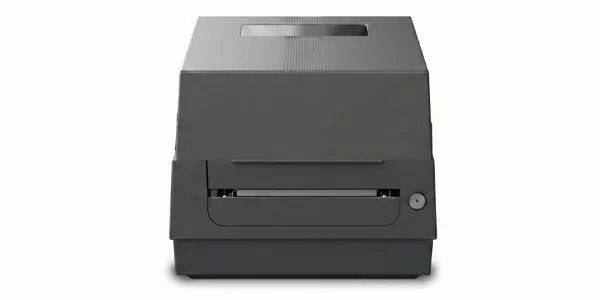
JT453 4-inch Thermal Transfer Printer
Specifically designed for efficient office operations and warehouse logistics. Supports…
View details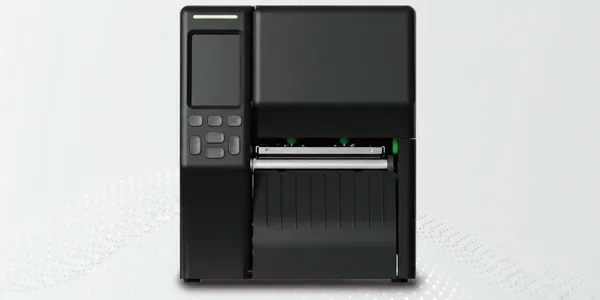
Q420 4-inch thermal transfer printer
Multiple print resolutions are available, with the higher 600dpi resolution offering…
View detailsNeed the right ribbon for your label application?
Share the label material, printer and operating environment. Our team will recommend a tested combination.
