
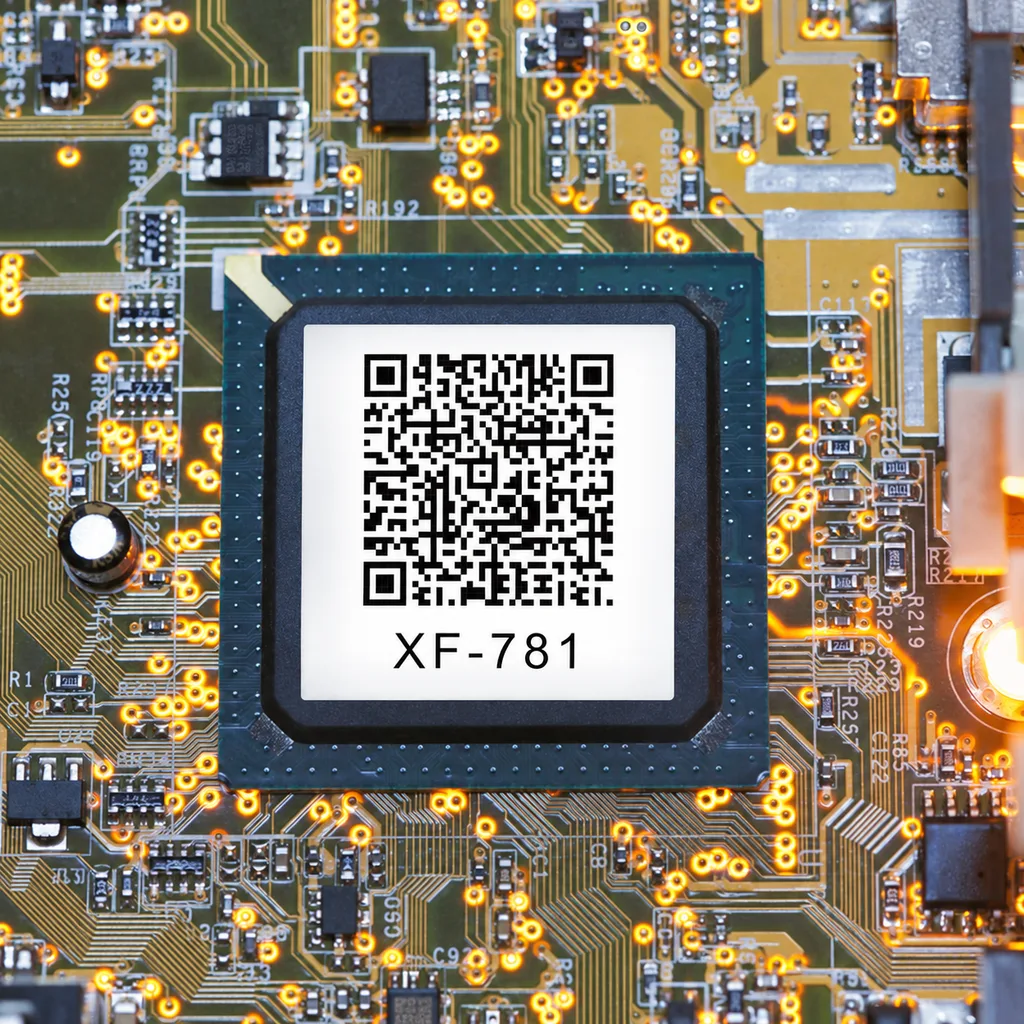
CL-781 Antistatic Polyimide Labels for PCB Process Tracking
CL-781 is a white gloss polyimide (PI) label material for printed circuit board (PCB) and sensitive-component identification in electronics manufacturing. Its stated applications include wave soldering and reflow soldering, with antistatic properties for label use around electrostatic discharge (ESD)-sensitive components. Select against the actual thermal profile, label position and chemical exposure; the stated temperature range does not establish exposure duration or cycle limits.
- -40-300℃Stated temperature range; exposure duration unspecified
- <100 voltsPeel voltage
Product Overview
Use this antistatic PI label material to identify circuit boards and sensitive components during process control and product traceability. The white gloss coating, PI substrate and stated 1mil thickness provide the material identity for selection. The thickness is not identified as the total label construction thickness.
For wave soldering or reflow soldering, review the label location, peak temperature, dwell time and number of passes. The stated temperature range is -40-300℃, but exposure duration and process-cycle limits are not specified. Validate adhesion and information readability through the intended soldering and cleaning sequence before approving the application.
Assess the stated antistatic value separately from the peel voltage. The available specification does not identify the resistance measurement object, test method or environmental conditions, so it should not be reclassified as surface resistivity or treated as proof of compliance for an entire ESD control system. As a general selection principle, a PI substrate alone does not establish antistatic performance.
Chemical resistance and halogen-free construction are stated material characteristics, but specific chemicals, concentrations and exposure times are not provided. Check the intended flux and cleaning process. The source lists SGS/UL/RoHS under certification standards; this listing does not establish certification of CL-781 or our company. Confirm applicable model-specific records and report scope when procurement requires them.
Core Advantages
Antistatic material for sensitive-component labeling
Intended to help protect sensitive components from ESD during label use. Evaluate the antistatic value and peel voltage against the acceptance requirements for the actual labeling operation; these two values do not establish complete ESD system compliance.
For electronics soldering processes
Wave soldering and reflow soldering are stated applications. Match the actual thermal profile and label location to the application requirements; continuous exposure at the temperature endpoints is not established.
Chemical resistance and halogen-free material
The material is described as chemical-resistant and halogen-free. No specific chemical exposure conditions or halogen test criteria are supplied; verify requirements for the intended manufacturing and cleaning process.
Technical Specifications
| Coating | White gloss |
|---|---|
| Thickness | 1mil |
| Substrate | PI |
| Temperature range | -40-300℃ |
| Antistatic value | ≥10^(8)Ω, ≤10^(11)Ω |
| Peel voltage | <100 volts |
| Certification standards | SGS/UL/RoHS |
Typical Applications
PCB process control and traceability
Identify circuit boards through electronics manufacturing, including the stated wave soldering and reflow soldering applications. Confirm label placement and validate the complete thermal and cleaning sequence before process approval.
Sensitive-component identification
Support process control and product tracking for sensitive electronic components. Review ESD requirements for label handling and peeling, and confirm the measurement methods needed for acceptance.
Frequently Asked Questions
Can these labels be used in wave soldering and reflow soldering?
Both are stated applications. The listed temperature range is -40-300℃, but dwell time, number of passes and direct solder-contact conditions are not specified. Check label placement and the actual thermal profile, then validate the intended process before approval.
Does the PI substrate alone establish suitability for an ESD-sensitive process?
No. As general selection guidance, standard PI material should not automatically be assumed to have ESD performance. This material is described as antistatic, with an antistatic value of ≥10^(8)Ω, ≤10^(11)Ω and peel voltage <100 volts. The measurement object and test conditions are not specified; confirm them against your process requirements rather than treating these figures as whole-system compliance.
Is chemical resistance sufficient to approve our cleaning process?
The material is described as chemical-resistant, but the available information does not identify compatible cleaners, concentrations or exposure times. Verify performance with the intended flux and cleaning sequence, including adhesion and information readability after processing.
Does the standards listing prove that CL-781 is certified?
No. SGS/UL/RoHS is the listing in the supplied source specification; applicable model-specific certification records and report scope are not supplied. Confirm the records required by your purchasing specification before making a certification or compliance determination.
Explore

Acid and Alkali Resistant Label
Chemical-resistant label construction for acid baths, paint-stripping solutions, alkali…
View details
Aluminum Foil High-Temperature Label
Coated aluminum label for metal processing, heat treatment and high-temperature part…
View details
Anti-Static High-Temperature Polyimide Label
Anti-static polyimide label for ESD-sensitive electronics assembly and high-temperature…
View detailsNot sure which grade fits your printer and label?
Tell us the label material, printer model, environment and expected durability. We will recommend the right option.
