
How to Test Logistics Label Print Durability and Choose the Right Ribbon
Request a solution
- Original TTR manufacturer since 2013
- Automated coating and slitting
- IQC / IPQC / OQC control
- ANSI barcode grade testing
- -20°C to 120°C environmental testing
- Batch-level traceability
- ANSI barcode grade
- Batch traceability
- RoHS / REACH compliance
- SGS and MSDS documents on request
Logistics label durability is decided by four things together: the ribbon formulation, the label facestock, the printer and its settings, and the conditions the shipment actually meets. The practical route is to narrow the ribbon family by substrate, prove the choice on printed samples tested for abrasion, moisture, chemicals, and barcode grade, and only then commit to bulk volumes. Suppliers who document their specifications and provide sample rolls make that verification fast.
Key Takeaways
- Three ribbon families cover logistics labeling: wax for paper, wax-resin for coated paper and light synthetics, and resin for synthetics that face heat, moisture, or chemicals.
- Barcode grade is the pass/fail language of the supply chain: most retailers and logistics partners expect at least grade C, so re-scan labels after abrasion and exposure tests.
- The reliable confirmation is a test on your actual label stock, printer settings, and operating environment, not a datasheet claim.
- Flat-head and near-edge (TTO) printers transfer ink on different timescales, so ribbons are not automatically interchangeable between print heads.
- Ask for documented specifications and sample rolls before bulk orders; a UL969-recognized label starts with what the supplier can document.
What Wears Out a Logistics Label
A logistics label has to keep its print readable from the warehouse floor to the receiving dock, and the ribbon carries that marking duty for products and packaging through transportation and logistics. In thermal transfer printing, the print head softens the coating on the ribbon and transfers it directly onto the film or paper substrate, so the printed image is a layer of ribbon ink bonded to the facestock.
Failures follow a short list. Smudging sets in when ribbon ink transfers improperly to the substrate and leaves blurry, unclear, or easily smeared prints. Choosing the wrong ribbon type can end in poor print quality, faded labels, or printer damage. Settings contribute their share, because excessive print head pressure deposits too much ribbon ink onto the substrate, and crisp, smudge-free printing depends on balancing head pressure, temperature, ribbon-substrate compatibility, and speed.
For buyers, the deeper point is that durability is a system property. The facestock is the starting point, but the final outcome depends on the ribbon formulation, printer architecture, print settings, and required durability. Ribbon construction matters beyond the ink as well: the additional layers each manufacturer applies influence print quality and durability. Treat print clarity, smear and scratch resistance, chemical resistance, and barcode grade as the dimensions a supplier must evidence, not promise.

Match the Ribbon Family to Your Label Substrate
Substrate points to the ribbon family before any other factor: wax covers general paper labels, wax-resin steps up for coated stock, and resin is built for synthetics. Start there, then narrow by the durability your route demands.
Wax is the economical workhorse. It is formulated for uncoated paper and delivers cost-effective standard indoor labeling with good print quality. The trade-off is durability: wax prints may not match the other ribbon types in resistance to smudging or scratching.
Wax-resin blends wax with resin for enhanced durability compared to wax, prints more durably across a wider range of substrates, and is intended for matte and semi-gloss paper where print has to resist abrasion. The blend also holds up on coated paper and some synthetics, and labels printed with it are more durable and smudge resistant than full-wax output. It is the practical default when a label needs to survive more handling than wax supports but faces no extreme chemical exposure, adding resistance to scratching, moisture, and moderate chemicals. Typical roles include shipping labels through multi-leg freight journeys and product labels handled repeatedly on retail shelves.
Resin is the grade built for synthetics that face chemicals, heat, or years of outdoor exposure, and it delivers excellent print quality for long-life applications such as asset tracking and chemical drum labels. Very smooth materials, such as glossy or vinyl stocks, require specific ribbons to print properly, and the adhesive layers that glue print to those surfaces are commonly found in resin formulations. Wash-care tagging sits inside this family too: a wash care ribbon is a resin-based formulation made for garment care labels and textile tags.
Getting the family wrong is not cosmetic, since the wrong type can result in poor print quality, faded labels, or printer damage. If your assortment mixes paper cartons and synthetic tags, treat them as two decisions and test each.
How to Test Print Durability Before You Commit
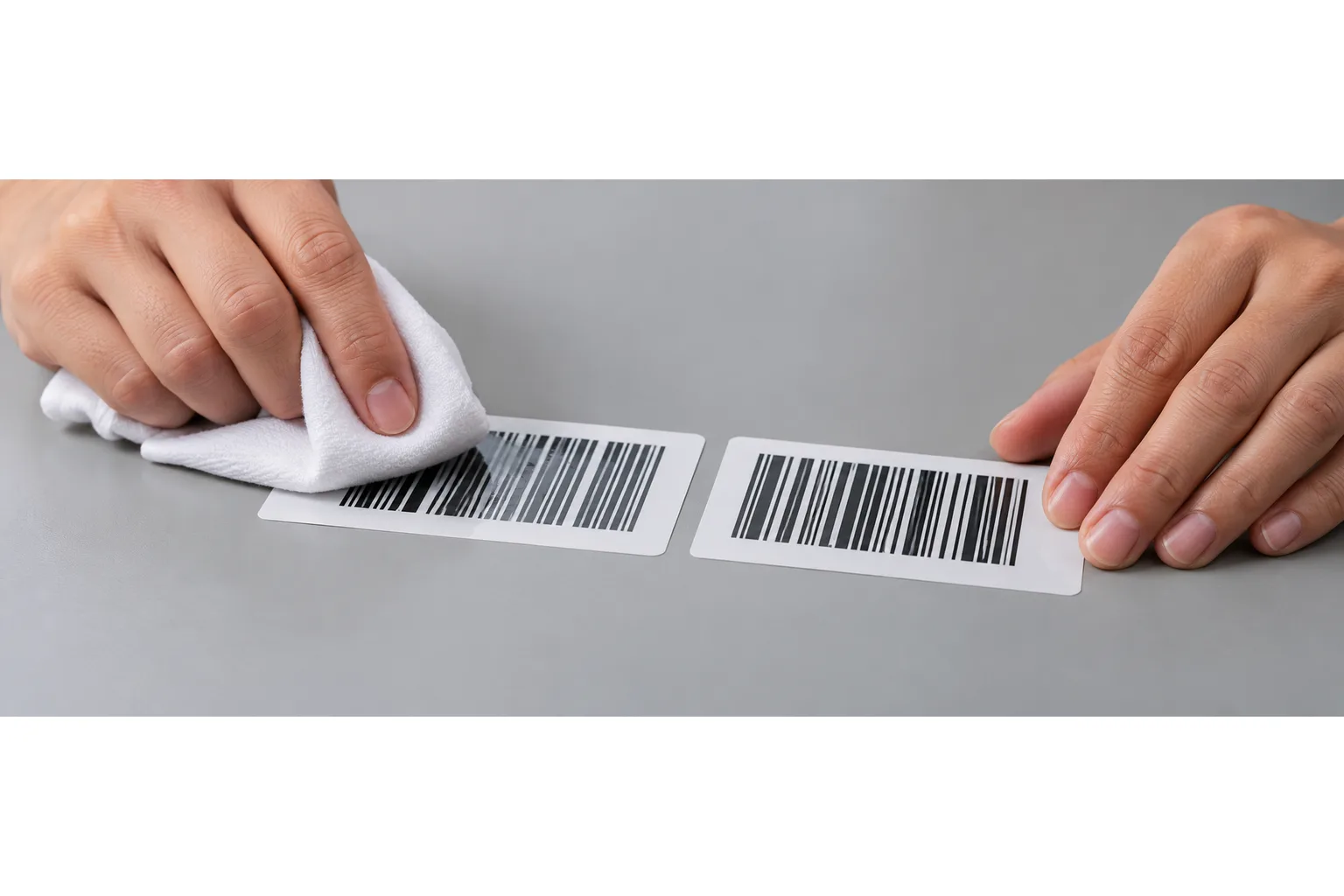
Datasheets narrow the field, but the reliable confirmation is a test on your actual label stock, printer settings, and operating environment. Run it as a six-step protocol before the bulk order:
- Lock the variables. Get sample rolls of the candidate ribbons and pull label stock from the lots you actually ship, with the same facestock and adhesive.
- Print at production settings. Run the pressure, temperature, ribbon-substrate pairing, and speed you use every day. Do not chase darkness with pressure, because excessive print head pressure deposits too much ribbon ink onto the substrate and sets up smudging.
- Reproduce handling. Rub, scratch, and stack the printed labels to copy sorting, conveyor contact, and pallet movement on your worst lane.
- Expose to your real environment. Wet the samples, wipe them with the chemicals they will actually meet, and cycle them through the temperature and humidity conditions the labels may come in contact with on the route.
- Re-scan and grade. Labels can be graded against print quality verification parameters such as those defined by ISO, and the grade shows whether the encoded data stays legible. Most retailers and logistics partners require a minimum grade of C, and labels that pass in your warehouse routinely fail at the receiving dock, so agree the acceptance grade with your trading partners and applicable standard before sign-off.
- Freeze the combination. Record the ribbon, facestock, and settings that passed, because optimum readability is possible only with the right combination of thermal transfer product, ribbon, and printer. Re-run the protocol whenever any of the three changes, and keep the approved spec on file for purchasing and quality.
Printer and Ribbon Compatibility Checks Buyers Miss
Print head architecture changes how a ribbon releases ink, so compatibility starts with the printer, not the price list. A Thermal Transfer Overprinter (TTO) prints onto flexible packaging by melting a coating of ribbon so it stays glued to the material once applied, and because the media only meets the ribbon as it passes under the print head's heating elements, the ink transfer must be instant. Flat-head printers print somewhat slower and can produce the most durable prints, because the label and ribbon spend longer under the heated head. Near-edge printers angle their floating print heads and run more than twice as fast, with speeds of over 10 IPS the norm, so their ribbons touch the label only for an instant before the peel point. That is why inline TTO lines lean on wax/resin ribbons formulated to release ink at speed.
Three checks get missed here. First, know the specifics of your printer, including head type and the ribbon orientation it accepts, because ribbons ship ink-side-in and ink-side-out and your model takes one of them. Second, treat durability as a compliance matter when labels travel on regulated goods: for overseas shipments of hazardous chemicals, label durability is a matter of legal compliance and human safety, not just branding. Third, ask for documentation early; a UL969 label is accepted because the facestock, adhesive, and print system are recognized under a valid PGDQ2 file, so the evaluation starts with what a supplier can document.
Close the loop with two or three suppliers: send each your facestock, printer model, and worst-case route conditions, request a documented ribbon recommendation plus sample rolls, and run the six-step test on both finalists before you scale the order.
Data and Evidence
The table condenses the evidence behind the three families so purchasing can shortlist before testing.
| Ribbon family | Best-fit substrates | Durability profile | Typical logistics roles |
|---|---|---|---|
| Wax | Uncoated and general paper labels | Cost-effective with good print quality but limited durability; weakest against smudging and scratching | General indoor paper labeling where handling is light |
| Wax-resin | Coated, matte, and semi-gloss paper; some synthetics and glossy stock | Enhanced durability over wax; more smudge resistant; better against scratching, moisture, and moderate chemicals | Shipping labels through multi-leg freight journeys; product labels handled repeatedly on retail shelves |
| Resin | Polyester, polypropylene, and other synthetics; smooth or glossy films via adhesive-layer grades | Built for chemicals, heat, and years of outdoor exposure; excellent long-life print quality | Chemical drum labels, asset tracking, harsh routes |
Above the table sit two acceptance anchors: grade printed samples against print quality verification parameters such as those defined by ISO, and set the pass threshold with your trading partners and applicable standard rather than assuming a warehouse pass survives the receiving dock.
Frequently Asked Questions
How do I test whether a thermal transfer ribbon is durable enough for my logistics labels?
Print the candidate ribbon on your own label stock at production settings, then rub, scratch, and expose the samples to the moisture, chemicals, and temperatures your shipments actually meet. Re-scan the barcodes afterwards and grade them against the acceptance level your trading partners require. Keep the ribbon, facestock, and settings that pass as your approved combination.
Which ribbon family should I choose for synthetic logistics labels like polyester or polypropylene?
Start with resin, the grade built for synthetics that face chemicals, heat, or outdoor exposure. Wax-resin is the practical default only when handling is moderate and chemical exposure is not a factor. Confirm the choice with a printed-sample test on the exact synthetic stock you use.
Can I use one wax ribbon for both paper shipping labels and synthetic tags?
Wax covers the paper side, but synthetic tags generally need wax-resin or resin to print and hold up. Forcing one family across both substrates risks poor print quality, faded labels, or printer damage, so test the mixed assortment before standardizing on a single part number.
Will a TTO ribbon work in my flat-head barcode label printer?
TTO ribbons are made for near-edge heads that touch the label for an instant at high speed, while flat-head printers hold the ribbon and label under the print head longer. That contact-time difference is why the two ribbon types behave differently. Confirm the printer specifics with the supplier and run a sample before substituting either way.
What should I confirm with the supplier before ordering ribbons in bulk?
Confirm the ribbon family for your facestock, the documentation behind any durability statement, the ink-side orientation and width your printer models take, and sample rolls for testing. Where compliance matters, start from what the supplier can document, as with UL969-recognized label systems.
Recommended products for this industry
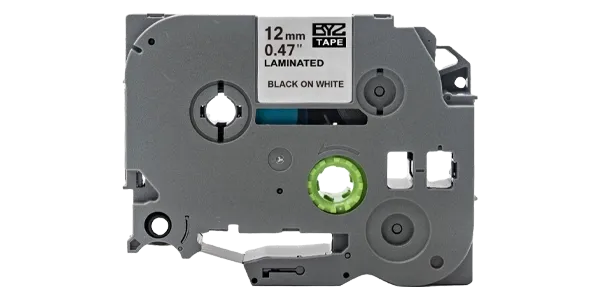
Brother Compatible Label Ribbons (TZe Series)
This Brother-compatible label ribbon (TZe series) is manufactured using high-quality…
View details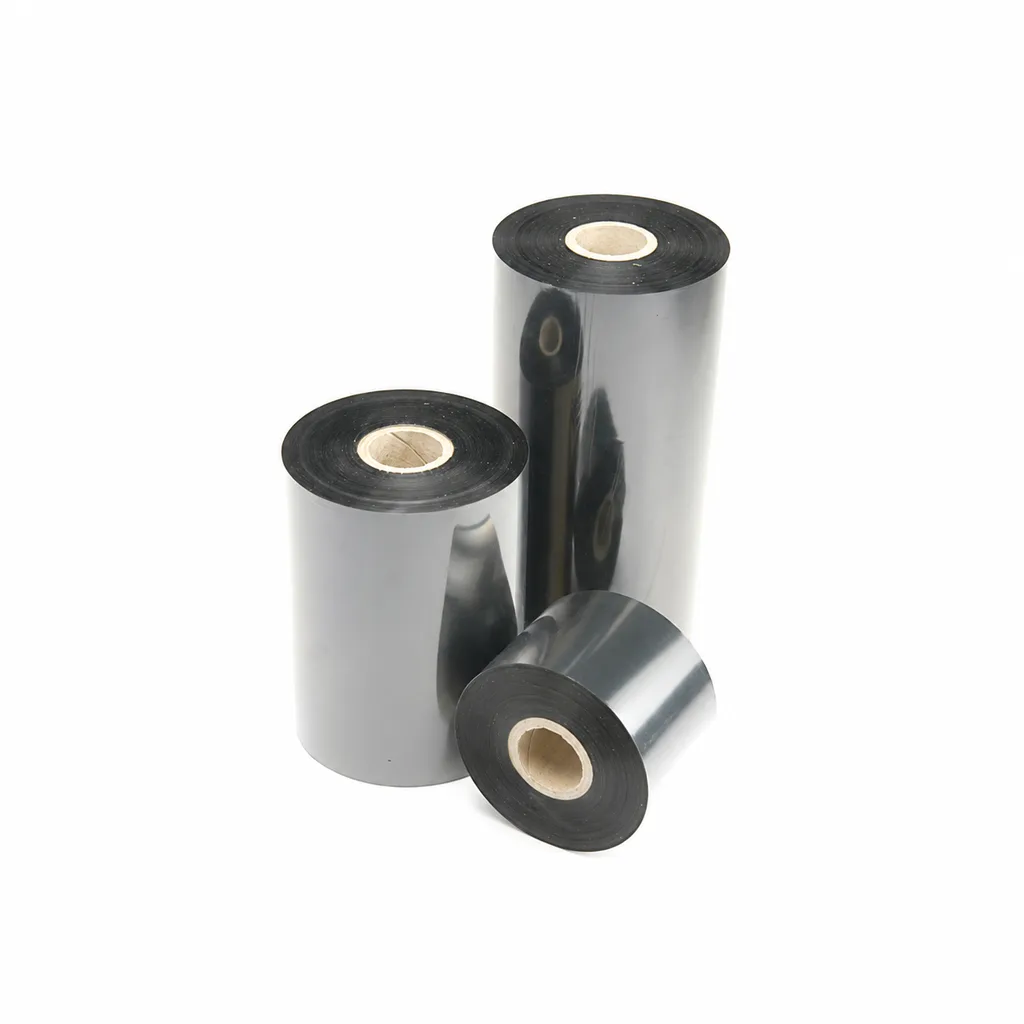
CL-Z213 Near-Edge Wax-Resin Thermal Transfer Ribbon for Barcode Labels
An enhanced black near-edge wax-resin thermal transfer ribbon for near-edge barcode printers and low- to medium-speed thermal transfer overprinting (TTO). Listed applications include retail labels, warehousing, garment tags and packaging identification. Match the printer, actual print medium and operating speed before selection: print quality and image durability can vary with the printer and substrate.
View details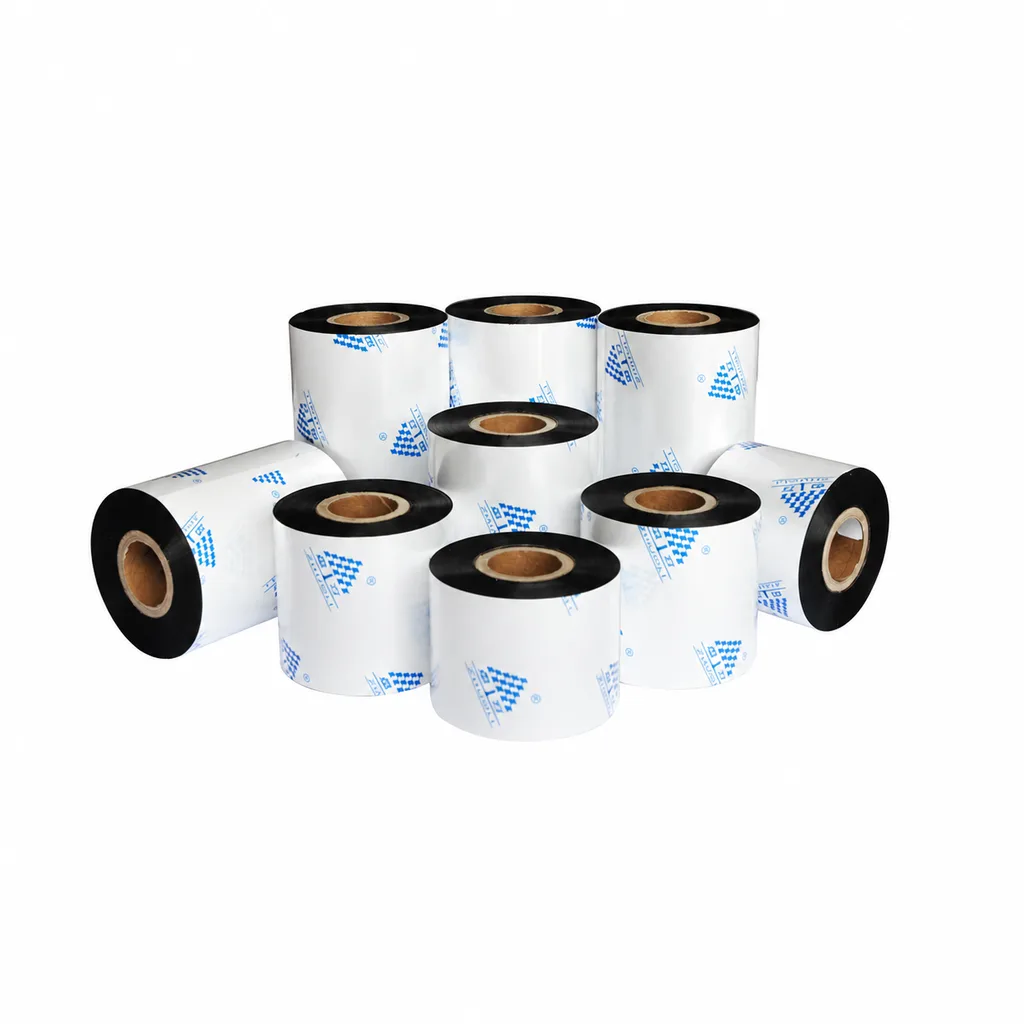
Near-Edge Wax-Resin Thermal Transfer Ribbon CL-Z212 for Barcode Labels
CL-Z212 is a general-purpose black wax-resin thermal transfer ribbon primarily for near-edge barcode printers, with use also described for low- to medium-speed thermal transfer overprinting (TTO). Listed applications include retail labels, garment tags, warehouse identification and packaging printing. Select according to printer type, actual printing speed and substrate: recommended conditions list near-edge printing at ≤10 inches per second (ips) and TTO at ≤20 ips. Print quality and image durability can vary with the printer and printing material, so trial printing on the intended substrate is necessary for selection.
View details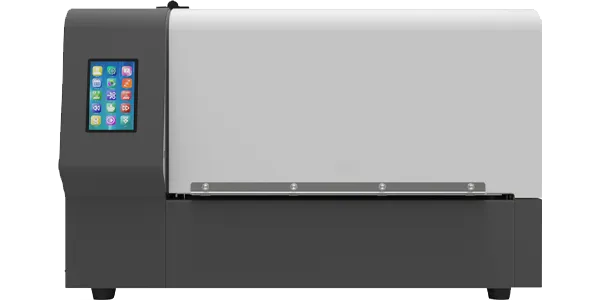
AL10-D Dual-Colour Label Printer
It can enhance industry productivity, optimise supply chain management, reduce…
View detailsNeed the right ribbon for your label application?
Share the label material, printer and operating environment. Our team will recommend a tested combination.
