
How to Choose Vulcanized Air Spring Labels for Your Production Line
Request a solution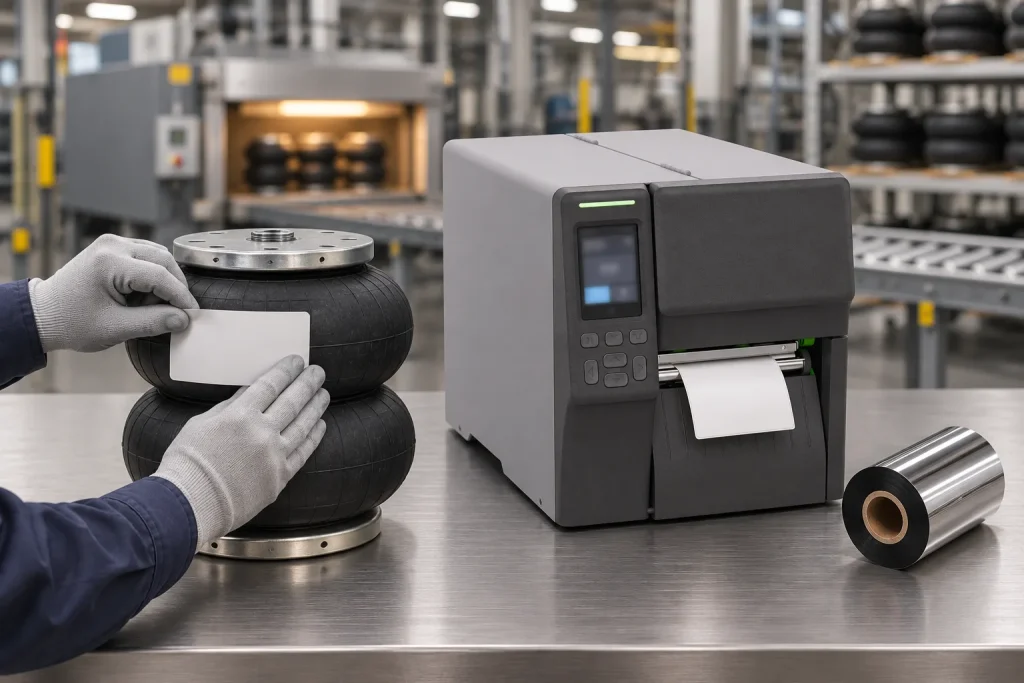
- Original TTR manufacturer since 2013
- Automated coating and slitting
- IQC / IPQC / OQC control
- ANSI barcode grade testing
- -20°C to 120°C environmental testing
- Batch-level traceability
- ANSI barcode grade
- Batch traceability
- RoHS / REACH compliance
- SGS and MSDS documents on request
For vulcanized air spring identification, choose a label by when it enters the line: before curing requires a rubber integration system designed for the cure process, while a label applied after curing must be confirmed against the finished part’s actual substrate, location, and use conditions. Match the face material, bonding method, and print method to the actual rubber or metal surface, then test a printed sample through the intended production steps and scan it afterward.
Key Takeaways
- Decide first whether the label must pass through the air spring cure cycle or will be applied to a finished part.
- Rubber and metal surfaces, and uncured and cured rubber, are different application conditions that require separate compatibility checks.
- Do not infer air spring performance from a label listing written for another rubber product.
- Print and scan a representative sample after the real production process before approving a label and ribbon combination.
Choose the Label by Its Point in the Air Spring Line
Air spring label selection starts with the point where identification is added, because a label applied before curing faces a different process from one attached to a finished air spring. If the identifier must remain with the rubber through vulcanization, ask for a system expressly designed for integration with rubber during curing; if the label is applied after cure, assess it as a finished-part identification label under the actual surface and service conditions.
A vulcanized label is described in the available product literature as an identification label embedded into rubber during vulcanization, unlike a pressure-sensitive label that relies on adhesive. That distinction helps frame the buyer’s first decision, but the cited description addresses industrial rubber applications and does not establish a particular specification for air springs. Require the supplier to confirm suitability for your air spring compound, cure procedure, and label position.
Map the production route before requesting samples. Record whether the label will sit on a flexible rubber bellows or a metal end component, whether the part is uncured or finished at application, and which production steps follow labeling. Also identify the information to be printed, such as the part identifier or traceability code, and whether it needs to remain readable at a later inspection point. These details define what the sample must prove.
Match Bonding and Print Choices to the Surface
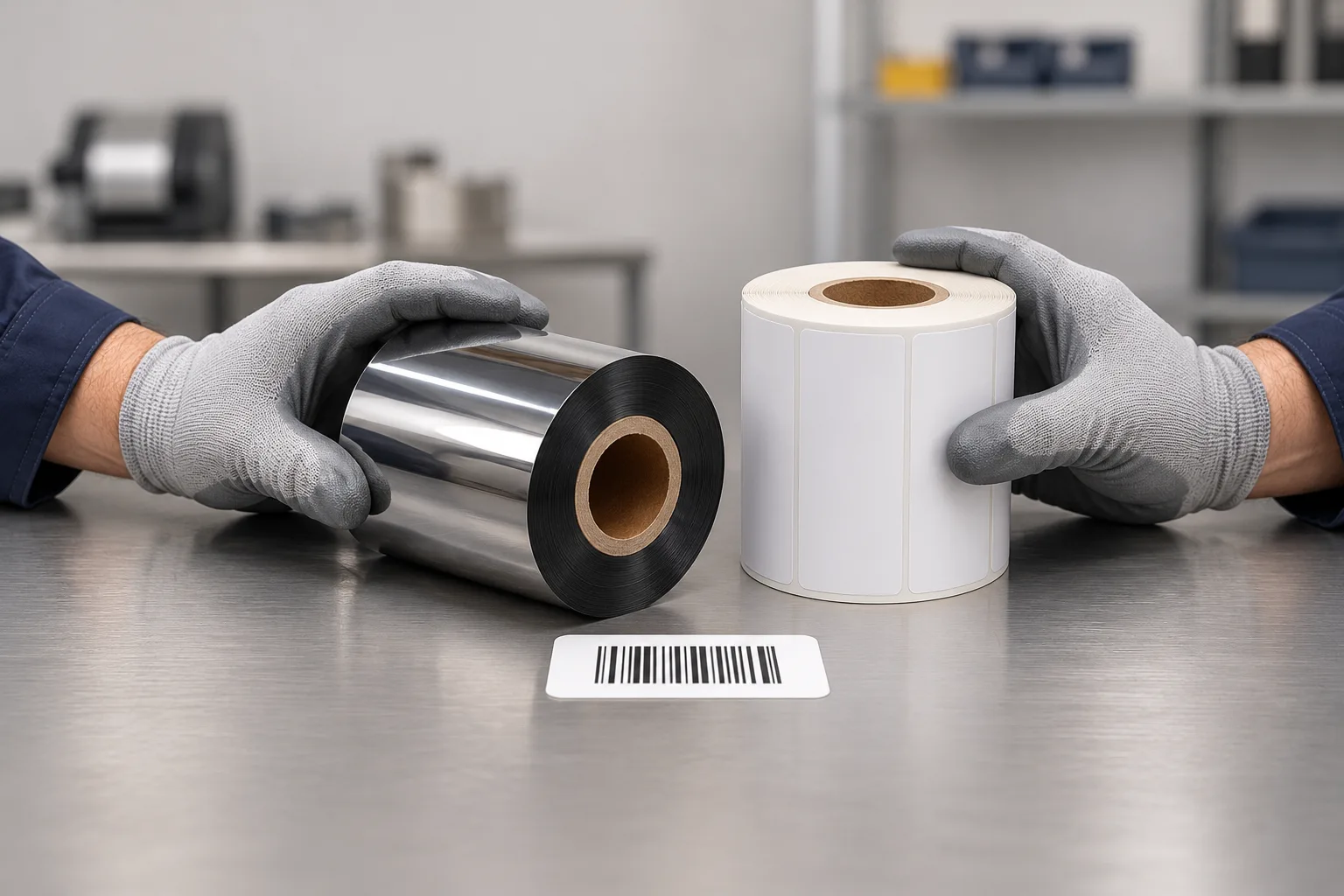
Label construction must match the exact air spring surface and the time of application. A flexible rubber bellows and a metal end surface present different bonding and movement conditions; likewise, green rubber and cured rubber are not interchangeable substrates. Ask the supplier to specify the intended substrate and bonding route in writing rather than treating a generic “rubber label” description as approval for every position.
For pre-cure placement, confirm that the complete label construction is intended to enter your cure process and that its bonding mechanism is compatible with the rubber application. The available vulcanized-label description says such labels may be placed in molds or applied to green rubber before curing, and that engineered films, coatings, and compatible substrates are used for vulcanization conditions. It does not give air spring-specific cure limits, so a supplier’s general rubber claim is only a starting point for sample evaluation.
For post-cure placement, test adhesion on the real finished surface. Ask what surface preparation is required and whether the label’s dimensions and flexibility suit the chosen curved or flat location. Pressure-sensitive adhesive labels are commonly applied by wipe-on, tamp, or air-blow techniques, but those are application methods rather than evidence that a particular adhesive will bond to a particular air spring. Select the method only after confirming the label and surface combination.
Thermal transfer can be considered when production needs variable printed identification. The cited vulcanized-label literature lists thermal transfer, screen printing, and digital printing as possible processes for vulcanized label systems, but does not rank them for air springs. Colorfulttr’s catalog includes a roll-form high-temperature vulcanized label described for vulcanized parts and production identification. Buyers considering it should confirm the intended air spring surface and cure timing, then match a compatible thermal transfer ribbon and test their own printed sample; the catalog description alone does not establish an air spring qualification.
Run a Representative Sample Before Approving a Specification
A label is ready for production consideration only after a representative sample has passed the steps it will actually encounter. Provide the supplier with the cure conditions, application stage, substrate, label location, and printer details, and request the corresponding label and ribbon information. Do not substitute a supplier’s generic temperature claim or another customer’s application for your process validation.
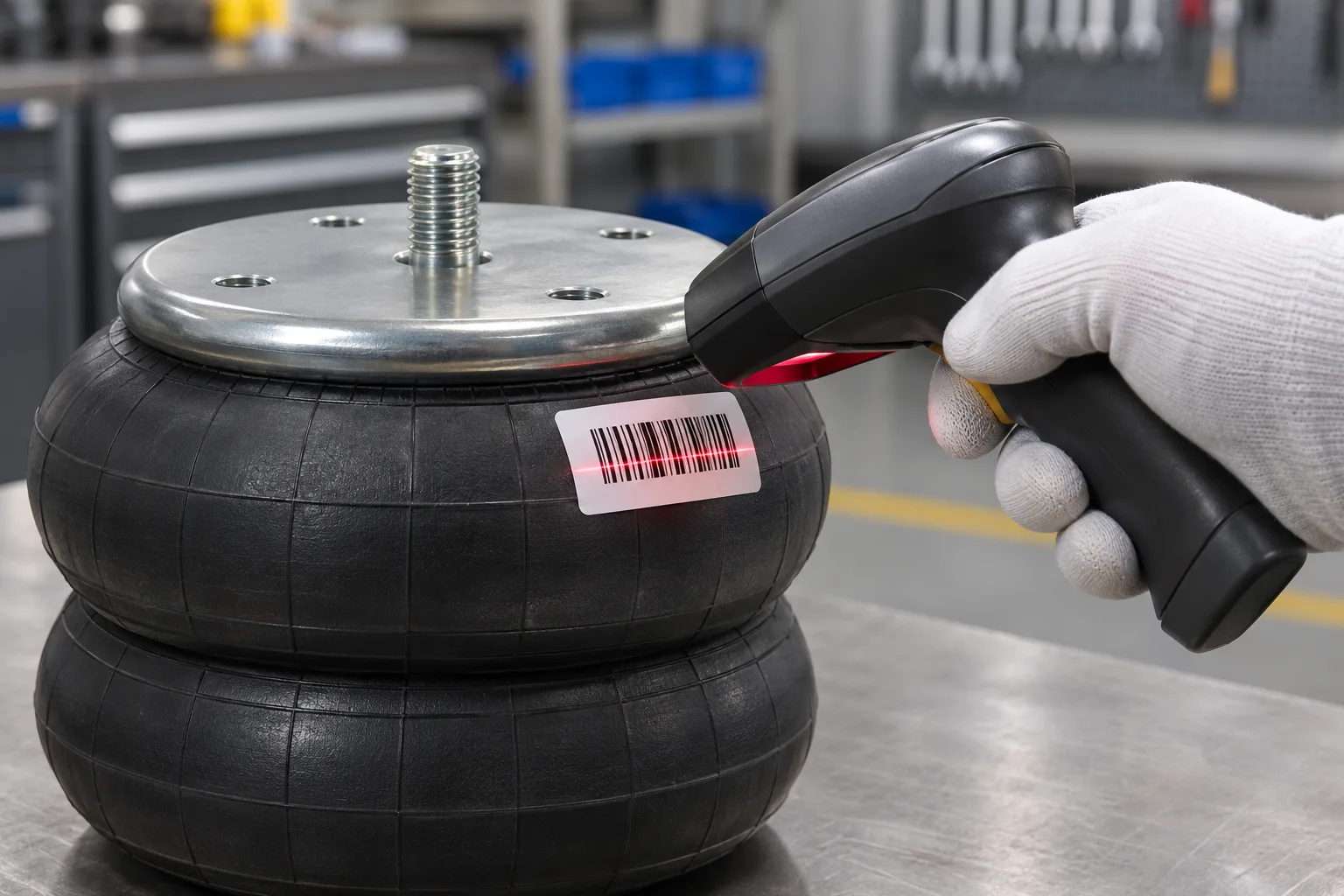
- Print the intended variable information and barcode using the proposed printer, label stock, and ribbon combination.
- Apply the sample at the planned line station and location, following the proposed surface preparation and application method.
- Run it through the actual cure process if the label is intended for pre-cure use; for post-cure labels, run it through the relevant finishing, handling, and identification steps.
- Inspect the sample for the items and criteria specified in the buyer’s traceability requirements; these may include legibility, attachment, damage, distortion, or barcode scanning at the intended inspection point. Set acceptance criteria for the project from those requirements; no universal air spring threshold is established here.
- Record the sample construction, printer and ribbon, application conditions, process route, visual result, and scan result before setting the purchasing specification.
If the sample fails, isolate which requirement was not met before changing the order: bonding to the target surface, survival of the process route, print legibility, barcode scanning, or fit with the printer and roll format. Ask the supplier to revise the label or ribbon recommendation against that specific failure, then repeat the same representative check. This keeps a successful trial tied to the configuration that was tested.
For sourcing, Colorfulttr’s high-temperature vulcanized label roll is listed as a roll-form label with strong adhesive for vulcanized parts and production identification. It may be relevant when evaluating a thermal-transfer consumable route, but the available description does not claim air spring qualification or provide cure-cycle limits. Share your surface, application stage, process data, printer model, and barcode needs when requesting a product match, and approve the selection only after your own sample check.
Data and Evidence
The evidence supports a selection method, not a universal air spring label specification. The cited vulcanized-label description concerns industrial rubber labels generally, while the Colorfulttr catalog entry describes a roll-form label for vulcanized parts; neither source supplies air spring-specific temperature, pressure, duration, adhesion, or scan-pass thresholds. Use the comparison below to organize supplier questions and sample acceptance.
| Decision | What to confirm | What the available evidence establishes |
|---|---|---|
| Before or after cure | Whether the sample must pass through the air spring cure process. | Vulcanized labels may be placed in molds or on green rubber before curing; no air spring-specific qualification is supplied. |
| Application surface | Uncured rubber, cured rubber, or metal, plus the planned label location. | Pressure-sensitive application methods are described, but no supplied source confirms adhesive compatibility with an air spring surface. |
| Printing route | Printer, label roll, ribbon, variable data, and barcode verification point. | Thermal transfer is listed among printing processes for vulcanized-label systems; the cited text does not establish an air spring setup. |
| Approval evidence | Sample inspection and scan result after the intended process route. | No source supplies a numeric air spring acceptance threshold; define acceptance from the buyer’s traceability requirements and confirm in a production-representative trial. |
The Colorfulttr roll listing is a catalog description, not a reported test result. Its relevance is limited to evaluating roll-form labeling for vulcanized parts. Confirm label and ribbon compatibility for your printer and application, and keep the approved sample configuration with the purchasing specification.
Frequently Asked Questions
Can a regular pressure-sensitive label go through an air spring cure cycle?
The supplied evidence does not establish that a standard pressure-sensitive label can survive an air spring cure cycle. If the label enters before curing, request a rubber-integration label construction for that process and approve it only after a representative post-cure inspection and barcode scan.
Should an air spring label be applied before or after vulcanization?
Apply before curing only when the identification must be integrated during the rubber process and the label system is specified for that route. Apply after cure when identification is added to a finished component; confirm adhesion on the actual rubber or metal location.
Do air spring barcode labels need a matched thermal transfer ribbon?
The sources do not identify a universal ribbon for air spring labels. If using thermal transfer, match the ribbon to the proposed label and printer, then verify print legibility and barcode scanning after the label’s intended process route.
What should buyers test on an air spring label sample before ordering?
Test the actual substrate, application point, printer and ribbon, and production route. Define inspection items and acceptance criteria from the buyer’s traceability requirements; no universal air spring threshold is established here.
Related Products & Guides
Recommended products for this industry

High-Temperature Vulcanized Label Roll
Roll-form high-temperature labels with strong adhesive for vulcanized parts and demanding…
View details
Acid and Alkali Resistant Label
Chemical-resistant label construction for acid baths, paint-stripping solutions, alkali…
View details
Aluminum Foil High-Temperature Label
Coated aluminum label for metal processing, heat treatment and high-temperature part…
View details
Anti-Static High-Temperature Polyimide Label
Anti-static polyimide label for ESD-sensitive electronics assembly and high-temperature…
View detailsNeed the right ribbon for your label application?
Share the label material, printer and operating environment. Our team will recommend a tested combination.
