
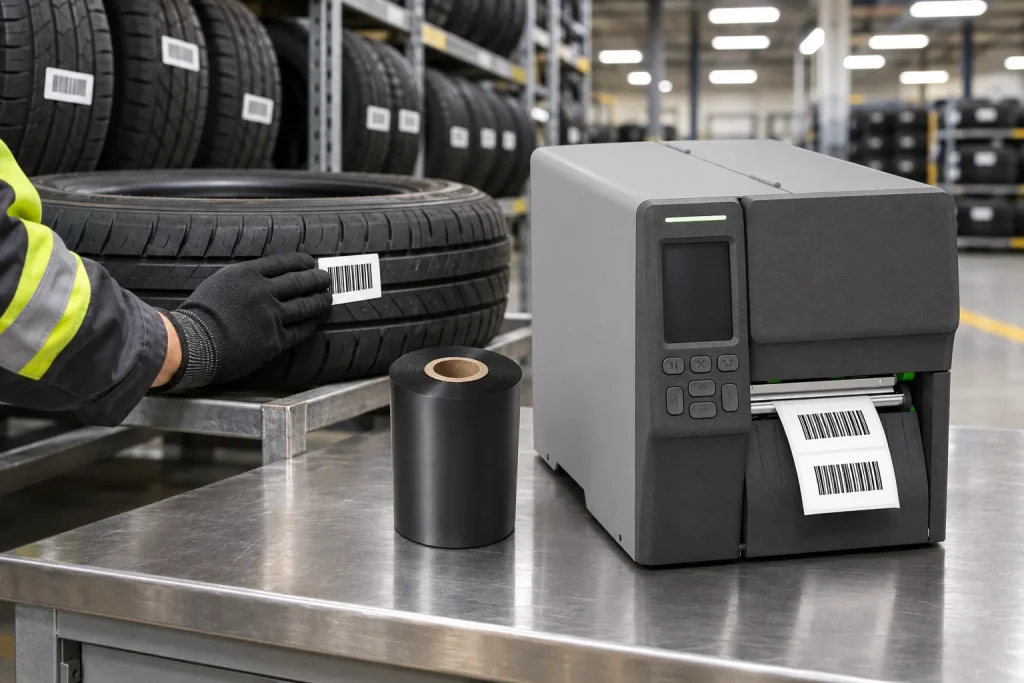
- Original TTR manufacturer since 2013
- Automated coating and slitting
- IQC / IPQC / OQC control
- ANSI barcode grade testing
- -20°C to 120°C environmental testing
- Batch-level traceability
- ANSI barcode grade
- Batch traceability
- RoHS / REACH compliance
- SGS and MSDS documents on request
Buyers choosing tire barcode systems should match the identifier to the application stage, tire surface and required read points. Select label material, printing method, scanner and data workflow together, then qualify printed samples through the intended process. Pre-cure identification requires a different material assessment from finished-tire inventory.
Key Takeaways
- Start with the tire's application stage and the last point where the identifier must be read.
- Match the label and ribbon to the surface, printer and expected exposure.
- Confirm barcode format and data fields with the receiving system.
- Test attachment and readability after the intended process as well as immediately after printing.
Choose the label for the tire's journey
The right tire label depends on whether it is applied to uncured rubber or to a finished tire, and on where it needs to be read. Map the path from application to the final scan: production, inspection, storage, shipping or another handoff. Record the surface, label position, handling and environmental conditions at each stage before comparing products.
For identification applied to a green tire before curing, evaluate a vulcanization label designed for that process. Vizlent describes such labels as embedded into rubber during vulcanization; Only Imaging distinguishes labels applied before curing from tread labels applied after the tire is made. These descriptions identify different application paths; they do not establish that a candidate will survive your particular mold and process.
For a finished tire, specify whether the label is for temporary inventory or a longer traceability period. A controlled indoor workflow may justify testing a simpler construction, while a label exposed to moisture, abrasion or chemicals needs its construction and printed image evaluated against those exposures. US Label describes paper stock for limited-exposure indoor identification and recommends matching thermal transfer ribbon and label material. Its examples concern chemical drums, so use them as selection principles rather than tire-specific performance results.
Colorfulttr lists a rubber-compatible tire vulcanization barcode label for green tires and casing tracking. Share the tire surface, application point, curing sequence and desired read points when evaluating it. The listing identifies its intended application; suitability for your process requires a sample trial.
Match the printer, ribbon and barcode data
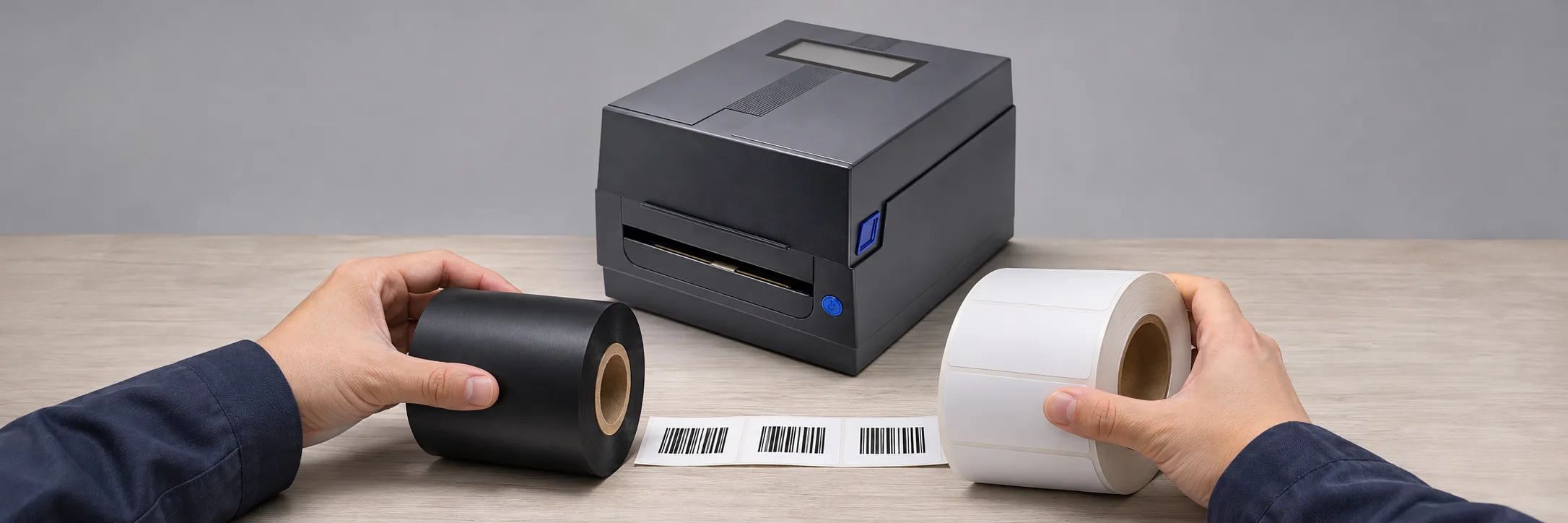
A tire barcode printing setup must produce the required data on a label construction that fits the selected printer and application. Confirm the identifier, required fields, barcode symbology and layout with the receiving warehouse, customer or traceability system. Include human-readable information so operators can compare it with the record during checks.
For on-demand labels, compare thermal transfer with direct thermal against the required label life. Thermal transfer uses a ribbon and label stock that must be matched; direct thermal uses heat-sensitive stock without a ribbon. ID Technology describes its direct thermal labels for short-term labeling, so test that option for a short-lived tire workflow rather than assuming its print will meet a longer retention requirement. Compare printer, stock and ribbon costs, replacement and handling alongside the consequences of an unreadable label.
Check the printer model, print width, resolution, speed and label feed requirements with the equipment supplier. Confirm the ribbon dimensions and configuration specified for the printer, and agree on a layout with room for the required data. US Label identifies ribbon, print darkness, resolution, label finish and barcode size as factors in readability; test them together rather than copying another site's settings.
For tire identification printed with a compatible flat-head printer, Colorfulttr lists CL-Z373 black resin ribbon for desktop or industrial printers at speeds of ≤6 ips (inches per second). Its stated fine-line, small-character and resistance results were obtained on coated paper, so they do not establish performance on a tire vulcanization label. Provide the printer model, stock and exposure conditions and test the proposed pairing, especially if it will pass through curing.
Connect scan points and qualify samples before purchase
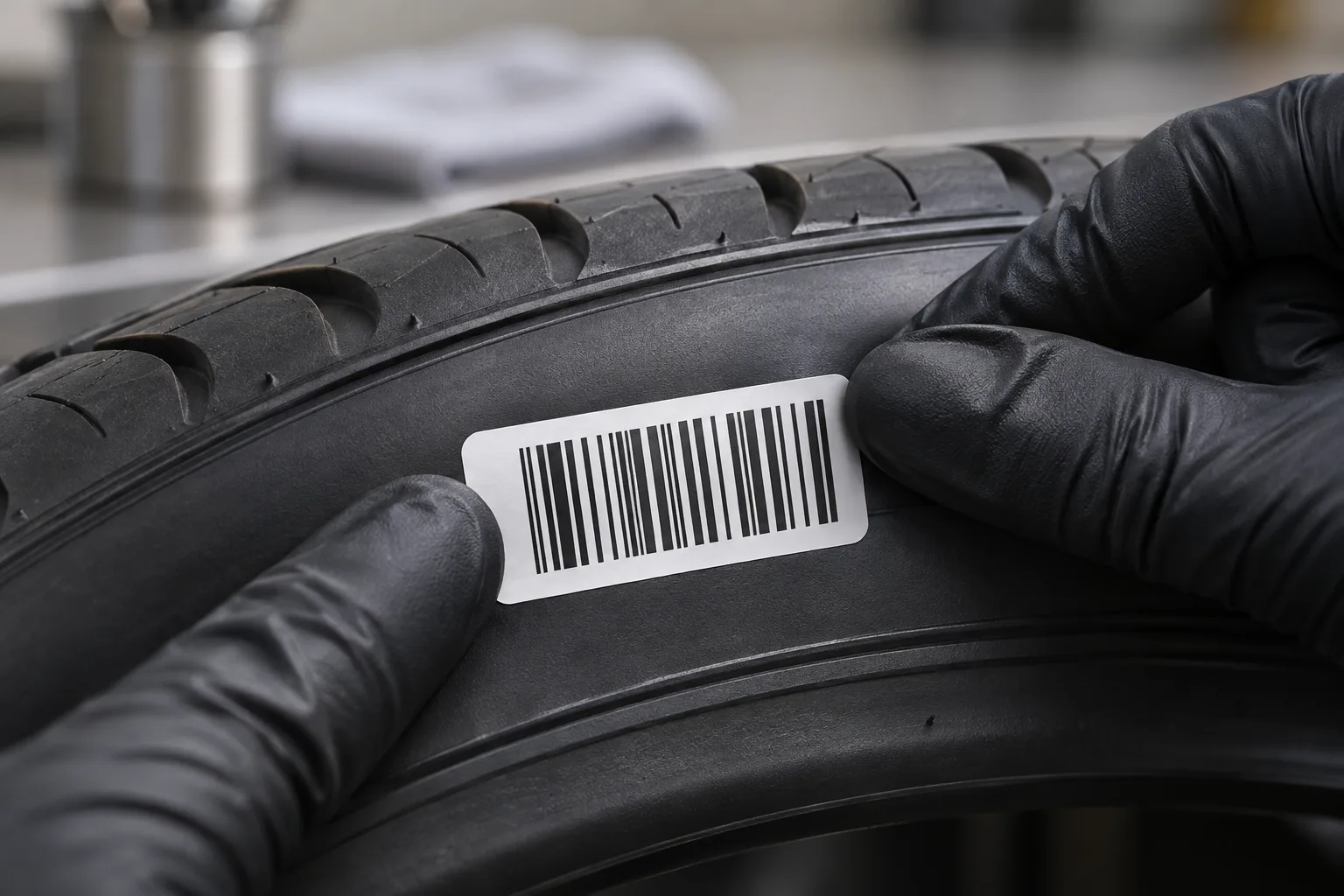
A useful tire barcode system links the printed identifier to the correct record at every required scan point. Document who creates the identifier, which system holds the record and what each scan should update. Check that the intended scanner reads the chosen symbology and that the receiving software accepts the expected data; a readable symbol is useful only if it resolves to the correct tire record.
Choose a handheld or fixed scanner around the actual presentation of the tire. A handheld workflow gives an operator control over the scan position; a fixed installation needs a planned label presentation at the line. Trial the proposed arrangement with the tire movement, label placement and operators that the workflow will use. Confirm the code and displayed record agree at each handoff, including any reprint or replacement procedure.
Print representative samples on the intended printer and stock, using the selected ribbon where applicable. Apply them to representative surfaces and take them through the actual sequence they must survive. Check attachment, printed text and scanning after application and again after relevant processing, handling and storage. Record the printer settings, materials and observations so the combination can be reviewed.
If a sample fails, separate the observations. Review surface and label construction when the label lifts; review print and ribbon matching when the label stays attached but its image is unreadable; review data and integration when a scan returns the wrong record. Change one candidate element at a time and repeat the relevant process trial before choosing a production combination.
Data and Evidence
The evidence supports choosing a complete print and application combination rather than assigning a universal durability rating to a material name. Use this comparison to define a trial; the sources describe different products and applications, so keep their stated conditions attached to each entry.
| Choice | Source and scope | Buyer check |
|---|---|---|
| Vulcanization label | Vizlent describes an identifier embedded in rubber during vulcanization. | Test the candidate on the actual green tire through the intended cure and inspection sequence. |
| Direct thermal stock | ID Technology describes ribbon-free variable printing for short-term labeling. | Check attachment and readability for the intended inventory period. |
| Thermal transfer combination | US Label says durability depends on matching ribbon and label material; its discussion concerns chemical drums. | Trial the selected ribbon, label and settings in the tire workflow. |
| CL-Z373 ribbon | Colorfulttr lists tire identification among its applications and specifies flat-head printers at speeds of ≤6 ips (inches per second). | Confirm printer compatibility and qualify the printed label under the intended conditions. |
For the purchase decision, retain a sample record with material references, printer and scanner models, label position, process conditions and results at each read point. Define acceptance with the customer or receiving system before the trial. If a sample does not meet those requirements, review the failed part of the workflow and repeat the assessment with a revised candidate.
Frequently Asked Questions
Should a tire barcode be applied before or after curing?
Choose the application stage from the required traceability points. Qualify a green-tire identifier through the actual curing process; qualify a finished-tire label for its later handling and storage.
Can direct thermal labels work for short-term tire inventory?
They are a candidate for a short-term workflow if the label adheres to the actual surface and remains readable through the required handling. Test the complete label before ordering.
How should I choose a scanner for a tire barcode?
Start with the tire position and movement at each scan point. Trial the intended scanner and label placement together and confirm the recorded identifier matches the printed one.
Does a resin ribbon automatically make a tire label cure-resistant?
No. Evaluate the ribbon, label construction, printer settings and actual curing process together. A listed application does not establish the performance of every combination.
Related Products & Guides
Recommended products for this industry
Thermal Coding Ribbon for Tire Position Marking CL-0080D
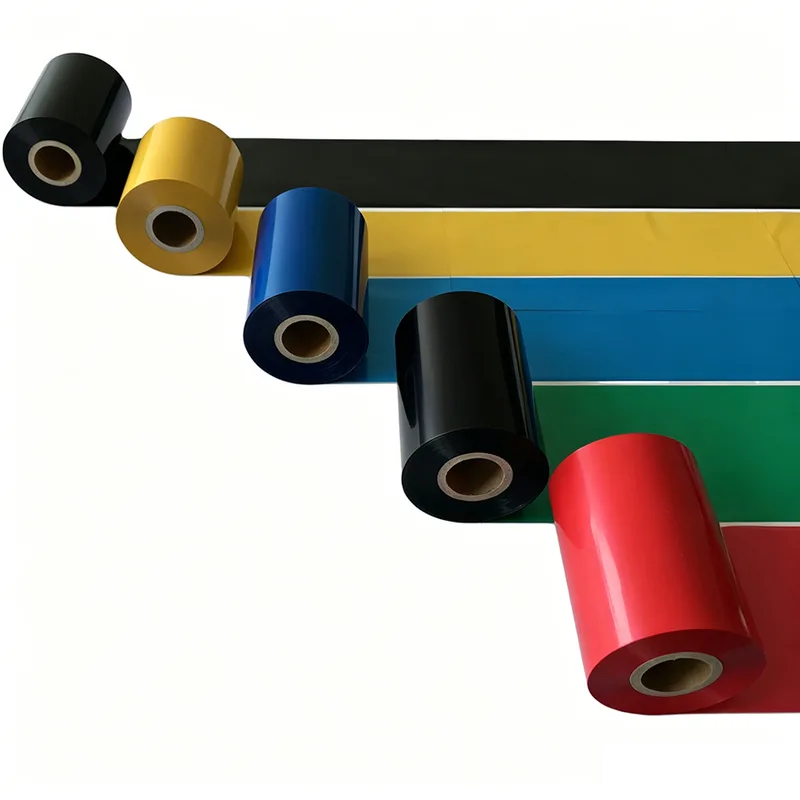
A thermal coding ribbon for tire position marking, available with red, white or yellow ink. Select it with the printer and printing surface in mind: print quality and image durability may vary with their types.
View details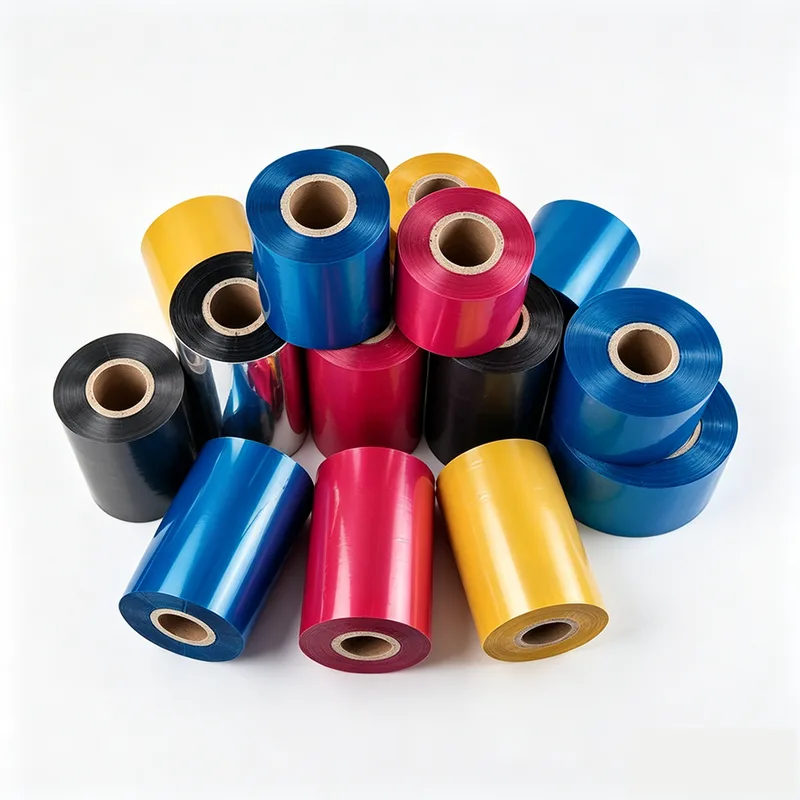
Thermal Coding Ribbon for Tire Position Marking CL-UFGQ2
CL-UFGQ2 is a thermal coding ribbon for tire position marking. Select the ink color and check the printer, marking material and operating conditions; print quality and image durability can vary with the printer and substrate.
View details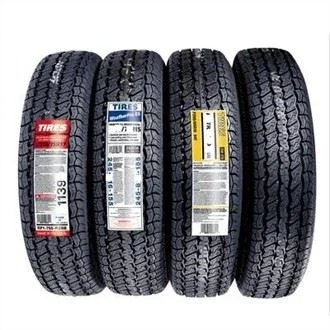
Tire Vulcanization Barcode Label
Rubber-compatible barcode label for green tires, casing tracking and vulcanized tire…
View details
3-inch mobile printer
These lightweight and cost-effective 3-inch mobile printers enable accurate receipt and…
View detailsNeed the right ribbon for your label application?
Share the label material, printer and operating environment. Our team will recommend a tested combination.
