

- Original TTR manufacturer since 2013
- Automated coating and slitting
- IQC / IPQC / OQC control
- ANSI barcode grade testing
- -20°C to 120°C environmental testing
- Batch-level traceability
- ANSI barcode grade
- Batch traceability
- RoHS / REACH compliance
- SGS and MSDS documents on request
This guide is for buyers who must pick a hot stamping foil for plastic caps — cosmetics caps, beverage tamper-evident caps and pharmaceutical caps. It covers what the foil does on a cap, how the layer structure controls adhesion, how to specify color and artwork, which die and machine variables to set, and how to accept a sample before ordering. The short answer: select by cap resin first (PP, PE, PET, ABS), then confirm the foil layers, artwork limits and the heat–pressure–dwell window on a sample run. Every setting in this guide has to be verified on your own caps and your own machine.
Key Takeaways
- Hot stamping transfers an image from a special foil onto the cap with a heated die and pressure; heat melts the foil's adhesive, and that bond is what holds the image.
- Foil selection is organised by plastic type — PP, PE, PET and ABS — so the cap resin is the first line of any inquiry.
- The foil film is a stack of layers, including a metallic foil layer, a color layer, a release layer and the adhesive; foils that look the same can perform differently.
- Pressing is done by a machine mechanism such as an air cylinder, so temperature, pressure and dwell are set at the machine and tuned per cap geometry.
- Adhesion, color and edge definition are accepted on a sample run on production caps, checked after cooling, and re-checked whenever the resin, mold or foil batch changes.
What Hot Stamping Foil Does for a Plastic Cap, and When to Choose It
Hot stamping foil decorates a plastic cap by transferring a film onto it with a heated die and pressure. The image comes from the foil itself, not from an ink layer applied to the cap, and heat is what melts the adhesive and makes the film adhere to the substrate. That single mechanism decides your whole specification: you are choosing a foil grade that bonds to your resin, not just a color.
Choose foil when the job is a small brand mark, a logo or a fine border and you want a genuine metallic finish. The alternatives buyers weigh it against are labels, pad printing and UV printing, which put a different kind of decoration on the cap. Foil earns its place where shelf impact comes from metallic shine on a small area — a cosmetics cap, a beverage tamper-evident cap, or a pharmaceutical cap that needs a crisp, legible mark.
One mechanical detail drives most settings. The heated die presses into the cap, and that contact deforms the plastic and leaves an impression while the pigment bonds because of the heat. Pressing is carried out by an air cylinder or a similar mechanism, so pressure and dwell belong to the machine setup, not to the foil. Expect to retune them for every new cap geometry.

How to Match Foil Layers and Adhesive to Your Cap Material
A hot foil film is a stack of layers, and the stack explains why two foils of the same color behave differently. The film consists of multiple layers: a metallic foil layer, a color layer when a colored foil is used, a release layer, and the adhesive that heat melts onto the substrate. The release layer governs how cleanly the image separates from the film; the adhesive governs whether it stays on the cap.
Foil is specified by substrate family — PP, PE, PET and ABS are the plastics covered by foil selection guidance — so the cap resin belongs in the first line of your inquiry. State the resin, then ask for the grade matched to it. Also describe the surface you are stamping: a molded finish, a coating or a textured area all change how the adhesive wets out.
Storage and handling sit in the same conversation. Foil kept damp, hot or under pressure can release differently, and a cap carrying mold release agent or dust will not bond the way a clean cap does. Neither fault appears on a datasheet; both appear on a sample run.
How to Specify Color, Finish, and Artwork Details for Cap Decoration
Gold and silver metallic finishes carry most cap work, and colored or special-effect foils extend the range when the brand needs something else. What limits you is rarely the color catalog — it is the cap: the curvature of the stamping area, the size of the artwork, and the thickness of the lines within it. A wide field on a curved cap side needs different tooling and dwell than a thin logo on the cap top.
Send a complete specification rather than a color name. Include the cap resin; a cap drawing with diameter and the exact stamping area; the artwork file with line weights; the target color and finish; the machine type and whether it stamps the cap top or the cap side; expected monthly volume; and the application.
Where the artwork is very fine or the surface is curved, ask for a tooling and artwork review before the foil is slit. Opening a line weight on screen costs nothing next to finding broken strokes on the production line.
How to Set Dies and Machines, and What to Check Before You Order
Set temperature, pressure and dwell on a sample, not on a datasheet
Three variables decide the result: die temperature, pressing pressure and dwell time. Temperature activates the adhesive, pressure brings the whole artwork into contact with a curved surface, and dwell gives the bond time to form. Equipment is also built specifically for cap-side work: one machine for cylindrical caps is described as designed for seamless decoration with dual stamping stations, rapid speed and precise control, which is what makes consistent decoration at volume possible. Start from the window your supplier recommends for the grade and resin, change one variable at a time on production caps, and record the setting that passes.
Diagnose the four defects you are most likely to see
- Foil lifts or rubs off — check the resin-to-grade match, then whether the adhesive is reaching its activation temperature and dwell, then cap surface cleanliness.
- Impression too deep or a visible die ring — pressure or dwell is too high; the heated die deforms the plastic, so back off and re-sample.
- Broken or incomplete artwork — check line weight against cap curvature, die condition, and contact across the stamping area.
- Color shift between batches — compare against a retained sample from the approved batch and agree a color tolerance with the supplier before the repeat order.
Confirm these points with the supplier before you order
Ask for a sample run on your caps and an agreed adhesion check. Ask how batch-to-batch color and release consistency is controlled, and what reference sample you will receive with each batch. Get minimum order quantity, sample lead time, production lead time, and packing and shipping terms in writing, and confirm the foil can be slit to your machine's width and core. Where you can, buy from a supplier that formulates and slits foil in-house: it can adjust the adhesive and release layers to your resin and turn matched samples around faster than a reseller.
Data and Evidence
The table turns the selection logic into a per-resin checklist. Verification is always a sample run on your own caps and machine, inspected after the caps have cooled.
| Cap material | What to confirm with your foil supplier | How to verify before ordering |
|---|---|---|
| PP | A foil grade specified for PP, plus the recommended temperature, pressure and dwell window for that grade | Stamp production caps at the recorded setting, then inspect adhesion and edge definition after cooling |
| PE | A grade specified for PE; do not assume a PP grade transfers the same way | Run the same artwork on PE caps and compare the result side by side with the PP sample |
| PET | A grade matched to PET and to the cap surface finish | Sample on the actual cap, including any coated or textured area |
| ABS | A grade matched to ABS, with pressure settings that avoid a visible die impression | Inspect impression depth, especially at the outer edges of the artwork |
Two published facts anchor the process description. Foil selection is organised by plastic type, covering PP, PE, PET and ABS. Hot foil printing uses a heated die and pressure to transfer the film, and the heat melts the adhesive on the foil so that it adheres to the substrate.
Frequently Asked Questions
What temperature should I use to hot stamp foil on PP plastic caps?
There is no single temperature that suits every PP cap. Ask your foil supplier for the window recommended for the PP grade you are buying, sample it on your own caps and machine, and change one variable at a time — temperature, then pressure, then dwell — until adhesion and edge definition both pass. Record that setting as the reference for the cap-and-foil combination.
Can the same hot stamping foil work on both PP and PE caps?
Do not assume it. Foil selection guidance is organised by plastic type — PP, PE, PET and ABS — which reflects that grades are formulated for a substrate family. Ask for a grade matched to each resin, run the same artwork on both caps, and compare adhesion before you commit one roll to both lines.
Hot stamping vs. screen printing for plastic caps: which should I choose?
Choose hot stamping when you want a metallic finish on a small brand mark, since the image is transferred from the foil to the cap with a heated die and pressure rather than an applied ink. Screen printing is one of the alternatives usually weighed alongside labels, pad printing and UV printing. Make the call on a sample of your own cap, judged on appearance, adhesion and unit cost.
How can I test foil adhesion on my caps before mass production?
Run the foil on production caps at the recorded setting, let the caps cool, then inspect the stamped area for lifting, edge breaks and rub-off using a check agreed with your supplier. Keep a retained sample from the approved run so later batches can be compared with it, and repeat the check whenever the cap resin, the mold or the foil batch changes.
What is the typical MOQ and lead time for custom hot stamping foil?
It depends on foil width, color and how the order is slit, so get it in writing for your own specification: minimum order quantity, sample lead time, production lead time, and packing and shipping terms. Also confirm the foil can be slit to your machine's width and core, because that affects both price and waste.
Recommended products for this industry
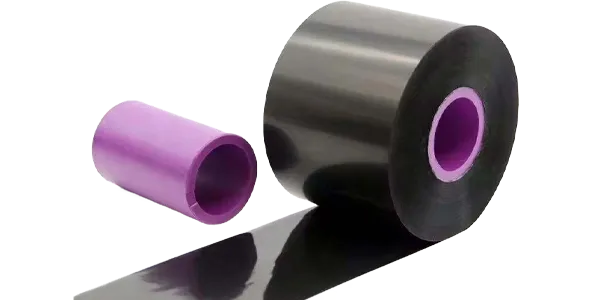
Width 33mm Length 600mm Plastic core near-edge TTO ribbon
TTO Barcode Printer Thermal Transfer Colour Ribbon High-Speed Customisation This TTO…
View details
Aluminum Foil High-Temperature Label
Coated aluminum label for metal processing, heat treatment and high-temperature part…
View details
Copper and Nickel Foil High-Temperature Label
Copper or nickel foil label for extreme heat treatment, metal foundry and furnace-side…
View details
Thermal Transfer Intelligent Coding Machine
This series of thermal transfer coders represents a cost-effective intelligent coding…
View detailsNeed the right ribbon for your label application?
Share the label material, printer and operating environment. Our team will recommend a tested combination.
