
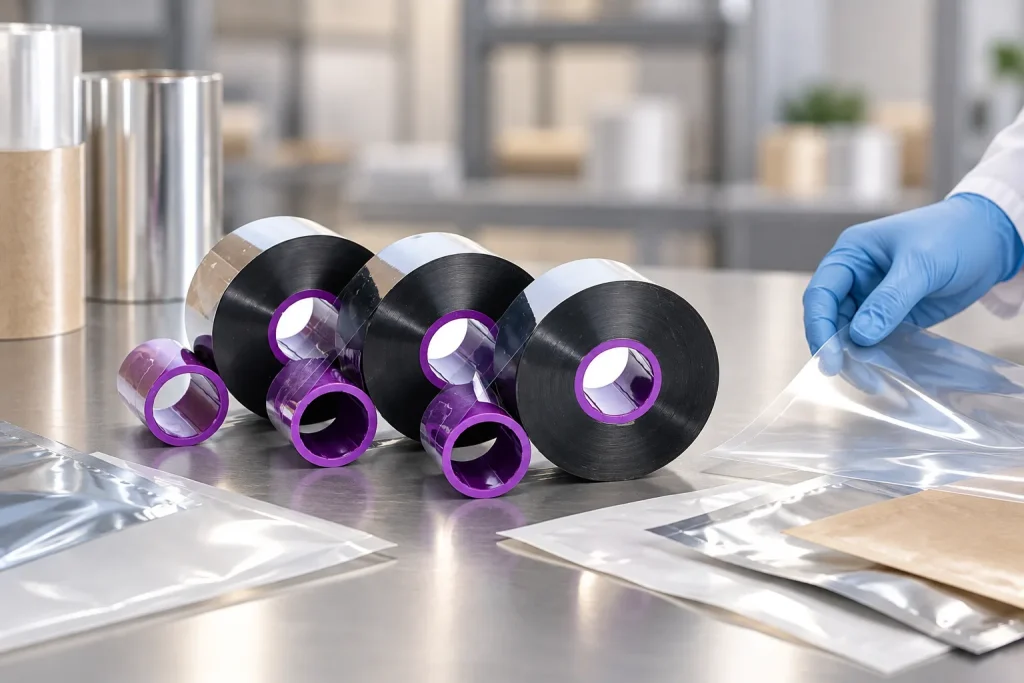
- Original TTR manufacturer since 2013
- Automated coating and slitting
- IQC / IPQC / OQC control
- ANSI barcode grade testing
- -20°C to 120°C environmental testing
- Batch-level traceability
- ANSI barcode grade
- Batch traceability
- RoHS / REACH compliance
- SGS and MSDS documents on request
Key Takeaways
- A code ribbon for TTO printing comes in wax-resin or resin formulations and transfers the code onto flexible film or labels through a thermal printhead.
- Near-edge wax/resin ribbons are made for TTO in-line/near edge printers; one listed premium ribbon runs on a 4.0 micron PET carrier film at speeds up to 40 ips.
- Listed near-edge ranges cover Wax/Resin Black, Resin White and Resin Silver, so color is a selection variable, not an afterthought.
- Supplier data ties longer rolls (20-25% more length) to fewer roll changes, lower energy that extends printhead life and 15% less landfill waste from thinner film.
- Drop-in replacement ribbons exist for OEM TTO printers, with published replacement lists covering Bellmark, Markem / Imaje and Videojet.
What a Code Ribbon Does in Thermal Transfer Coding
A code ribbon is the ink-carrying consumable that lets a thermal printhead place date, price, lot and bar codes directly onto flexible packaging. Thermal Transfer Overprinting is a digital printing technology that applies a code to flexible packaging such as a flexible film or label by using a thermal printhead and a wax-resin or resin thermal transfer ribbon. The ribbon, not the printer, supplies the ink layer that becomes your printed code.
During printing, the thermal element in the printhead heats the ribbon against the film, and the transferred ink forms the code on the film surface. The same process covers flexible film and labels, which is why one ribbon family can serve both film and label coding.
Because the ribbon carries the ink, formulation choice decides how well the code anchors to your substrate. A ribbon that prints densely on one film may underperform on another, so treat the code ribbon as a substrate-matched component rather than a generic supply item.
How to Match a Code Ribbon to Your Printer
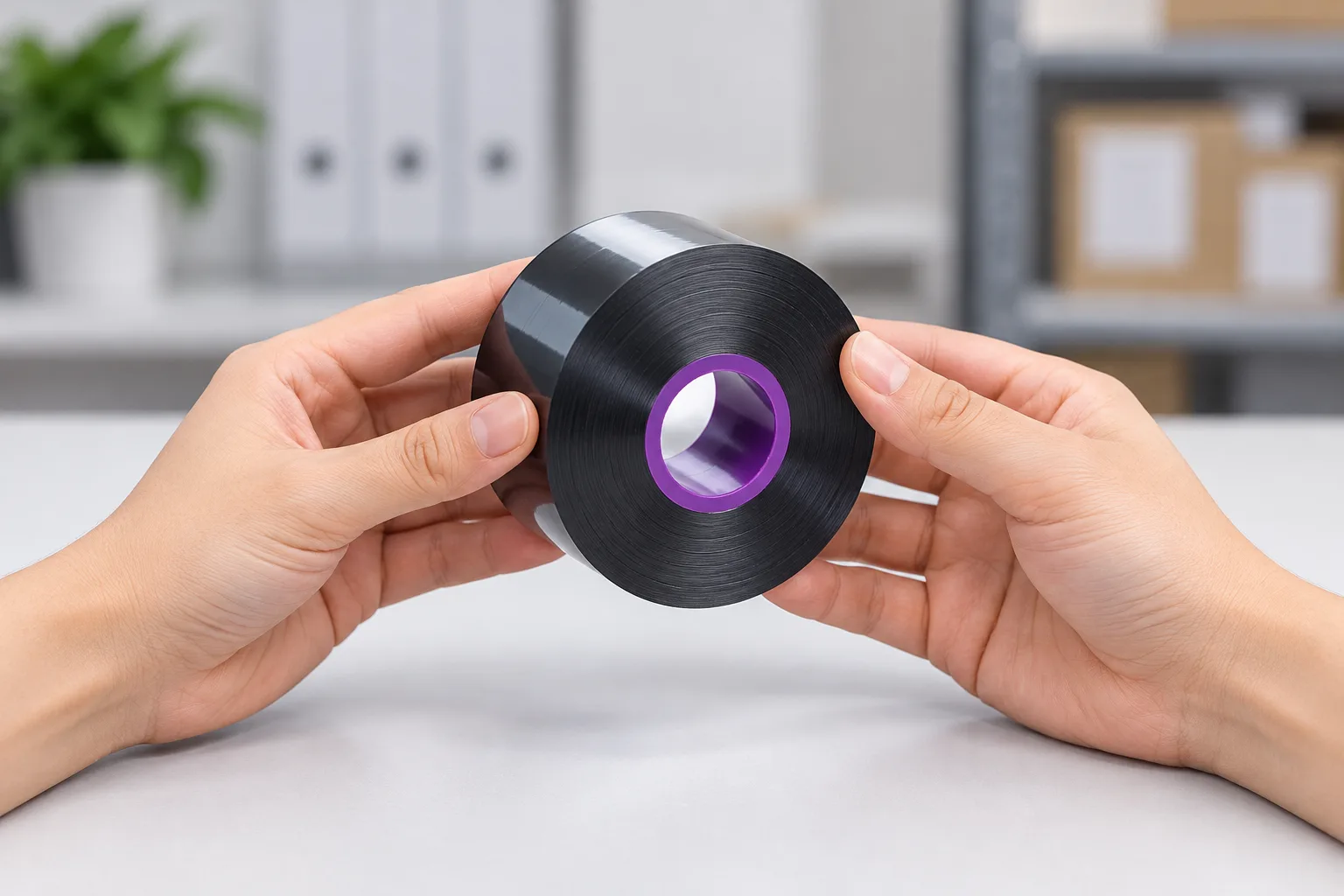
Printer fit is the first filter in code ribbon selection, because ribbon format follows the coder's print style. TTO coders run near-edge ribbons: the Z214 listed by one supplier is a TTO near edge wax/resin ribbon designed for use on TTO in-line/near edge printers at speeds up to 40 ips. Start from your printer's documentation, not from the ribbon shelf.
- Confirm whether your coder is a TTO in-line/near edge printer, since near-edge ribbons are designed for that print style.
- Check the ribbon width, core and ink-side orientation your printer manual specifies before ordering.
- Check the supplier's replacement list for your printer brand; published lists cover Bellmark, Markem / Imaje and Videojet.
- If your equipment maker is not listed, ask the supplier directly instead of guessing at compatibility.
You also do not have to buy the printer brand's own consumable. Suppliers offer drop-in replacements to OEM Thermal Transfer Overprinter Ribbons, and replacement products are stated to meet or exceed OEM specs. Those are supplier statements rather than independent test results, so the practical check is a trial roll in your own printer before you commit to volume.
Choosing Formulation and Color for Your Film
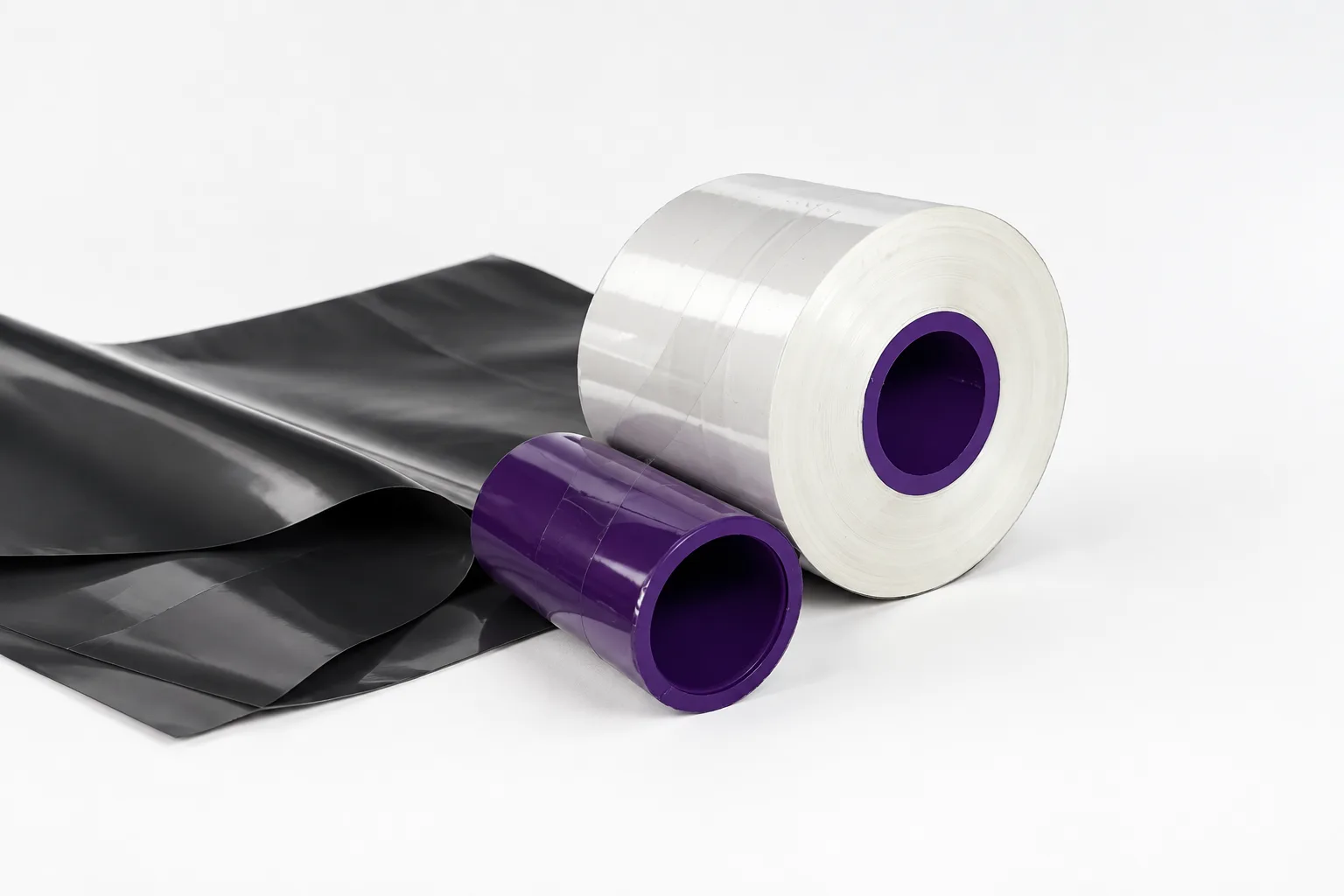
Formulation and color decide how well the code reads on your substrate. TTO ribbons come in wax-resin or resin formulations, and the listed near-edge range is Wax/Resin, Resin White and Silver — wax/resin black is the option named for high-speed flexible packaging coding, while resin white and silver give you choices when black does not read clearly on the film.
On print quality, supplier material for near-edge replacement ribbons promises dark, dense printed images on a wide variety of substrates. That phrasing covers many substrates but names none of them, so the dependable test is your own film: print your real date and bar code layouts, then check density, edge sharpness and scannability.
When you compare products, read at specification level instead of category level. A rating that appears in one premium product listing does not transfer to every wax/resin ribbon on the market.
Weighing Roll Length, Carrier Film and Running Cost
Roll length and carrier film thickness can affect your cost per printed code, not just the price on the box, and how much they affect it depends on the prices you actually pay. Work out cost per code from your quoted roll price and the number of codes a roll prints before treating a longer or thinner format as cheaper. Supplier data for longer-length near-edge ribbons lists 20-25% Longer Length Rolls and ties that format to four running benefits: fewer roll changes reduces downtime, lower energy extends printhead life, the format allows for higher speed printing, and thinner film produces 15% less landfill waste.
Carrier film thickness points the same way. The listed premium near-edge ribbon is coated on a 4.0 micron PET carrier film, a spec that sits at the center of its productivity case rather than in the fine print.
Treat these as supplier-side numbers: they describe the ribbon products as listed, not guaranteed outcomes on every production line. Longer rolls also change what your printer handles, so confirm the longer format is specified for your printer model before you switch.
Data and Evidence
The table pulls the selection-critical values from the source material so you can compare options before shortlisting. For source clarity, the product-level values come from two named supplier listings: the Z214 high-speed near-edge wax/resin ribbon listing (near-edge fit, 4.0 micron PET carrier film, speeds up to 40 ips) and Graphic Controls' near-edge TTO ribbon range (wax/resin, resin white and silver colors, drop-in OEM replacement lists covering Bellmark, Markem / Imaje and Videojet, and the longer-roll benefits); the thermal transfer overprinting definitions come from TTO technical overviews. Where this guide says "supplier data" or "one supplier," it refers to those listings.
| Selection factor | Values in source data | What it means for your choice |
|---|---|---|
| Printer fit | "designed for use on TTO in-line/near edge printers" | Use near-edge TTO ribbon formats in TTO coders and check the replacement list for your brand |
| Formulation | wax-resin or resin; near-edge range listed as "Wax/Resin, Resin White and Silver" | Match the formulation to your film; wax/resin is the listed near-edge option for flexible packaging coding |
| Color | "Wax/Resin Black, Resin White and Resin Silver." | Pick the color your substrate needs and confirm it exists in your chosen formulation |
| Carrier film | "4.0 micron PET- carrier film" (one premium near-edge ribbon) | A per-product spec, not a category standard |
| Print speed | "speeds up to 40 ips" (the same premium ribbon) | A product rating, not a default setting for every printer |
| Roll length | "20-25% Longer Length Rolls" | Fewer roll changes and lower running cost, per supplier data |
Verification stays with the buyer: run a short trial with each shortlisted ribbon on your production film, print your real date and bar code layouts, scan the results, and compare density and edge quality side by side. If a trial print comes out unclear or the code will not scan reliably, pause the bulk purchase, contact the supplier to re-match formulation, color or roll format to your film and printer, and repeat the trial with the corrected ribbon before shortlisting again. Catalog ratings describe ribbon products under supplier conditions; they are not acceptance criteria for your finished labels.
Next step: shortlist two or three code ribbons that match your printer's format and your film, request sample rolls, and run the side-by-side trial before committing to a full order.
Frequently Asked Questions
What ribbon does a TTO printer use for date codes?
A near-edge thermal transfer ribbon, typically wax/resin, designed for TTO in-line/near edge printers; this ribbon type imprints date, price, lot and bar codes directly onto flexible packaging.
Can I use a replacement code ribbon instead of my printer brand's ribbon?
Yes. Suppliers offer drop-in replacements to OEM Thermal Transfer Overprinter Ribbons and state that the products meet or exceed OEM specs; check your printer brand against the published replacement list, which covers Bellmark, Markem / Imaje and Videojet, and run a trial roll first.
Which code ribbon colors are available besides black?
The listed near-edge range includes Resin White and Resin Silver alongside Wax/Resin Black; choose the color that gives your code enough contrast and confirm legibility with a print on the actual film.
Does a longer ribbon roll reduce printing cost?
Supplier data links longer rolls to lower running cost: rolls run 20-25% longer, which cuts roll changes and downtime, while lower energy extends printhead life and thinner film reduces landfill waste by 15%.
How fast can a near-edge code ribbon print?
One listed premium wax/resin ribbon is rated for speeds up to 40 ips on a 4.0 micron PET carrier film; treat that figure as the product's rating and confirm speed on your own printer and film.
Recommended products for this industry
CL-Z308 Resin Thermal Transfer Ribbon for Film and Paper Labels
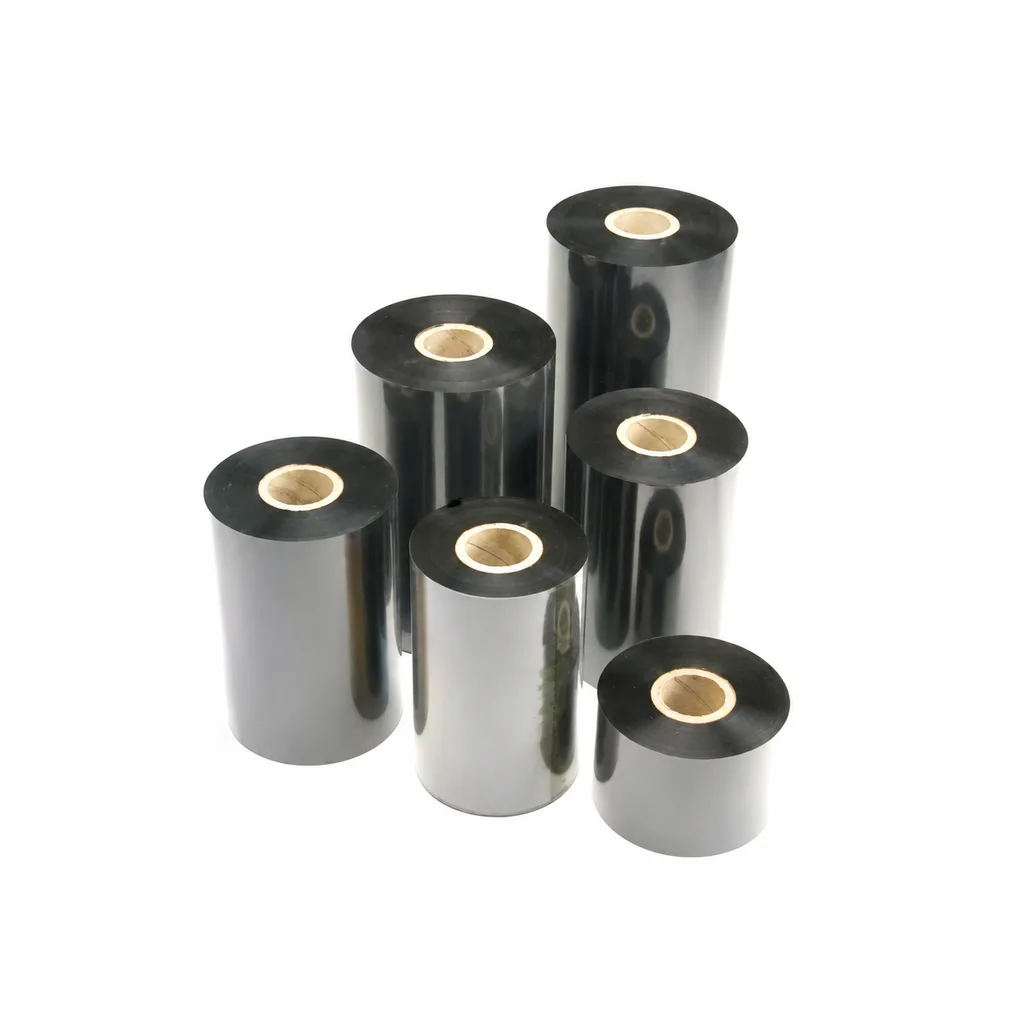
A black resin thermal transfer ribbon for printing film and paper labels with flat-head printers. Listed applications include retail labels, warehousing, logistics transport, garment hang tags and food packaging. The recommended printing speed is ≤8 inches per second (IPS). Select it by printer type and actual label material, and confirm the required ribbon width, length, core and ink-side orientation before ordering; these dimensions are not specified in the available product data.
View details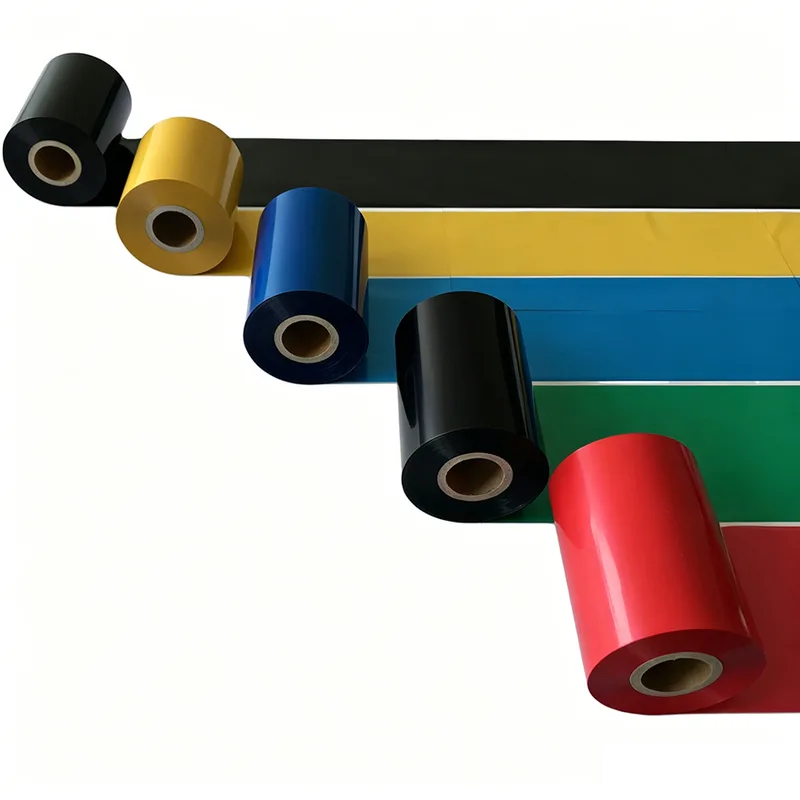
Thermal Coding Ribbon for Tire Position Marking CL-0080D
A thermal coding ribbon for tire position marking, available with red, white or yellow ink. Select it with the printer and printing surface in mind: print quality and image durability may vary with their types.
View details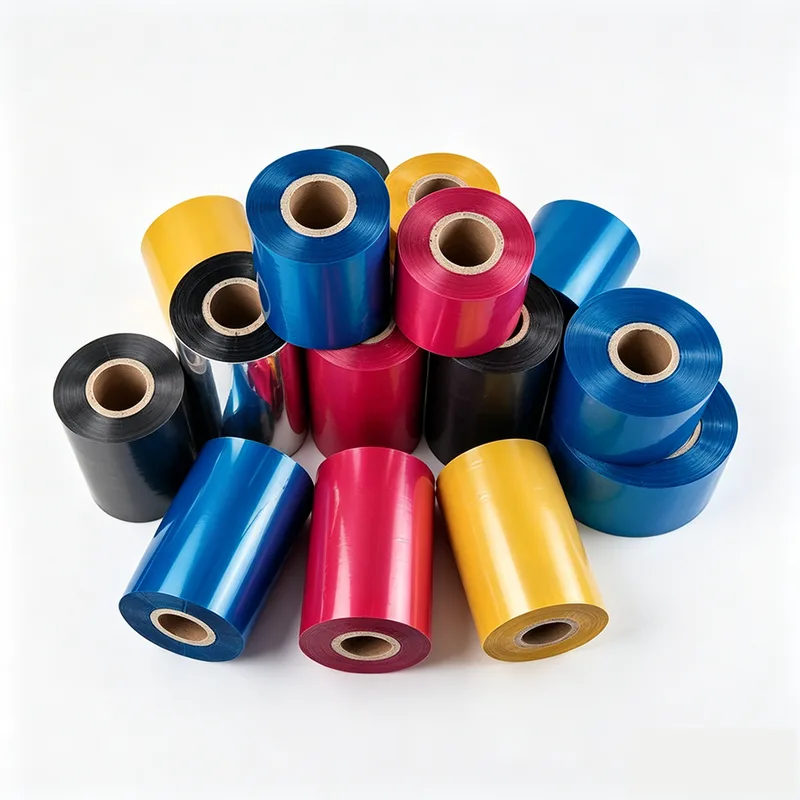
Thermal Coding Ribbon for Tire Position Marking CL-UFGQ2
CL-UFGQ2 is a thermal coding ribbon for tire position marking. Select the ink color and check the printer, marking material and operating conditions; print quality and image durability can vary with the printer and substrate.
View details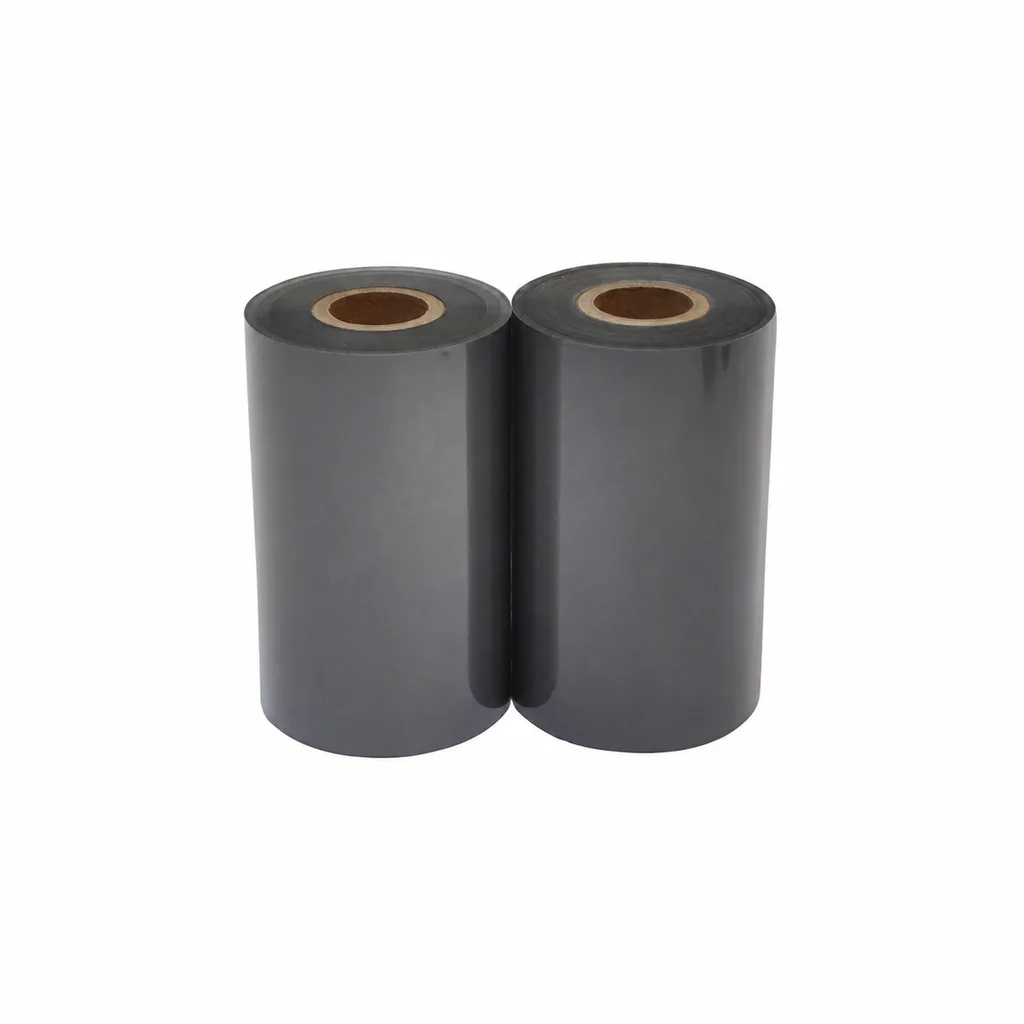
Black Resin Thermal Transfer Ribbon for Label Printing - CL-Z373
CL-Z373 is a black resin thermal transfer ribbon for label printing with desktop or industrial flat-head barcode printers at speeds of ≤6 ips (inches per second). Listed applications include electronics processing, tire identification, automotive manufacturing, pharmaceutical packaging, cosmetic labels and outdoor identification. Selection depends on the actual label material, printer and exposure conditions. Fine-line, small-character and resistance results were obtained on coated paper; print quality and image durability may vary with the printer and print substrate.
View detailsNeed the right ribbon for your label application?
Share the label material, printer and operating environment. Our team will recommend a tested combination.
