
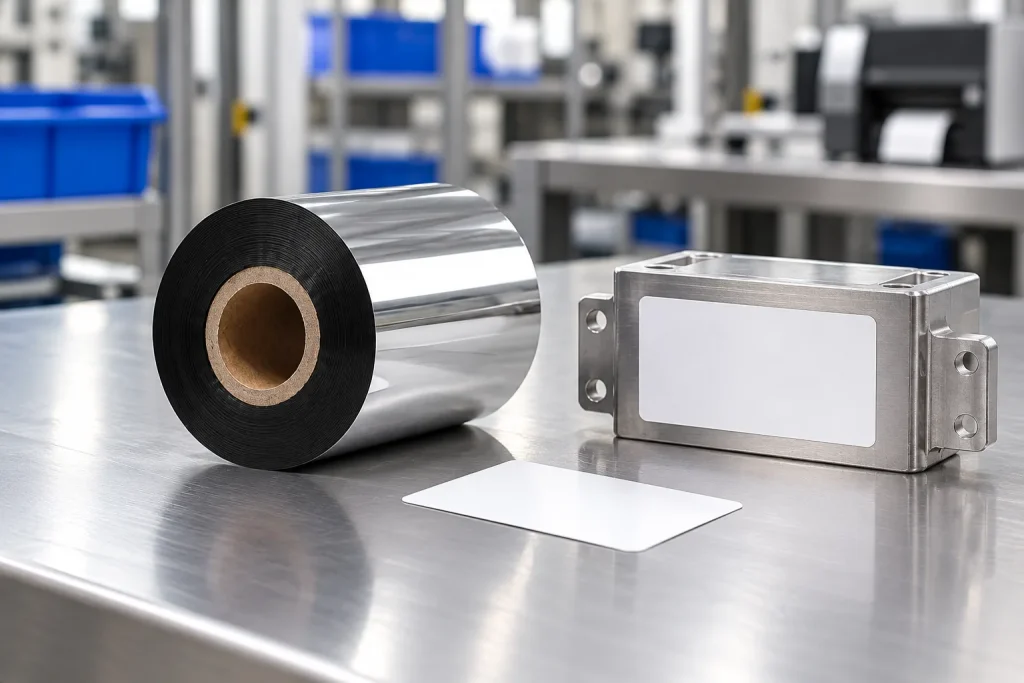
- Original TTR manufacturer since 2013
- Automated coating and slitting
- IQC / IPQC / OQC control
- ANSI barcode grade testing
- -20°C to 120°C environmental testing
- Batch-level traceability
- ANSI barcode grade
- Batch traceability
- RoHS / REACH compliance
- SGS and MSDS documents on request
High-temperature resistant marking describes identification intended to remain usable during heat exposure. For a printed label, the label material, printed image and adhesion each matter. Assess the finished construction on its intended surface under relevant exposure conditions.
Key Takeaways
- Thermal transfer printing uses printhead heat to transfer ribbon ink onto a label.
- Heat used during printing and heat encountered by the finished marking are different events.
- Polyimide labels are described as resisting extreme temperatures and harsh chemicals, without a universal temperature limit in the available evidence.
- Temperature cycling, chemical contact and surface energy affect adhesion.
What High-Temperature Resistant Marking Means
High-temperature resistant marking is identification intended to remain usable when exposed to heat. For a printed label, that objective concerns the finished marking in its working environment: its information needs to remain legible and the label needs to stay attached for its intended use.
The description is a performance objective, not a numerical temperature rating. A heat-resistance statement alone does not specify the temperature, duration or conditions for a particular finished label. The available evidence describes polyimide labels as withstanding extreme temperatures, harsh chemicals and demanding manufacturing environments, but gives no numerical limit for a complete printed construction.
The label and its image are distinct. The label material carries the information, while the ribbon supplies the transferred ink. Adhesion concerns the attachment of the applied label to its surface. A claim about one of these parts does not establish the performance of the others.
How Heat Creates a Thermal Transfer Image
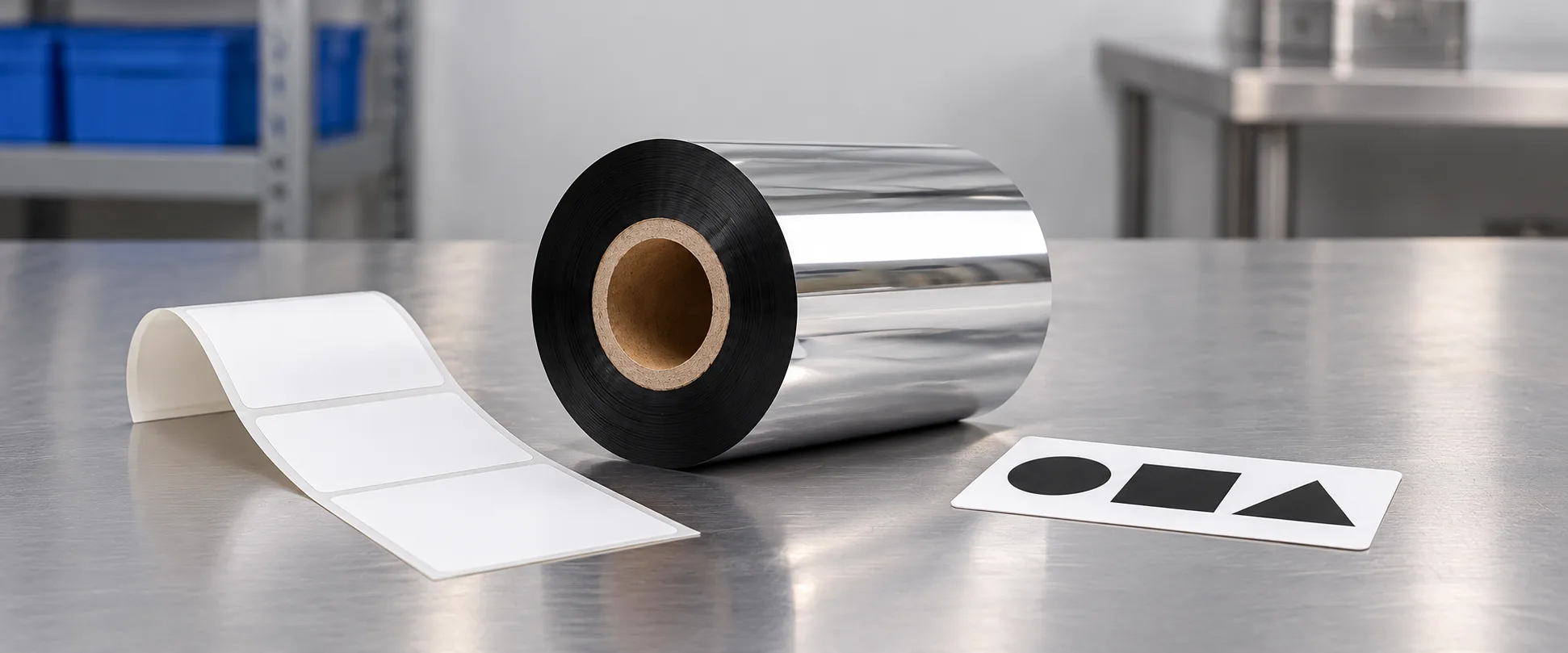
Thermal transfer printing uses heat from the printhead to melt ribbon ink onto the label. The ribbon consists of a thin film coated on one side with wax-based, resin-based or mixed wax-resin ink. The transferred ink forms the image on the receiving material.
The heat used to make the image is a printing event. Heat encountered by the finished label later is an exposure event. Knowing how an image is produced does not establish its resistance to heat during use.
The company product matrix describes its full-resin ribbon category as resistant to heat, friction and corrosion. This qualitative description does not specify a maximum service temperature or exposure duration for a particular ribbon and label combination. It also does not establish how the adhesive or image will perform in a specific process.
Why the Complete Marking Matters
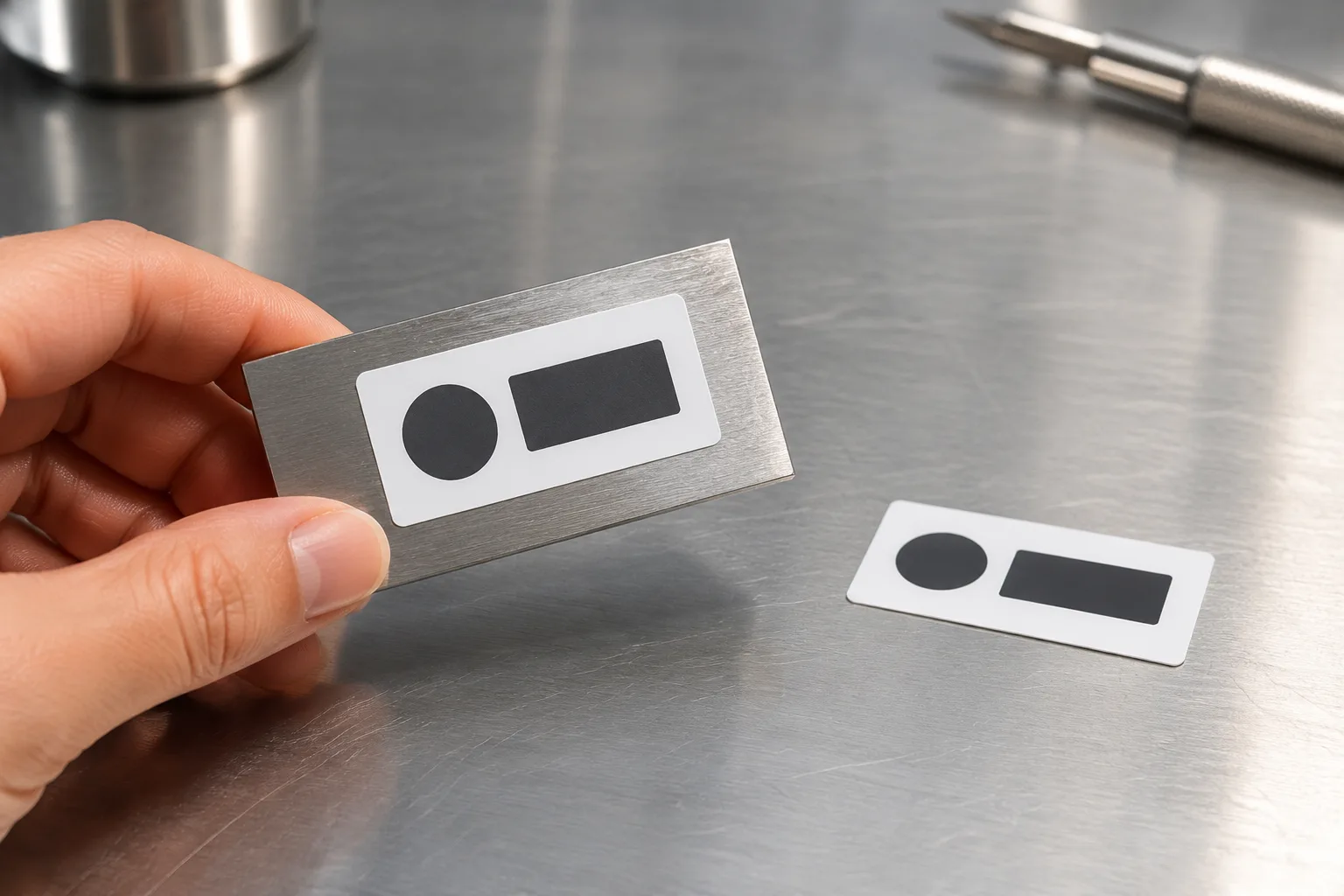
A printed label brings together the label material, transferred image and attachment to the surface. Polyimide labels are described as having thermal stability and chemical resistance, while the company product matrix separately describes heat resistance for full-resin ribbon. Those statements describe different components rather than a single rating for their combination.
Adhesion depends on the application. Temperature cycling, chemical contact and surface energy change adhesion; the available evidence recommends approving samples made from the same material stack and applied to the same surface. The material stack is the label construction considered as a combination of layers.
When reading a marking claim, identify whether it concerns the label material, the ribbon or a finished applied sample. Check what exposure the evidence covers. This distinction helps prevent a general material description from being mistaken for a result for the whole application.
Data and Evidence
The available evidence supports qualitative distinctions but does not provide a universal temperature limit for a complete high-temperature printed label.
| Evidence relates to | What the source describes | What remains to be established |
|---|---|---|
| Polyimide label | Resistance to extreme temperatures and harsh chemicals | Conditions and performance of the particular printed construction |
| Full-resin ribbon category | Heat, friction and corrosion resistance in the company product matrix | A numerical heat limit and performance on the intended label |
| Applied label adhesion | Temperature cycling, chemical contact and surface energy affect adhesion | Sample approval using the same material stack and surface |
The ribbon statement comes from the company product matrix. The polyimide and adhesion statements come from the available polyimide-label and adhesion evidence. None supplies a complete-label temperature and time rating.
As a next step, document the intended exposure and examine a finished sample made with the same material stack on the same surface. Record whether the image remains legible and the label remains attached under the conditions relevant to the application.
Frequently Asked Questions
How hot can a high-temperature label get?
The available evidence does not specify a temperature limit or exposure duration for the complete printed label. A specific limit requires evidence for the actual construction and conditions.
Do polyimide labels resist chemicals as well as heat?
Polyimide labels are described as resisting harsh chemicals and extreme temperatures, but that does not establish resistance to every chemical or for every printed construction.
Is printhead heat the same as a label service-temperature rating?
No. Printhead heat transfers the ribbon ink during printing; service temperature concerns exposure of the finished marking. The printing mechanism does not establish its service rating.
Related Products & Guides
Recommended products for this industry

Aluminum Foil High-Temperature Label
Coated aluminum label for metal processing, heat treatment and high-temperature part…
View details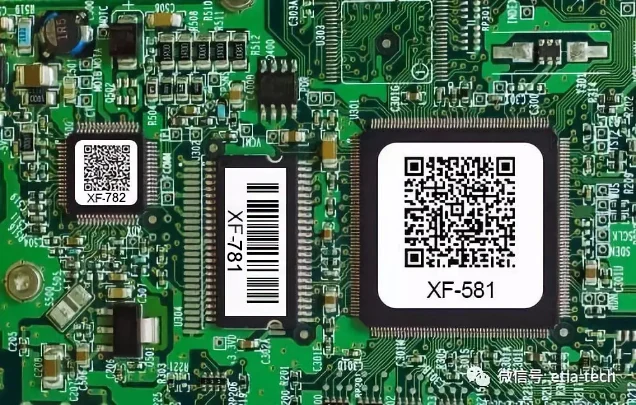
Anti-Static High-Temperature Polyimide Label
Anti-static polyimide label for ESD-sensitive electronics assembly and high-temperature…
View details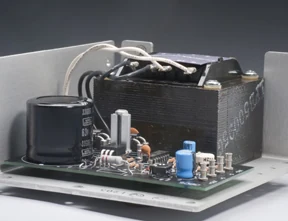
Black High-Temperature Polyimide Label
Matte-black polyimide label for high-contrast codes on dark electronics and industrial…
View details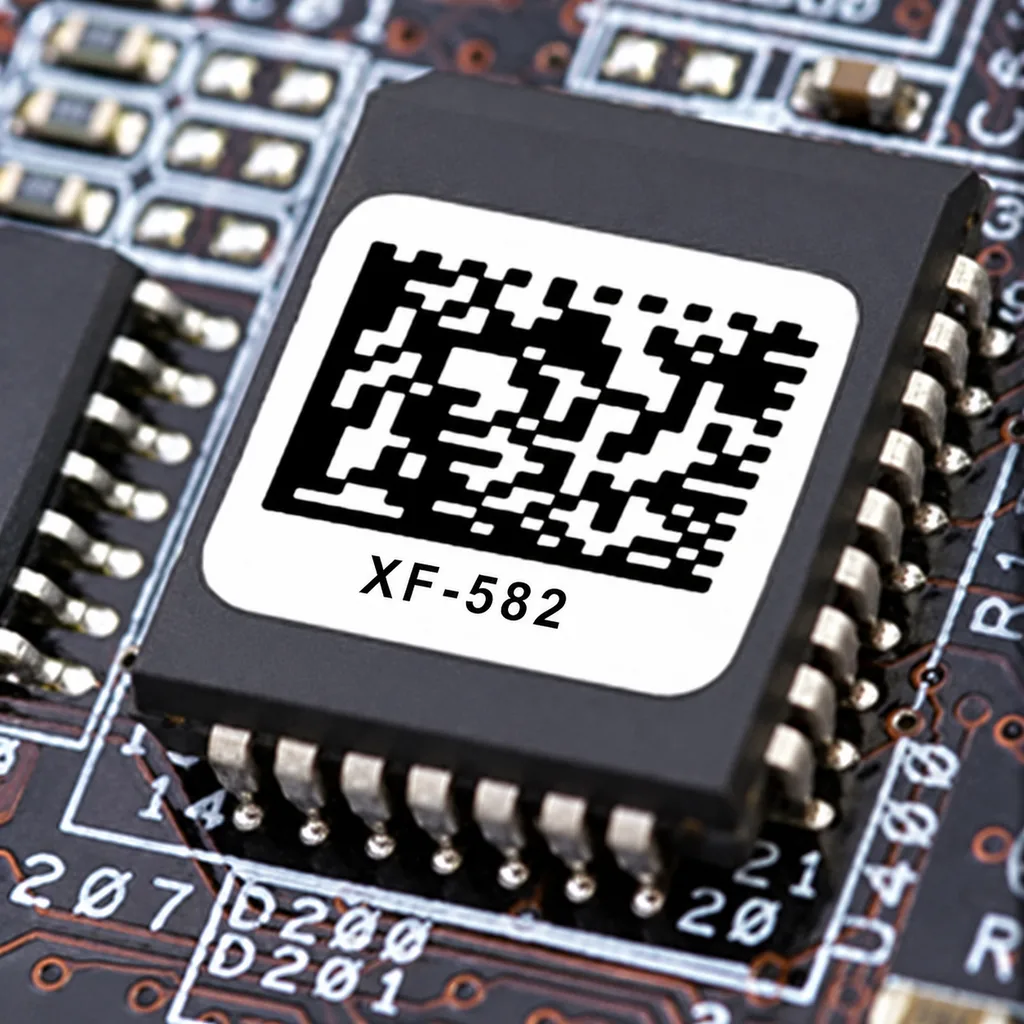
CL-582 High-Temperature Polyimide Labels for Printed Circuit Board Traceability
CL-582 is a high-temperature polyimide (PI) label material for printed circuit board (PCB) and sensitive electronic component process control and product traceability. It has a gloss white coating, a listed thickness of 2mil and an acrylic adhesive. The source identifies wave soldering and reflow soldering as applications. Selection requires confirmation of the actual heat exposure and chemical conditions: the listed temperature range has no specified exposure duration, and solvent resistance is qualitative.
View detailsNeed the right ribbon for your label application?
Share the label material, printer and operating environment. Our team will recommend a tested combination.
