
High-Temperature Polyimide Label Materials: A Buyer's Guide to Documented Manufacturers and Suppliers
Request a solution
- Original TTR manufacturer since 2013
- Automated coating and slitting
- IQC / IPQC / OQC control
- ANSI barcode grade testing
- -20°C to 120°C environmental testing
- Batch-level traceability
- ANSI barcode grade
- Batch traceability
- RoHS / REACH compliance
- SGS and MSDS documents on request
Key Takeaways
- Compare polyimide label vendors on documented products and verifiable published data.
- The supply market has three layers: polyimide film brands, label material suppliers, and converters or distributors that deliver finished labels.
- Brady, LINTEC, ImageTek, and Bartech Data have documented polyimide label products or circuit-board label lines.
- Documented soldering survival belongs to specific products, not to polyimide as a category — LINTEC specifies whiteness, barcode legibility, and adhesive performance through 300°C for up to one minute, and ImageTek builds its labels to withstand 500°F (260°C) — and within the UL969 range PET, polyimide, and vinyl are not interchangeable.
- Published ratings are construction-specific — 300°C for up to one minute in one documented program and 500°F (260°C) in another — and Bartech Data states that its polyimide PCB label materials call for high-temperature resin ribbons.
What Buyers Need from High-Temperature Polyimide Labels
Polyimide labels are constructed from a thin, flexible film with strong thermal stability and chemical resistance, and they are specified for extreme temperatures, harsh chemicals, and demanding manufacturing environments. Documented soldering survival, however, attaches to specific products rather than polyimide as a category: LINTEC specifies its heat resistant circuit board labels to maintain whiteness, barcode legibility, and adhesive performance through exposure to 300°C for up to one minute, and ImageTek builds its polyimide labels to withstand temperatures as high as 500°F (260°C).
Before contacting suppliers, quantify four requirements. Record peak temperature and exposure time separately, since suppliers rate short peaks differently from prolonged bakes. List the chemicals the label will meet after application, including flux, cleaning fluids, and solvents. Note the application surface and the process point where the label goes on, since adhesive performance depends on both. Define the print method and traceability needs: barcode symbology, label dimensions, and any customer or regulatory standard your shipments must satisfy.
Be precise about what you are buying. A film maker sells base polyimide film. A label material supplier coats that film with adhesive and a release liner to make pressure-sensitive label stock. A converter die-cuts and prints finished labels, and a distributor may resell any of these. Deciding which layer you need keeps your RFQs comparable.
Documented Manufacturers and Their Product Focus
The following product listings provide a starting point for comparison; confirm each company’s role and current availability directly.
In practice, “Kapton labels” and “polyimide labels” are often used interchangeably. Confirm the exact material and construction with the vendor.
Suppliers with documented polyimide PCB label lines:
- Brady — documents wash and reflow circuit board polyimide label lines in its BradyID catalog.
- LINTEC — documents heat resistant circuit board labels built on white polyimide films, specified to maintain whiteness, barcode legibility, and adhesive performance through exposure to 300°C for up to one minute.
- ImageTek — lists high-temperature polyimide labels and PCB stickers built to withstand temperatures as high as 500°F (260°C).
- Bartech Data — lists polyimide PCB label materials, sizes, and resin ribbons for thermal transfer printers, and treats matching a high temperature resin ribbon as critical so the label stays on the PCB and the text remains legible.
Many industrial label materials, including polyimide and PET, are engineered to meet RoHS, REACH, and other global regulatory standards; treat that as a category-level expectation and require compliance statements for the specific material you will buy. Compare vendors on four dimensions: supply-chain role, documented product focus, published performance data, and compliance references.
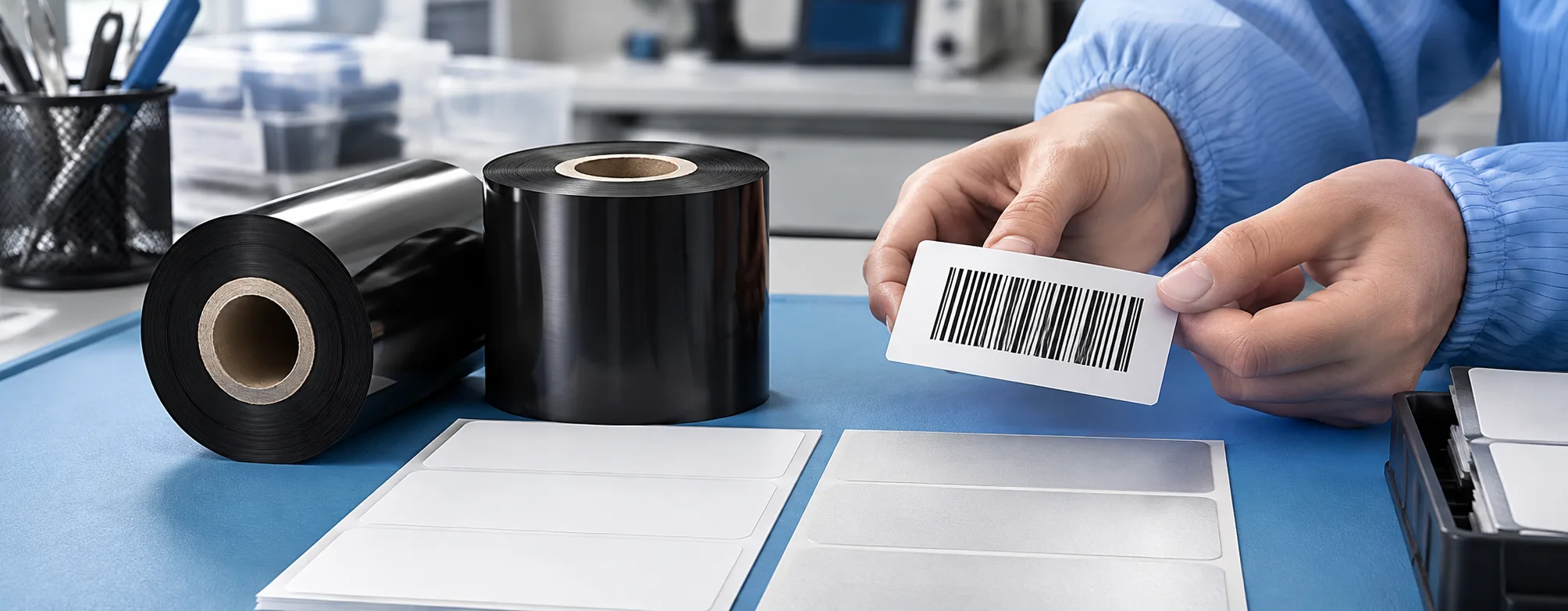
How Polyimide Compares with Other High-Temperature Label Materials
Within the UL969 label materials range, matte silver PET, polyimide, and vinyl all appear, yet they are not interchangeable — treat any substitution as a new material decision that needs fresh testing.
Performance depends on the complete construction of facestock, adhesive, and topcoat — the release liner is part of the pressure-sensitive label stock, not of the final applied label — so judge a label by its datasheet rather than the film name alone. Cost follows capability. Paper labels remain the low-cost, high-volume option and pair with the most economical wax ribbons, which are designed for high-speed printing on paper. Synthetic label materials are printed primarily with hybrid and resin-based thermal transfer ribbons, chosen per requirements and usage environment. Resin ribbons are the tier chosen for robust resistance to chemicals and harsh conditions. For polyimide PCB labels specifically, Bartech Data states that matching a high temperature resin ribbon is critical so the label stays on the board and the text remains legible — confirm ribbon compatibility for your exact material with printed samples before production.
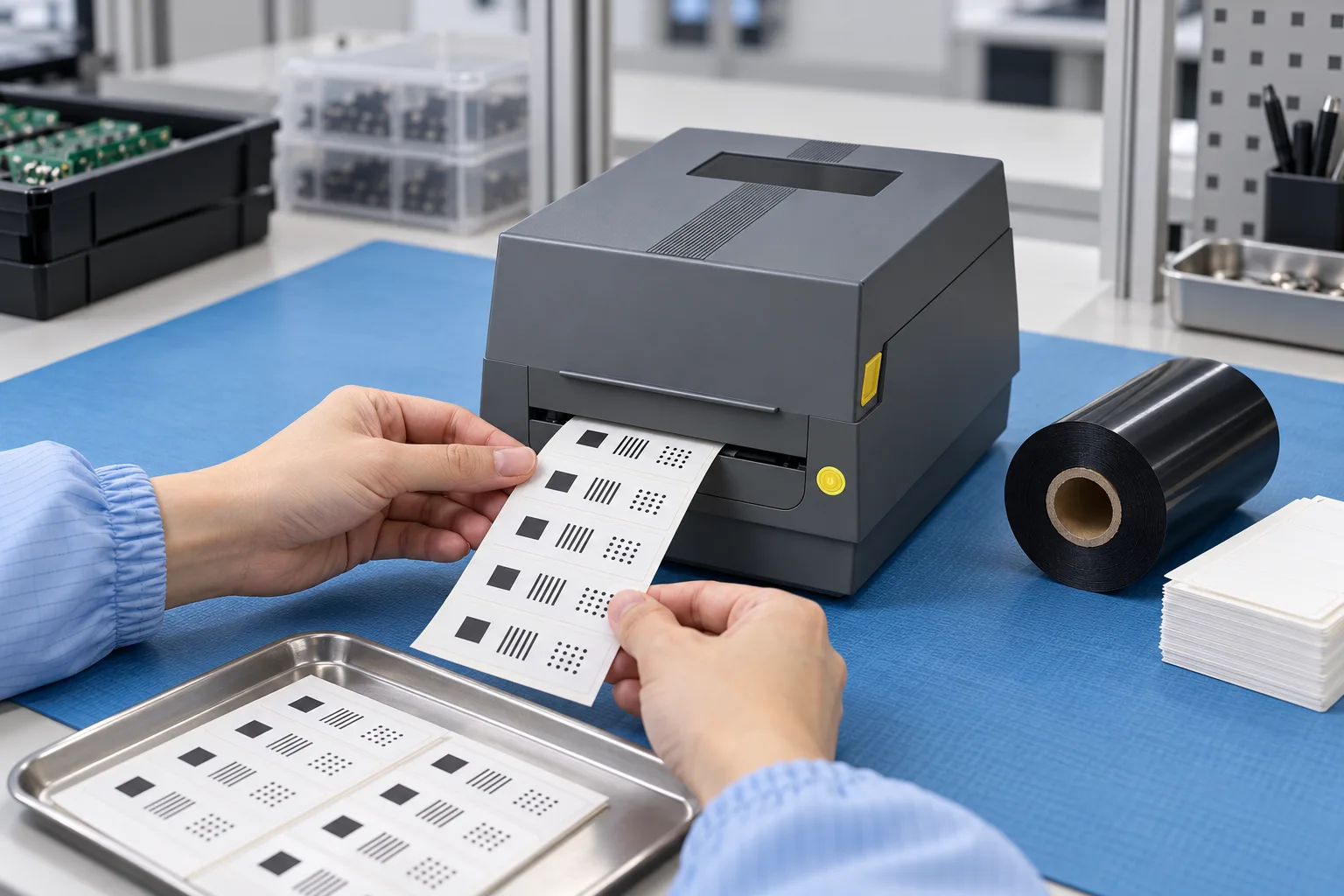
How to Evaluate Suppliers and Select a Material
Supplier evaluation for polyimide labels comes down to documented items rather than adjectives. Ask every shortlisted supplier for the following.
- Datasheets for the exact construction you will buy, stating the temperature rating with exposure duration, adhesive service conditions, and chemical resistance.
- Printer and ribbon compatibility: whether the material is qualified for thermal transfer — direct thermal instead applies heat to a specially treated surface and serves shorter-term applications — plus the recommended ribbon formulation and the printhead geometry the rating assumes.
- Print resolution for your smallest barcode: thermal printheads are often 203 dots per inch (8 dots per mm) or 300 dpi (12 dots per mm), though some manufacturers now make 600 dpi printers for very small electronics barcodes.
- Compliance documentation: RoHS and REACH statements for the specific material, and UL 969 recognition where your application requires it.
- Supply details: available sizes, ribbon widths, core sizes, and roll lengths, because matching ink formulation, width, core size, and roll length to your printer and label material is where a knowledgeable supplier proves value.
Then test before you commit. Print samples with the specified ribbon and run them through your actual reflow or wave-solder profile, not a generic heat test, then check adhesion, whiteness, barcode legibility, and scan performance under the chemical and abrasion exposure your line applies. Some suppliers formalize this step — the SATO European Technical Lab, for example, can test ribbon and label combinations against a customer’s specific application before purchase. Whichever vendor you choose, record the acceptance criteria before the first production order.
On cost: request an itemized quote from each supplier. Your cost stack includes the specialty label material, a ribbon matched to your material, conversion into your die-cut size, process testing, and order volume. Weigh unit costs against the cost of failure — for manufacturers shipping hazardous chemicals, industrial products, or hardware overseas, label durability is a matter of legal compliance and human safety. Confirm lead times, minimum order quantities, custom sizes, and supply stability item by item with each supplier.
Data and Evidence
Product sources: Brady product details, Bartech Data product details, ImageTek product details, LINTEC product details. Performance statements are the respective companies’ own descriptions.
Two published temperature ratings anchor this comparison: LINTEC specifies its heat resistant circuit board labels to maintain whiteness, barcode legibility, and adhesive performance through exposure to 300°C for up to one minute, and ImageTek builds its polyimide labels to withstand temperatures as high as 500°F (260°C). Both figures are manufacturer-published self-descriptions of specific constructions, not of the material category, so request the equivalent written rating for any label you intend to buy.
| Supplier | Role | Documented polyimide focus | Published rating or condition |
|---|---|---|---|
| Brady | Confirm with vendor | Wash and reflow circuit board polyimide label lines | — |
| LINTEC | Confirm with vendor | Heat resistant circuit board labels on white polyimide films | 300°C for up to one minute |
| ImageTek | Confirm with vendor | High-temperature polyimide labels and PCB stickers | 500°F (260°C) |
| Bartech Data | Confirm with vendor | Polyimide PCB label materials, sizes, and matching resin ribbons | High temperature resin ribbon pairing stated as critical |
Verification method: get temperature and exposure-time ratings in writing for the exact construction, print samples with the specified ribbon, run them through the process profile your line actually applies, and inspect adhesion, legibility, and scan performance afterward. If a supplier cannot state a rating or support a sample test, treat that as a gap to resolve before ordering, not a detail to negotiate later.
Frequently Asked Questions
Who manufactures high-temperature polyimide label materials?
Brady, LINTEC, ImageTek, and Bartech Data have product listings relevant to polyimide labels. Confirm each company’s role and current availability directly, and shortlist using product evidence and your own test results.
How do buyers distinguish film manufacturers from label material suppliers and label converters?
Film makers produce the base polymer. Label material suppliers coat it into pressure-sensitive stock. Converters die-cut and print finished labels, and distributors may resell any of these. Ask each vendor which operations they perform in-house, and request datasheets for the layer you are actually buying.
How should buyers verify whether a label can withstand their PCB or SMT process?
Get temperature and exposure-time ratings in writing for the exact construction, print samples with the specified ribbon, and run them through the process profile your line actually applies. Inspect adhesion, legibility, and scan performance after processing, under your line’s chemical and abrasion exposure.
How does polyimide compare with polyester for high-temperature labels?
Within the UL969 label materials range, polyimide and PET are not interchangeable. Note that the published temperature ratings cited for comparison — 300°C for up to one minute (LINTEC) and 500°F (260°C) (ImageTek) — both describe specific polyimide label products, not PET data. Verify both materials against your own process before substituting one for the other.
What should buyers check for thermal-transfer printing compatibility?
Ask each supplier to confirm the recommended ribbon formulation for the exact material — Bartech Data states that polyimide PCB label materials call for a high-temperature resin ribbon — plus the printhead geometry the material is qualified on and the resolution your smallest barcode needs, since thermal printheads are often 203 or 300 dpi and only some printers reach 600 dpi. Match ribbon width, core size, and roll length to your printers, and give priority to suppliers who will test the label-ribbon combination before you order.
Recommended products for this industry
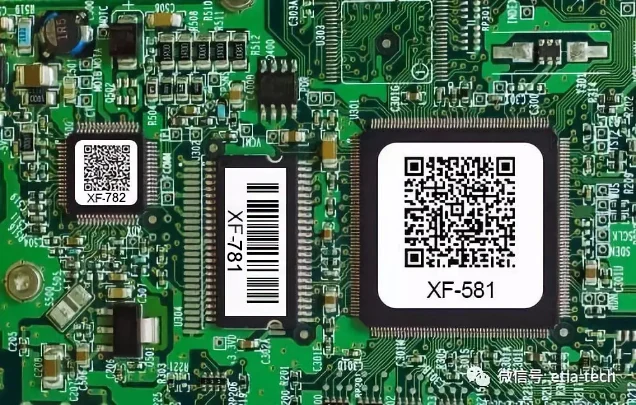
Anti-Static High-Temperature Polyimide Label
Anti-static polyimide label for ESD-sensitive electronics assembly and high-temperature…
View details
Black High-Temperature Polyimide Label
Matte-black polyimide label for high-contrast codes on dark electronics and industrial…
View details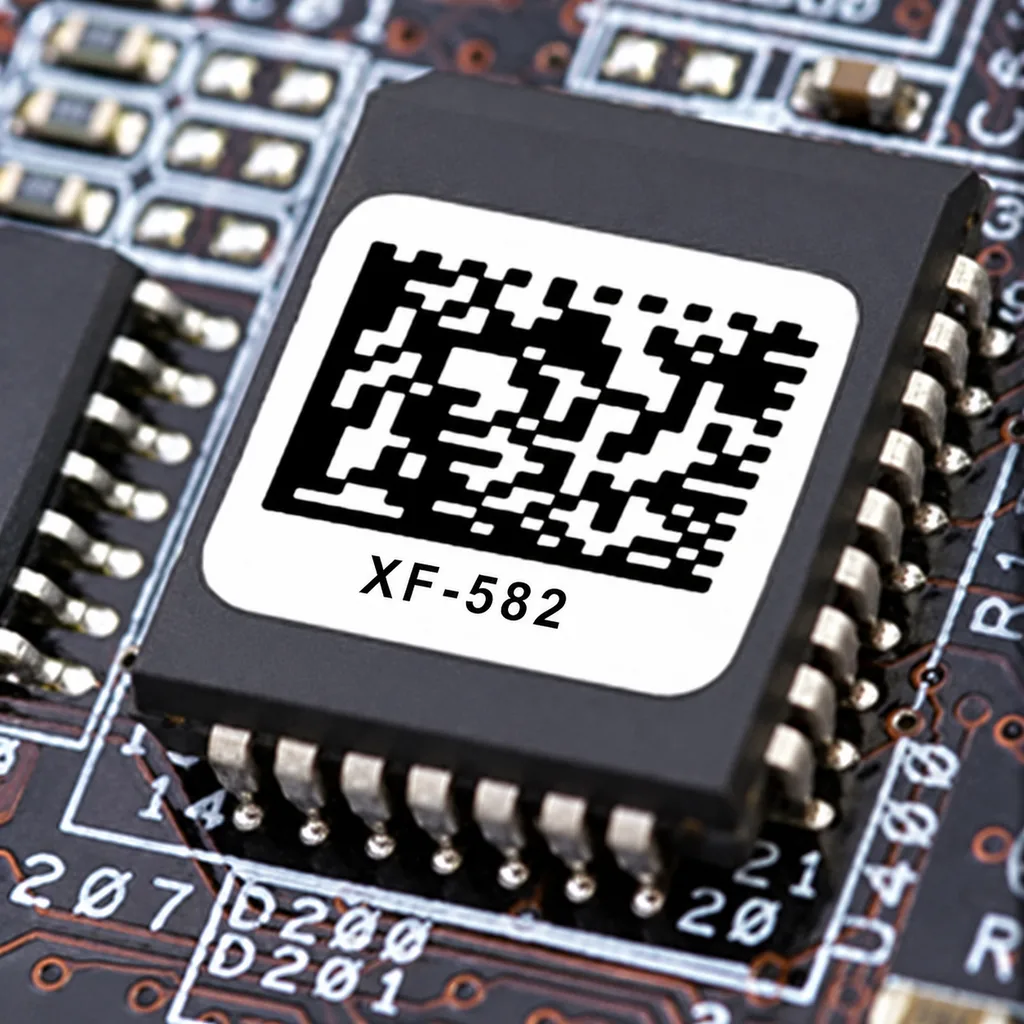
CL-582 High-Temperature Polyimide Labels for Printed Circuit Board Traceability
CL-582 is a high-temperature polyimide (PI) label material for printed circuit board (PCB) and sensitive electronic component process control and product traceability. It has a gloss white coating, a listed thickness of 2mil and an acrylic adhesive. The source identifies wave soldering and reflow soldering as applications. Selection requires confirmation of the actual heat exposure and chemical conditions: the listed temperature range has no specified exposure duration, and solvent resistance is qualitative.
View details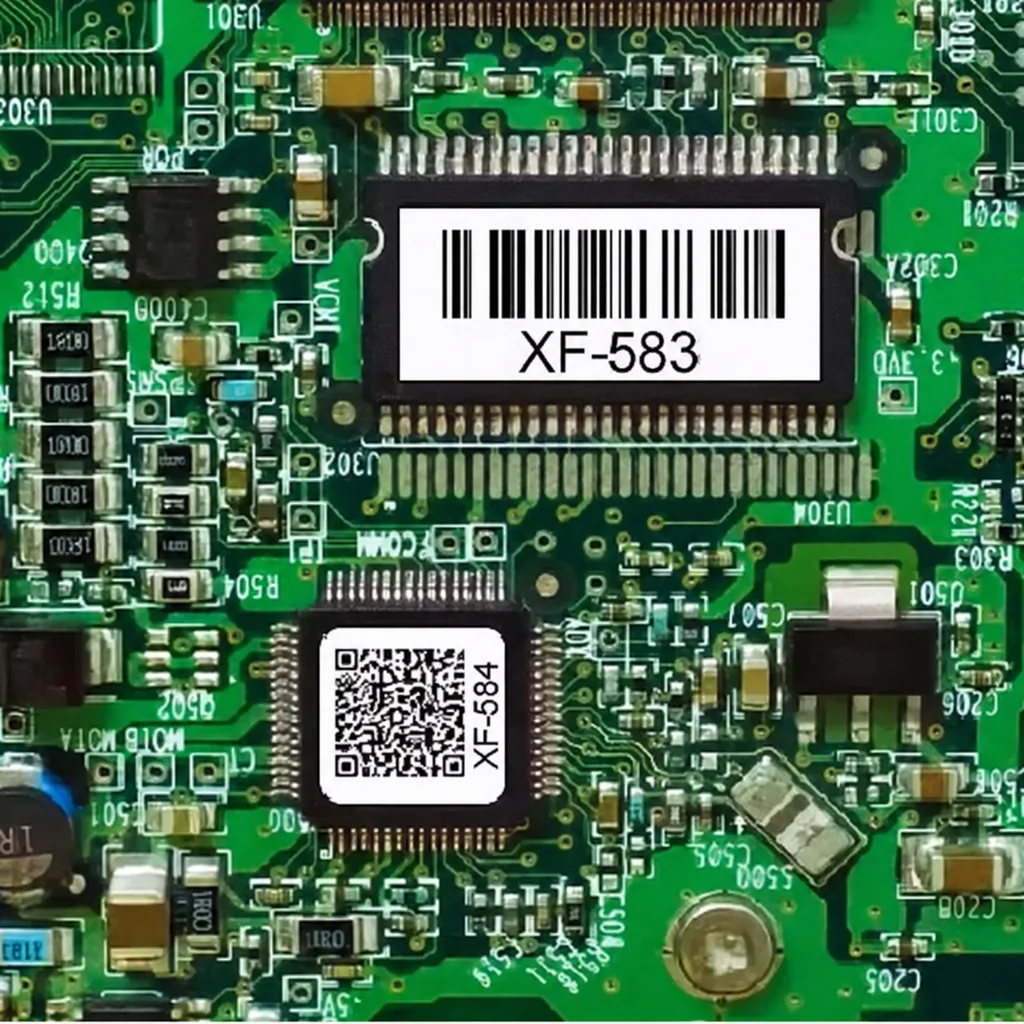
CL-583 High-Temperature Polyimide Labels for PCB Traceability
A matte white polyimide (PI) label material with acrylic adhesive for printed circuit board (PCB) process control and product traceability, including reflow and wave soldering applications. The listed thickness is 1mil and the stated temperature resistance range is -40-350℃. Select it against the actual soldering profile and chemical exposure: the available data does not specify exposure duration, cycle limits or solvent test conditions.
View detailsNeed the right ribbon for your label application?
Share the label material, printer and operating environment. Our team will recommend a tested combination.
