
Blood Bag Label Selection: How to Match Facestock, Adhesive, and Ribbon to Storage Conditions
Request a solution
- Original TTR manufacturer since 2013
- Automated coating and slitting
- IQC / IPQC / OQC control
- ANSI barcode grade testing
- -20°C to 120°C environmental testing
- Batch-level traceability
- ANSI barcode grade
- Batch traceability
- RoHS / REACH compliance
- SGS and MSDS documents on request
Buyers choosing a blood bag label need three matched decisions: facestock and adhesive rated for the coldest storage step, print and adhesive that survive moisture and alcohol contact, and a thermal transfer ribbon class suited to the facestock. This guide explains how to read recorded product attributes, including temperature grades of minus 20, minus 40, and minus 80 degrees, alcohol resistance, and no-residue adhesives, and how to verify a shortlist by printing and scanning samples on the actual bag film. Verification on your own film, not the catalog grade, is what approves a material.
Key Takeaways
- Select a blood bag label by starting from storage and contact conditions (coldest temperature, moisture, chemicals), not from the printer catalog.
- Recorded temperature grades in the reference list include minus 20 degrees on art paper and PET labels, minus 40 degrees on a synthetic paper label, and minus 80 degrees on a PET label.
- A medical infusion bag label in the list is recorded as waterproof, resistant to alcohol, and free of glue residue, attributes worth requiring for any bag that gets wiped.
- Wax-based, wax-resin mixed, and resin-based ribbons are distinct classes, and infusion bag ribbons and barcode ribbons are recognized classes of their own.
- Batch numbers are printed on packaging including carton, bag, and pallet labels, so approve a label and ribbon pair per surface, not once for all.
Define the Conditions Your Blood Bag Label Must Survive
A blood bag label has to stay attached and readable through every condition the bag meets after printing, so selection starts by writing those conditions down before opening any catalog. Record the lowest temperature the labeled bag reaches and how long it stays there, note whether your process wipes or splashes bags with alcohol or disinfectant, and list every surface the label must grip, from the flexible plastic film of the bag to the outer carton.
Three condition groups drive the rest of the decision:
- Coldest storage step. An adhesive that holds at room temperature can lift in a freezer, so the grade you select has to cover the minimum, not the average.
- Moisture and chemical contact. Condensation forms when cold bags reach room temperature, and alcohol resistance appears as a recorded attribute on medical bag labels, so if your process wipes bags, your print and adhesive need to tolerate it.
- Surface and handling. A bag film, a printed carton, and a pallet label each hold adhesive differently, and labels on bags get rubbed during transport and stacking.
With this list written, every recorded product attribute you read next becomes a checkable criterion instead of marketing language.
Match Facestock and Adhesive to the Coldest Storage Step
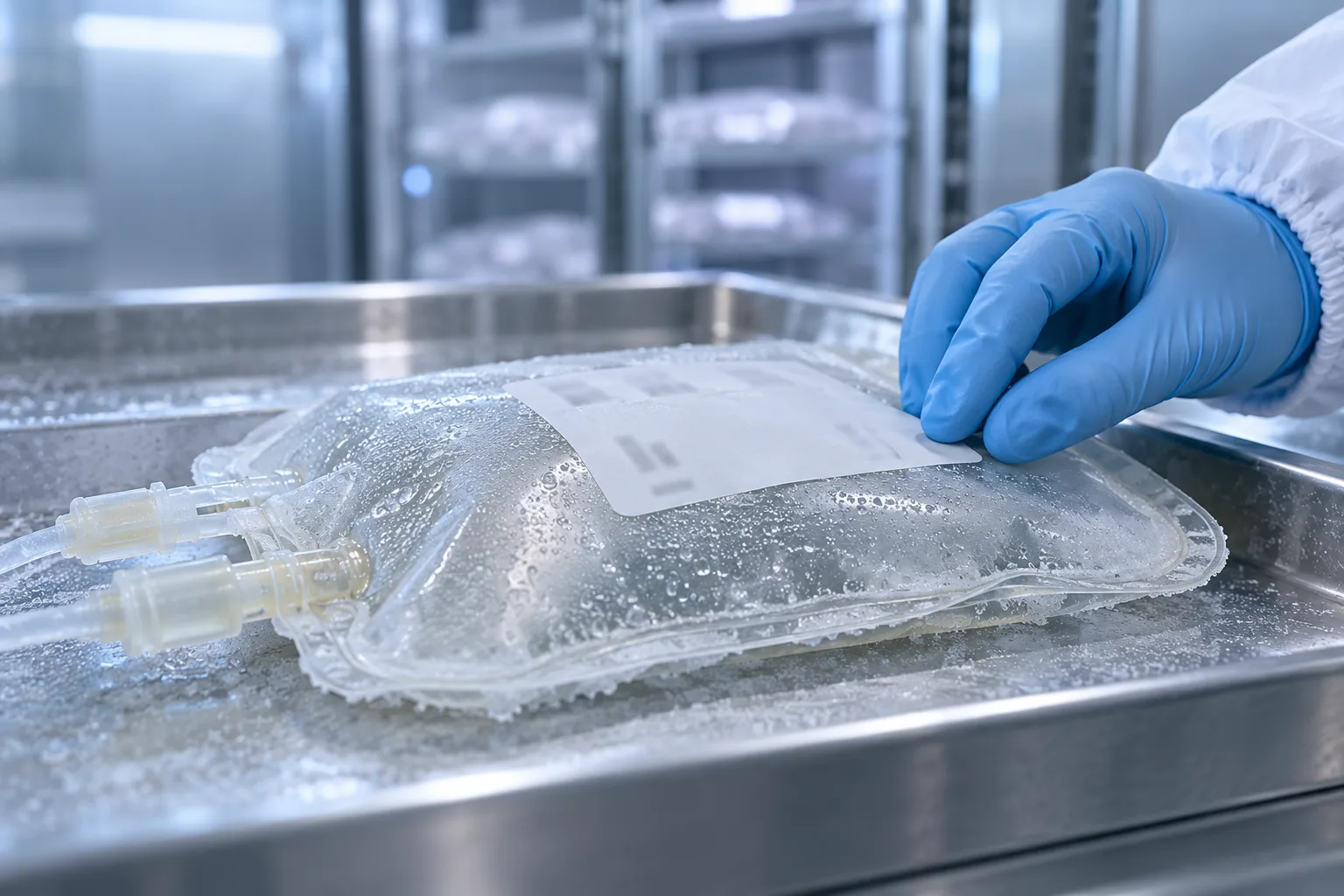
Facestock and adhesive for a blood bag label are chosen against the lowest temperature on your condition list, because cold is where adhesives lose grip first. Product records express this fitness as a temperature grade attached to one specific item, so the practical skill is reading grades the way they are written.
The reference list shows the spread of recorded grades: minus 20 degrees on an art paper label and on a PET label built for an iron and steel plant, minus 40 degrees on an anti-counterfeiting fragile synthetic paper label, and minus 80 degrees on a PET label listed for the steel industry. The medical side of the list records the deep-cold case as an ultra-low temperature resistant liquid nitrogen freezing label described as medical and waterproof. Each grade belongs to the item it is recorded on, so treat a recorded grade as evidence that a construction class reaches that temperature, then confirm the matching medical construction on your own bag film before relying on it for blood bags.
Treat recorded grades as entry criteria for sampling rather than as batch acceptance. Your own printed samples, conditioned in your coldest storage on your own bag film, are the acceptance test; a catalog grade cannot tell you how an adhesive grips a film it has never met.
Choose the Ribbon Class That Fits the Facestock
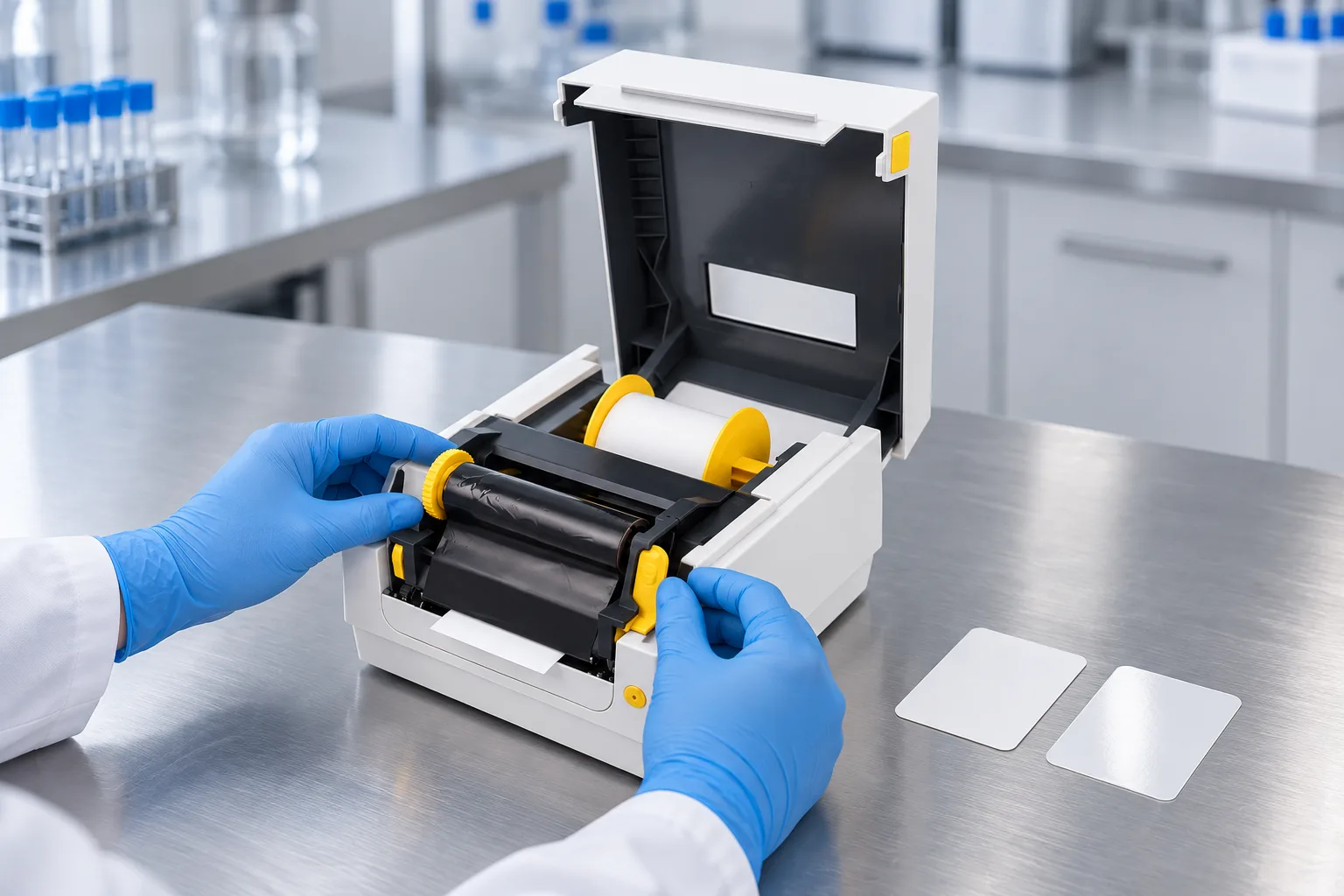
Thermal transfer printing pairs a ribbon class with a facestock, and the recorded classes give you a clear starting menu: wax-based ribbons, wax-resin mixed ribbons, and resin-based ribbons are all widely used models, alongside dedicated types such as infusion bag ribbons and barcode ribbons. For a paper label in mild conditions, wax-based is the usual starting point; for the synthetic film stocks that cold, damp storage favors, test the wax-resin mixed and resin-based classes first, because resin-based ink generally bonds harder and withstands abrasion and chemical contact better than wax.
The recorded examples show the range: an enhanced wax-based mixed ribbon is listed for heat transfer barcode printing on labels, and an anti-static wax-based resin ribbon is recorded among ribbon consumables. If your line prints barcodes on bags, put scan quality on the test list; a sterilization bag label in the reference list is recorded with clear printing as an attribute, which is the same property you will verify on your own samples.
Check the printer side of the match before ordering: the ribbon width, core, and ink-side orientation your printer requires, and whether the ribbon width covers the label height. A ribbon that fits the printer but not the label leaves part of the print area blank; a ribbon that fits the label but not the printer does not run at all.
Data and Evidence
The table below consolidates recorded attributes from the reference product list that your shortlist should be checked against. Recorded attributes describe the item they are attached to, and they become your specification only after the sample test on your own film passes.
| Recorded item | Recorded attributes | What it tells you as a buyer |
|---|---|---|
| Sd215e infusion bag label, medical | Waterproof, resistant to alcohol, free of glue residue | The attribute set to require when bags are wiped or exposed to moisture |
| Sd204sb sterilization bag medical label | Tear-resistant, printing clear, safe and non-toxic | Durability and legibility attributes for handled medical bags |
| Enhanced wax-based mixed ribbon | Heat transfer printing, barcode printing | A recorded ribbon class for barcode work on labels |
| Anti-static wax-based resin ribbon | Anti-static, wax-based resin class | A recorded option where static is a concern on the line |
Temperature grades sit in the item records rather than in this table, with minus 20, minus 40, and minus 80 degrees each recorded on specific labels as described above. Verify a shortlist in this order:
- Print your real data, including the barcode, with the chosen ribbon on the candidate label stock.
- Apply samples to the actual bag film and to a carton, then condition them in your coldest storage for your normal hold time.
- Wipe one sample with your process alcohol or disinfectant and rub another to check abrasion.
- Check edge lift, print density, and legibility, then scan the barcode.
- If a pair fails any check, drop it and test the next facestock and ribbon combination; a failed sample disqualifies the pair regardless of the recorded grade.
Frequently Asked Questions
What ribbon should I use to print blood bag labels?
Match the ribbon class to the facestock first: wax-based ribbons are the starting point for paper stocks, while wax-resin mixed and resin-based classes are the candidates to test on synthetic film stocks used in cold, damp storage. Dedicated classes such as infusion bag ribbons exist for medical bag work. Confirm the pairing with a printed and scanned sample before ordering any volume.
Which label material survives frozen storage on blood bags?
Look for a recorded temperature grade that covers your coldest storage step; recorded grades in the reference list include minus 20 degrees, minus 40 degrees, and minus 80 degrees on different label constructions. Treat the grade as an entry criterion, then condition a printed sample on your actual bag film in real storage before approving the material.
How do I keep blood bag labels readable after alcohol wiping?
Choose a label whose record includes alcohol resistance, such as the medical infusion bag label in the table above, and pair it with a ribbon class that bonds to that facestock. Verify by wiping a printed sample with your own disinfectant, then rechecking legibility and the barcode scan.
Do blood bag labels and outer carton labels need different materials?
Treat them as separate decisions. Batch numbers are printed on packaging including carton, bag, and pallet labels, and each surface grips adhesive differently, so a pair that passes on the bag film is not approved for the carton until it is tested there too. Write down your coldest storage temperature, your bag film, and your printer's ribbon specification, shortlist two label and ribbon pairs against them, and run the sample test above on every surface before committing to a batch.
Recommended products for this industry

Blood Bag and Medical Storage Label
Medical-grade family for blood bags, sample tubes and clinical storage requiring…
View details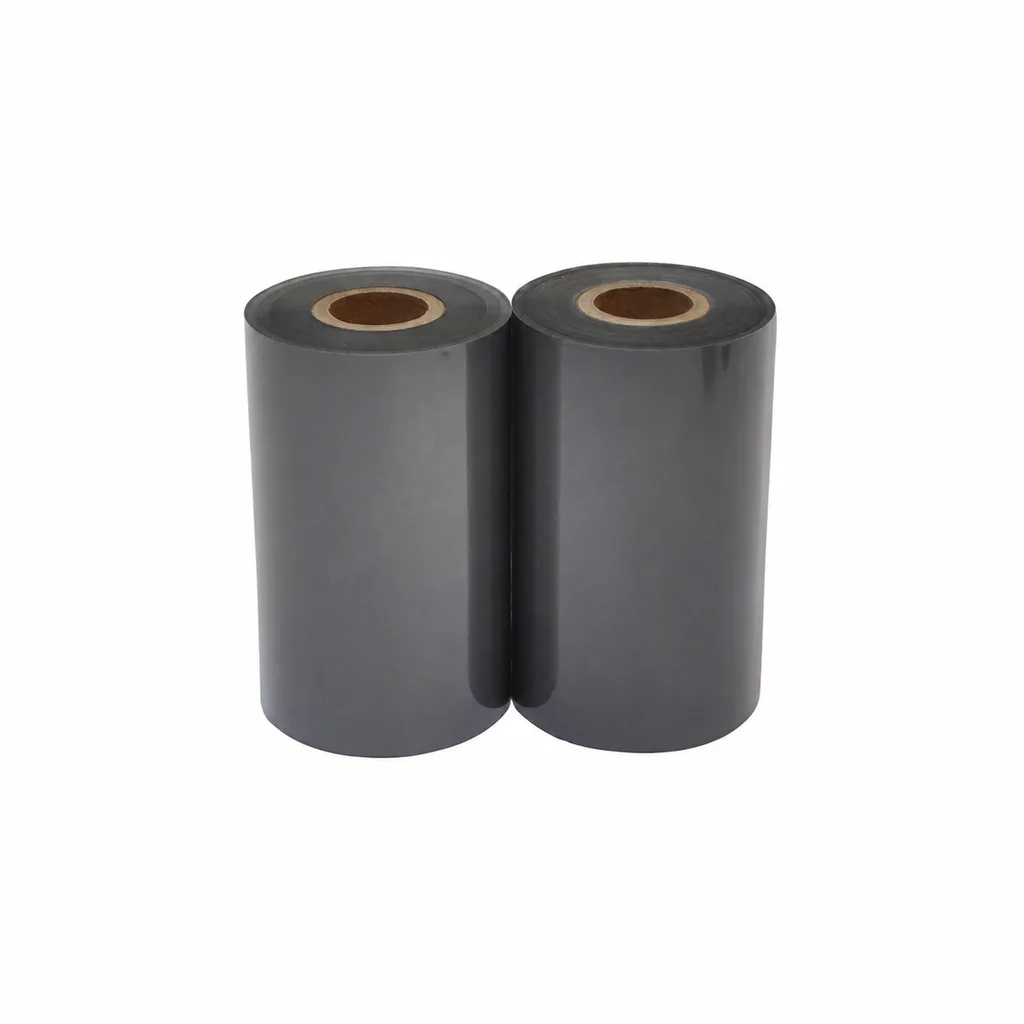
Black Resin Thermal Transfer Ribbon for Label Printing - CL-Z373
CL-Z373 is a black resin thermal transfer ribbon for label printing with desktop or industrial flat-head barcode printers at speeds of ≤6 ips (inches per second). Listed applications include electronics processing, tire identification, automotive manufacturing, pharmaceutical packaging, cosmetic labels and outdoor identification. Selection depends on the actual label material, printer and exposure conditions. Fine-line, small-character and resistance results were obtained on coated paper; print quality and image durability may vary with the printer and print substrate.
View details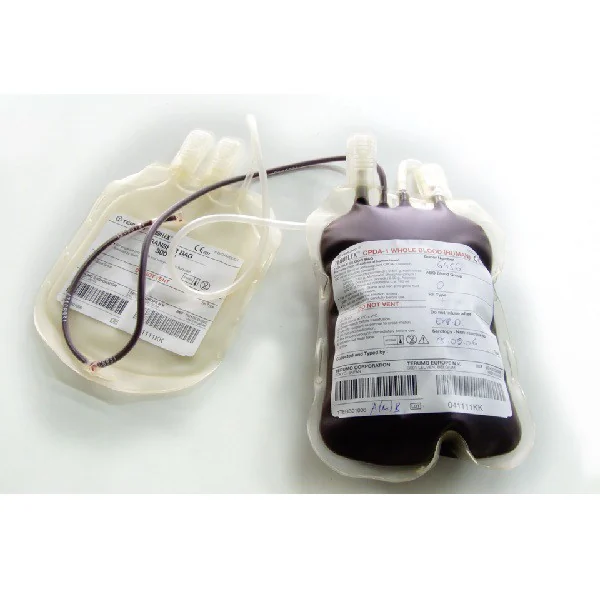
Blood Bag Identification Label
Cold-storage label for blood bags and transfusion containers where traceability remains…
View details
Brother Compatible Label Ribbons (TZe Series)
This Brother-compatible label ribbon (TZe series) is manufactured using high-quality…
View detailsNeed the right ribbon for your label application?
Share the label material, printer and operating environment. Our team will recommend a tested combination.
