
Étiquette industrielle: What Industrial Labels Mean and How They Are Printed
Request a solution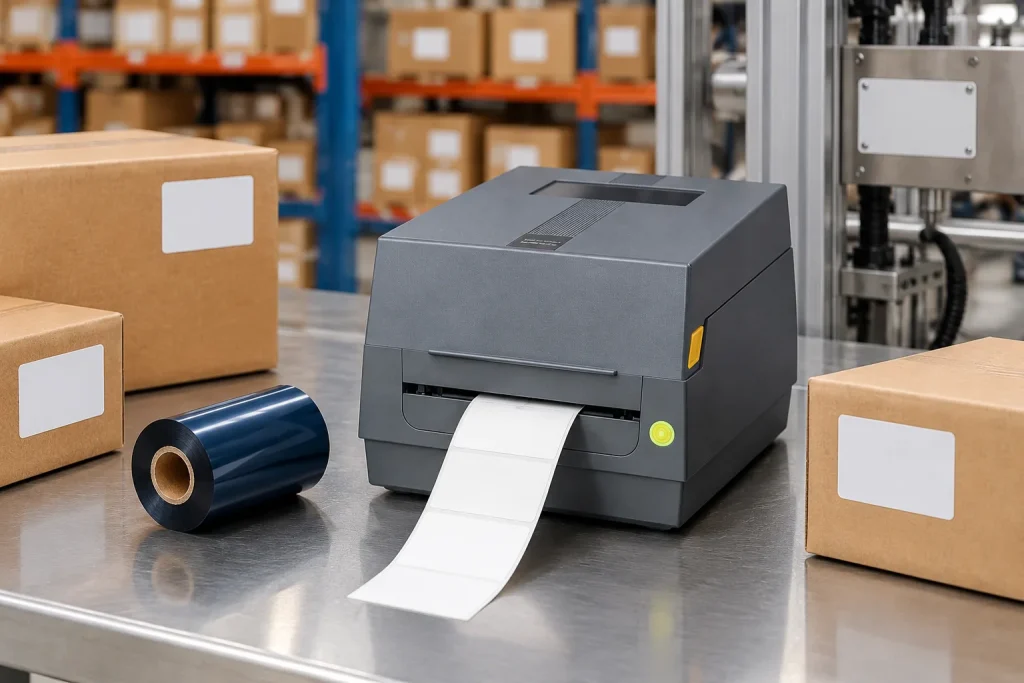
- Original TTR manufacturer since 2013
- Automated coating and slitting
- IQC / IPQC / OQC control
- ANSI barcode grade testing
- -20°C to 120°C environmental testing
- Batch-level traceability
- ANSI barcode grade
- Batch traceability
- RoHS / REACH compliance
- SGS and MSDS documents on request
For buyers and print teams, an étiquette industrielle is an industrial label used to identify equipment or products and communicate safety information. Its purpose does not specify one label material or printing process. For in-house printing, confirm the stock and printer method, then assess the complete printed label under the conditions it will face.
Key Takeaways
- Industrial labels commonly carry equipment or product identification and critical safety information.
- Thermal transfer prints with ribbon ink, while direct thermal forms an image on specially treated stock.
- Wax, wax-resin, and resin are ribbon families with different material applications.
- Durability depends on the complete printed construction, including its use conditions.
Understand what makes a label industrial
An industrial label identifies equipment or a product, or communicates critical safety information in an industrial setting. The French phrase étiquette industrielle names that role. It does not by itself tell a print team which roll to load, which ribbon to fit, or which exposure the finished label can withstand.
Think first about the information that must remain available. A label identifying a part and a label warning about equipment hazards serve different reading tasks. In manufacturing and warehousing, labels can identify parts, track inventory, and warn about hazardous equipment while facing oil, dust, and rough handling. The practical question is therefore what the label must communicate and what could prevent someone from reading it.
This explains why industrial labeling is closely associated with durability. Heat, light, moisture, and corrosive solvents can challenge labels, with possible fading, cracking, tearing, or peeling. These are exposure categories to investigate, rather than a universal specification shared by everything sold as an industrial label.
When reading a description, separate the stated use from the demonstrated performance. “Industrial identification” describes a job. A named material describes part of the label. A printing method describes how the image is made. Ask for the missing detail before treating any one of these descriptions as a complete printing specification.

Separate the label, its material, and its printing method
Thermal transfer and direct thermal form printed images in different ways, even when both are used for label printing. Thermal transfer uses heat from the printhead to transfer ribbon ink onto the label. Direct thermal applies heat directly to specially treated label material and does not require a ribbon.
This distinction matters before discussing ribbon grades. If the intended workflow is direct thermal, selecting a resin ribbon does not answer the stock question. If it is thermal transfer, the label surface and ribbon must be considered together. Confirm the actual printer mode rather than relying on the broad description “thermal printer,” which can refer to either method.
The label material and the ribbon also have different jobs. The ribbon supplies the transferred ink; the label provides the surface that receives it. PET in a stock description identifies a material choice, while wax, wax-resin, or resin identifies a ribbon family. These terms are not interchangeable descriptions of the same item.
As general starting points, wax suits porous and coated paper, wax-resin suits coated paper and selected synthetics, and full resin suits demanding synthetic films such as polyester, polyimide, and vinyl. Those broad matches help interpret a specification; they do not identify an approved combination for every printer. The final choice still depends on the formulation, printer architecture, settings, and durability required for the application.

Explain durability through the complete printed construction
Ribbon performance belongs to the complete printed construction, so a ribbon description alone cannot establish the result on your labels. The relevant combination includes the chosen stock, the printer, and the settings used to make the sample. For adhesive labels, attachment to the intended surface is another part of the assessment.
This gives buyers a useful way to interpret common supplier statements. A ribbon may be proposed for a synthetic film, but the meaningful question is how that combination performs on the film you will actually use. Likewise, a material name does not explain every aspect of attachment: temperature cycling, chemical contact, and surface energy can change adhesion.
Use that relationship to plan a focused sample review. Ask for samples made from the same material stack and apply them to the same surface as the intended job. Print with the proposed stock, ribbon, printer, and settings. Describe the exposure that matters to the application instead of asking for an undefined “industrial durability” result.
Keep print survival and attachment as separate observations. Record whether the information remains readable and whether the label remains attached. Before testing, agree what visible evidence will count as an acceptable result and what action follows a failure. This produces a decision that refers to a defined application, without inventing a universal temperature limit, solvent rating, or test cycle count.
Recognize what the industrial label name cannot prove
The term industrial label does not provide a barcode verification grade or validate a particular stock-and-ribbon combination. These conclusions require evidence about the printed output. Treat the name as an introduction to the application, then look for the information needed to support the specific claim.
A barcode that scans once illustrates the distinction. A scanner decodes a symbol and can use image processing to read marginal symbols. A barcode verification grade instead expresses how closely the printed barcode meets the relevant readability standard. A successful reading is useful, but it is not the same result as a documented verification grade.
The same reasoning applies when changing suppliers. Rather than accepting a replacement because its broad ribbon family matches the previous one, compare samples made with your actual stock and printing setup. Keep the intended durability requirement attached to that comparison. This avoids converting a general material recommendation into an unsupported approval.
You can express the next step in one short application brief: identify the item, state the information to print, name the stock and printer method, and describe the expected exposure. Then request or produce a representative sample and record the agreed observations. That brief turns an imprecise request for an étiquette industrielle into a question a print team can verify.
Data and Evidence
The evidence needed for an industrial label follows the claim being assessed, rather than a single numerical specification. Use the following comparison to distinguish a useful description from a completed approval.
| Description or claim | What it establishes | What to check next |
|---|---|---|
| Industrial label | An identification or safety communication role | The actual information and expected exposure |
| Thermal transfer | A ribbon-based printing method | The stock, ribbon, printer, and settings together |
| Direct thermal | A method using specially treated stock without a ribbon | The specified stock and intended printer mode |
| Proposed durable construction | A combination to evaluate for the application | Printed samples and attachment on the intended surface |
| Successful barcode scan | Decoding during that check | A verification result if a barcode grade is required |
The printer-mode distinction is also documented in 公司打印机介质兼容性与材质规格(已审第一方来源). Its thermal transfer entry requires ribbon; its direct thermal entry uses direct thermal paper without ribbon. This supports the method distinction, rather than a blanket durability approval for every compatible material.
For your next sample, record the exact stock and ribbon identity, printer, settings, receiving surface, and intended exposure alongside the observed result. Keep a separate record of barcode verification when it is required. These records let the next reviewer understand what was checked and which combination the result describes.
Frequently Asked Questions
Does an industrial label need a thermal transfer ribbon?
Only when its printing method requires one. Thermal transfer uses a ribbon, while direct thermal uses specially treated heat-sensitive stock without a ribbon. Confirm the printer mode and label stock together.
Does PET label stock guarantee durable industrial printing?
PET identifies a material, but the final result also depends on the ribbon formulation, printer architecture, settings, and required durability. Validate the actual printed construction before release.
Can a barcode scan replace industrial label qualification?
A successful scan confirms decoding in that check. It does not establish a barcode verification grade or prove that the label will remain attached and readable after its intended exposure.
Recommended products for this industry
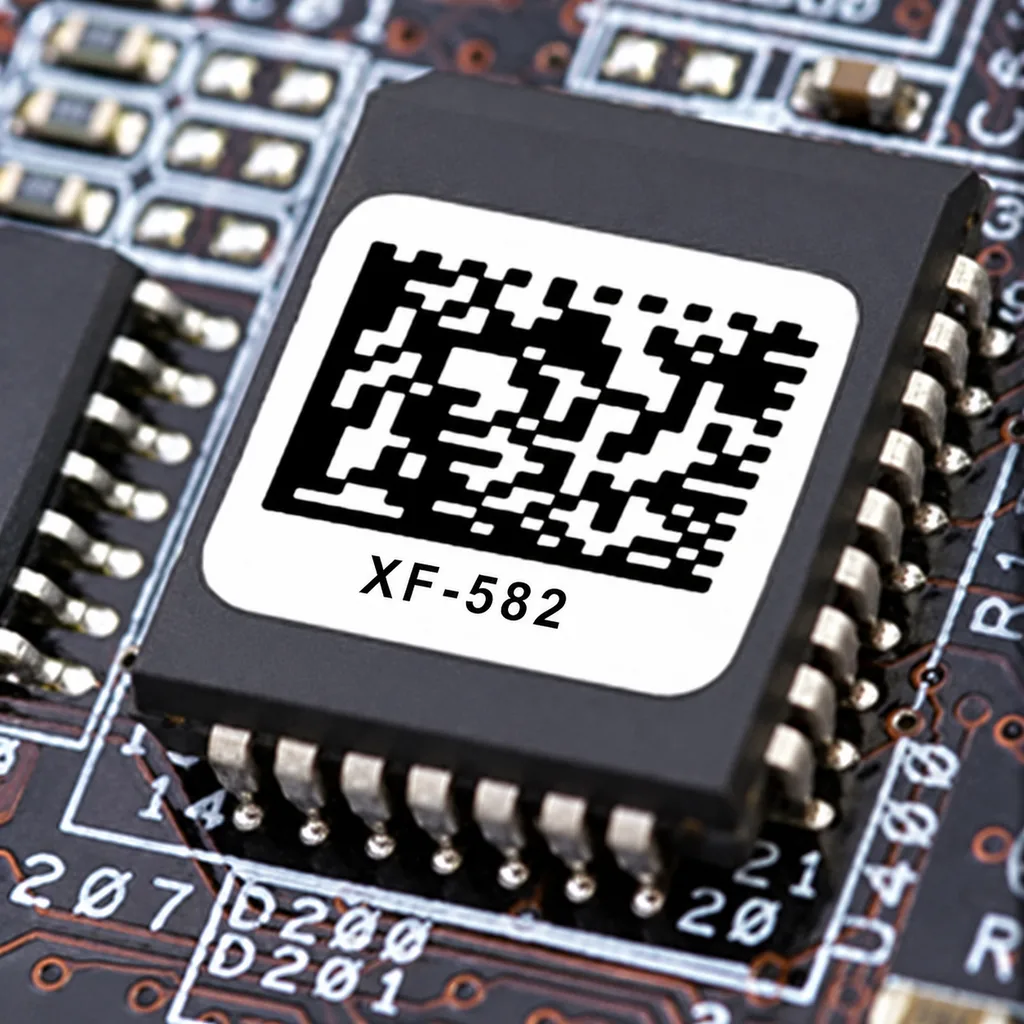
CL-582 High-Temperature Polyimide Labels for Printed Circuit Board Traceability
CL-582 is a high-temperature polyimide (PI) label material for printed circuit board (PCB) and sensitive electronic component process control and product traceability. It has a gloss white coating, a listed thickness of 2mil and an acrylic adhesive. The source identifies wave soldering and reflow soldering as applications. Selection requires confirmation of the actual heat exposure and chemical conditions: the listed temperature range has no specified exposure duration, and solvent resistance is qualitative.
View details
Acid and Alkali Resistant Label
Chemical-resistant label construction for acid baths, paint-stripping solutions, alkali…
View details
Aluminum Foil High-Temperature Label
Coated aluminum label for metal processing, heat treatment and high-temperature part…
View details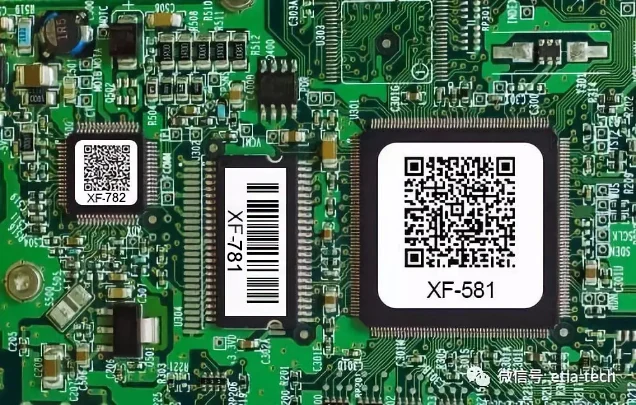
Anti-Static High-Temperature Polyimide Label
Anti-static polyimide label for ESD-sensitive electronics assembly and high-temperature…
View detailsNeed the right ribbon for your label application?
Share the label material, printer and operating environment. Our team will recommend a tested combination.
