
What Retail Labels Mean: A Buyer's Guide to Choosing Ribbon and Label Stock
Request a solution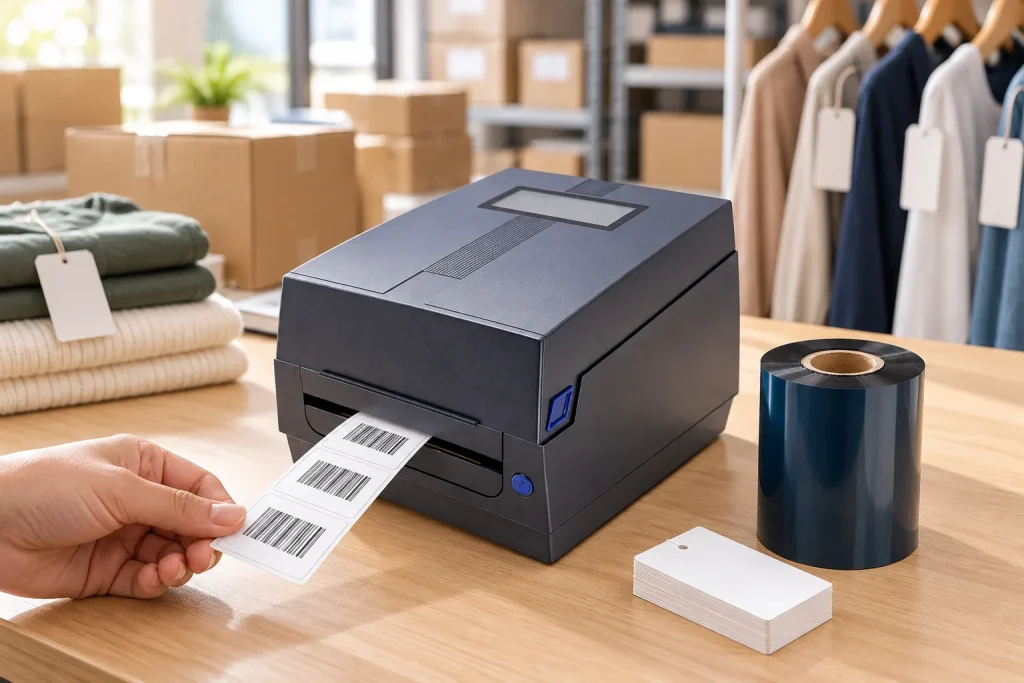
- Original TTR manufacturer since 2013
- Automated coating and slitting
- IQC / IPQC / OQC control
- ANSI barcode grade testing
- -20°C to 120°C environmental testing
- Batch-level traceability
- ANSI barcode grade
- Batch traceability
- RoHS / REACH compliance
- SGS and MSDS documents on request
Key Takeaways
- Retail labels are the price tags, barcode labels, and product labels used to identify merchandise in stores, printed on thermal transfer printers with wax, wax-resin, or resin ribbons.
- Wax is the economical grade for uncoated and coated paper labels — retail tags, price labels, and carton or tracking labels — where handling stays normal.
- Wax-resin is the practical default when a label must survive more handling than pure wax supports, such as product labels handled repeatedly on a retail shelf.
- Resin is the only grade built for synthetic labels that face chemicals, heat, or years of outdoor exposure.
- Labels moving through retail supply chains must meet each trading partner's zone requirements, and under the GS1 General Specifications the barcodes on those labels should be GS1 128 symbols.
What Retail Labels Mean for a Buyer
In labeling and printing supply, retail labels are the labels that identify merchandise in stores: price tags, barcode labels, and product labels on the shelf, plus the carton and shipping labels that carry those goods through distribution. When a ribbon or label datasheet lists retail among its applications, it points to exactly this family of uses — industry references describe retail work as price tags and barcode labels, and group retail tags with shipping labels and product labeling.
The term matters to a buyer because it signals a consumables decision rather than a finished-goods order. Retail labels of this kind are printed on thermal transfer printers, where a ribbon's coating transfers onto the label surface. That coating decides whether a price tag stays readable through a shift of handling and whether a barcode still scans after meeting moisture or sunlight. Thermal transfer ribbons are made by applying wax, resin, or a mixture to a polyester sheet, and the printed result resists elements like moisture, oil, and UV light — the mix differs by grade.
Three choices define the buying task. Pick the label material — paper or synthetic. Match the ribbon grade — wax, wax-resin, or resin — to that material and to the conditions the label will face. Confirm both against your printer's specifications. If the labels travel through retail distribution rather than staying on the shelf, add a fourth: the barcodes must satisfy each trading partner's requirements, covered below.

Match the Ribbon Grade to Label Material and Shelf Conditions
Label material and exposure decide the grade: wax for paper labels under normal handling, wax-resin for coated paper and synthetics that take more handling, resin for synthetics that face chemicals, heat, or years of outdoor exposure. The grades print the same way; what differs is how much abuse the print survives.
Wax ribbons have the lowest melting point of the three families, so they transfer at lower print head temperatures, run at higher print speeds, and put less wear on the print head. They are formulated for uncoated and coated paper labels — the most common substrate for retail tags — where the label sees little beyond normal handling. For everyday retail work on paper, wax is the economical solution: price labels, general carton labeling, tracking labels. The tradeoff is durability.
Wax-resin ribbons print well on both coated paper and synthetic label stocks. They are the practical default when a label must survive more handling than pure wax can support but doesn't need full resin-level chemical resistance — product labels handled repeatedly on a retail shelf are a typical case, and shipping labels that must stay legible through a multi-leg freight journey belong here too. If the label is synthetic and will face chemicals, heat, or years of outdoor exposure, resin is the only grade built for it.

Check Printer Specs and Retailer Requirements Before Ordering
Two checklists decide whether the ribbon you pick actually works: your printer's specifications and, for supply-chain labels, each trading partner's barcode requirements. Choosing the right thermal transfer ribbon starts with knowing the specifics of your printer. Before ordering, confirm the ribbon width your printer accepts, the core size, and the ink-side orientation — a roll wound the wrong way for your printer will not print correctly. Ribbon lines are matched to desktop and industrial-grade printers, so pick the collection built for your printer class.
Retailer requirements apply once your labels enter the supply chain. Suppliers to the retail industry face specific zone requirements for each trading partner. On carton and shipping labels, the GS1 General Specifications call for GS1 128 barcode symbols; many retailers add a Store (or Destination) barcode in a zone alongside the SSCC 18; and a supplier labeling guide requires the barcode height to be 1.25 inches. These specifications vary by partner, so get the trading partner's spec sheet before you print — a label that fails them comes back as a rejected shipment.
Data and Evidence
The table below condenses the selection rules into grade, material, and retail job. Each row is conditional: the grade follows the label material and the exposure the label will face, not the other way around.
| Ribbon grade | Prints on | Typical retail jobs | Conditions and limits |
|---|---|---|---|
| Wax | Uncoated and coated paper labels | Retail price labeling, general carton labeling, tracking labels | Lowest melting point of the three families; lower print head temperatures, higher print speeds, less print head wear; for labels not exposed to much beyond normal handling |
| Wax-resin | Coated paper and synthetic label stocks | Product labels handled repeatedly on a retail shelf; shipping labels that must stay legible through a multi-leg freight journey | Practical default where some durability matters but extreme chemical exposure isn't a factor |
| Resin | Synthetic label stock | Labels facing chemicals, heat, or years of outdoor exposure | The only grade built for those conditions |
To verify a choice before you commit, print samples of each candidate grade on your actual label stock at your production print speed, then put the samples through the conditions the label will meet in service — shelf handling, moisture, storefront light. Check that barcodes still scan and small text stays legible. If a wax print smudges under that handling, step up to wax-resin on the same stock; if the stock is synthetic and the environment is harsh, go to resin.
Next step: note your printer model, the ribbon width and core it takes, and your current label stock, then order single rolls of wax and wax-resin and run the sampling sequence above on your own shelf conditions. The grade that survives your handling at the lowest running cost is your answer.
Frequently Asked Questions
What does 'retail labels' mean on a thermal transfer ribbon?
It marks ribbons suited to the labels used in stores: price tags, barcode labels, and product labels. Paper price tags and carton labels usually take a wax ribbon, while coated paper or synthetic product labels with heavier handling take wax-resin.
What ribbon should I use for paper price tags in a retail store?
Use a wax ribbon on uncoated or coated paper stock. It transfers at lower print head temperatures and runs at higher speeds, which keeps wear on the print head down, and it is the economical option for everyday price labeling — provided the tags face no more than normal handling.
Do retail supply chain labels have to be GS1 128 barcodes?
For carton and shipping labels entering retail distribution, the GS1 General Specifications call for GS1 128 symbols, and each trading partner adds its own zone requirements, often including a Store (or Destination) barcode alongside the SSCC 18. Get the partner's spec sheet before printing.
When should I upgrade from wax to wax-resin for retail shelf labels?
When a wax print shows the failure first: smudging or scanning problems after the label has been picked up, stacked, or exposed to moisture. Wax-resin holds up to that extra handling on both coated paper and synthetic stocks, where pure wax would not.
How do I test a ribbon and label combination before ordering a full batch?
Order single rolls, print each candidate grade on your actual stock at production speed, and put the samples through real handling, moisture, and light before checking that barcodes still scan. Keep the printer model, ribbon width, and ink-side orientation on file so the winning sample is easy to reorder.
Recommended products for this industry
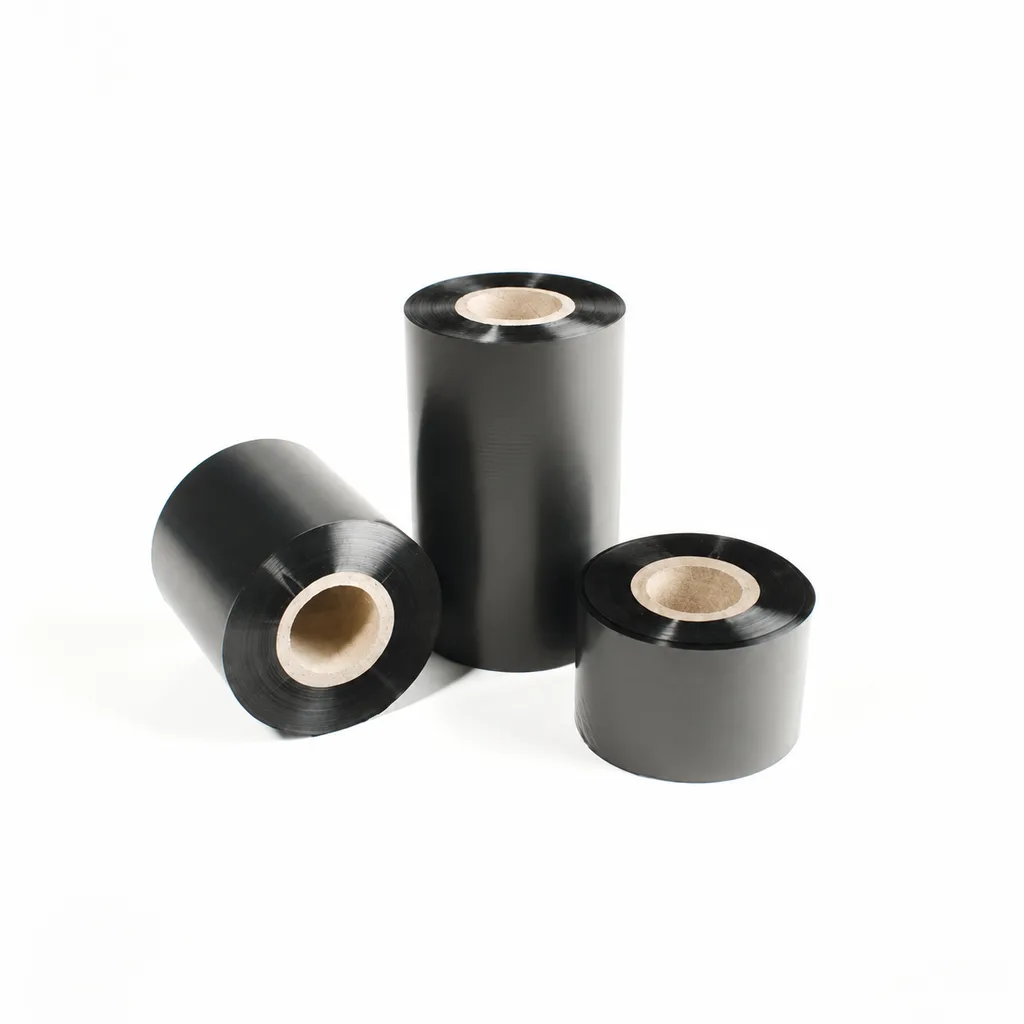
CL-Z112 Enhanced Wax Thermal Transfer Ribbon for Paper Labels and Tags
An enhanced wax thermal transfer ribbon with black ink for paper labels and tags used in retail, warehousing and logistics. It is specified for flat-head printing on desktop or industrial barcode printers at ≤8 inches per second (ips). Select it by checking the actual label material, printer configuration and handling conditions: image-quality, rub-resistance and cold-chamber results were obtained on coated paper, and print quality and image durability may vary with the printer and print medium.
View details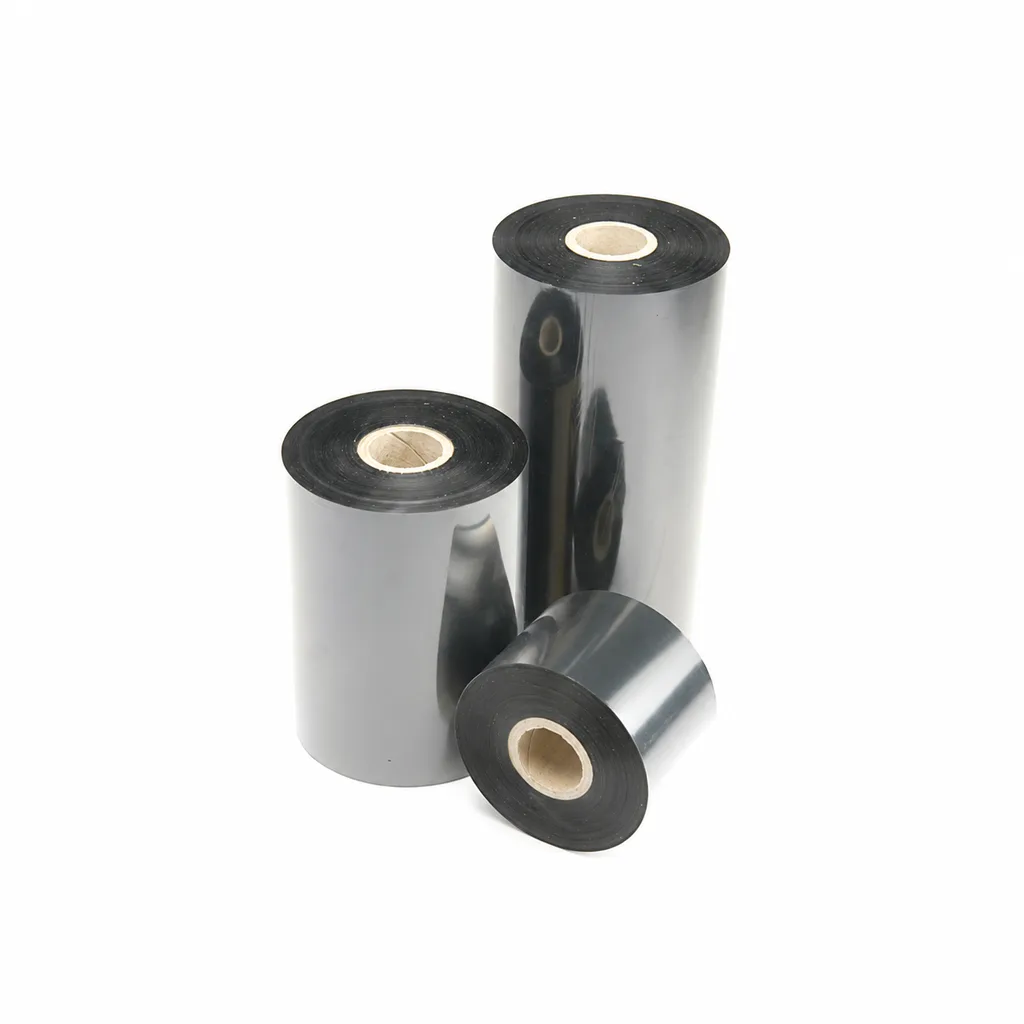
CL-Z213 Near-Edge Wax-Resin Thermal Transfer Ribbon for Barcode Labels
An enhanced black near-edge wax-resin thermal transfer ribbon for near-edge barcode printers and low- to medium-speed thermal transfer overprinting (TTO). Listed applications include retail labels, warehousing, garment tags and packaging identification. Match the printer, actual print medium and operating speed before selection: print quality and image durability can vary with the printer and substrate.
View details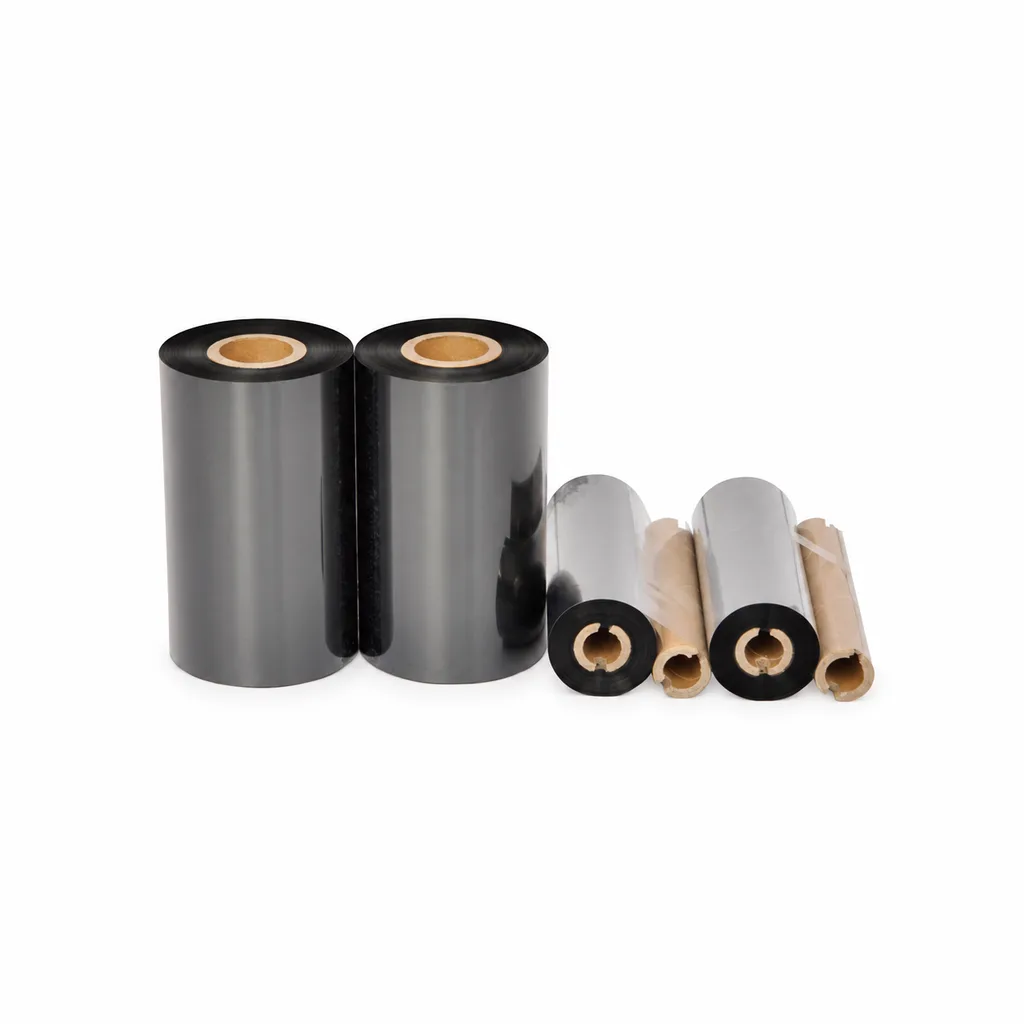
CL-Z908 Wax Thermal Transfer Ribbon for Barcode Labels and Tags
CL-Z908 is an economical black wax thermal transfer ribbon for label and tag printing. Listed applications include retail, warehousing, logistics, clothing tags, simple packaging and production line identification. It is intended for flat-head printing on desktop or industrial barcode printers at speeds of ≤6 inches per second (ips). Select it against your actual paper stock, printer and required image durability: print quality and image durability may vary with the printer and printing substrate.
View details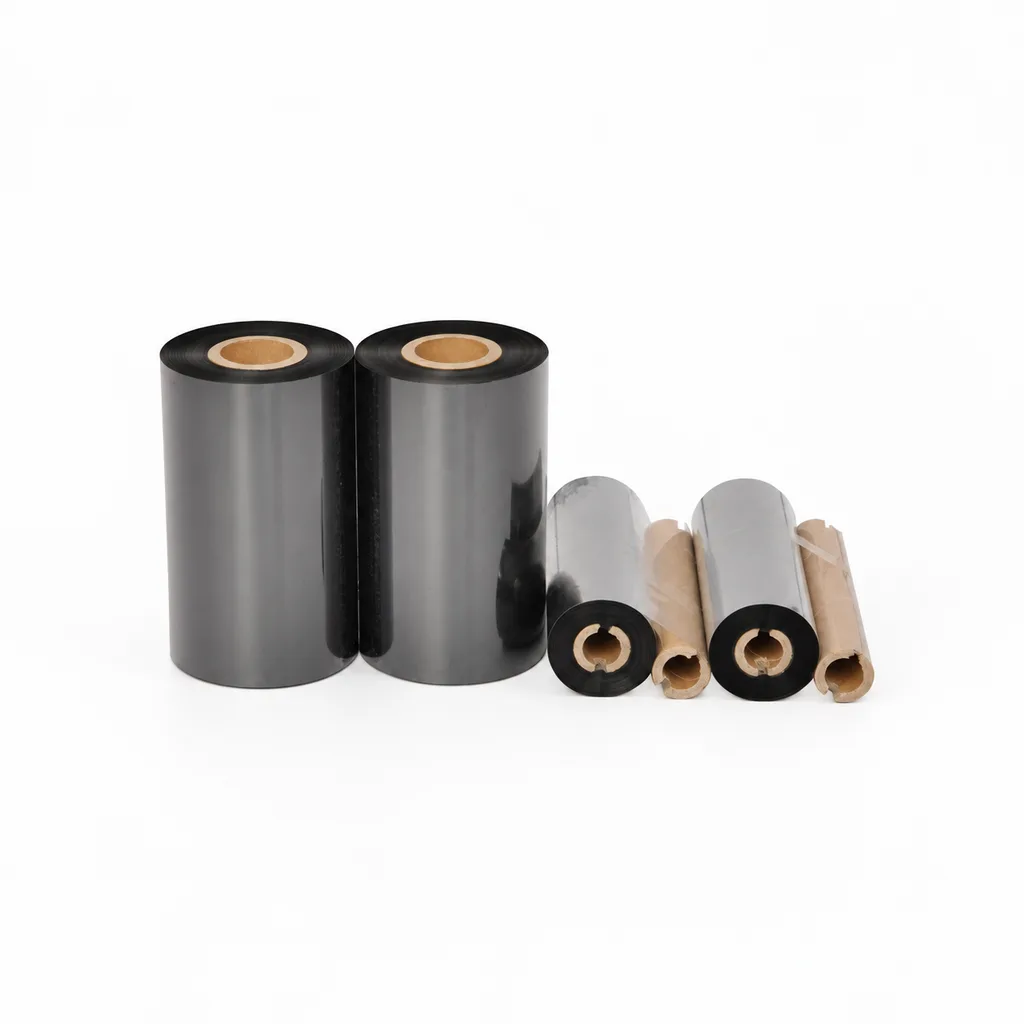
CL-Z908PLUS Wax Thermal Transfer Ribbon for Paper Labels
An economical black wax thermal transfer ribbon for flat-head printing of paper labels in retail, warehousing, logistics, simple packaging and production lines, with garment hangtags also listed as an application. The recommended printing speed is ≤8 inches per second (ips) on desktop or industrial barcode printers. Select it against your actual label material and printer: the material adaptability chart lists lower values for cardstock and hangtags, and print quality and image durability may vary with the printer and print medium.
View detailsNeed the right ribbon for your label application?
Share the label material, printer and operating environment. Our team will recommend a tested combination.
