
High-Temperature Aluminium Marking: Processes, Labels and Evidence
Request a solution
- Original TTR manufacturer since 2013
- Automated coating and slitting
- IQC / IPQC / OQC control
- ANSI barcode grade testing
- -20°C to 120°C environmental testing
- Batch-level traceability
- ANSI barcode grade
- Batch traceability
- RoHS / REACH compliance
- SGS and MSDS documents on request
High-temperature aluminium marking requires separating the temperature during marking from the heat the identification must survive afterward. For teams printing their own labels, polyimide stock and a compatible resin ribbon provide a combination to evaluate, rather than a universal temperature rating. Validate the printed construction on the actual aluminium surface under the intended process conditions.
Key Takeaways
- High surface temperatures and subsequent heat treatment both challenge aluminium identification.
- Thermal transfer describes how a printer transfers ribbon ink onto a label, rather than the label's service-temperature limit.
- Polyimide labels offer heat resistance, but that material name alone does not establish a complete printed label's performance.
- Temperature cycling, chemical contact and surface energy affect adhesion, so sample approval must use the intended material stack and surface.
Separate marking on hot aluminium from surviving later heat
High-temperature aluminium marking covers two distinct questions: whether a mark can be applied to a hot surface, and whether identification remains readable after later heating. Define which question your application must answer before comparing label stock or ribbon descriptions. A requirement that simply says “high temperature” leaves this distinction unresolved.
The French phrase marquage aluminium haute température describes the aluminium object and its thermal conditions; it does not identify one printing process. The aluminium-marking reference “Aluminiumprodukten” identifies high surface temperatures and subsequent heat treatment as separate challenges. Its related “Die Markierung” reference distinguishes application to hot and cold surfaces.
For an in-house label application, write down the surface condition when the label will be attached and the heating it will encounter afterward. Include the intended temperature profile, exposure duration, repeated heating and any chemical contact as requirements to investigate. These are fields for your application brief, not assumed product ratings.
If identification must be applied while the aluminium is already hot, ask for evidence covering hot-surface application. If the label will be attached before a later thermal process, ask for evidence covering that sequence. Treating these as separate branches makes supplier comparisons clearer without assuming that either branch has already been qualified.
Distinguish the marking process from the label material
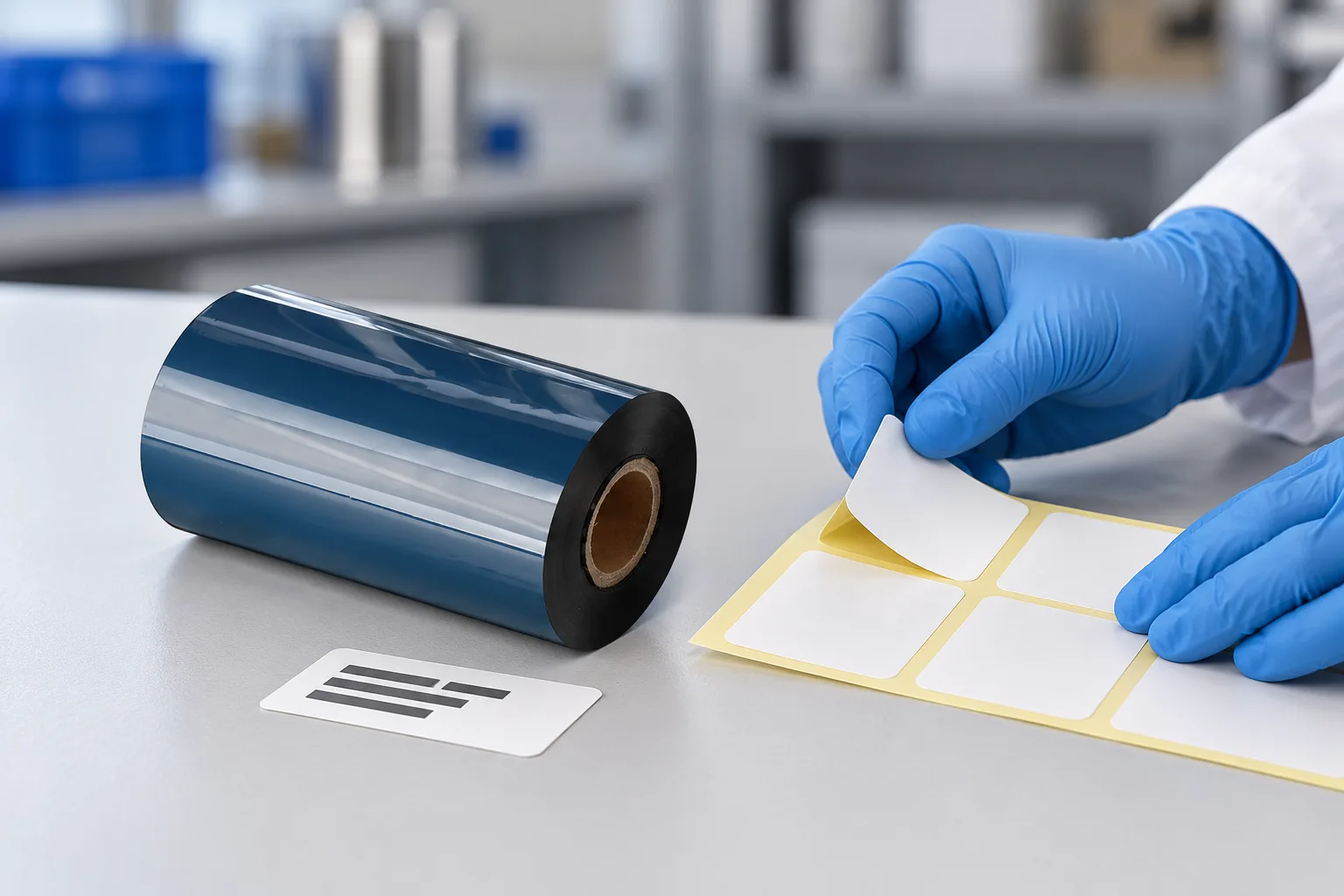
Thermal transfer printing uses printhead heat to melt ribbon ink onto a label. That explains how the image forms; it does not supply a temperature rating for the finished identification. Keep the printing process, label material and exposure requirement in separate fields when reviewing a proposed solution.
Polyimide is a label-material option relevant to high-temperature work. The “Polyimide labels” reference describes resistance to extreme temperatures, harsh chemicals and demanding manufacturing environments. It supplies no numerical operating limit or aluminium-specific approval, so use it to identify a candidate material rather than to approve a production combination.
For self-printed polyimide labels, full resin ribbon is a relevant starting point: the “Wax ribbons” reference associates full resin with demanding synthetic films, including polyimide. Confirm the exact ribbon and printable label surface together. A resin category description is broader than evidence for your particular printed label.
Direct marking is a different branch. “Signier- und Markiersysteme” describes special paints used with a marking gun on hot surfaces. This establishes that hot-surface marking can involve a dedicated marking system; it does not establish that a thermal transfer ribbon can perform the same job on bare aluminium. Keep that distinction explicit when specifying equipment and consumables.
Understand where heat-resistance claims come from
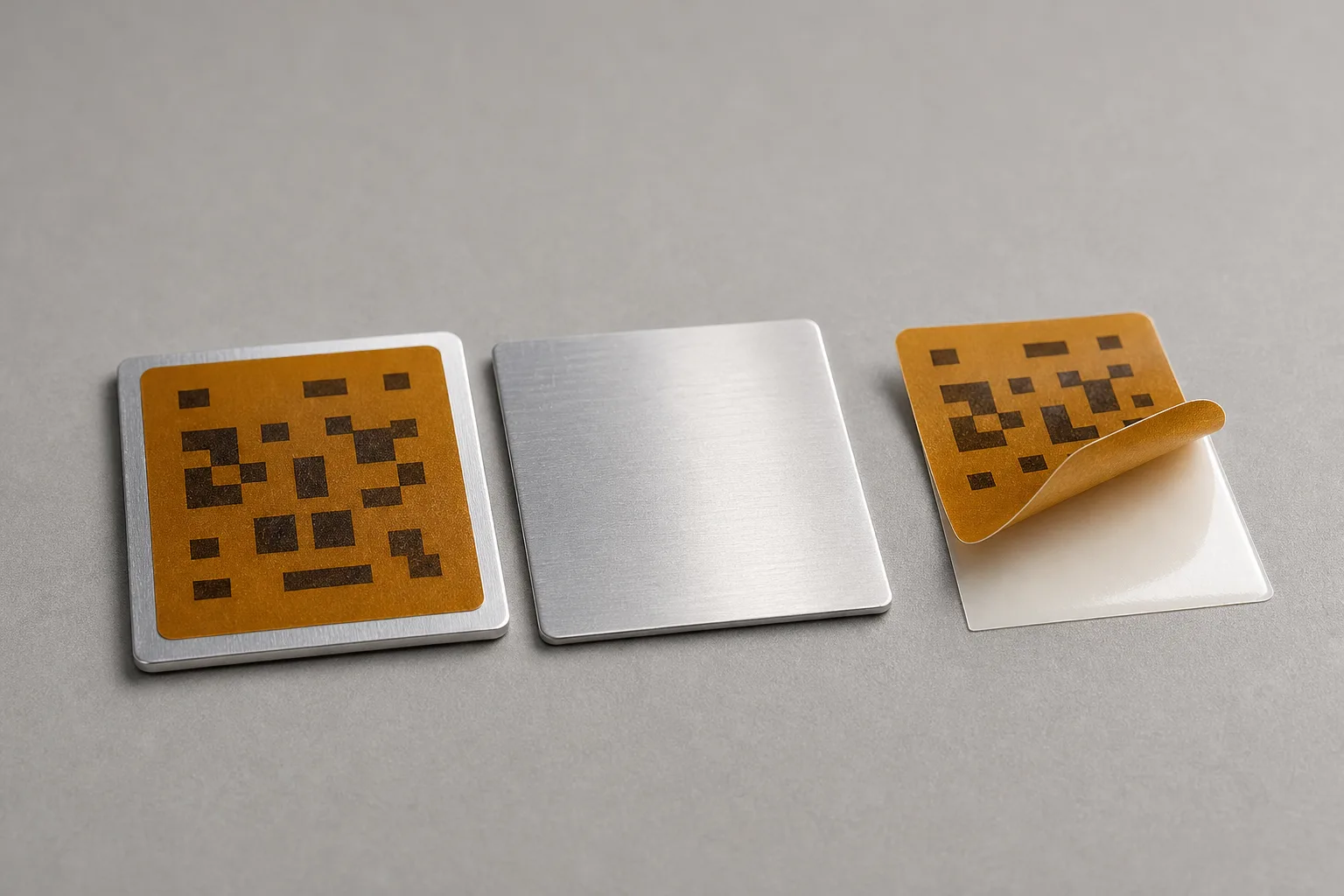
A printed label's performance depends on the complete construction and printing conditions, rather than on the ribbon name alone. The “Ribbon performance” reference calls for validation on the user's own facestock, printer and settings. Facestock means the label material receiving the printed image.
Adhesion introduces a second interface: the label must remain attached to the aluminium. The “adhesion” reference identifies temperature cycling, chemical contact and surface energy as factors that change adhesion. It recommends approving samples made from the same material stack and applied to the same surface. A successful print sample therefore answers a different question from an attached sample exposed to the intended process.
This distinction also explains why a supplier change deserves a documented comparison. Ask which label construction, ribbon and printing conditions supported the original approval, then identify what the proposed replacement changes. Retain the unchanged application conditions in the comparison, so you can judge the replacement against the same requirement.
For ribbon compatibility, check formulation, width, core size and roll length against the printer and label material. Those matching factors come from the “ribbon” reference. Mechanical fit supports a printing trial, while the complete construction still needs its own durability evaluation. Record both decisions instead of treating printer fit as evidence of heat resistance.
Data and Evidence
The cited material supports a method for evaluating high-temperature aluminium identification, but it does not establish a universal temperature limit for a ribbon-and-label combination on aluminium. Use the following evidence map to distinguish a supported starting point from the application result you still need to verify.
| Evidence topic | Supported conclusion | Application check |
|---|---|---|
| Aluminium thermal conditions | Hot surfaces and subsequent heat treatment challenge marking. | Specify when marking occurs relative to heating. |
| Polyimide stock | The material category offers heat and chemical resistance. | Obtain conditions for the exact printable construction. |
| Resin ribbon | Full resin is associated with demanding synthetic films, including polyimide. | Print the proposed ribbon on the proposed stock. |
| Adhesion | Temperature cycling, chemicals and surface energy affect bonding. | Evaluate the same material stack on the intended aluminium surface. |
Source scope: “Aluminiumprodukten” supports the thermal challenge; “Polyimide labels” and “Wax ribbons” support the material starting points; “adhesion” and “Ribbon performance” support evaluation of the complete sample. These statements do not constitute a test report for a particular aluminium part.
Turn that distinction into a short evaluation record:
- Define the aluminium surface, attachment stage and subsequent exposure conditions.
- Identify the exact label stock, ribbon and printer used for the sample.
- Print and apply samples to the production substrate, as recommended by “production substrate.”
- Evaluate attachment and image readability after the intended exposure, using your agreed acceptance requirements.
If a sample fails, record whether the problem concerns attachment, printed readability or both before evaluating another combination. Your next step is to prepare this application record and retain the tested sample alongside it, so a later consumable change can be compared with the same requirements.
Frequently Asked Questions
Does thermal transfer printing establish a high-temperature rating for an aluminium label?
No. Thermal transfer describes ink transfer from ribbon to label using printhead heat. Validate the finished construction on the intended aluminium surface under the required exposure conditions.
Can I approve a polyimide label for hot aluminium from the material name alone?
No. The material description supports considering polyimide for heat resistance, but approval needs evidence for the actual printed construction and aluminium surface.
What should I compare when changing ribbon suppliers for high-temperature aluminium labels?
Compare ribbon formulation and printer fit, then evaluate the replacement on the same label stock, printer, settings and aluminium surface used for the application approval.
Recommended products for this industry

Aluminum Foil High-Temperature Label
Coated aluminum label for metal processing, heat treatment and high-temperature part…
View details
Anti-Static High-Temperature Polyimide Label
Anti-static polyimide label for ESD-sensitive electronics assembly and high-temperature…
View details
Black High-Temperature Polyimide Label
Matte-black polyimide label for high-contrast codes on dark electronics and industrial…
View details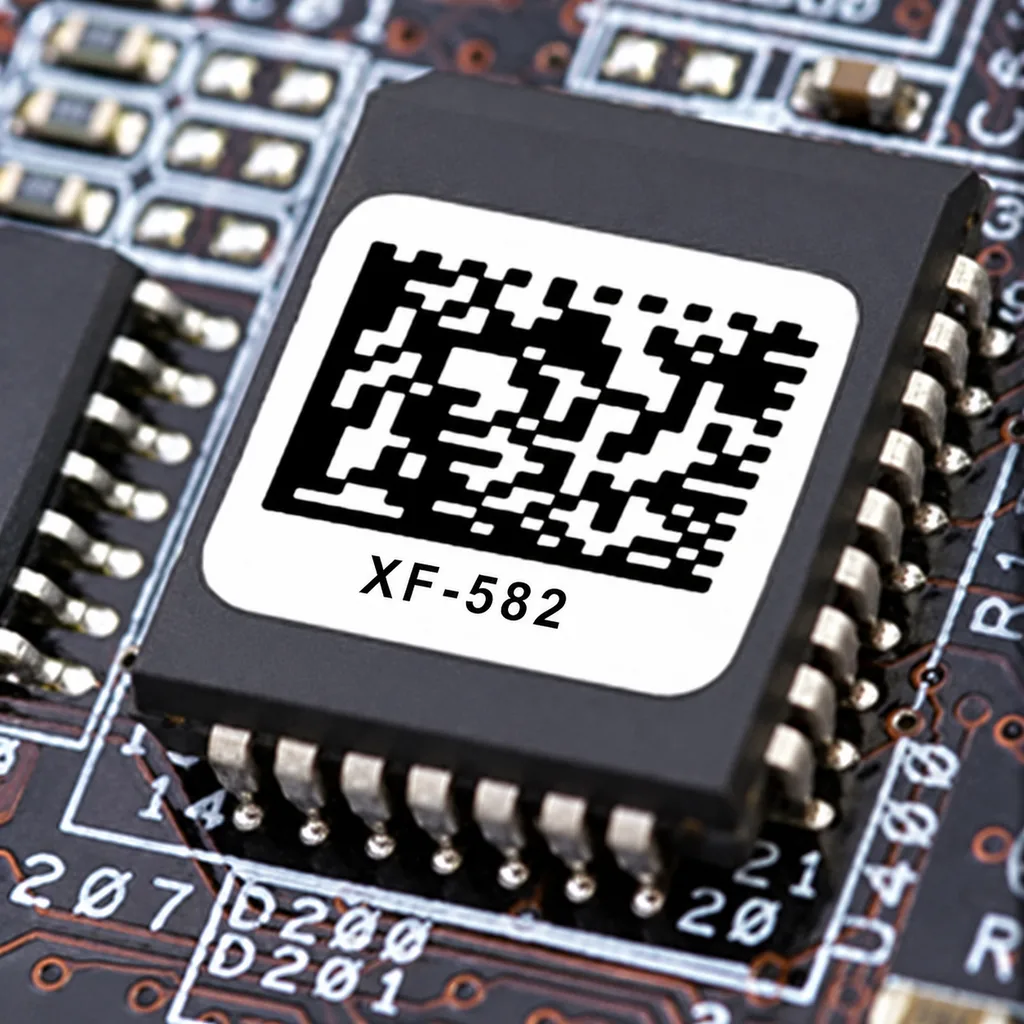
CL-582 High-Temperature Polyimide Labels for Printed Circuit Board Traceability
CL-582 is a high-temperature polyimide (PI) label material for printed circuit board (PCB) and sensitive electronic component process control and product traceability. It has a gloss white coating, a listed thickness of 2mil and an acrylic adhesive. The source identifies wave soldering and reflow soldering as applications. Selection requires confirmation of the actual heat exposure and chemical conditions: the listed temperature range has no specified exposure duration, and solvent resistance is qualitative.
View detailsNeed the right ribbon for your label application?
Share the label material, printer and operating environment. Our team will recommend a tested combination.
