
Industrie Ruban Transfert Thermique: What the Term Means and What It Does Not Tell You
Request a solution
- Original TTR manufacturer since 2013
- Automated coating and slitting
- IQC / IPQC / OQC control
- ANSI barcode grade testing
- -20°C to 120°C environmental testing
- Batch-level traceability
- ANSI barcode grade
- Batch traceability
- RoHS / REACH compliance
- SGS and MSDS documents on request
Key Takeaways
- Ruban transfert thermique is French for thermal transfer ribbon: an inked film a heated printhead melts onto labels, consumed as it prints.
- The word industrie marks the usage context — production and packaging lines — not a separate product grade.
- Wax, wax/resin and resin are the ink-chemistry classes within the same ribbon family, and the right class depends on the label material.
- Verified records document ribbon use across the food, medical and pharmaceutical sectors, from wrapped confectionery to nutraceutical labels.
- Application lists prove neither regulatory compliance nor printer compatibility; both are per-product facts confirmed with documents and sample runs.
What Ruban Transfert Thermique Means in Industrial Labeling
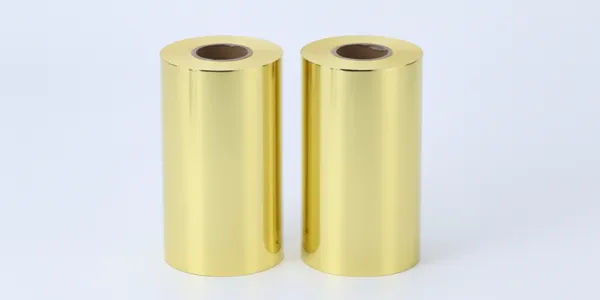
Ruban transfert thermique is the French term for a thermal transfer ribbon: a thin polyester film coated on one side with an ink layer, which a thermal printhead heats point by point so the ink transfers onto the label and bonds to its surface. The ribbon is a consumable. Each printed label uses up a matching length of film, and printing stops when the roll ends.
The word industrie in the search phrase signals where this printing happens: production lines, packaging areas, laboratories and warehouses rather than office desks. Labels in these settings usually have to survive handling, storage and distribution, so buyers match the ribbon to the printer and the label material instead of reaching for the nearest roll.
Within this product family, suppliers group ribbons by ink chemistry into wax, wax/resin and resin classes. Which class suits a given application depends on the label material and the conditions the label will face, and that pairing is a per-product question settled with the supplier's specification and samples — not something the word industrie answers. For readers comparing grades, the definition of a wax thermal transfer ribbon and its differences is a practical starting point.
How Industrial Ribbon Differs From Adjacent Concepts
Industrial thermal transfer ribbon differs from its neighbor terms in what each word specifies: the printing method, the ink grade or the usage context. Confusing them is the fastest route to a wrong order, so the table below draws the boundaries.
| Term | What it names | How it relates to industrie ruban transfert thermique |
|---|---|---|
| Thermal transfer ribbon | The inked film consumable itself | The base product; industrie only adds the industrial usage context |
| Direct thermal media | Heat-sensitive label stock that prints without a ribbon | A different printing method — the printer heats the label, so there is no ribbon to buy or match |
| Wax, wax/resin and resin grades | Ink-chemistry classes within the ribbon family | Grades describe formulation; an industrial application still requires choosing one grade per job |
| Printer-brand listings such as ruban transfert thermique Zebra | Ribbons matched to a printer brand or model | Brand fit is a separate check from industrial context; both must pass before ordering |
Two distinctions carry most of the weight in practice. First, thermal transfer requires a ribbon while direct thermal does not; because the ink sits in the ribbon, the label itself needs no special coating and can be paper or synthetic. Second, industrial is not a fourth ink grade — an industrial buyer may run any of the three classes depending on the label and its environment. Note also that the term names a consumable, not a printing service: buyers searching it are equipping their own printers, which is why this guide focuses on matching and verifying rather than outsourcing the print.
Where the Term Comes From and What Industrie Adds
The phrase industrie ruban transfert thermique is assembled from French sourcing vocabulary: ruban transfert thermique names the product, and industrie narrows it toward industrial use. French-speaking buyers add the context word to reach production-grade labeling supplies instead of office printer consumables.
Verified application records show what that industrial reach looks like. Documented uses span the food, medical and pharmaceutical sectors — from wrapped confectionery, bagged snacks and candy bars to sleeve wrappers for bottles, frozen vegetables, meat and poultry, and pharmaceutical labels. The same labeling environment also covers industrial identification labels tracked on equipment and goods.
Two limits keep this picture honest. The records show where ribbons are used in supplier documentation; they do not name the ink grade behind each use or rank one ribbon against another. And the word industrie adds no specification of its own: on a datasheet or quotation, the facts that decide an order remain width, core size, ink-side orientation, ink chemistry and printer fit. Treat the French phrase as a context marker, then move to the product-level checks below.

What the Term Does Not Tell You Before You Order
The phrase industrie ruban transfert thermique on its own specifies no ink chemistry, no printer fit, no ribbon dimensions and no regulatory status. Four checks turn the search phrase into an order.
- Ink chemistry versus label material. Wax, wax/resin and resin grades behave differently on paper and synthetic labels, so confirm the pairing on the datasheet of the exact product code rather than the product family.
- Physical fit with the printer. Match ribbon width, core size and ink-side orientation to the printer model; a context word cannot stand in for these three values.
- Application compliance. A documented use in food or pharmaceutical settings does not by itself qualify a specific ribbon for direct food contact or pharmaceutical labeling, so request compliance documents that name the product and the applicable regulation.
- Durability on your own line. Application lists describe where ribbons are used, not how a roll performs on your printer at your settings; a sample run on your own labels settles print quality and adhesion.
Running these checks in order costs little and prevents the two common failures: ribbons that do not fit the printer and prints that do not hold up in the application. Suppliers that publish datasheets, state compliance scope per product and support sample runs make each step short.
Data and Evidence
The table below collects the industrial applications documented in the verified fact asset used for this guide, together with the verification step each area still requires before ordering.
| Application area | Documented uses | Verify before ordering |
|---|---|---|
| Food labeling | Wrapped confectionery, bagged snacks, candy bars | Ink grade for the label material; food-contact scope of the specific product |
| Beverage packaging | Sleeve wrappers for bottles | Print quality on the wrapper material at your line speed |
| Fresh and frozen food | Vegetables, meat, poultry | Sample run under your cold-chain and handling conditions |
| Medical and pharmaceutical | Pharmaceutical and nutraceutical labels | Compliance documents naming the product and the applicable regulation |
Source note: the application rows come from the verified fact asset "food, medical and pharmaceutical industries", checked on 2026-10-01. The verification column is guidance — application records document use, not test results for your printer, labels or storage conditions.
Frequently Asked Questions
What does industrie ruban transfert thermique mean in English?
Industrie means industry, and ruban transfert thermique means thermal transfer ribbon. Together the phrase refers to thermal transfer ribbon used for industrial labeling — an inked film consumable that a heated printhead melts onto labels on production lines.
Is an industrial thermal transfer ribbon a different product from a standard one?
It is not a separate product class. Industrial ribbon comes from the same family and the same wax, wax/resin and resin grades; industrie only describes the usage context. The differences that matter at purchase are width, core size, ink side, ink chemistry and printer fit.
Which industries use thermal transfer ribbons?
Verified records document use across the food, medical and pharmaceutical sectors. Typical applications range from wrapped confectionery and bagged snacks to bottle sleeve wrappers, fresh and frozen foods, and pharmaceutical and nutraceutical labels.
Does a listed food or pharmaceutical application prove a ribbon is compliant?
No. Application lists show where ribbons are used; they do not certify a specific product for direct food contact or pharmaceutical labeling. Compliance is established by documents that name the product and the applicable regulation, requested from the supplier per product code.
Recommended products for this industry

Thermal Transfer Intelligent Coding Machine
This series of thermal transfer coders represents a cost-effective intelligent coding…
View details
Ultra-Small PCB Barcode Label
Miniature polyimide barcode label for dense PCB boards, small components and…
View details
Ultra-Thin High-Temperature Polyimide Label
Approximately 13 µm polyimide label for miniature components and curved electronics…
View details
Universal Labelling Machine
An economical entry-level labelling machine designed to deliver industrial-grade…
View detailsNeed the right ribbon for your label application?
Share the label material, printer and operating environment. Our team will recommend a tested combination.
