
Which Thermal Transfer Ribbon Manufacturers Can Supply Industrial Barcode Ribbon?
Request a solution
- Original TTR manufacturer since 2013
- Automated coating and slitting
- IQC / IPQC / OQC control
- ANSI barcode grade testing
- -20°C to 120°C environmental testing
- Batch-level traceability
- ANSI barcode grade
- Batch traceability
- RoHS / REACH compliance
- SGS and MSDS documents on request
Key Takeaways
- Industrial barcode ribbon comes from ribbon manufacturers, printer-brand supplies divisions, and converters or resellers — each identity changes what you must verify.
- Industrial printers take the long format: supplier pages list 300, 360, or 450 m rolls and 1 inch cores, against 74 m or 110 m and ½ inch cores for desktop models.
- Grade follows label material: wax for paper logistics labels, wax-resin for coated paper and synthetics under heavier handling, resin for synthetics facing chemicals, heat or outdoor exposure.
- Flat-head barcode printers and near-edge or TTO packaging printers need different ribbons; one roll cannot serve both printhead classes.
- Approve bulk supply only after samples print and scan on your own printer and labels, with acceptance criteria agreed in writing.
Which Manufacturers Can Supply Industrial Barcode Ribbon?
Industrial barcode ribbon reaches buyers through three kinds of supplier: ribbon manufacturers that formulate the ink and coat the film, printer-brand supplies divisions that sell consumables for their own machines, and converters or resellers that slit or stock other producers' ribbon. Identity matters: apart from the ink itself, a ribbon's additional layers form each manufacturer's know-how and influence print quality and durability — the formulator can adjust them, a reseller can only pass specifications through.
The table below names suppliers whose own published pages document ribbon activity relevant to industrial barcode printing. A row marks a shortlist candidate — not proof of current stock, pricing or availability for your exact printer.
| Supplier | What their own pages show | Printer coverage stated | Confirm at RFQ |
|---|---|---|---|
| ETISOFT | Publishes wax, wax-resin and resin thermal transfer ribbons plus selection guidance | Thermal transfer label printers | Current grades, sizes and stock |
| DNP Imagingcomm Europe | Publishes ribbon selection guidance by printer type | Flat-head, near-edge and TTO printers | Product range in your region |
| Technicode | Publishes wax, wax-resin and full resin ribbons, ink-side-in and ink-side-out | Zebra, Sato, Datamax, Intermec, Printronix | Grades, roll sizes, lead times |
| Able Label | Publishes ribbon collections for industrial-grade and desktop printers | Industrial-grade and desktop printers | Resin and wax-resin range, roll formats |
| Termedia Labels | Publishes TTO and thermal transfer ribbons with width, length and core guidance | Desktop and industrial printer examples | Grade availability, customization |
| Graphic Controls | Publishes near-edge TTO ribbons and drop-in replacements for OEM TTO ribbons | TTO / near-edge; Bellmark, Markem, Videojet replacements | Flat-head barcode ribbon range |
| Videojet | Publishes an Ultra Grade ribbon for its TTO products | Videojet TTO printers | Flat-head barcode ribbon range |
| Vivid Data Group | Publishes Zebra thermal transfer ribbons for Zebra printers and labels | Zebra industrial and desktop printers | Whether it manufactures or resells |
| COLORFULTTR | Manufacturer of thermal transfer ribbons and printing consumables; no finished-label printing service | Same checks as every row above | Grade for your label material, roll format, samples |
Apply the same standard to COLORFULTTR: as a ribbon and consumables manufacturer it does not print finished labels, so the selection task stays with you — pick the grade for your label material, fix the roll format, then request current datasheets and sample rolls for your printer. Treat category descriptions from any supplier, including this one, as claims to verify by printing. Where pages do not state whether a supplier coats its own film or resells another's, mark the identity unconfirmed and ask in the RFQ.
Choose Wax, Wax-Resin or Resin for Your Label Application
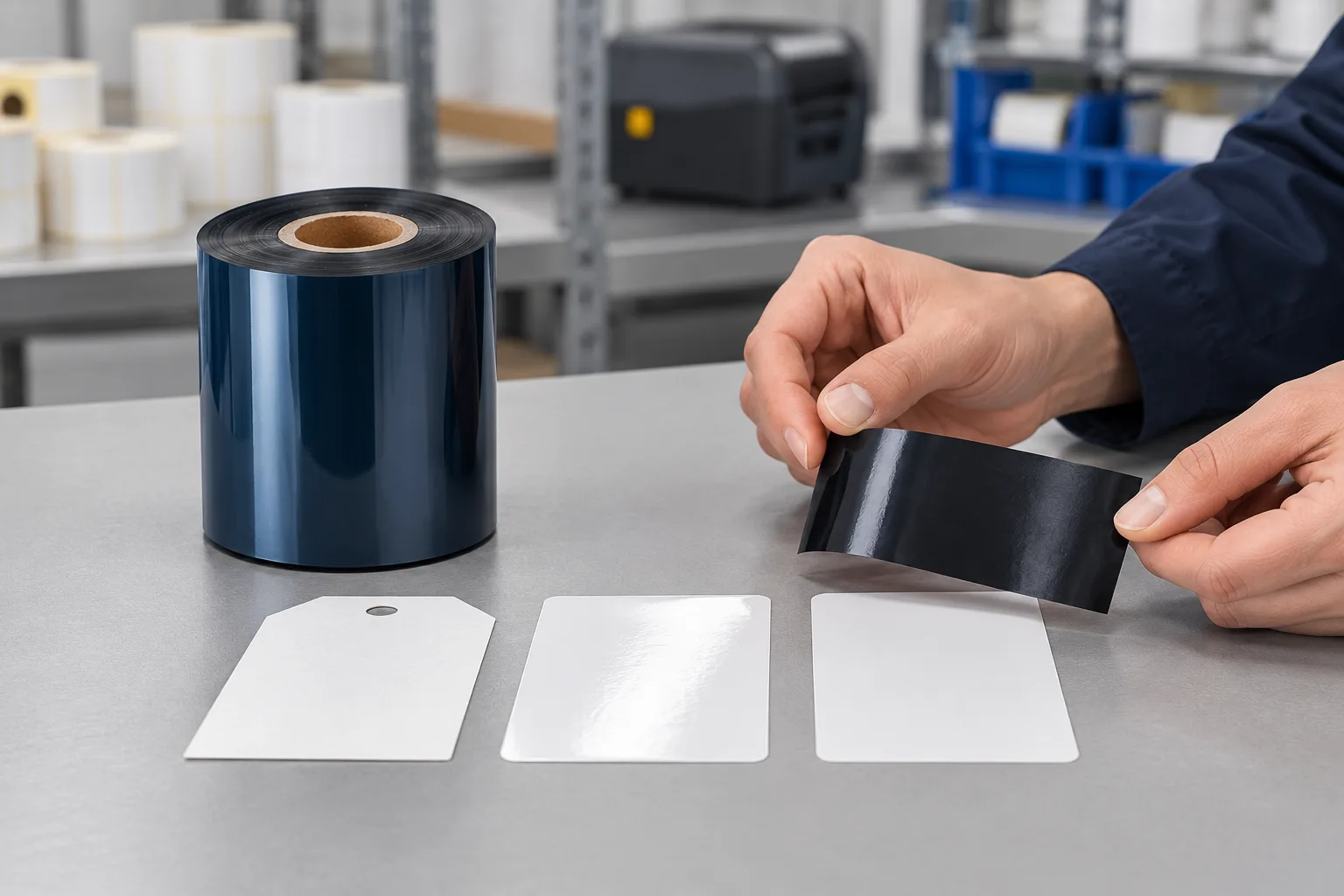
Match the ribbon grade to the label material and the conditions the printed barcode must survive; the three families differ in melting point, durability and substrate range. The print head heats and melts ink from the ribbon onto the label to create a print that resists abrasion and outdoor exposure — the grade sets how far that resistance goes.
Choose wax for paper labels in normal handling. Wax has the lowest melting point of the three families, so it transfers at lower printhead temperatures, runs at higher speeds and wears the printhead less. It is formulated primarily for uncoated and coated paper — retail tags, general shipping labels and warehouse identification — and suppliers position it as the economical option for carton marking and tracking labels.
Choose wax-resin when a label must survive more handling than wax supports without needing full chemical resistance. The blended ink prints on a wide variety of substrates, including synthetics and glossy paper, with prints more durable and smudge-resistant than full wax. Suppliers name multi-leg freight shipping labels, repeatedly handled product labels and general industrial labeling as typical cases.
Choose resin when the label is synthetic and will face chemicals, heat or years of outdoor exposure — one supplier guide calls resin the only grade built for that combination. A second supplier publishes exceptional resistance to high temperature and chemicals, with resin ribbons designed for warning, chemical, product and textile labels. For barcode work, confirm any grade by scanning the real symbol again after the exposure the label will actually meet.
Check Printer and Ribbon Specifications Before Ordering
Match four roll specifications before ordering: width, length, core size and ink-side winding. The ribbon must be equal to or wider than the label, with common widths of 25, 33, 40, 50, 60, 83, 110, 125, 165, and 220 mm; winding is published as ink-side-in and ink-side-out for Zebra, Sato, Datamax, Intermec and Printronix machines.
Length and core follow the printer class. Suppliers list 74 m or 110 m rolls for desktop models such as Zebra ZD and TSC DA, and 300, 360, or 450 m rolls for industrial models such as Zebra ZT and SATO CL4NX; desktop printers typically take a ½ inch core, industrial ribbons a 1 inch core. Industrial printers take larger rolls to keep production moving without interruption.
Printhead type decides the ribbon chemistry. Flat-head printers — desktop or industrial stand-alone machines whose labels are applied after printing — run somewhat slower but produce very durable prints; near-edge printheads serve both industrial stand-alone printers and in-line thermal transfer overprinters (TTO). Different printers require different ribbons depending on the printhead, and TTO speeds demand quick-release ink layers, so a TTO ribbon is not a general substitute for a flat-head barcode printer ribbon.
Also confirm the printing mode. Most professional and industrial label printers offer both thermal transfer and direct thermal: the first requires ribbon and prints durably, the second needs no ribbon but requires direct thermal paper. On a direct thermal line, paper choice — not ribbon — is the consumable decision.
Validate Samples and Send a Complete RFQ Before Bulk Orders
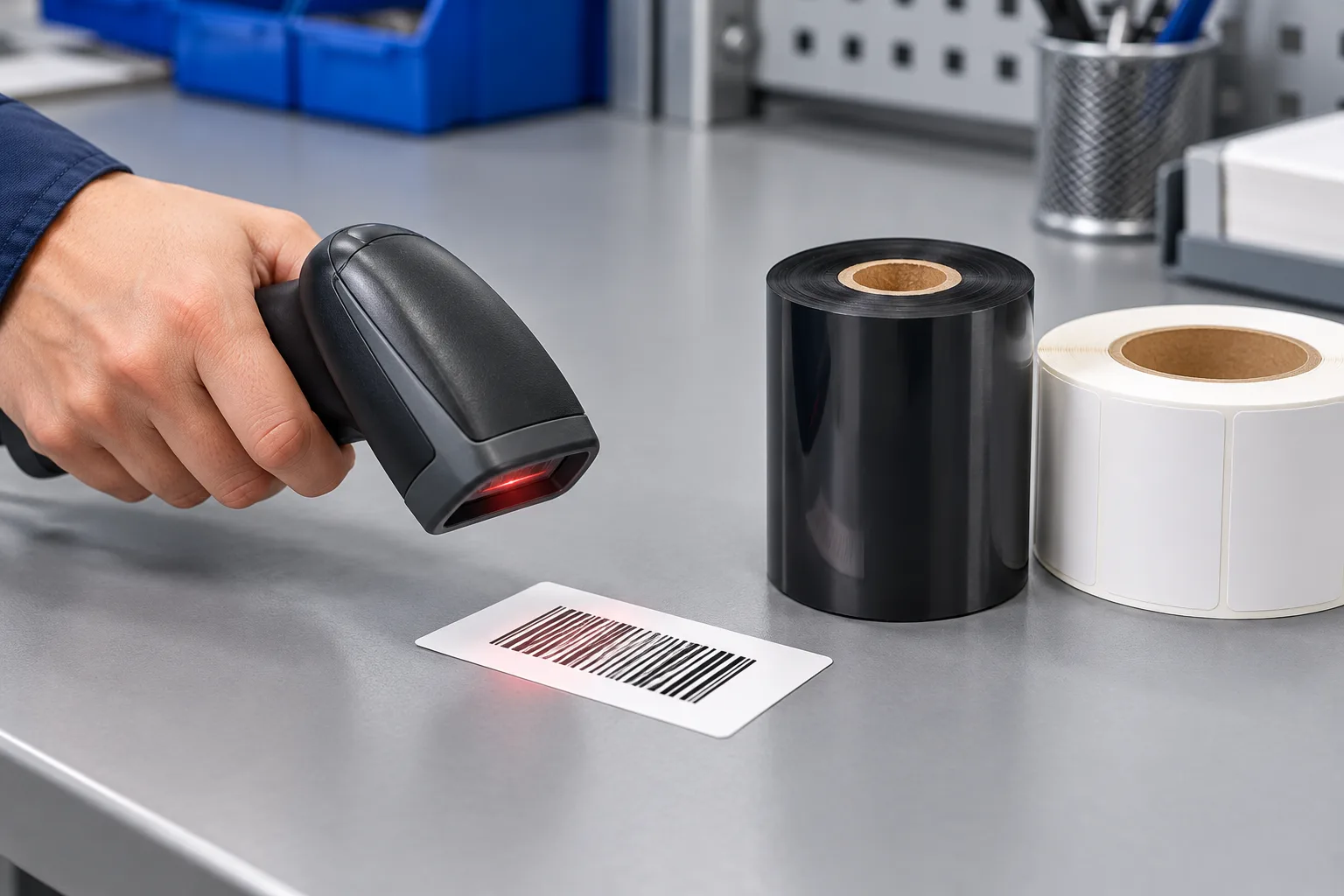
Approve bulk supply only after samples have printed on your own printer and labels, with results recorded against real conditions. A label that scans perfectly at the machine can still fail after friction, moisture or time in service.
- Confirm and record the printer model, printhead type and label material before requesting samples.
- Print your actual barcodes and text at production settings, not a generic test pattern.
- Scan with your own scanners immediately, and again after the handling, cleaning or environmental exposure the label will meet in use.
- Record the results and agree written acceptance criteria — test conditions and pass thresholds — with the supplier before any bulk order.
Then send every shortlisted supplier the same RFQ so answers compare on equal terms: printer brand, model and printhead type; label material and application; ribbon width, length, core size and ink-side winding; monthly or annual volume; environment and destination; sample requirements; and documents such as current datasheets. Ask each supplier to answer separately on specification match, samples, minimum order quantity, lead time and price conditions.
Data and Evidence
The tables below condense the specification guidance cited in this article, as published on the named suppliers' own pages. Verify each order against the supplier's current datasheet and your own sample prints.
| Ribbon grade | Label materials stated | Stated behavior and typical use |
|---|---|---|
| Wax | Uncoated and coated paper | Lowest melting point; lower printhead temperatures, higher speeds, less printhead wear; retail tags, shipping labels, warehouse identification |
| Wax-resin | Coated paper, synthetics, glossy paper | More durable and smudge-resistant than wax; multi-leg freight labels, handled product labels, general industrial labeling |
| Resin | Synthetic labels facing chemicals, heat or outdoor exposure | Exceptional high-temperature and chemical resistance; warning, chemical, product and textile labels |
| Parameter | Desktop printers | Industrial printers |
|---|---|---|
| Roll length | 74 m or 110 m (Zebra ZD, TSC DA) | 300, 360, or 450 m (Zebra ZT, SATO CL4NX) |
| Core size | ½ inch | 1 inch |
| Ribbon width | Must be equal to or wider than the label | Same rule; common widths 25, 33, 40, 50, 60, 83, 110, 125, 165, and 220 mm |
Your next step: shortlist two or three suppliers whose published scope covers your grade and roll format, then let sample results from your own line make the final cut.
Frequently Asked Questions
Which manufacturers can supply industrial barcode ribbon for my application?
Candidates include ribbon manufacturers such as ETISOFT, DNP Imagingcomm Europe and Technicode, printer-brand supplies divisions such as Videojet, and further suppliers such as Graphic Controls, Termedia Labels, Able Label and Vivid Data Group. Treat the list as a shortlist: confirm each supplier's role where it is not stated, then check grade availability, roll format and lead time through an RFQ and samples.
How can I verify whether a supplier manufactures ribbons or resells them?
Ask directly in the RFQ. The company that formulates the ink and the ribbon's additional layers holds the know-how behind print quality and durability and can adjust formulations; a reseller confirms specifications and stock but not chemistry. If the pages do not state the identity, record it as unconfirmed.
Should I choose wax, wax-resin or resin ribbon for industrial labels?
Use wax on uncoated or coated paper for shipping, warehousing and retail tagging; wax-resin for heavier handling, moisture or synthetic and glossy substrates; resin when synthetic labels face chemicals, heat or outdoor exposure. Confirm by scanning printed samples after exposure that matches real use.
What printer and ribbon specifications should I include in an RFQ?
State printer brand, model and printhead type (flat-head, near-edge or TTO); ribbon width, which must be equal to or wider than the label; roll length; core size (½ inch desktop, 1 inch industrial); ink-side winding; label material and application; volume; environment and destination; plus sample and documentation requirements.
Can TTO ribbons replace ribbons used in industrial barcode label printers?
Not as a general substitution — different TTR printers require different ribbons depending on the printhead. TTO machines are near-edge printers for flexible packaging running at very high speeds with quick-release ink layers; flat-head barcode printers use a different formulation. Specify per model and validate by sample printing.
Recommended products for this industry
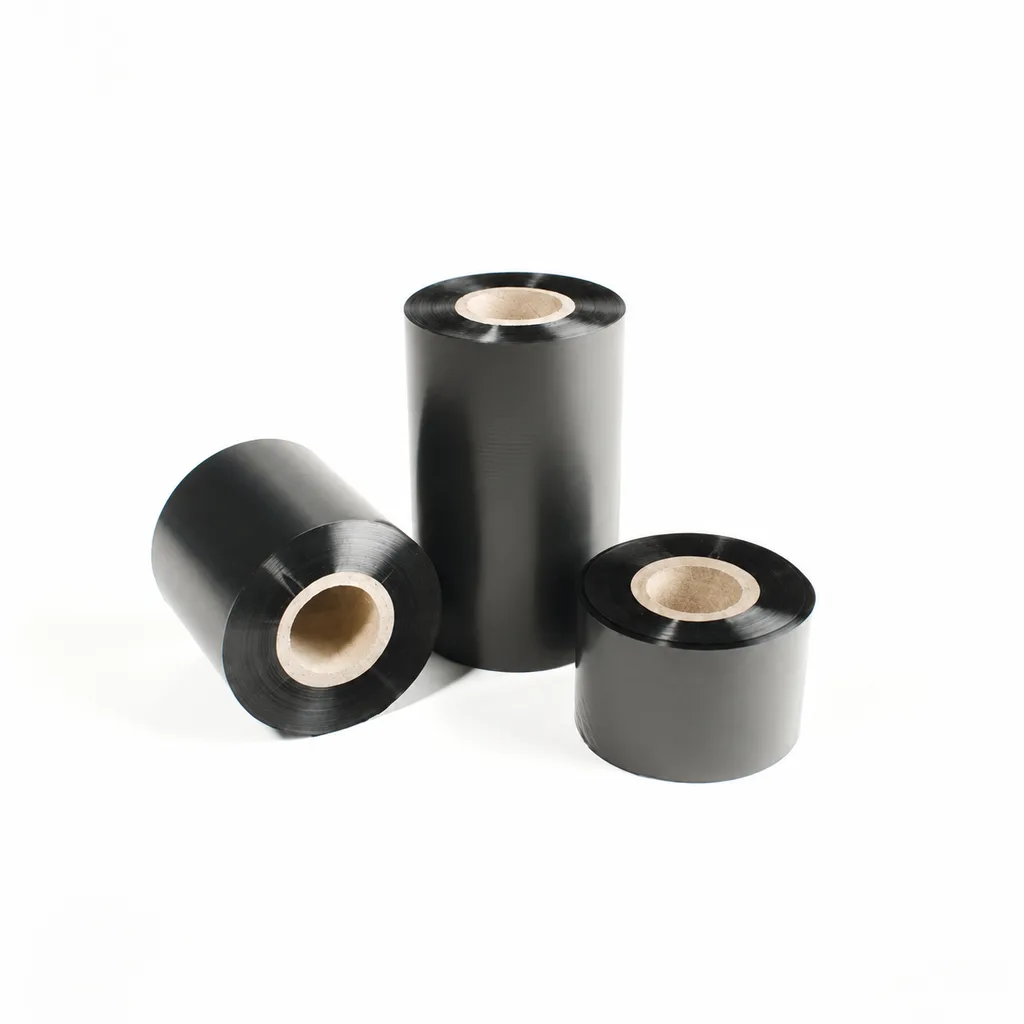
CL-Z112 Enhanced Wax Thermal Transfer Ribbon for Paper Labels and Tags
An enhanced wax thermal transfer ribbon with black ink for paper labels and tags used in retail, warehousing and logistics. It is specified for flat-head printing on desktop or industrial barcode printers at ≤8 inches per second (ips). Select it by checking the actual label material, printer configuration and handling conditions: image-quality, rub-resistance and cold-chamber results were obtained on coated paper, and print quality and image durability may vary with the printer and print medium.
View details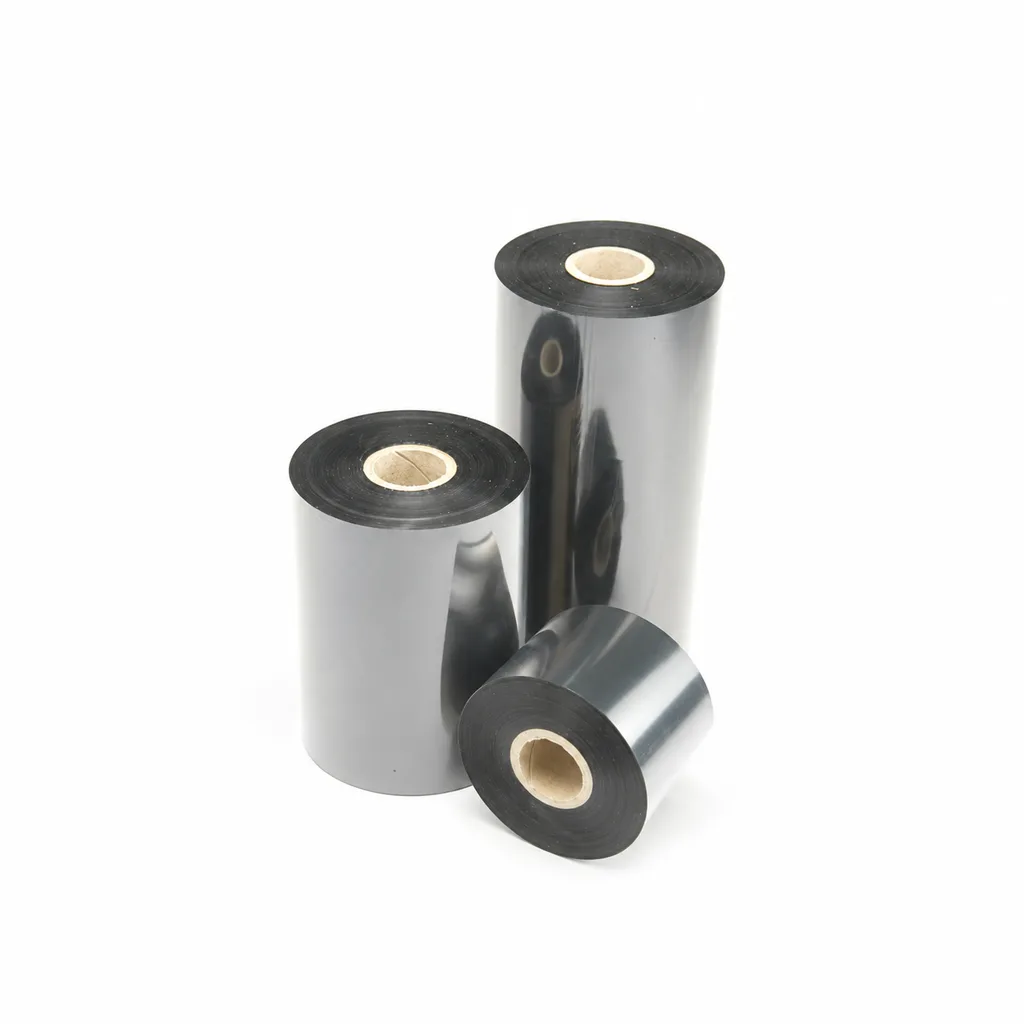
CL-Z203 Wax-Resin Thermal Transfer Ribbon for Barcode Labels
A black wax-resin thermal transfer ribbon for flat-head printing, with listed applications including retail, warehousing, logistics and garment tags. Select it against your actual label material and desktop or industrial barcode printer at speeds ≤6 ips (inches per second). Fine-line, small-text and durability results were obtained on coated paper; print quality and image durability may vary with the printer and printing substrate.
View details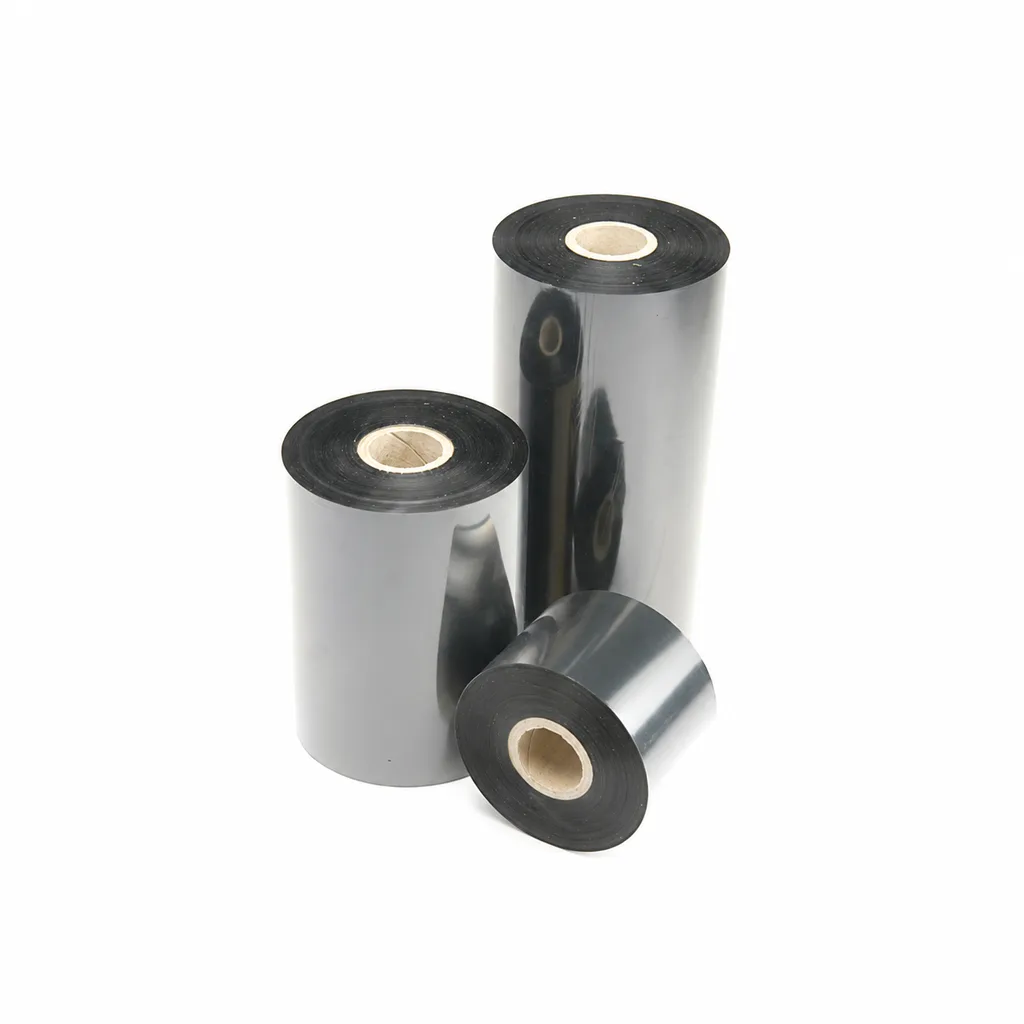
CL-Z213 Near-Edge Wax-Resin Thermal Transfer Ribbon for Barcode Labels
An enhanced black near-edge wax-resin thermal transfer ribbon for near-edge barcode printers and low- to medium-speed thermal transfer overprinting (TTO). Listed applications include retail labels, warehousing, garment tags and packaging identification. Match the printer, actual print medium and operating speed before selection: print quality and image durability can vary with the printer and substrate.
View details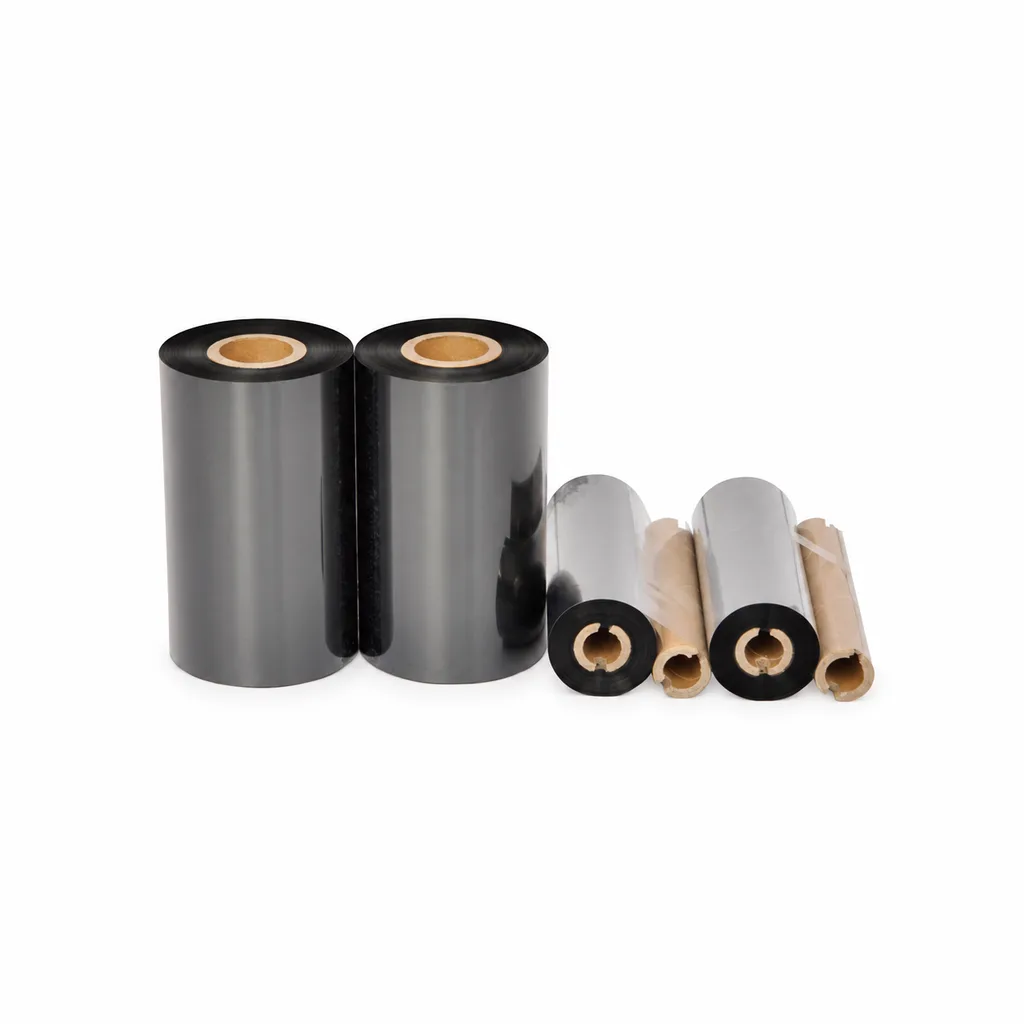
CL-Z908 Wax Thermal Transfer Ribbon for Barcode Labels and Tags
CL-Z908 is an economical black wax thermal transfer ribbon for label and tag printing. Listed applications include retail, warehousing, logistics, clothing tags, simple packaging and production line identification. It is intended for flat-head printing on desktop or industrial barcode printers at speeds of ≤6 inches per second (ips). Select it against your actual paper stock, printer and required image durability: print quality and image durability may vary with the printer and printing substrate.
View detailsNeed the right ribbon for your label application?
Share the label material, printer and operating environment. Our team will recommend a tested combination.
