
Cold Chain Proof Labeling: TTR Built for Freezers, Sterilization, and Compliance Audits
Request a solution
- Original TTR manufacturer since 2013
- Automated coating and slitting
- IQC / IPQC / OQC control
- ANSI barcode grade testing
- -20°C to 120°C environmental testing
- Batch-level traceability
- ANSI barcode grade
- Batch traceability
- RoHS / REACH compliance
- SGS and MSDS documents on request
Key Takeaways
- Cold chain proof labeling demands ribbons that survive freezer storage, moisture, abrasion, and sterilization while keeping audit-ready print.
- This guide helps distributors match resin and high-performance hybrid TTR to label facestock and printers, separate TTO soft-packaging coding from water-washable textile printing, verify FDA food-contact and RoHS/REACH documentation by model, and run sample trials against the customer's acceptance specification before quoting.
Data and Evidence
Cold chain proof labeling sits at the intersection of packaging, logistics, and regulatory review. For distributors, the commercial risk is not only print quality on day one, but whether the printed code, batch number, or expiry date remains legible after freezer storage, condensation, handling, and any sterilization step the customer specifies. This guide is written for ribbon traders, coding product distributors, and channel partners who must match thermal transfer ribbon (TTR) to downstream label materials and printer platforms, then verify samples before volume orders.
The manufacturer behind this guide has been an original thermal transfer ribbon manufacturer since 2013, with more than 13 years of thermal transfer ribbon experience. Annual production capacity is 50 million square meters, with monthly output of more than 200,000 rolls. Custom widths run from 30 mm to 220 mm and custom lengths from 70 m to 600 m. OEM and private label packaging, custom Pantone color matching, and custom formulation support are available. Quality references include ISO 9001:2015, RoHS 2.0, REACH, SGS testing, FDA compliance for food contact, and MSDS reports. Sample and production lead times vary by product type, so confirm the current schedule with the sales team.
For cold chain and pharma labels, resin or high-performance hybrid ribbons are commonly used when moisture, abrasion, and temperature change are expected. For indirect food contact, confirm FDA-compliant formulations with the supplier. These are selection signals, not universal rules: the correct ribbon depends on the label facestock, the printer or coder, the applied code, and the customer's acceptance specification.
- Original manufacturer since 2013 with 13+ years of thermal transfer ribbon experience.
- Annual production capacity of 50 million square meters and monthly output of more than 200,000 rolls.
- Custom widths from 30 mm to 220 mm and custom lengths from 70 m to 600 m.
- OEM and private label packaging, custom Pantone color matching, and custom formulation support.
- Quality references include ISO 9001:2015, RoHS 2.0, REACH, SGS testing, FDA compliance for food contact, and MSDS reports.
- Sample and production lead times vary by product type, so confirm the current schedule with the sales team.

Resin and Hybrid Ribbon Selection for Freezer and Sterilization Labels
Cold chain proof labeling usually starts with the label facestock, not the ribbon. Frozen food cartons, pharmaceutical vials, and logistics labels may use coated paper, synthetic paper, PET, or other films. Each surface accepts ink differently. A resin ribbon is generally chosen when the printed image must resist moisture, abrasion, and temperature change. A high-performance hybrid ribbon can be a practical middle option when the facestock and printer allow it. The distributor's job is to confirm the facestock, the printer or coder model, the print speed and darkness settings, and the customer's acceptance specification before recommending a ribbon grade.
Do not assume that one resin ribbon fits every freezer or sterilization label. Sterilization methods vary, and the label construction, adhesive, and topcoat may matter as much as the ribbon. Ask the customer to provide the exact label material data sheet and the sterilization or cold storage conditions in their acceptance specification. If those documents are not available, request a sample trial on the customer's own printer and label stock. Record the printer model, ribbon grade, label material, and observed print result. This is the minimum evidence needed to reduce after-sales disputes.
For distributors, the practical selection sequence is: identify the application (frozen food, pharma secondary packaging, logistics, or TTO soft packaging); confirm the printer or coder platform; confirm the label facestock and adhesive; confirm the required resistance (moisture, abrasion, temperature change, or sterilization); then request a ribbon sample in the correct width and length. Custom widths from 30 mm to 220 mm and custom lengths from 70 m to 600 m allow the ribbon to be matched to the printer and the order quantity. Confirm the current sample and production schedule with the sales team because lead times vary by product type.
- Confirm the label facestock, adhesive, and topcoat before selecting a resin or hybrid ribbon.
- Verify the printer or coder model and the customer's print settings against the ribbon grade.
- Request the customer's acceptance specification for freezer storage, moisture, abrasion, or sterilization.
- Use custom widths from 30 mm to 220 mm and custom lengths from 70 m to 600 m to match the printer and order size.
- Run a sample trial on the customer's own label stock and printer before quoting volume.
TTO Soft-Packaging Coding: A Separate Application from Water-Washable Textile Printing
TTO (thermal transfer overprinting) is used for coding flexible packaging and labels on production lines. It is a different application from water-washable textile printing, and the two should not be treated as interchangeable. TTO ribbons are selected for the packaging film, the coder model, the printed code content, and the line conditions. Water-washable resin ribbons are selected for textile labels and care labels where the printed information must survive washing. They are not the same product, and they should not be assumed to run on the same printer or with the same settings.
For TTO soft-packaging coding, the distributor should confirm the packaging film structure, the coder make and model, the print area, and the required code type (batch, date, lot, or barcode). The ribbon grade must match the coder's specification. If the customer asks for a water-washable textile ribbon, treat it as a separate inquiry: confirm the textile substrate, the wash process in the customer's acceptance specification, and the printer platform. Do not infer that a TTO ribbon will work for textile washing or that a water-washable ribbon will work in a TTO coder.
Color is a separate decision from chemistry. TTO marking ribbons and color ribbons are available in a range of colors, and custom Pantone color matching is supported. For distributors, color matching should be confirmed against the customer's brand standard and the label or film substrate. Request a color sample and confirm the target under the customer's lighting and inspection conditions. If the customer requires a specific color reference, provide the Pantone reference and confirm the formulation with the sales team.
- Treat TTO soft-packaging coding and water-washable textile printing as separate applications with separate ribbon selection.
- Confirm the packaging film structure, coder model, print area, and code type before recommending a TTO ribbon.
- For water-washable textile ribbons, confirm the textile substrate and the wash process in the customer's acceptance specification.
- Do not assume the same printer or ribbon can serve both TTO coding and textile washing.
- Use custom Pantone color matching and request a color sample under the customer's inspection conditions.
Compliance Documents for Cold Chain and Food-Contact Labeling
Compliance audits often ask for documentation that connects the ribbon to the application. The manufacturer's quality references include ISO 9001:2015, RoHS 2.0, REACH, SGS testing, FDA compliance for food contact, and MSDS reports. These references are important, but they are not automatically attached to every sample or every order. Distributors should confirm which documents are available for the specific ribbon model and the specific sales transaction. Do not promise that every sample shipment includes the full document set.
For indirect food contact, confirm FDA-compliant formulations with the supplier. The phrase 'food contact' can cover direct and indirect contact, and the customer's regulatory team may require a specific statement. Ask the customer to define the contact scenario and the required document. Then request the matching FDA compliance statement, MSDS, and any RoHS or REACH documentation for the exact model. If the customer needs SGS testing, confirm the scope and the current schedule with the sales team.
For cold chain and pharma labeling, the audit trail may also include the label material, the adhesive, and the printer settings. The ribbon supplier can provide ribbon-related documents, but the distributor should not claim that ribbon documents alone satisfy the customer's full audit. Work with the customer's quality team to list the required documents, then map each document to the ribbon model and the label construction. This prevents a last-minute compliance gap before a production run.
- Quality references include ISO 9001:2015, RoHS 2.0, REACH, SGS testing, FDA compliance for food contact, and MSDS reports.
- Confirm which documents are available for the specific ribbon model and sales transaction.
- For indirect food contact, confirm FDA-compliant formulations with the supplier.
- Do not promise that every sample shipment includes the full document set.
- Map each required document to the ribbon model and the label construction with the customer's quality team.
Sample Verification and After-Sales Risk Control for Distributors
Sample verification is the distributor's best tool for reducing after-sales risk. A ribbon that prints well in a demo room may behave differently on the customer's line. The verification should use the customer's own label stock, the customer's printer or coder, and the customer's acceptance specification. Record the ribbon grade, width, length, printer model, label material, and the observed print result. If the customer has a cold storage or sterilization step, include a sample that goes through that step and inspect the print after the step. Do not invent test parameters; use the customer's specification or the equipment manual.
For TTO soft-packaging coding, verify the code on the actual film structure and at the line's normal operating condition. For water-washable textile ribbons, verify the print after the customer's wash process. For freezer labels, verify the print after the customer's cold storage condition. In each case, the acceptance criteria should come from the customer, not from the ribbon supplier. If the customer does not have a written specification, ask them to define one before the trial. This protects both sides and gives the distributor a documented basis for the quotation.
Order planning should account for sample and production lead times, which vary by product type. Confirm the current schedule with the sales team before committing to a delivery date. For custom widths from 30 mm to 220 mm and custom lengths from 70 m to 600 m, confirm the minimum order quantity and the packaging format. OEM and private label packaging are available, so clarify the artwork, the label language, and the carton marking requirements. Custom formulation support is also available when the standard grade does not meet the customer's acceptance specification.
- Run sample trials on the customer's own label stock and printer or coder.
- Record ribbon grade, width, length, printer model, label material, and observed print result.
- Use the customer's acceptance specification or the equipment manual for test conditions; do not invent parameters.
- Confirm sample and production lead times with the sales team because they vary by product type.
- Clarify OEM and private label packaging, artwork, label language, and carton marking before production.
Quotation Checklist for Cold Chain Proof Labeling Projects
A complete quotation for cold chain proof labeling should include the ribbon grade, the width and length, the color, the packaging format, the compliance documents available for the model, and the sample and production lead times. For TTO soft-packaging coding, include the coder model and the film structure. For water-washable textile printing, include the textile substrate and the wash process. For freezer and sterilization labels, include the label facestock, adhesive, and the customer's acceptance specification. This checklist helps the distributor avoid mismatched orders and repeated sample rounds.
When the customer asks for a specific certification or standard, confirm the exact document and the exact model before quoting. The manufacturer's quality references include ISO 9001:2015, RoHS 2.0, REACH, SGS testing, FDA compliance for food contact, and MSDS reports, but availability can depend on the model and the transaction. Do not add standards or thresholds that are not in the customer's specification or the supplier's documentation. If a required document is not available, tell the customer and offer an alternative verification action, such as a sample trial or a formulation review with the sales team.
Finally, keep the application boundaries clear. TTO soft-packaging coding and water-washable textile printing are different applications. Freezer labels and sterilization labels may use different ribbon grades even when they look similar. The distributor's value is in matching the ribbon to the substrate, the printer, and the acceptance specification, then documenting the verification. This approach supports compliance audits and reduces after-sales claims without relying on unverified performance claims.
- Include ribbon grade, width, length, color, packaging, available compliance documents, and lead times in the quotation.
- For TTO, include the coder model and film structure; for water-washable textile, include the substrate and wash process.
- For freezer and sterilization labels, include the label facestock, adhesive, and the customer's acceptance specification.
- Confirm the exact document and model before quoting; do not add standards or thresholds not in the specification.
- Keep TTO soft-packaging coding and water-washable textile printing as separate applications.
Frequently Asked Questions
What ribbon type is used for cold chain proof labeling?
Cold chain and pharma labels often use resin or high-performance hybrid ribbons when moisture, abrasion, and temperature change are expected. The final choice depends on the label facestock, the printer or coder, and the customer's acceptance specification.
Can the same ribbon be used for TTO soft-packaging coding and water-washable textile printing?
No. TTO soft-packaging coding and water-washable textile printing are different applications. They should not be assumed to use the same printer or the same ribbon. Confirm the coder model and film structure for TTO, and confirm the textile substrate and wash process for water-washable textile ribbons.
What compliance documents are available for food-contact and cold chain labeling?
Quality references include ISO 9001:2015, RoHS 2.0, REACH, SGS testing, FDA compliance for food contact, and MSDS reports. Availability can depend on the specific ribbon model and the sales transaction.
How should distributors verify a ribbon sample for freezer or sterilization labels?
Use the customer's own label stock, printer or coder, and acceptance specification. Record the ribbon grade, width, length, printer model, label material, and observed print result. If the customer has a cold storage or sterilization step, include a sample that goes through that step and inspect the print afterward.
What are the custom width and length options?
Custom widths run from 30 mm to 220 mm and custom lengths from 70 m to 600 m. OEM and private label packaging, custom Pantone color matching, and custom formulation support are available. Confirm the minimum order quantity, packaging format, and current lead time with the sales team.
Related Products & Guides
Recommended products for this industry
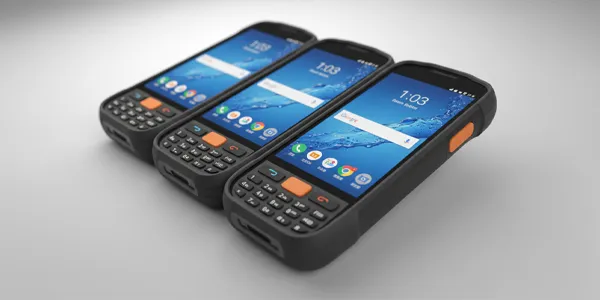
Cold Storage Cold Chain PDA
To address the high-humidity environment of professional cold storage and cold chain…
View details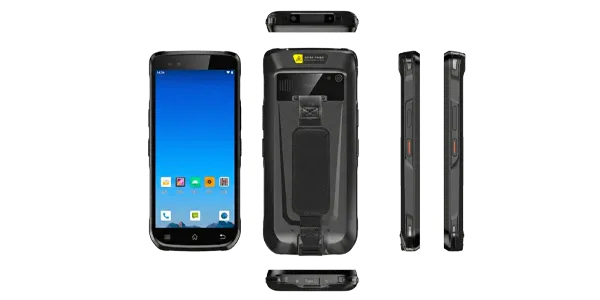
PDA Data Collector for Cold Chain Applications
Octa-core 2.0GHz processor, 4+64GB storage, standard barcode/QR code scanning…
View details
Sterilization Indicator Label
Color-change indicator label for steam, dry-heat or ethylene-oxide sterilization process…
View details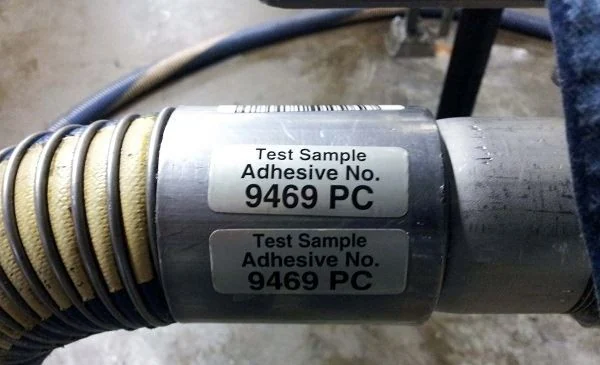
Weatherproof Outdoor Label
UV-resistant outdoor label for equipment, assets and signage exposed to sunlight…
View detailsNeed the right ribbon for your label application?
Share the label material, printer and operating environment. Our team will recommend a tested combination.
