
Resin Ribbon Selection Guide: Match the Grade to Your Labels, Printer and Environment
Request a solution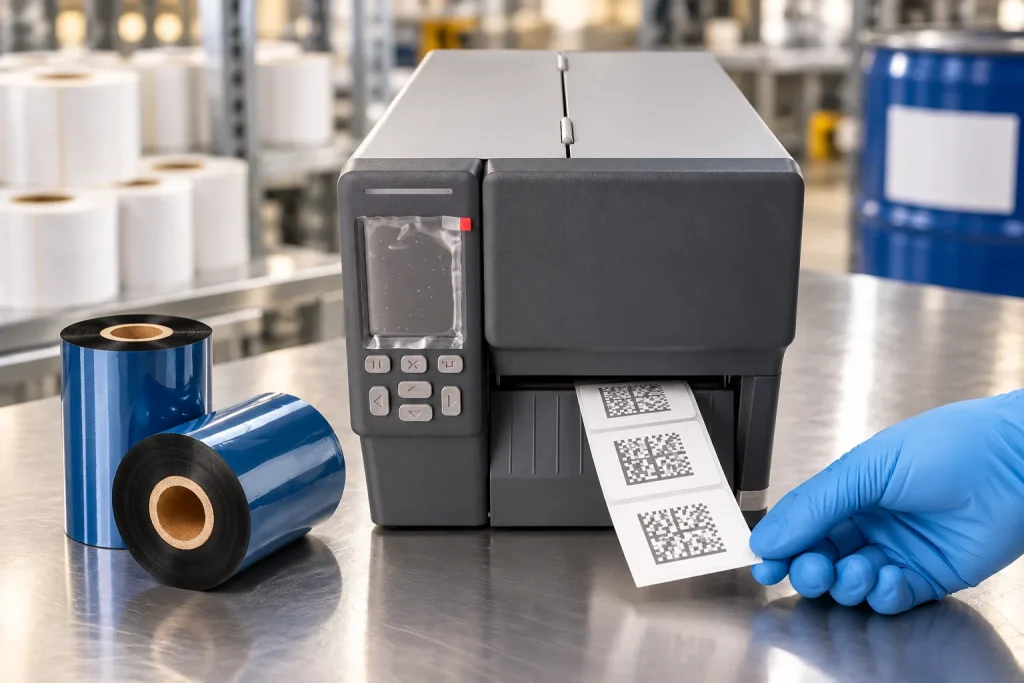
- Original TTR manufacturer since 2013
- Automated coating and slitting
- IQC / IPQC / OQC control
- ANSI barcode grade testing
- -20°C to 120°C environmental testing
- Batch-level traceability
- ANSI barcode grade
- Batch traceability
- RoHS / REACH compliance
- SGS and MSDS documents on request
Key Takeaways
- Thermal transfer ribbons come in three grades: full wax, wax-resin blend, and full resin.
- Full resin ribbons are matched to demanding synthetic films such as polyester, polyimide, and vinyl.
- Resin ink needs more print energy: wax/resin combinations generally require 25-30°C, while pure resin ribbons may need 30-35°C for proper transfer.
- Wash care ribbons are resin-based ribbons formulated for garment labels that face repeated washing, dry cleaning and ironing.
- Before ordering, confirm ribbon width (equal to or wider than the label), roll length, core size and ink-side orientation for your exact printer model.
What a Resin Ribbon Is and When Your Labels Need One
A resin ribbon is a thermal transfer ribbon whose ink layer is built mainly of resin, and it is the grade to shortlist when labels are synthetic or have to survive rough conditions. In general, there are three types of thermal transfer ribbons to choose from: full wax, wax-resin blend, and full resin. Wax ribbons work on paper labels for general applications, wax-resin ribbons provide better durability on coated paper and some synthetic labels, and full resin ribbons are required for synthetic materials like polyester and polypropylene.
Resin earns its place through durability. Resin thermal transfer ribbons deliver exceptional durability and resistance to challenging environmental conditions, and they are known for excellent high-temperature resistance, friction resistance, and chemical resistance. Resin ribbons provide excellent print quality and are ideal for applications that demand long-lasting durability, such as asset tracking labels or chemical drum labels. In short: wax for cost-effective paper labels, wax/resin for added scratch and moisture resistance, and full resin for chemical, heat, or outdoor durability on synthetic labels.
Resin is not automatically the better buy. Pure resin ribbons deliver maximum longevity but at premium prices, so the grade pays for itself only where paper or wax-resin options would fail. Match the grade to the surface first: wax ribbons are generally suited to porous and coated paper, wax resin ribbons to coated paper and selected synthetics, and full resin ribbons to demanding synthetic films such as polyester, polyimide, and vinyl.
The same structure runs through the wider market. In China, widely used ribbons include date coding ribbons, infusion bag ribbons, fabric care label ribbons (resin-based), cable marking ribbons, barcode ribbons, wax-based ribbons, wax-resin mixed ribbons, and resin-based ribbons, among other models. Packaging coders share these families too: Thermal Transfer Overprinting is a digital printing technology that applies a code to flexible packaging such as a flexible film or label by using a thermal printhead and a wax-resin or resin thermal transfer ribbon.

Match the Ribbon Grade to Label Material and Working Environment
Label material decides which grades can bond to the surface, and the working environment decides how much durability you need to pay for. Work through them in that order: substrate first, then heat, moisture, chemical contact and abrasion.
Standard Resin for Synthetic and Industrial Labels
Full resin ribbons are required for synthetic materials like polyester and polypropylene, and they are the default for films such as polyimide and vinyl as well. The reason is adhesion: wax ribbons work best with paper-based materials and struggle to adhere properly to synthetic substrates like polyester or polypropylene, restricting their application range. Typical resin uses include asset tracking labels and chemical drum labels, where the print must stay legible for the life of the item.
Surface finish is the second check. Very smooth materials require specific ribbons in order to be properly printed, and a glossy label with a varnish or made from vinyl is a known challenge — resin formulations commonly carry the adhesive layers that bond to these surfaces, so name the exact material when you enquire. Very small codes are another special case: some manufacturers now make 600 dpi printers to produce very small barcodes for electronics industries, and the ribbon should be sampled against those codes.
Wash Care Resin for Garment and Textile Labels
A wash care ribbon (also called a wash-care or care-label thermal transfer ribbon) is a resin-based thermal transfer ribbon formulated to produce durable, high-contrast prints on garment care labels and textile tags. These ribbons withstand repeated washing, dry cleaning, and ironing, keeping labels readable over time, and they work on materials including nylon, satin, acetate, polyester, rayon, and synthetic fibers. Treat wash care as its own category rather than a generic resin ribbon, because laundry conditions differ from industrial durability and the formulations are tuned for them. Tell the supplier the textile material plus the washing, drying and ironing process the label will face, then sample on that exact stock.
Check Printer, Ribbon Width, Length and Core Before Ordering
A resin ribbon only performs when the printer, ribbon dimensions and label stock match, so confirm four points before ordering: printer capability, ribbon width, roll length and core, and ink-side orientation.
Start with the printer itself. Resin ribbons require a higher level of heat and pressure during printing, making them suitable for printers equipped with compatible printheads, so check that your model can run resin energy settings. As a reference point, wax/resin combinations generally require 25-30°C, while pure resin ribbons may need 30-35°C for proper transfer; the exact setting for your grade belongs in its TDS. Confirm by exact model, not by brand, because two printers from the same maker can accept different widths, lengths and cores.
Then check the dimensions. The ribbon must be equal to or wider than the label — common widths are 25, 33, 40, 50, 60, 83, 110, 125, 165, and 220 mm. Roll length follows printer capability: desktop printers such as the Zebra ZD and TSC DA accept 74 m or 110 m rolls, while industrial printers such as the Zebra ZT and SATO CL4NX accept 300, 360, or 450 m rolls. Core size matters too; the TSC TE Series, for example, supports shorter ribbons on a 0.5-inch core and 300m ribbons on a 1-inch core. Ribbons come ink-side-in and ink-side-out, so order the winding direction your printer requires.
Finally, separate normal label printing from TTO coding. If you print dates and batch codes on flexible packaging with a Thermal Transfer Overprinter, the ribbon system is different: for inline (TTO) printers, working at high speeds, a wax/resin is also the primary choice, and TTO wax-resin ribbons are most often used by manufacturers of food and hygiene products. Near-edge TTO grades are made to imprint date, price, lot and bar codes directly onto flexible packaging, on materials such as PP, PET, aluminium, paper and Tyvek. Do not assume a standard resin ribbon for label printers will transfer on a near-edge TTO machine — ask for TTO-specific grades and confirm the formulation for your packaging film.
Test Samples and Send a Complete RFQ
Sample approval turns a specification into a bulk order you can trust, and a complete RFQ makes that sample round efficient.
Sample Acceptance Checklist
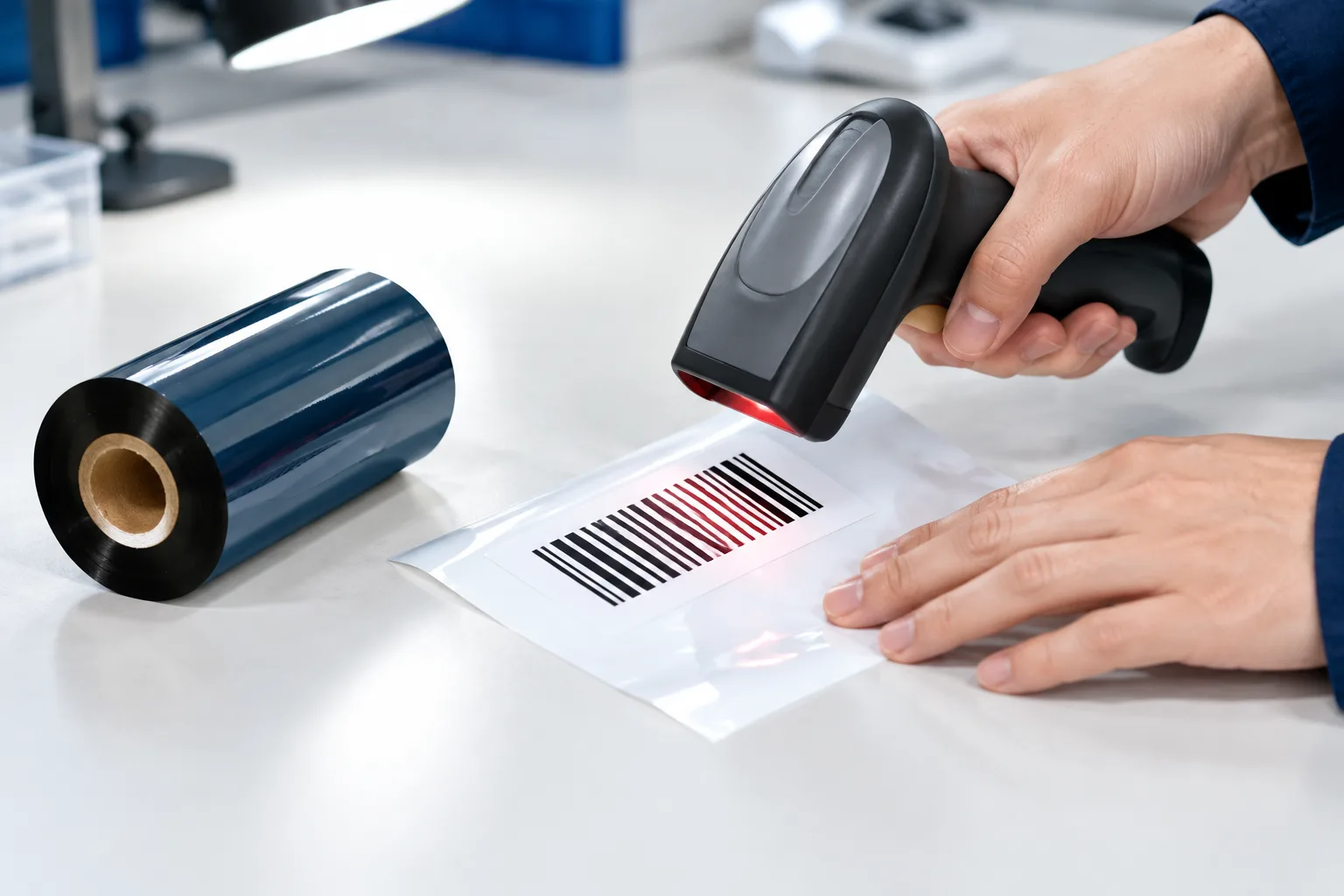
Print the sample with your own printer on your production label stock, because printer energy and label surface both change the result. Check image density, edge definition and barcode scanning first. Then expose the printed labels to the conditions that matter for your product — friction during handling, moisture or water contact, any chemicals involved, and washing or ironing for care labels. Compare the results with the durability the grade is meant to deliver, and treat catalog values as orientation rather than acceptance criteria for your batch. Agree the pass criteria with the supplier before the bulk run and keep the approved sample as the reference.
Information to Include in Your RFQ
One complete enquiry saves several rounds of back-and-forth. Send the supplier:
- Printer make and model, so the grade, width, length, core and winding direction all match the machine.
- Label material and surface — paper, PP, PET, synthetic paper or textile — plus the label width.
- Ribbon width, roll length, core size and ink-side orientation your printer accepts.
- Ink colour you need, and whether codes must survive known chemicals, washing or outdoor exposure.
- Estimated monthly or annual usage, so the supplier can quote the right specification.
Minimum order quantities and pricing depend on the specification, so confirm them against your list rather than assuming a standard answer. COLORFULTTR manufactures thermal transfer ribbons and matching label consumables: send the details above, and we will recommend a grade, confirm the exact specification and arrange printed samples for your approval.
Data and Evidence
The table below condenses the selection facts behind this guide, with the parameters buyers most often need to confirm.
| Grade | Typical label materials | Durability profile | Printing notes |
|---|---|---|---|
| Full wax | Porous and coated paper | General applications such as retail tags, general shipping labels, and warehouse identification; may not last as long as resin counterparts | Lowest melting point: transfers at lower print head temperatures, runs at higher print speeds with less wear on the print head |
| Wax-resin | Coated paper and some types of film; also tags, synthetic papers, BOPP, PET, and PVC films | Enhanced durability compared to wax; better resistance to scratching, moisture, and moderate chemicals; mid-range on the affordability scale | Primary choice for inline TTO at high speeds; common on multi-leg freight and repeatedly handled retail labels |
| Full resin | Demanding synthetic films such as polyester, polypropylene, polyimide, and vinyl | Long-lasting durability for heat, moisture, chemicals and outdoor exposure; suits asset tracking and chemical drum labels | Needs higher heat and pressure and a compatible printhead; confirm energy settings against the ribbon TDS |
Verify any grade before committing volume: print on the production label stock, scan the codes, then test the printed labels against your real handling, moisture, chemical or laundry conditions. When a supplier quotes performance for a specific ribbon, ask for the TDS that backs it, and keep the approved sample with your purchase records.
Frequently Asked Questions
What information should I send a supplier before ordering a resin ribbon?
Send your printer make and model, the label material and surface, label width, the ribbon width, roll length, core size and ink-side orientation your printer accepts, the ink colour, your estimated monthly volume, and the conditions the label must survive. With those details a supplier can name a grade, confirm the specification and prepare samples.
Will a resin ribbon work on PP, PET and synthetic paper labels?
Full resin ribbons are required for synthetic materials like polyester and polypropylene, which covers PET and PP films, and they are the grade to test whenever labels face heat, moisture, chemicals or outdoor exposure. Synthetic paper varies by surface, and very smooth or varnished stocks may need a resin grade with a special adhesive layer, so run a sample on your exact material first.
How is a wash care resin ribbon different from a standard resin ribbon?
A wash care ribbon is a resin-based ribbon formulated for garment care labels and textile tags, built to withstand repeated washing, dry cleaning and ironing. Standard resin grades target industrial durability on synthetic films instead. Tell your supplier the textile material and the laundry process, then sample before ordering in bulk.
Are all TTO ribbons resin ribbons?
No. Near-edge TTO ribbons are most commonly wax/resin formulations, and wax/resin is the primary choice for high-speed inline coding on flexible packaging. If you print on a TTO overprinter, ask for TTO-specific grades and confirm the formulation for your packaging film instead of ordering a standard resin ribbon for label printers.
What should a resin ribbon sample test cover before a bulk order?
Print the sample with your own printer on your production label stock, check density, edge definition and barcode scanning, then expose the printed labels to your real conditions: abrasion during handling, moisture, any chemicals involved, and washing or ironing for care labels. Agree the pass criteria with the supplier and keep the approved sample as the bulk reference.
Recommended products for this industry
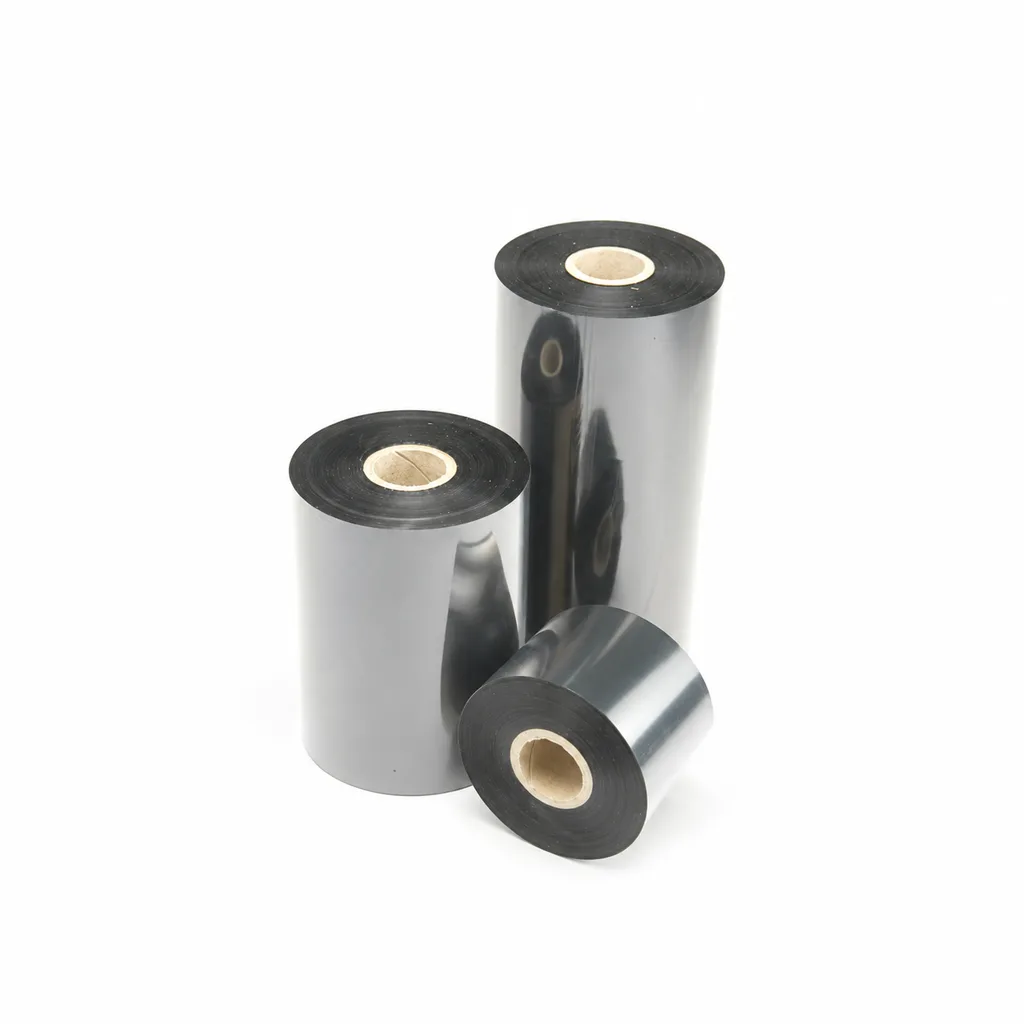
CL-Z203 Wax-Resin Thermal Transfer Ribbon for Barcode Labels
A black wax-resin thermal transfer ribbon for flat-head printing, with listed applications including retail, warehousing, logistics and garment tags. Select it against your actual label material and desktop or industrial barcode printer at speeds ≤6 ips (inches per second). Fine-line, small-text and durability results were obtained on coated paper; print quality and image durability may vary with the printer and printing substrate.
View details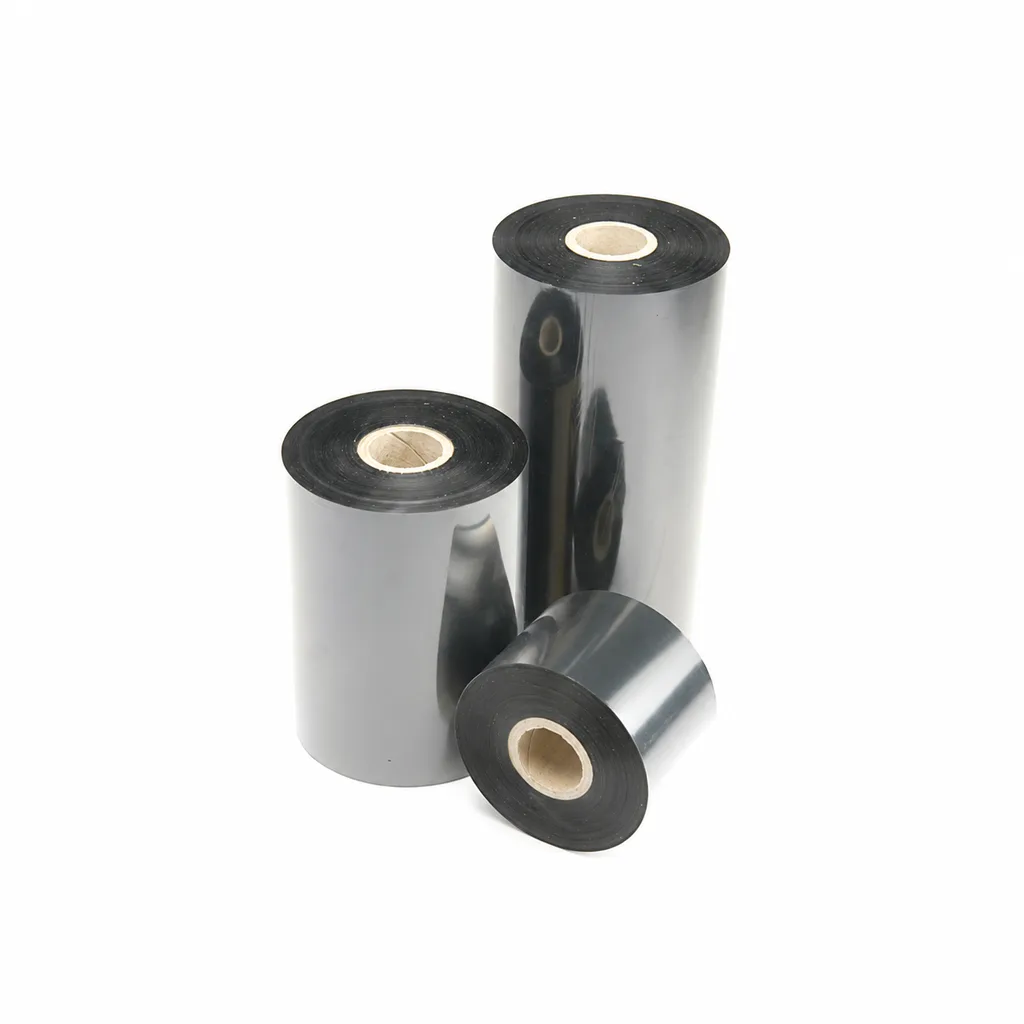
CL-Z213 Near-Edge Wax-Resin Thermal Transfer Ribbon for Barcode Labels
An enhanced black near-edge wax-resin thermal transfer ribbon for near-edge barcode printers and low- to medium-speed thermal transfer overprinting (TTO). Listed applications include retail labels, warehousing, garment tags and packaging identification. Match the printer, actual print medium and operating speed before selection: print quality and image durability can vary with the printer and substrate.
View details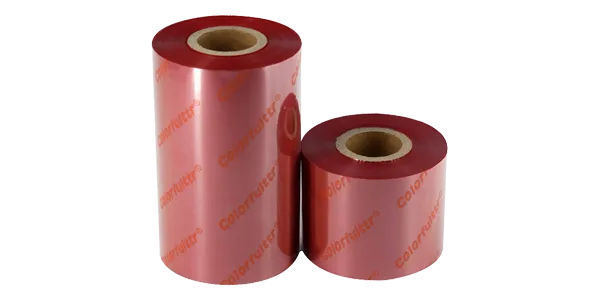
High-grade wax resin thermal transfer ribbon
Premium wax-resin thermal transfer ribbons are specifically engineered for diverse…
View details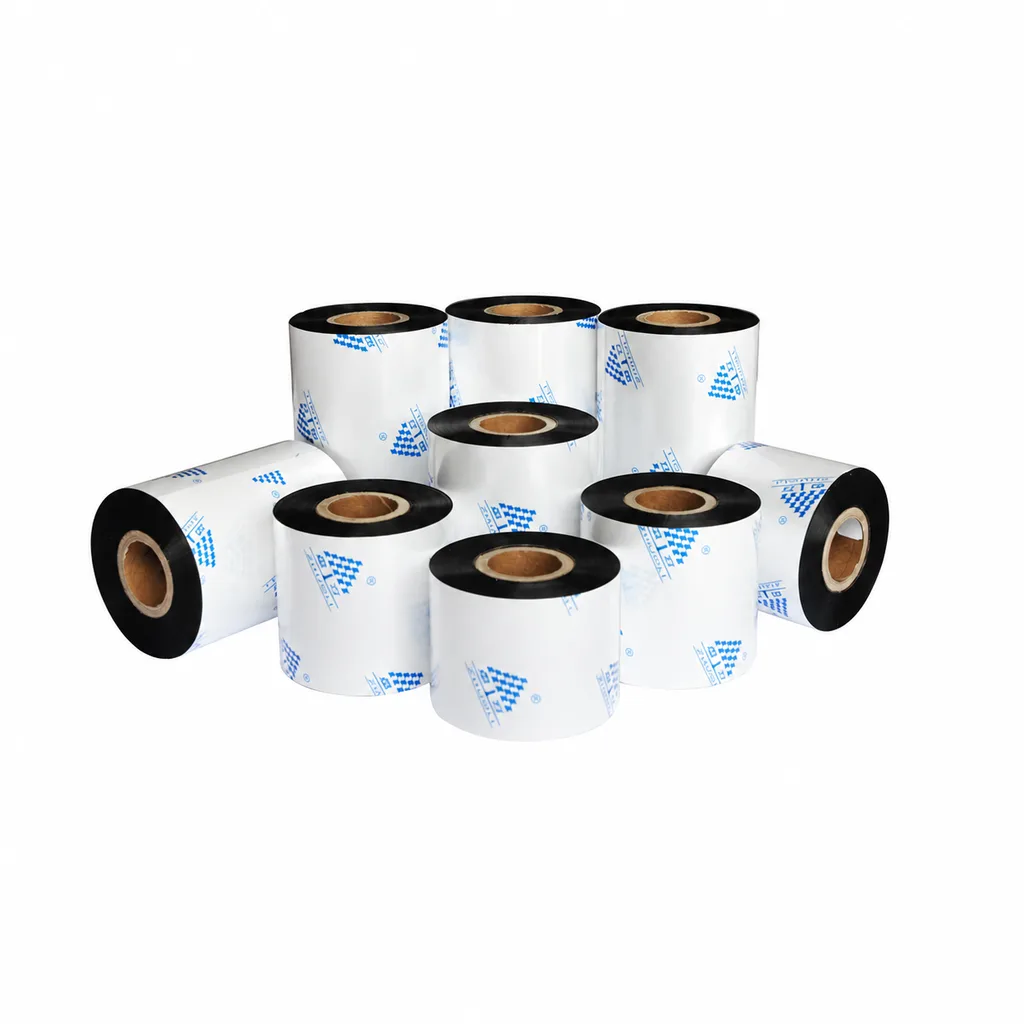
Near-Edge Wax-Resin Thermal Transfer Ribbon CL-Z212 for Barcode Labels
CL-Z212 is a general-purpose black wax-resin thermal transfer ribbon primarily for near-edge barcode printers, with use also described for low- to medium-speed thermal transfer overprinting (TTO). Listed applications include retail labels, garment tags, warehouse identification and packaging printing. Select according to printer type, actual printing speed and substrate: recommended conditions list near-edge printing at ≤10 inches per second (ips) and TTO at ≤20 ips. Print quality and image durability can vary with the printer and printing material, so trial printing on the intended substrate is necessary for selection.
View detailsNeed the right ribbon for your label application?
Share the label material, printer and operating environment. Our team will recommend a tested combination.
