
Marquage Aluminium Haute Température: What High-Temperature Marking on Aluminum Means
Request a solution
- Original TTR manufacturer since 2013
- Automated coating and slitting
- IQC / IPQC / OQC control
- ANSI barcode grade testing
- -20°C to 120°C environmental testing
- Batch-level traceability
- ANSI barcode grade
- Batch traceability
- RoHS / REACH compliance
- SGS and MSDS documents on request
This guide explains the French industrial search term marquage aluminium haute température for buyers of thermal transfer consumables. The term bundles two questions that must be answered separately: how much heat the aluminum item itself tolerates, and what an identification mark must survive when it sits on or near that item. The documented aluminum thresholds come from compressed-gas cylinder rules — 265ºF (130ºC) and 350ºF (175ºC) — while wax and hybrid ribbon catalogs document label stocks such as paper, synthetics and fabrics, not bare metal. You verify any claim in this space by matching a supplier's substrate and temperature evidence against your actual exposure.
Key Takeaways
- Marquage aluminium haute température bundles two separate questions: the heat tolerance of the aluminum item and the durability of the identification placed on it.
- Compressed-gas cylinder rules set fixed exposure thresholds for aluminum cylinders: do not exceed 265ºF (130ºC), retest after exposure between 265ºF (130ºC) and 350ºF (175ºC), and condemn above 350ºF (175ºC).
- Any cylinder exposed to direct fire must leave service because heat degrades the mechanical properties of the metal, regardless of how the surface looks.
- The documented substrates for wax and hybrid thermal transfer ribbons are label stocks — paper, synthetic paper, PP, PET/PVC and garment fabrics — and the compatibility chart lists no aluminum row.
- A temperature range on a ribbon datasheet describes service conditions on specified label materials, not a rating for marking aluminum.
What the Term Marquage Aluminium Haute Température Means for a Buyer
The French phrase marquage aluminium haute température describes identification that is applied to aluminum and must remain readable after exposure to elevated temperatures. Buyers meet the term when they have to identify aluminum parts, tags or equipment that will see heat in service, and when they must judge whether their usual printing consumables still apply. The concept carries three components that belong in any specification: an aluminum item, a temperature exposure with a level and a duration, and an identification mark whose legibility has to outlast that exposure.
Identification on metal splits into two families. The first family forms the mark in the metal surface itself, so the mark endures as part of the surface. The second family prints the mark onto a label or tag stock with a thermal transfer ribbon and attaches that printed carrier to the item, so the mark survives only as long as the print, the ink, the stock and the attachment survive together. The search term alone does not tell you which family your application needs; it only tells you that heat is part of the requirement. Settling that question comes before product selection, because the evidence you demand from a supplier differs completely between the two families.
Where the Documented Temperature Numbers for Aluminum Come From
The best-documented temperature thresholds for aluminum equipment come from compressed-gas cylinder rules, not from printing or ribbon standards. Those rules treat 265ºF (130ºC) as a limit you do not cross: no aluminum cylinder may be exposed to temperatures above it. Suspected exposure between 265ºF (130ºC) and 350ºF (175ºC) does not condemn the cylinder, but the cylinder must pass a hydrostatic retest before it returns to service. Above 350ºF (175ºC), the rules require condemnation under CGA C-6.1, and any cylinder exposed to the direct action of fire must leave service because high temperatures adversely affect its mechanical properties, as 49 CFR 173.34 records.
These numbers matter to a marking discussion for one reason: they show that industry judges heat-exposed aluminum by fixed thresholds rather than by appearance. An identification system mounted on heat-exposed aluminum faces the same environment as the metal beneath it, so its qualification has to be checked against the same exposure level. The thresholds also mark the boundary of what this evidence can tell you. They are written about pressure cylinders, so they prove how aluminum equipment is judged after heat exposure; they say nothing about how a particular mark, ink or adhesive behaves at those temperatures. The second half of the question must be answered by marking and consumable documentation, which is a separate body of evidence.

How This Differs from the Temperature Range on a Ribbon Datasheet
A temperature range printed on a thermal transfer ribbon datasheet describes the service conditions that a finished label tolerates on the label materials documented for that ribbon, not a capability rating for marking aluminum. The distinction matters because both documents use the word temperature for different things. Printhead heat decides how ink transfers onto the stock during printing. The datasheet range describes the environment the finished printed label withstands afterwards, on the specific stocks the supplier has documented. Neither figure speaks to a bare aluminum surface.
The scope of the documented substrates makes this concrete. In the COLORFULTTR wax and wax-resin product catalog, wax ribbons are positioned as the economical option with excellent print density on paper labels, and hybrid ribbons add balanced durability with good performance on synthetic materials. The catalog's compatibility chart maps exactly seven label material families: uncoated paper, coated paper, synthetic paper, matte PP, PET/PVC, nylon taffeta and polyester satin. Aluminum and other bare metals do not appear in the chart, so this catalog documents no ribbon compatibility with the metal itself. Where aluminum meets thermal transfer in practice, the documented path runs through a label or tag stock that is itself qualified for the surface and the temperature — a question about the tag and the ribbon together, never the ribbon alone.
What the Search Term Does Not Tell You
Searching for marquage aluminium haute température does not establish which marking method fits your application, because fit depends on the aluminum item, its real temperature exposure and the legibility life you must guarantee. Treat the term as the start of a specification exercise rather than an answer. Four conclusions in particular do not follow from it.
- A ribbon's documented temperature range on paper or synthetic labels does not transfer to an aluminum surface, because the compatibility evidence behind that range covers label stocks only.
- The 265ºF (130ºC) and 350ºF (175ºC) cylinder thresholds are equipment-safety rules for pressure cylinders, not marking specifications, so they cannot serve as pass or fail criteria for a printed mark.
- Visual condition after heat exposure is not the acceptance criterion for aluminum equipment — cylinder rules trigger on exposure history — so demand exposure-based evidence for marks as well, not appearance checks.
- Catalog-listed performance parameters stay provisional until the supplier confirms them on the current datasheet (TDS) for the exact model you will run, especially when comparing figures across suppliers.
The practical next step is to write down your exposure temperature and duration, your substrate or tag material, and the required legibility life, then ask for the compatibility chart row and the TDS that matches each item. For identification on metal surfaces under heat, start from the guide to high-temperature metal tags below and check which ribbon families the documented evidence supports for the tag stock you plan to print.
Data and Evidence
Documented aluminum exposure thresholds cluster at 265ºF (130ºC) and 350ºF (175ºC), with each band carrying a different required action. The table below lists each threshold with its scope conditions. All four rules are written about compressed-gas cylinders, so they evidence how industry judges heat-exposed aluminum equipment, not how marks behave.
| Exposure condition | Documented requirement | Basis |
|---|---|---|
| Above 265ºF (130ºC) | Do not expose any aluminum cylinder to these temperatures | Compressed-gas cylinder guidance |
| Between 265ºF (130ºC) and 350ºF (175ºC) | Hydrostatic retest required before return to service | Compressed-gas cylinder guidance |
| Above 350ºF (175ºC) | Condemn and remove from service | CGA C-6.1 |
| Direct action of fire | Remove from service; mechanical properties adversely affected, may fail under pressure | 49 CFR 173.34 |
Sources: aluminum exposure thresholds per compressed-gas cylinder guidance citing CGA C-6.1 and 49 CFR 173.34; substrate scope per the COLORFULTTR wax and wax-resin product catalog.
On the consumable side, the evidence base is that same catalog. Its Common Label Material Compatibility Chart documents seven label material families — uncoated paper, coated paper, synthetic paper, matte PP, PET/PVC, nylon taffeta and polyester satin — and contains no row for aluminum or any bare metal. Before ordering, verify each figure three ways: confirm the chart row for your exact stock, ask for the current TDS for the exact model, and match the documented service range against your measured exposure rather than a catalog headline.
Frequently Asked Questions
How much heat can an aluminum cylinder take before it must be condemned?
Under compressed-gas cylinder rules, any aluminum cylinder exposed or suspected of exposure above 350ºF (175ºC) must be condemned and removed from service per CGA C-6.1. Suspected exposure between 265ºF (130ºC) and 350ºF (175ºC) requires a hydrostatic retest before return to service, and 265ºF (130ºC) is the documented limit not to exceed in the first place.
Does a thermal transfer ribbon's temperature range mean it can mark aluminum at high temperature?
No. The range describes the service conditions a finished label tolerates on the label materials documented for that ribbon. The compatibility chart in the COLORFULTTR catalog covers paper, synthetic paper, PP, PET/PVC and garment fabrics, with no aluminum row, so the documented evidence does not extend to marking the metal itself.
Can I print on aluminum parts with a wax or hybrid ribbon if the labels only see moderate heat?
Not on the bare metal on the documented evidence: the compatibility chart assigns wax and hybrid ribbons to label stocks such as coated paper, synthetic paper, matte PP and PET/PVC, and lists no substrate row for aluminum. The documented route is a label or tag stock qualified for the surface and the exposure, printed with a ribbon whose chart row covers that stock.
Is aluminum equipment still usable after a fire if it looks undamaged?
Cylinder rules say no: any cylinder exposed to the direct action of fire must be removed from service, because high temperatures adversely affect its mechanical properties and it may fail under pressure (49 CFR 173.34). Exposure history, not appearance, is the acceptance criterion.
Do continuous heat and short heat spikes affect aluminum equipment differently?
The documented cylinder rules trigger on exposure level and suspicion rather than on a stated duration: exposure above 265ºF (130ºC) leads to retest or condemnation depending on the band, and direct fire exposure removes the cylinder from service outright. Because the rules act on "exposed or suspected of having been exposed", treat any suspected excursion past those levels as significant and record both level and duration in your own specification.
Related Products & Guides
Recommended products for this industry

Aluminum Foil High-Temperature Label
Coated aluminum label for metal processing, heat treatment and high-temperature part…
View details
Anti-Static High-Temperature Polyimide Label
Anti-static polyimide label for ESD-sensitive electronics assembly and high-temperature…
View details
Black High-Temperature Polyimide Label
Matte-black polyimide label for high-contrast codes on dark electronics and industrial…
View details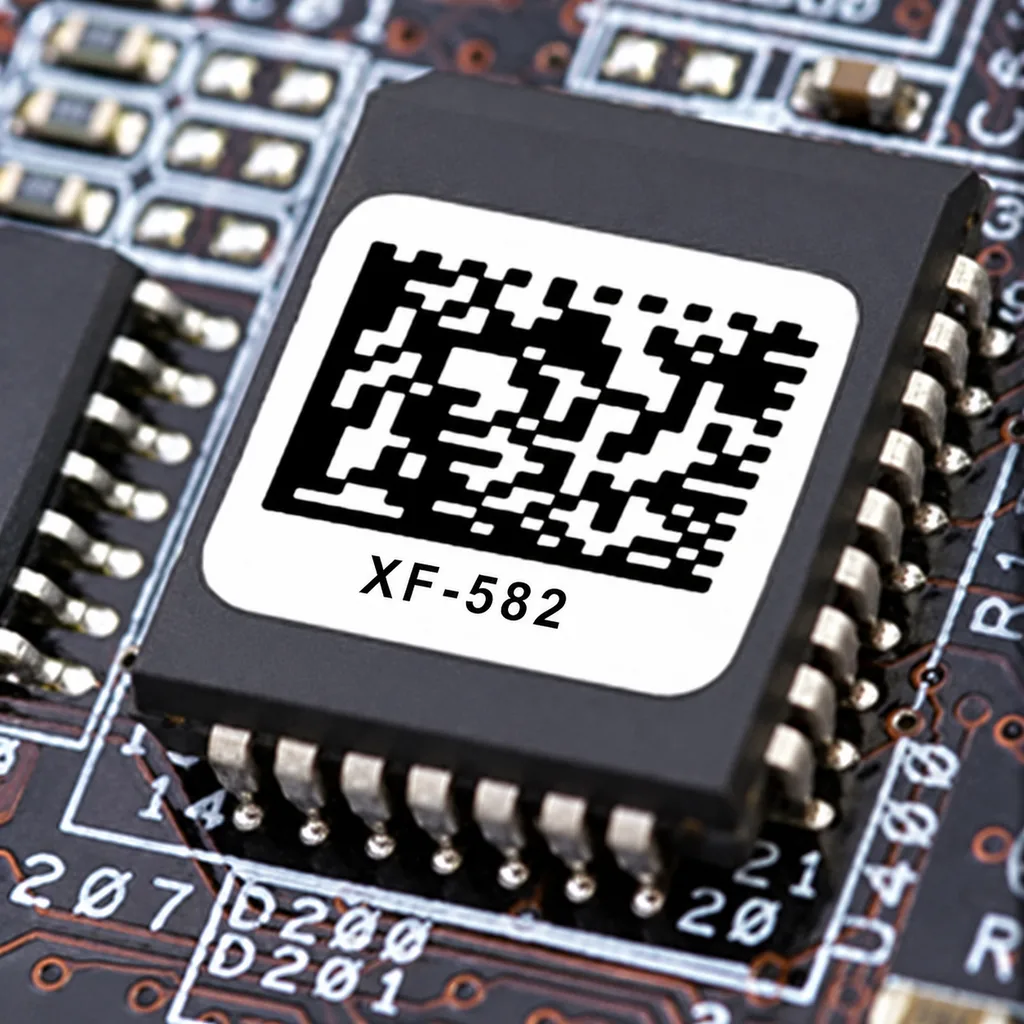
CL-582 High-Temperature Polyimide Labels for Printed Circuit Board Traceability
CL-582 is a high-temperature polyimide (PI) label material for printed circuit board (PCB) and sensitive electronic component process control and product traceability. It has a gloss white coating, a listed thickness of 2mil and an acrylic adhesive. The source identifies wave soldering and reflow soldering as applications. Selection requires confirmation of the actual heat exposure and chemical conditions: the listed temperature range has no specified exposure duration, and solvent resistance is qualitative.
View detailsNeed the right ribbon for your label application?
Share the label material, printer and operating environment. Our team will recommend a tested combination.
