
Colour Thermal Transfer Ribbon Manufacturers: What the Term Means
Request a solution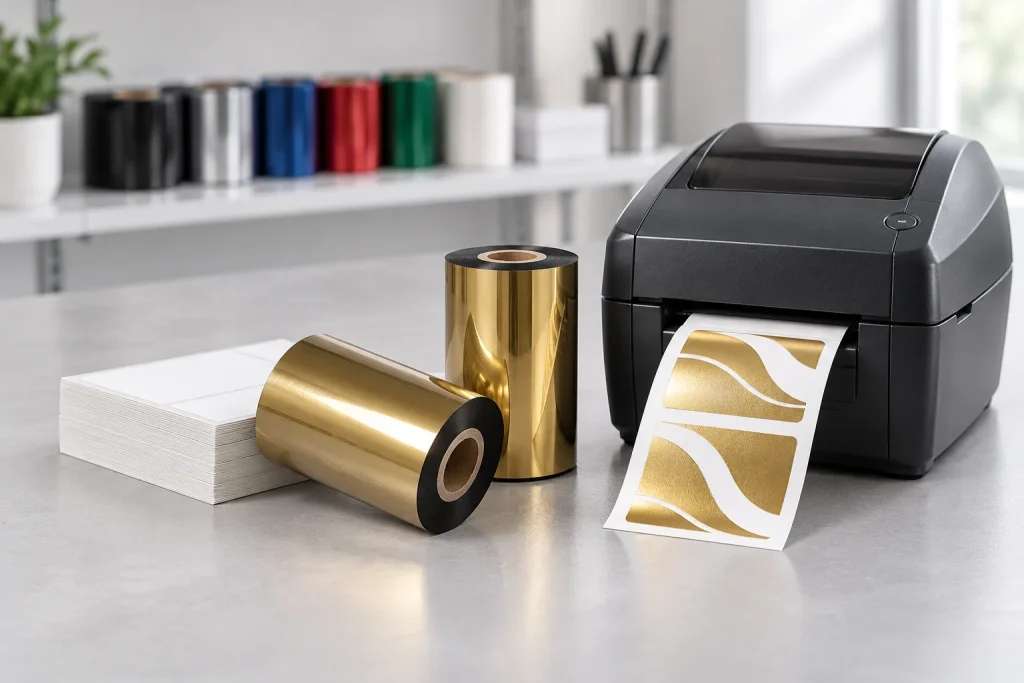
- Original TTR manufacturer since 2013
- Automated coating and slitting
- IQC / IPQC / OQC control
- ANSI barcode grade testing
- -20°C to 120°C environmental testing
- Batch-level traceability
- ANSI barcode grade
- Batch traceability
- RoHS / REACH compliance
- SGS and MSDS documents on request
A colour thermal transfer ribbon manufacturer produces the ribbon consumable used to transfer coloured ink onto label material. For buyers and print technicians, the useful distinction is between the ribbon’s colour, its ink formulation and the printer system it serves. A manufacturer’s colour range identifies available options; the product specification and a trial on the intended material establish whether an option fits the job.
Key Takeaways
- Thermal transfer printing uses heat and pressure to transfer information from a coated ribbon onto a label.
- Colour and ink formulation are separate characteristics: gold ribbons, for example, appear in wax, wax/resin and resin versions.
- COLORFULTTR documents ribbon research, production and sales, with a production chain covering raw materials, coating, slitting and finished products.
- The company’s 12-colour label-ribbon line consists of single-colour ribbons; card ribbons are a separate product category.
- A colour name or OEM package does not establish compatibility with a particular printer and label material.
What a colour thermal transfer ribbon manufacturer makes
A colour thermal transfer ribbon manufacturer makes coated printing consumables, and the term describes the ribbon rather than a finished printed label. The French phrase fabricant de ruban transfert thermique couleur refers to this supplier category. For a business printing its own labels, the output being discussed is the roll loaded into the printer.
A ribbon normally has a polyester film carrying wax-based, resin-based or mixed ink on one side. The other side carries a lubricating coating intended to protect the printhead. During printing, heat and pressure transfer the text or barcode information from the ribbon onto the label. This construction explains why the ribbon and the receiving material need to be considered together.
Direct thermal printing is an adjacent but different process: it uses direct thermal paper without a ribbon. A search for coloured thermal transfer consumables should therefore begin with the printing mode. A printer running in direct thermal mode is not using the consumable described here.
COLORFULTTR’s company profile describes the business as a thermal transfer ribbon research, production and sales manufacturer. It also records colour, width, length and packaging customisation. Those statements describe the company’s activity and supply scope; they do not specify which ribbon should be loaded into every printer. Keep the manufacturer’s identity separate from the technical identity of the individual roll.

Why colour, ink family and printing system are different descriptions
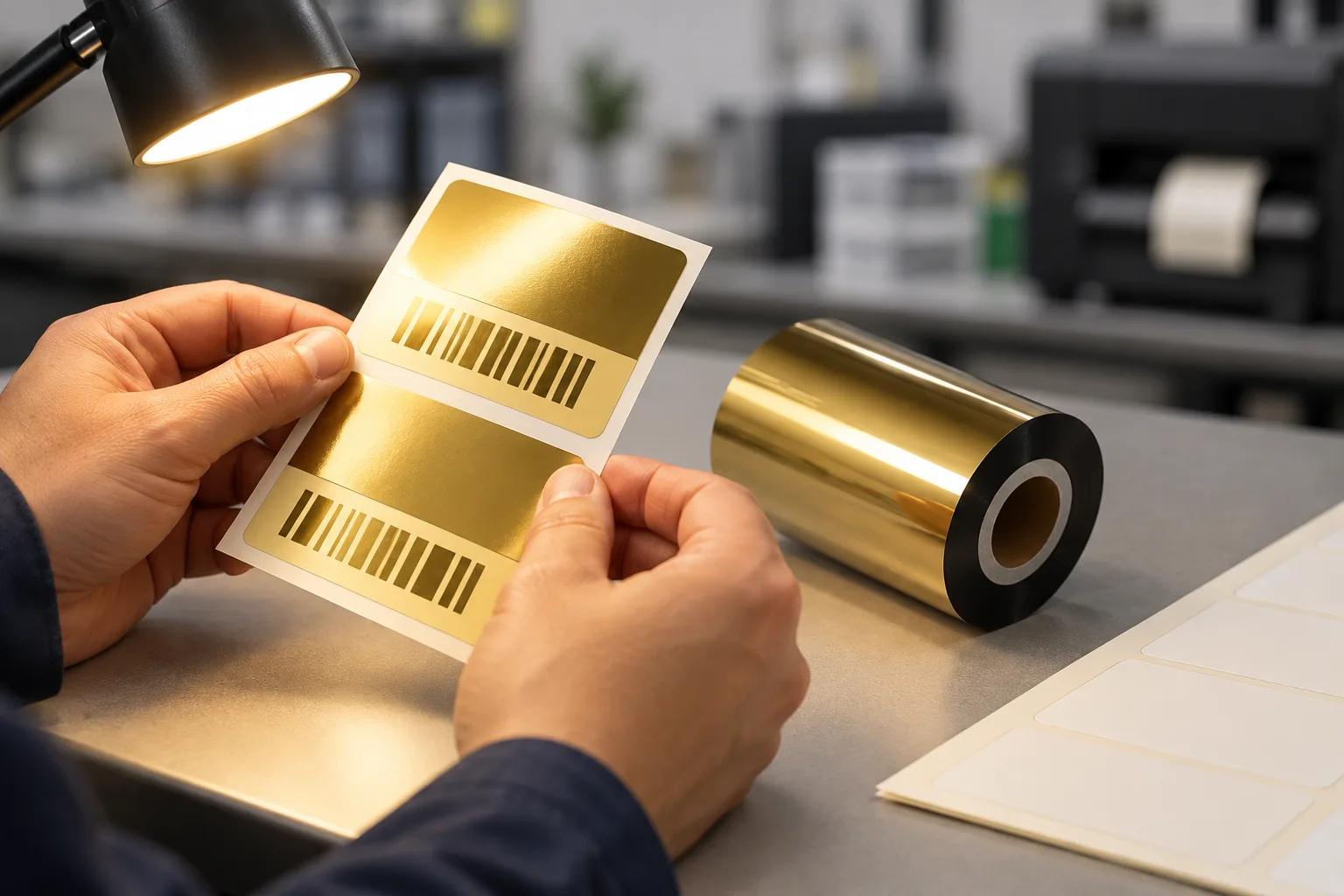
A ribbon’s colour does not identify its ink family, as COLORFULTTR’s gold range illustrates. The product matrix lists matte-gold enhanced wax, bright-gold wax/resin and special resin versions. Two rolls described simply as “gold thermal transfer ribbon” may therefore refer to different formulations and finishes.
The matrix organises the wider range into wax, wax/resin, resin and wash-care resin. It describes wax as economical and requiring low printing temperature, but with limited scratch resistance. Wax/resin combines print quality with durability and friction resistance. These are category descriptions, useful for understanding the terminology rather than approving a particular colour on an untested material.
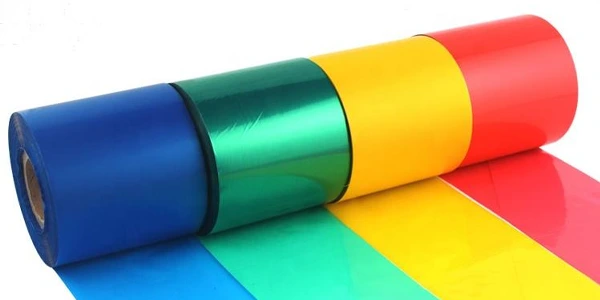
The company lists black, gold, silver, grey, white, red, blue, green, yellow, orange, brown and purple colour families. This list does not form a promise that every colour is available in every ink family. Read the model entry for the actual combination instead of treating the range as a complete colour-by-formulation grid.
The 12-colour label line is described as single-colour ribbons. Card ribbons appear separately in the matrix, with monochrome and colour versions. TTO is another separately specified line. These distinctions matter when interpreting a supplier’s catalogue: the shared word “colour” does not make label ribbons, card ribbons and TTO ribbons one interchangeable product.
What manufacturing scope explains about the finished roll
Ribbon manufacturing includes formulation, coating and slitting, according to COLORFULTTR’s production document. The company profile describes its own chain as covering raw materials through coating and slitting to finished products. This is more informative than using the word “manufacturer” without explaining the stages behind it.
Coating explains the ribbon’s layered construction, while slitting gives the roll its specified width. The production document identifies width stability, winding tension and roll flatness as quality concerns. For example, excessive tension can damage the PET base film, while insufficient tension can cause wrinkles. These are production-control considerations, not a diagnosis of every printing defect observed at a customer’s site.
Packaging answers a different question. COLORFULTTR documents neutral packaging with the model on the core, branded leader packaging, blank packaging without a logo or model marking, and customer-specific packaging. It also supports OEM/ODM supply. A label on the box should therefore be considered alongside the product specification and the supplier’s stated manufacturing scope.
For a buyer changing suppliers, compare the specification of the proposed ribbon with the existing job requirements. Request clarification about the production stages that matter to your evaluation, rather than relying on packaging appearance as evidence. A documented manufacturing chain explains where the consumable comes from; the product record and application trial answer whether it serves the intended printing task.
What a colour range cannot establish about compatibility
Printer compatibility depends on more than a colour listing, and COLORFULTTR’s compatibility document treats coloured ribbons according to their wax, wax/resin or resin formulation. The document lists the single-colour line for the JT desktop and Q light-industrial series, subject to the corresponding formulation category.
The same document excludes TTO near-edge ribbons from those flat-head printer series. That is a specific system distinction, not a reason to make a universal claim about every coloured ribbon or every printer brand. Identify the printer system first, then read the specification for the relevant roll.
When comparing an alternative supplier’s ribbon, ask for the precise formulation, model, colour and finish. Also record the printer model, intended label material, ribbon width, roll length, core arrangement and ink-side orientation. These details turn a broad supplier description into a specification that can be checked. A matching colour name alone does not resolve the remaining questions.
For the application trial, use the intended label stock and print content, and agree what the result needs to show. Compare the printed appearance with the requested colour and assess the handling or exposure relevant to the job. Record the conditions with the result. Avoid turning a satisfactory sample into a claim about unrelated label materials, printer systems or durability conditions.
Data and Evidence
COLORFULTTR’s current product matrix distinguishes gold ribbon options by both ink family and finish, providing a concrete example of why colour alone is incomplete.
| Ink family | Listed gold models | Published description | What to establish next |
|---|---|---|---|
| Wax | CL900GD | Enhanced wax, matte gold | Whether the specified finish and formulation fit the intended label |
| Wax/resin | CL905GD / CL915GD | Bright gold | Which model is proposed for the application |
| Resin | CL506GD / CL508GD | Special resin | The specific material and use conditions to evaluate |
Source: 公司现行产品矩阵(2026-10-02校订), gold entries. The table reports catalogue descriptions rather than comparative test results. Manufacturing scope and ribbon construction are documented in 公司简介-2025 and 生产工艺与品质-2025; the JT/Q and TTO distinction comes from 公司打印机介质兼容性与材质规格(已审第一方来源).
The matrix lists standard barcode-ribbon samples at 110 mm × 10 m and permits sample width to be slit to the customer’s requirement. Treat this as the listed sample format, rather than a universal printer loading specification. Confirm a suitable roll format before arranging the trial.
Your next step is to write one application record containing the printer, label stock, requested colour and finish, proposed ribbon model and roll format. Use that record to compare the catalogue entry with the sample result before approving the consumable for your own printing.
Frequently Asked Questions
Does a colour thermal transfer ribbon mean full-colour label printing?
The colour range discussed here consists of single-colour ribbons. COLORFULTTR lists card ribbons separately, including monochrome and colour versions, so a colour label-ribbon listing should not be read as a specification for full-colour card printing.
Are gold thermal transfer ribbons available in wax, wax/resin and resin?
COLORFULTTR’s product matrix lists CL900GD as an enhanced wax ribbon in matte gold, CL905GD / CL915GD as bright-gold wax/resin ribbons, and CL506GD / CL508GD as special resin ribbons. Gold therefore identifies a colour family rather than one ink formulation.
Does OEM packaging prove who coated a thermal transfer ribbon?
Packaging alone does not establish the production stages behind a ribbon. COLORFULTTR documents OEM/ODM supply and several packaging formats, while its company profile separately describes a production chain covering raw materials, coating, slitting and finished products.
What sample size is listed for a standard barcode ribbon?
COLORFULTTR’s current product matrix lists a standard barcode-ribbon sample of 110 mm × 10 m, with sample width available for slitting to the customer’s requirement. Confirm the printer’s roll and core requirements before arranging a trial.
Related Products & Guides
Recommended products for this industry
Silver Thermal Transfer Colour Washable Resin Printer Ribbon
High-performance silver thermal transfer washable resin ribbon, specifically designed for…
View details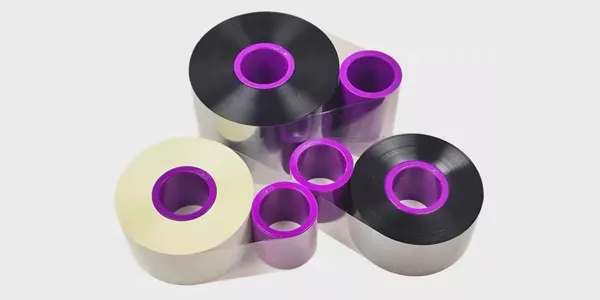
TTO Barcode Printer Thermal Transfer Colour Ribbon High-Speed Customisation
This TTO thermal transfer ribbon is suitable for a variety of label materials across…
View details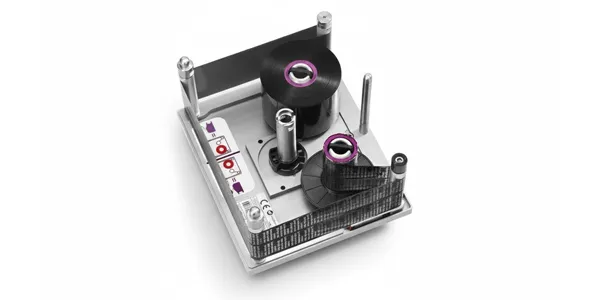
TTO Ribbon Printer High-Speed Customisation Model with Thermal Transfer Colour Ribbon
Highly durable TTO thermal transfer ribbons engineered for high-speed packaging lines…
View details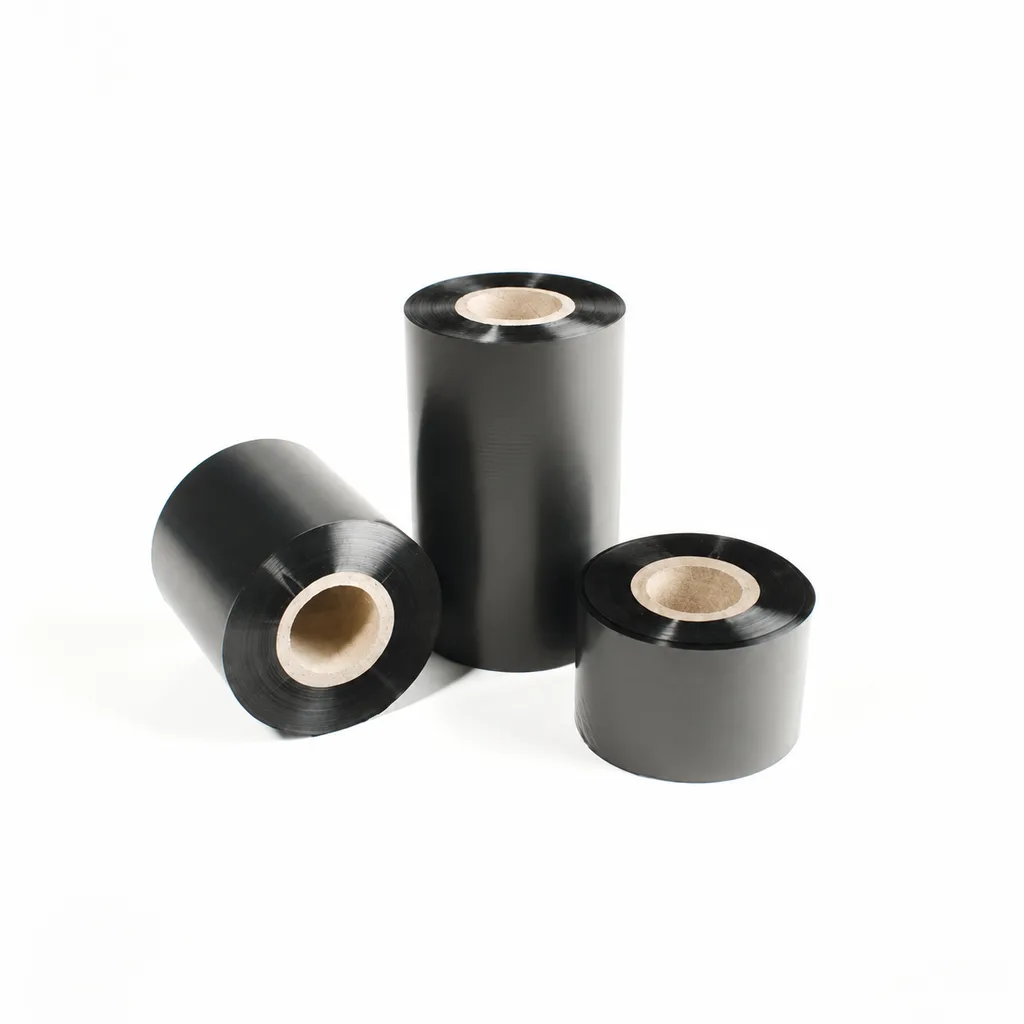
CL-Z112 Enhanced Wax Thermal Transfer Ribbon for Paper Labels and Tags
An enhanced wax thermal transfer ribbon with black ink for paper labels and tags used in retail, warehousing and logistics. It is specified for flat-head printing on desktop or industrial barcode printers at ≤8 inches per second (ips). Select it by checking the actual label material, printer configuration and handling conditions: image-quality, rub-resistance and cold-chamber results were obtained on coated paper, and print quality and image durability may vary with the printer and print medium.
View detailsNeed the right ribbon for your label application?
Share the label material, printer and operating environment. Our team will recommend a tested combination.
