
Definition of Retail Labels: Choose Consumables for In-House Printing
Request a solution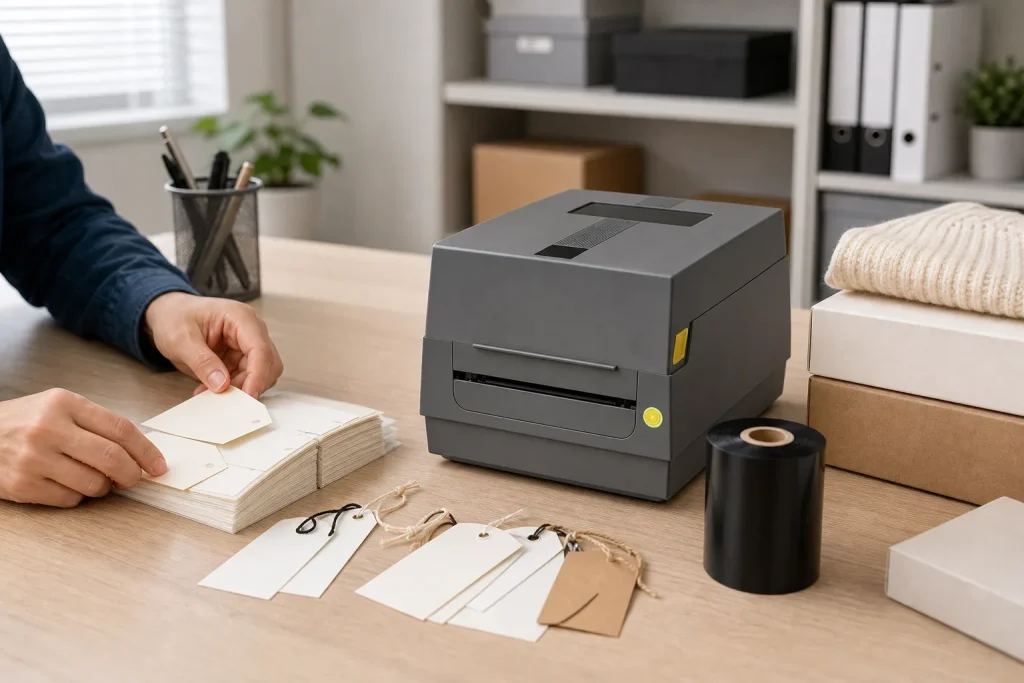
- Original TTR manufacturer since 2013
- Automated coating and slitting
- IQC / IPQC / OQC control
- ANSI barcode grade testing
- -20°C to 120°C environmental testing
- Batch-level traceability
- ANSI barcode grade
- Batch traceability
- RoHS / REACH compliance
- SGS and MSDS documents on request
For buyers planning in-house printing, retail labels are labels or tags used for retail tasks such as displaying prices and carrying barcodes. Choose thermal transfer consumables by the label stock, expected handling, and printer requirements: paper under normal handling points toward wax, while more demanding use calls for evaluating wax-resin or resin. Confirm the choice with a sample printed on your intended equipment and assessed under the conditions the label will face.
Key Takeaways
- Retail labeling includes price tags and barcode labels; the application name alone does not specify a ribbon grade.
- Wax ribbons are primarily formulated for coated and uncoated paper labels under normal handling.
- Wax-resin ribbons cover coated paper and synthetic stocks when handling demands exceed the intended role of wax.
- Printer details and actual exposure conditions belong in the purchase brief before a sample is approved.
Define the retail label you need before selecting consumables
Retail labels include price tags and barcode labels used in retail applications. That is the practical definition of retail labels for this buying decision: it identifies what the label does, while the material and printing requirements still need to be specified. A request for “retail labels” therefore needs more detail before it can become a useful thermal transfer consumables order.
Start by describing the information you intend to print. Is the task a retail price label, a barcode label, or a product tag? Keep that intended use in the brief, then add the label stock and the handling conditions. Avoid making the ribbon choice from the label's name alone. The supplied industry material identifies retail price and barcode applications, while BIS Labels distinguishes ribbon families by substrate and exposure.
For example, use a paper price label with normal handling as a starting point for evaluating wax. If the proposed product label will be handled repeatedly on a retail shelf, include wax-resin in the sample comparison. These are candidate selection paths, not a promise that an unspecified ribbon will work in your printer.
Keep shipping labels separate in the brief when goods will also move through a retailer's receiving process. Commport describes trading-partner-specific zone requirements for retail shipping labels. Ask for the receiving partner's current label instructions rather than carrying a price-label layout into that task.
Match ribbon grade to stock and handling
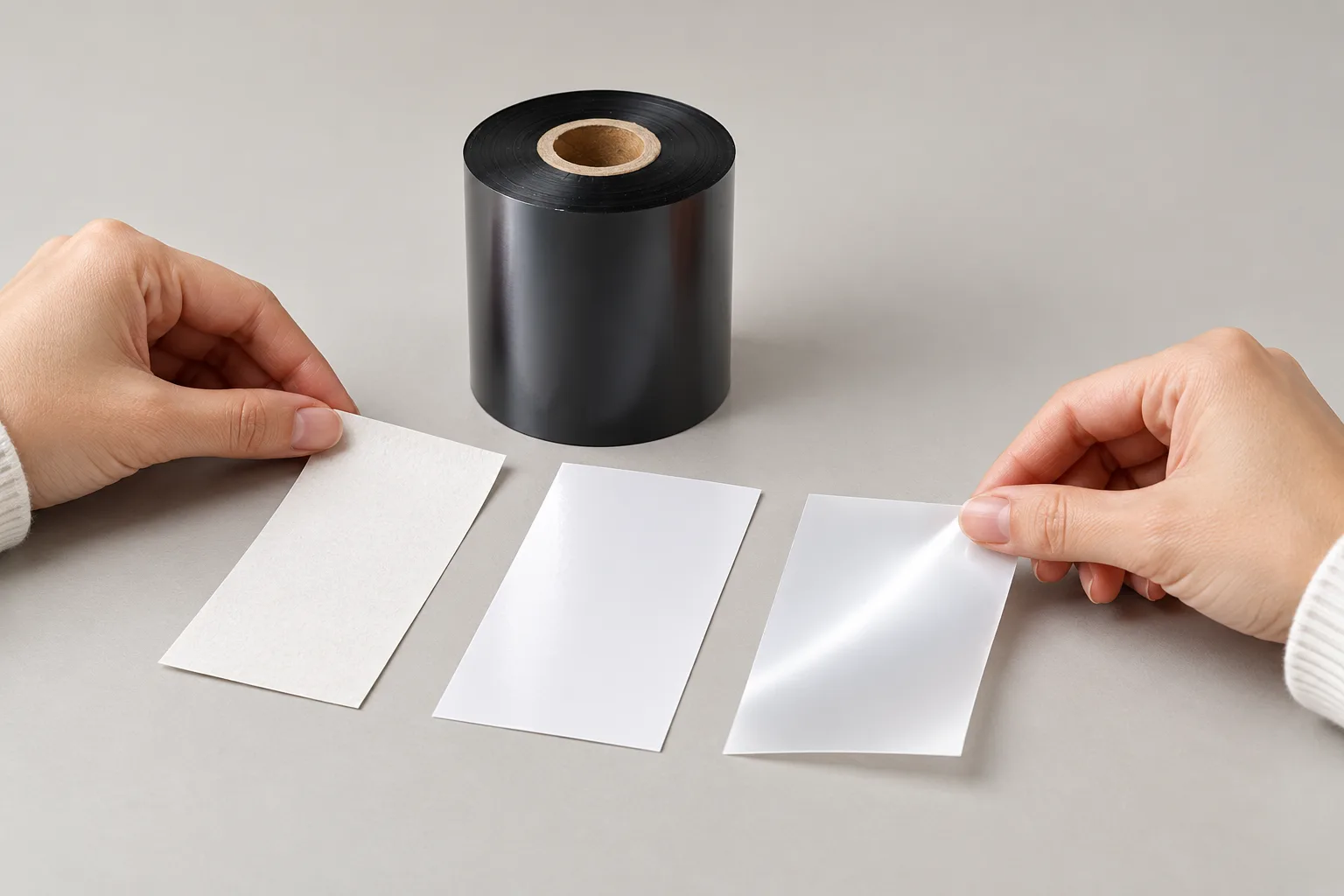
Wax, wax-resin, and resin address different material and durability needs in the BIS Labels guidance. Begin with the stock you plan to print, then decide how much exposure the printed information must tolerate. This order keeps a familiar ribbon name from becoming the whole specification.
For coated or uncoated paper with little beyond normal handling, evaluate wax first. BIS Labels places wax in that setting, and Able Label describes its wax products as an economical option for everyday paper labeling, including retail price labeling. The tradeoff is durability; use the paper application as the reason to test wax, rather than assuming that an economical option covers every retail environment.
For coated paper or synthetic stock that will receive more handling, evaluate wax-resin. BIS Labels specifically includes repeatedly handled retail shelf labels in its wax-resin examples. This offers a practical middle path where wax is not durable enough but the application does not call for full resin-level chemical resistance.
For synthetic labels facing chemicals, heat, or extended outdoor exposure, evaluate resin against the stated exposure. Keep the recommendation attached to those conditions. Do not turn the resin category into an unqualified promise of resistance for every chemical or temperature. Ask the supplier to identify a candidate for your stock and exposure, then approve the actual printed sample.
Confirm the printer and approve a representative sample
Printer details are part of thermal transfer ribbon selection, as Vivid Data Group's guidance makes clear. Record the printer identity before requesting consumables, and ask the supplier to confirm the proposed combination against that equipment. A ribbon family's suitability for a material is only part of the buying decision.
Use a short approval sequence so a purchasing team can see why a candidate was accepted:
- Prepare the brief. State the retail task, printer, exact label stock, intended handling, and relevant exposure. Include the information or barcode you plan to print.
- Request a matched candidate. Ask for a wax, wax-resin, or resin sample based on those conditions. If conditions are uncertain, request a comparison rather than approving a bulk purchase by grade name.
- Print the intended content. Use the equipment and stock proposed for regular production, following the equipment and consumable instructions.
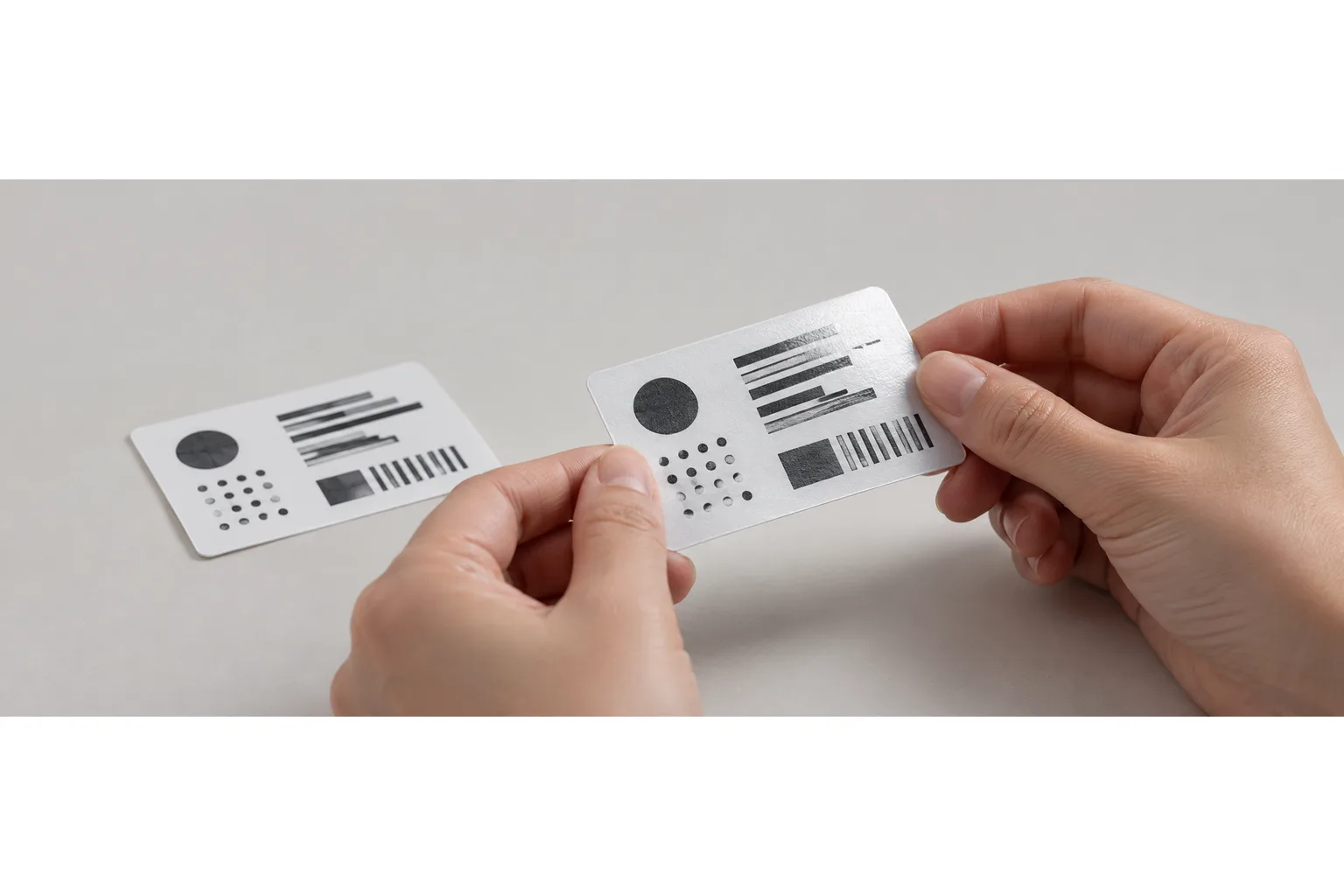
- Check the result. Inspect the text and, where applicable, check the barcode with the equipment used in your workflow. Assess legibility after representative handling and relevant exposure.
- Resolve a failed sample. If the initial print is unacceptable, confirm the equipment and consumable match before changing ribbon family. If the image is acceptable initially but fails your handling check, return the observed failure and conditions to the supplier for another candidate.
Record your acceptance criteria before comparing samples. Keep the approved stock and ribbon identity with the result, so a later order refers to the tested combination rather than a broad retail-label description.
Data and Evidence
The available evidence supports ribbon-family selection by substrate and exposure, rather than universal operating settings. The table separates the documented application guidance from the checks a buyer should make before ordering. BIS Labels provides the material and handling distinctions; Able Label adds an everyday paper-labeling cost perspective.
| Candidate | Documented selection basis | Tradeoff or boundary | Sample check to request |
|---|---|---|---|
| Wax | Coated and uncoated paper labels with normal handling; Able Label includes retail price labeling among its economical paper applications. | BIS Labels identifies durability as the tradeoff. | Check the intended print on the selected paper after normal handling. |
| Wax-resin | Coated paper and synthetic stocks; repeated retail shelf handling is an example. | The guidance concerns added handling durability without a need for full resin-level chemical resistance. | Compare legibility before and after the handling and moderate moisture relevant to your task. |
| Resin | Synthetic labels facing chemicals, heat, or extended outdoor exposure. | The category guidance does not specify a universal exposure limit for a particular product. | Request a candidate and sample assessment tied to the actual exposure. |
Use this comparison to narrow a sample request, not to set printer temperature or speed. The supplied guidance does not establish numerical operating settings or pass limits for your printer and label combination. Obtain those details for the proposed consumables and set acceptance criteria around your intended use.
Your next step is to send the printer identity, label-stock details, intended print, and exposure description with a sample request. Approve the combination only after recording the result of the checks that matter in your retail workflow.
Frequently Asked Questions
Does a retail label always need a thermal transfer ribbon?
The term retail label describes an application, so it is not enough to specify a ribbon purchase. This guide addresses thermal transfer self-printing; confirm your printer's printing method before selecting consumables.
Should I order resin ribbon just because my label uses synthetic stock?
Do not choose by the word synthetic alone. BIS Labels describes wax-resin use on synthetic stocks as well as coated paper; its resin guidance concerns synthetic labels facing chemicals, heat, or extended outdoor exposure.
Can a retail price label specification also cover shipping labels?
Treat shipping requirements as a separate check. Commport describes trading-partner-specific zones for retail shipping labels, so obtain the receiving partner's requirements before approving that layout.
Recommended products for this industry
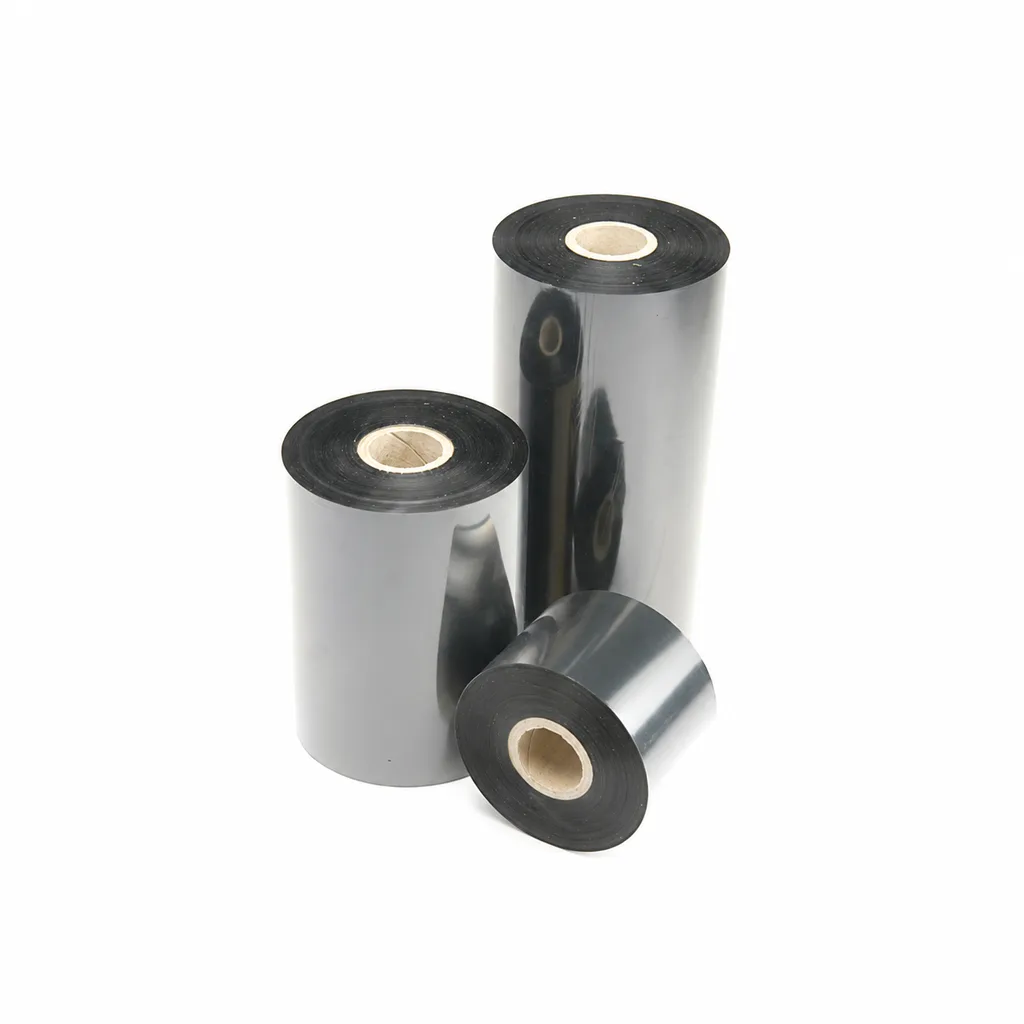
CL-Z213 Near-Edge Wax-Resin Thermal Transfer Ribbon for Barcode Labels
An enhanced black near-edge wax-resin thermal transfer ribbon for near-edge barcode printers and low- to medium-speed thermal transfer overprinting (TTO). Listed applications include retail labels, warehousing, garment tags and packaging identification. Match the printer, actual print medium and operating speed before selection: print quality and image durability can vary with the printer and substrate.
View details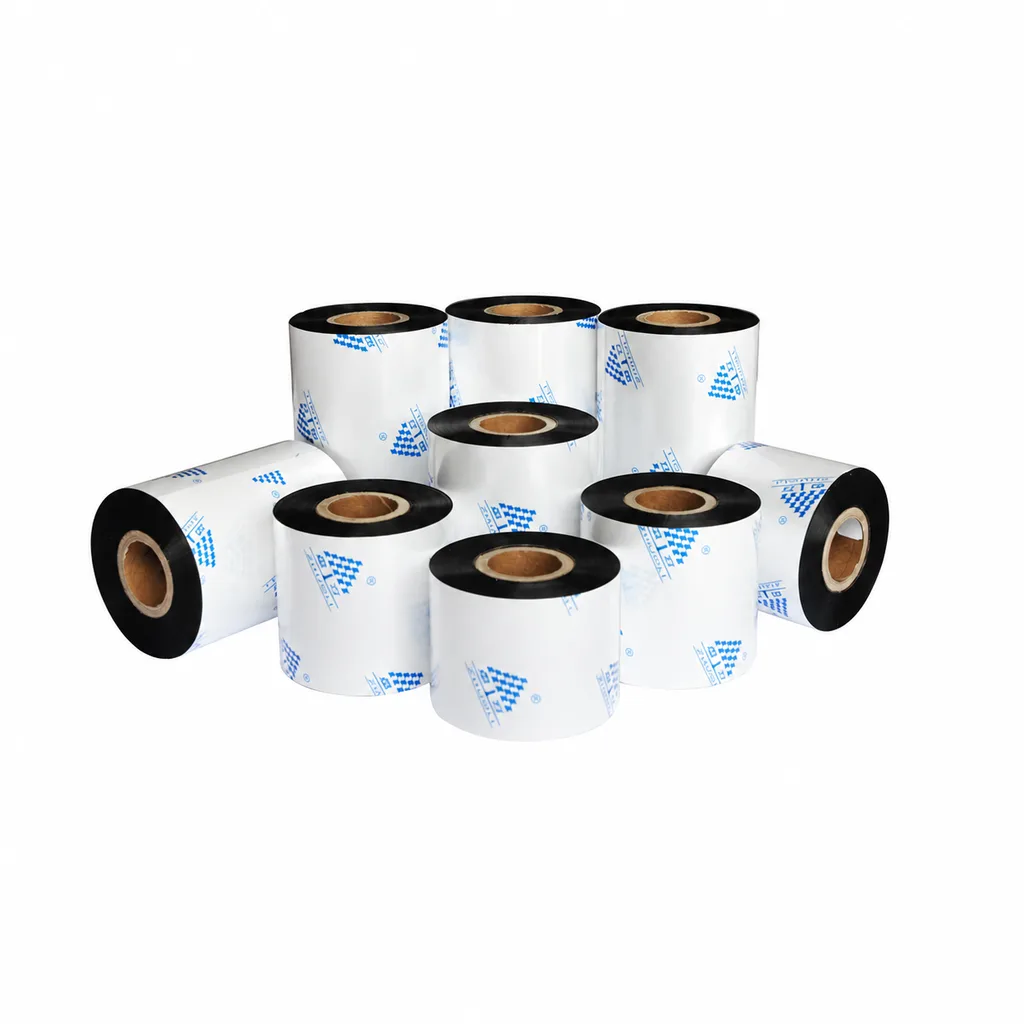
Near-Edge Wax-Resin Thermal Transfer Ribbon CL-Z212 for Barcode Labels
CL-Z212 is a general-purpose black wax-resin thermal transfer ribbon primarily for near-edge barcode printers, with use also described for low- to medium-speed thermal transfer overprinting (TTO). Listed applications include retail labels, garment tags, warehouse identification and packaging printing. Select according to printer type, actual printing speed and substrate: recommended conditions list near-edge printing at ≤10 inches per second (ips) and TTO at ≤20 ips. Print quality and image durability can vary with the printer and printing material, so trial printing on the intended substrate is necessary for selection.
View details
Acid and Alkali Resistant Label
Chemical-resistant label construction for acid baths, paint-stripping solutions, alkali…
View details
Aluminum Foil High-Temperature Label
Coated aluminum label for metal processing, heat treatment and high-temperature part…
View detailsNeed the right ribbon for your label application?
Share the label material, printer and operating environment. Our team will recommend a tested combination.
