
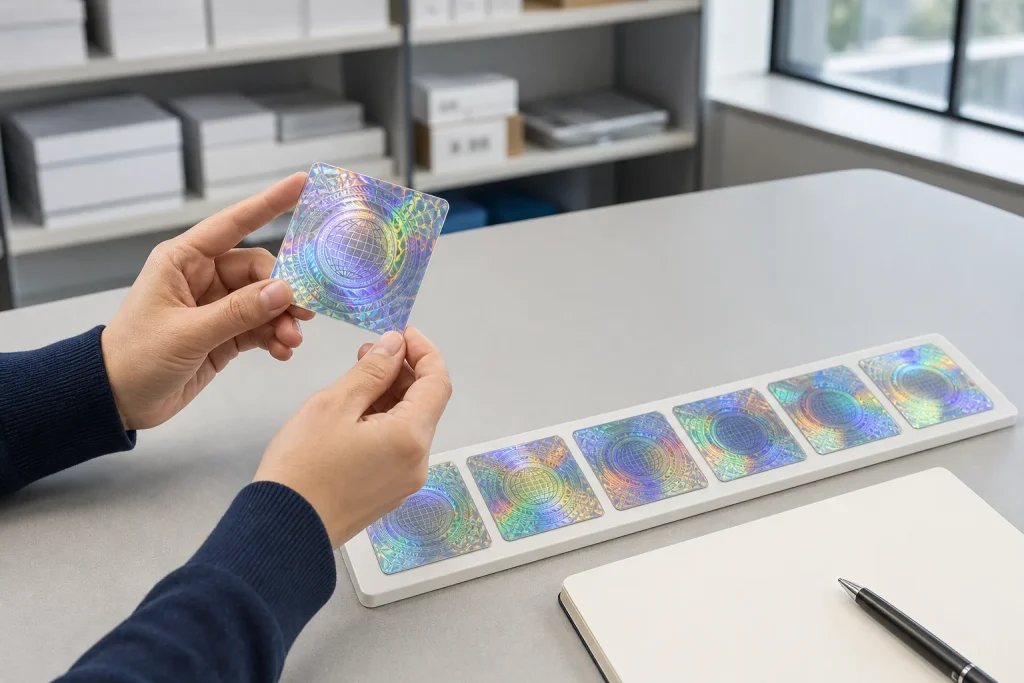
- Original TTR manufacturer since 2013
- Automated coating and slitting
- IQC / IPQC / OQC control
- ANSI barcode grade testing
- -20°C to 120°C environmental testing
- Batch-level traceability
- ANSI barcode grade
- Batch traceability
- RoHS / REACH compliance
- SGS and MSDS documents on request
Key Takeaways
- Overt security features are the easily visible elements of a hologram label: holographic images, 3D effects, and serialization.
- Overt features are designed to be eye catching and to serve as clear indications that a product is genuine.
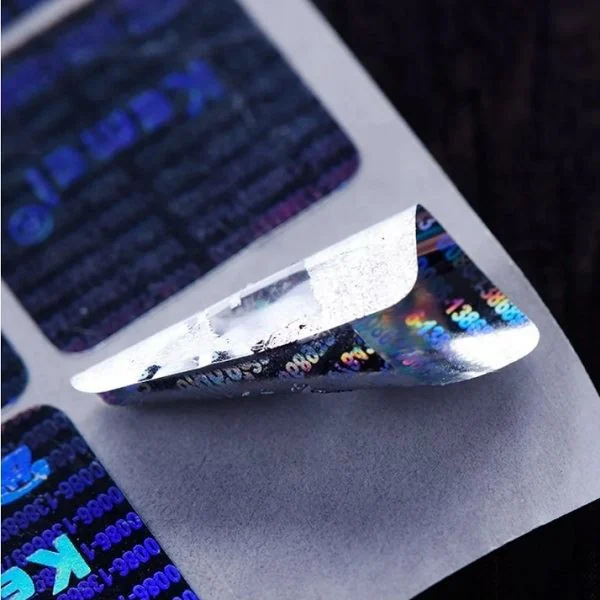
- Visual tamper evidence on security labels has historically come from VOID patterns, holograms, and destructible films.
- Current designs pair overt visual cues with covert digital verification, so choose your feature mix based on who verifies the label.
- Confirm every overt feature on samples before ordering, and test in-house serial number printing on the actual label material first.
Identify the Overt Security Characteristics on a Hologram Label
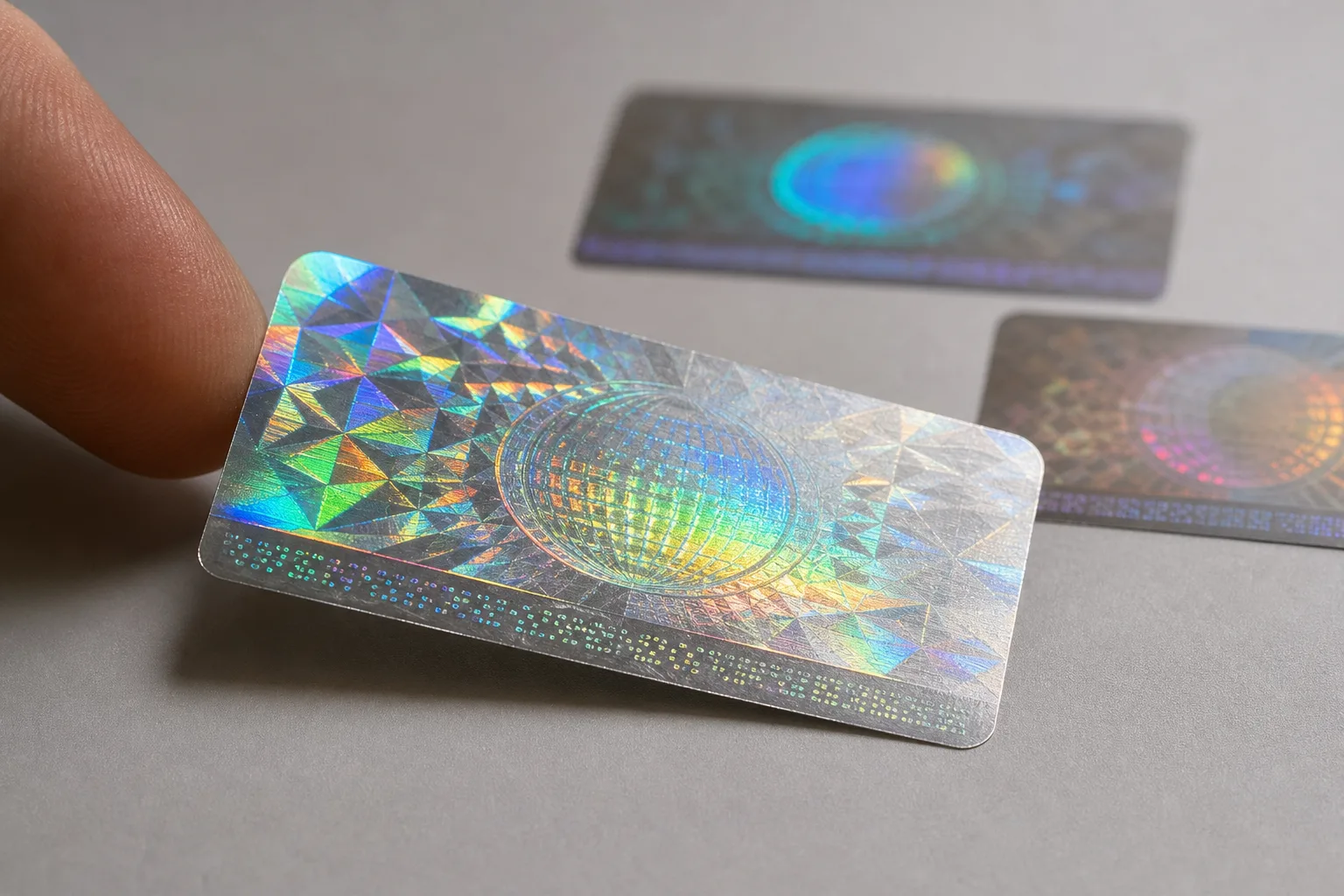
Every security feature on a hologram label is either overt or covert, and tamper evident and security features are critical in a hologram label design. Overt features are the easily visible ones: holographic images, 3D effects, and serialization. They are meant to be eye catching and to act as clear indications that a product is genuine, which means your customers can authenticate the product themselves, at the shelf, with no equipment.
When you evaluate a candidate label, check three groups of overt characteristics:
- Holographic images. The visible hologram artwork on the label face.
- 3D effects. Depth in the holographic image that is visible to the unaided eye as you tilt the label.
- Serialization. Readable serial numbers that turn the label into a checkable data point.
Around these sits the tamper-evidence layer, which security labels have delivered historically as VOID patterns, holograms, or destructible films. Treat the two layers separately when you specify: one visible feature that signals a genuine product, and one tamper-evidence form that surfaces mishandling. Specify both checks rather than choosing between them.
Choose Between Overt-Only and Hybrid Security Labels
Overt features carry the checks that untrained people perform, because they are easily visible by design. They answer the question a customer actually asks at the shelf: does this look genuine? The covert side of the same design is the hidden layer, and in current hybrid designs it takes the form of digital verification layered under the visible cues, because the category has evolved into an architecture that combines overt visual cues with covert digital verification.
Use this decision path when you specify:
- If end consumers or retail staff are the main verifiers, weight the specification toward overt features, meaning holographic images, 3D effects, and serialization, because these are the checks people can actually perform without tools.
- If you also need a controlled verification path for audits, channel checks, or counterfeit investigations, specify a hybrid label that pairs the overt cues with covert digital verification.
- Whatever mix you choose, keep the tamper-evidence layer: VOID patterns, holograms, and destructible films remain the historical forms of visual tamper evidence on these labels.
Digital verification is already appearing in the hologram supply base, with MicroCloud Hologram, for example, having unveiled a blockchain security solution, and the market is set to surpass USD 82.5 Billion by 2036 as anti-counterfeit imperatives reshape packaging intelligence. Neither fact changes your task as a buyer: digital layers add depth to verification, but overt features are still what your customer sees first.
Validate Overt Features on Samples Before You Order
Overt features are the easiest part of a label program to verify because the check needs nothing more than the label and the human eye. Ask each candidate supplier for printed samples that carry the exact overt features you specified, then run four checks:
- Inspect the holographic image and 3D effects under the light your product will actually be sold in, which usually means normal store light rather than a demonstration lamp, and tilt the label through the angles a customer would use.
- Read the serialization. Serial numbers are an overt feature, so they must be legible to the unaided eye; check print legibility across several samples, not just one.
- Confirm the tamper-evidence form you chose, whether a VOID pattern or a destructible film, on a spare sample, and check that its visible behavior matches the supplier's description.
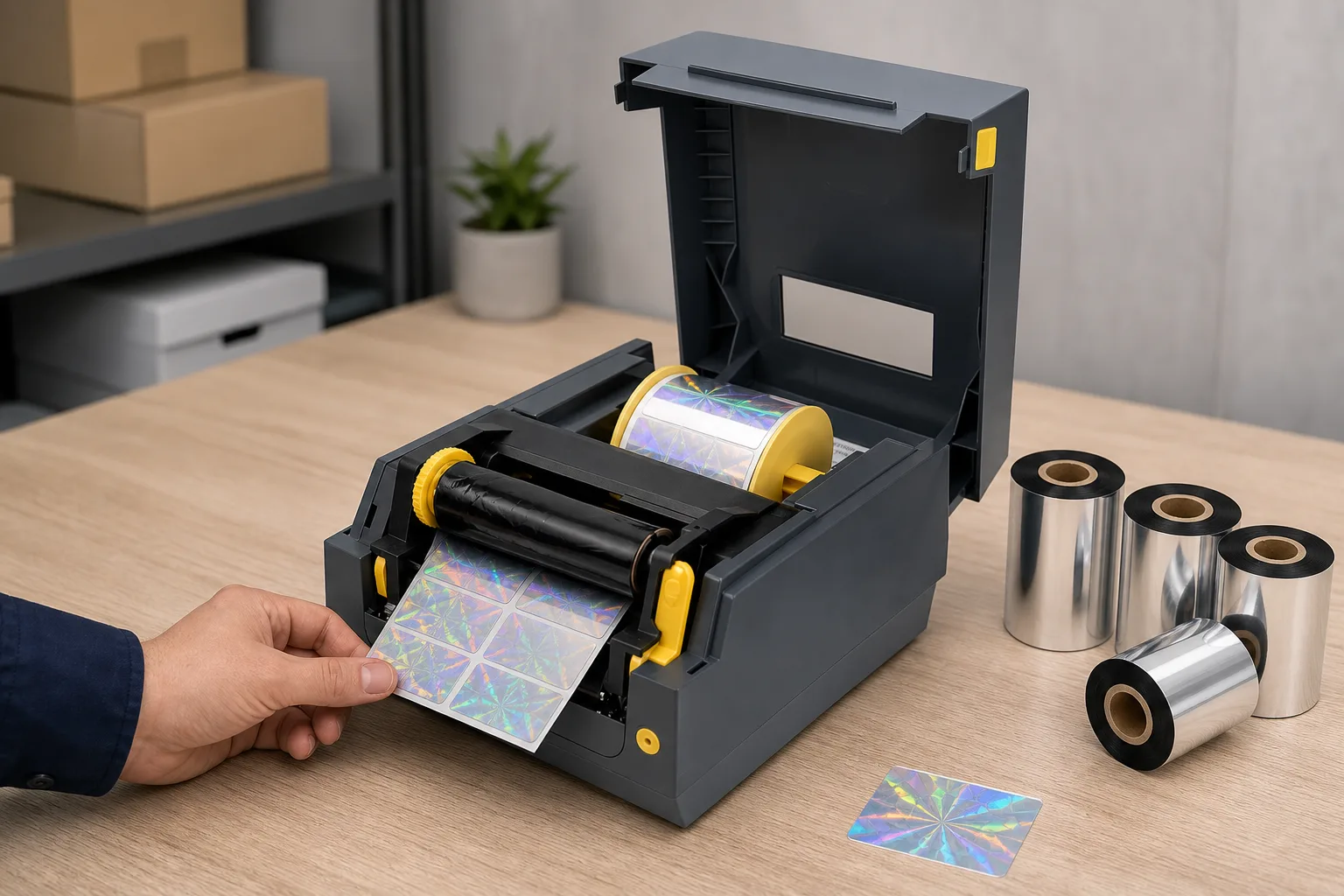
- If you will print serial numbers in house, run a trial print with your own printer and ribbon on the actual label material, and ask the supplier to confirm in writing which areas of the label accept overprinting.
Keep the samples that failed and the notes on why. A sample that passes unaided-eye checks under store light, carries legible serialization, and shows the tamper-evidence behavior the supplier described is your baseline for approving the production run. Your next step: request samples from your shortlisted suppliers, run this four-point check on each, and only then fix the final specification and order quantity.
Data and Evidence
The table below collects the overt characteristics to specify, what each one signals, and how to check it on a sample.
| Overt characteristic | What the buyer sees | What it signals | How to check on a sample |
|---|---|---|---|
| Holographic image | Visible hologram artwork on the label face | Authenticity cue; overt features are clear indications that a product is genuine | Unaided visual inspection under normal light |
| 3D effect | Depth within the holographic image | Eye-catching authenticity cue | Tilt the label and view with the unaided eye |
| Serialization | Readable serial numbers on the label | Visible, checkable data point | Read the numbers; check legibility across several samples |
| VOID pattern | Visual tamper-evidence pattern | Visual tamper evidence by design | Check that visible behavior matches the supplier's description |
| Destructible film | Film form of tamper evidence | Visual tamper evidence by design | Check that visible behavior matches the supplier's description |
Two context points sit behind this table. Security labels historically offered visual tamper evidence as VOID patterns, holograms, or destructible films, and in 2026 the category operates as a hybrid security architecture combining overt visual cues with covert digital verification. The market forecast, set to surpass USD 82.5 Billion by 2036, explains why suppliers keep adding digital layers, yet the overt features above remain the part your customers actually see and use.
Frequently Asked Questions
What overt security features should I look for on a hologram label?
Look for the easily visible features: holographic images, 3D effects, and serialization. Add a tamper-evidence form, historically VOID patterns, holograms, or destructible films, so the label signals both authenticity and tampering.
What is the difference between overt and covert features on security labels?
Every security feature on a hologram label is either overt or covert. Overt features are easily visible, eye catching, and act as clear indications that a product is genuine. The covert side is hidden, and in current hybrid designs it takes the form of digital verification layered under the visible cues.
Should I choose overt features only or a hybrid label design?
Choose based on who verifies the label. If customers and retail staff do the checking with no tools, overt features carry that job. If you also need controlled verification for audits or channel checks, specify the hybrid architecture that combines overt visual cues with covert digital verification.
How do I check overt features before placing a bulk order?
Request printed samples that carry the exact features you specified. Inspect the holographic image and 3D effects under normal store light, read the serial numbers for legibility, and confirm the tamper-evidence behavior matches the supplier's description. Approve the run only after the samples pass all four checks.
Can I print the serialization on hologram labels myself?
You can, provided the label is specified for it. Serialization is an overt feature, so the numbers must end up clearly legible; ask the supplier which areas accept overprinting, then run a trial print with your own printer and ribbon on the actual label material before the production run.
Recommended products for this industry
Hologram Security Label
Reflective holographic security label with visual authentication for brand protection and…
View details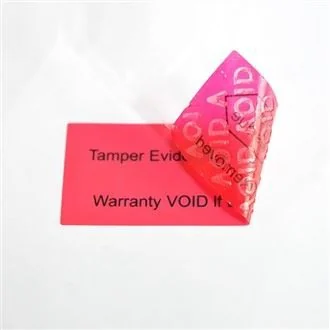
VOID Tamper Evident Security Label
Security label that reveals a tamper message when lifted, helping protect equipment…
View details
Acid and Alkali Resistant Label
Chemical-resistant label construction for acid baths, paint-stripping solutions, alkali…
View details
Aluminum Foil High-Temperature Label
Coated aluminum label for metal processing, heat treatment and high-temperature part…
View detailsNeed the right ribbon for your label application?
Share the label material, printer and operating environment. Our team will recommend a tested combination.
