
- Original TTR manufacturer since 2013
- Automated coating and slitting
- IQC / IPQC / OQC control
- ANSI barcode grade testing
- -20°C to 120°C environmental testing
- Batch-level traceability
- ANSI barcode grade
- Batch traceability
- RoHS / REACH compliance
- SGS and MSDS documents on request
For buyers planning in-house printing, industrielle Kennzeichnung means industrial identification: giving products or equipment identifying information and, where needed, safety information. Separate the identity being assigned from the label or marking that carries it and the process that produces it. Select thermal-transfer consumables by printer and material compatibility, then verify the complete printed sample under the intended conditions.
Key Takeaways
- Industrial labels identify products or equipment and communicate critical safety information.
- A batch number identifies a group, while a serial number identifies an individual product.
- Thermal transfer uses heat to move ribbon ink onto a label, whereas direct thermal printing heats specially treated label material.
- Ribbon selection requires matching the formulation and roll dimensions to the printer and label material.
- Durability must be assessed on the complete printed construction under its intended conditions.
Understand the task behind industrielle Kennzeichnung
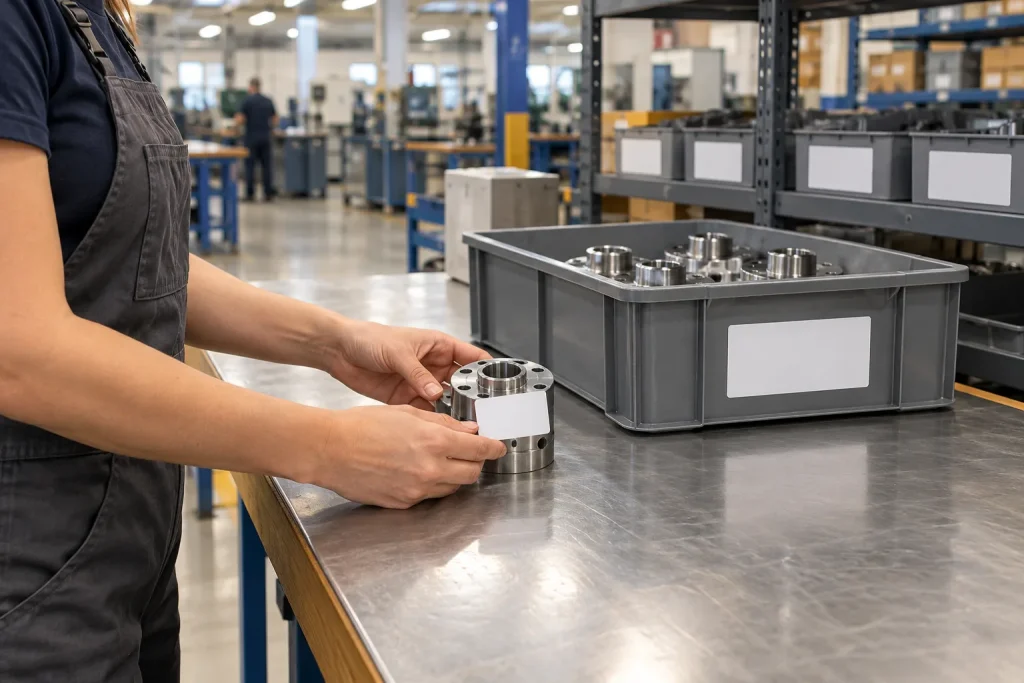
Industrial labels identify equipment or products and communicate critical safety information. In this guide, industrielle Kennzeichnung is used in that practical sense of industrial identification, rather than as the name of a particular ribbon or printing machine. For a buyer, the useful starting question is what the information must identify and where someone will use it.
Manufacturing and warehousing labels may identify parts, track inventory or warn about hazardous equipment while facing oil, dust and rough handling. Those are different tasks even when the printed labels look similar. Write down which task applies before discussing a replacement consumable: identifying a part is a different requirement from communicating a warning.
Keep three questions separate in your brief. What information must be carried? What will carry it? How will you produce it? This is a way to organize the requirement, not a new product classification. It prevents a discussion about ribbon chemistry from standing in for a decision about the information itself.
For example, begin a supplier discussion with the product or equipment to be identified and the intended reading point. Then add the existing printer and label material if you plan to print internally. Avoid starting with an undefined request for an “industrial” ribbon: that word describes the setting but leaves the actual printing requirement unresolved.
Separate the identifier from its carrier and printing method
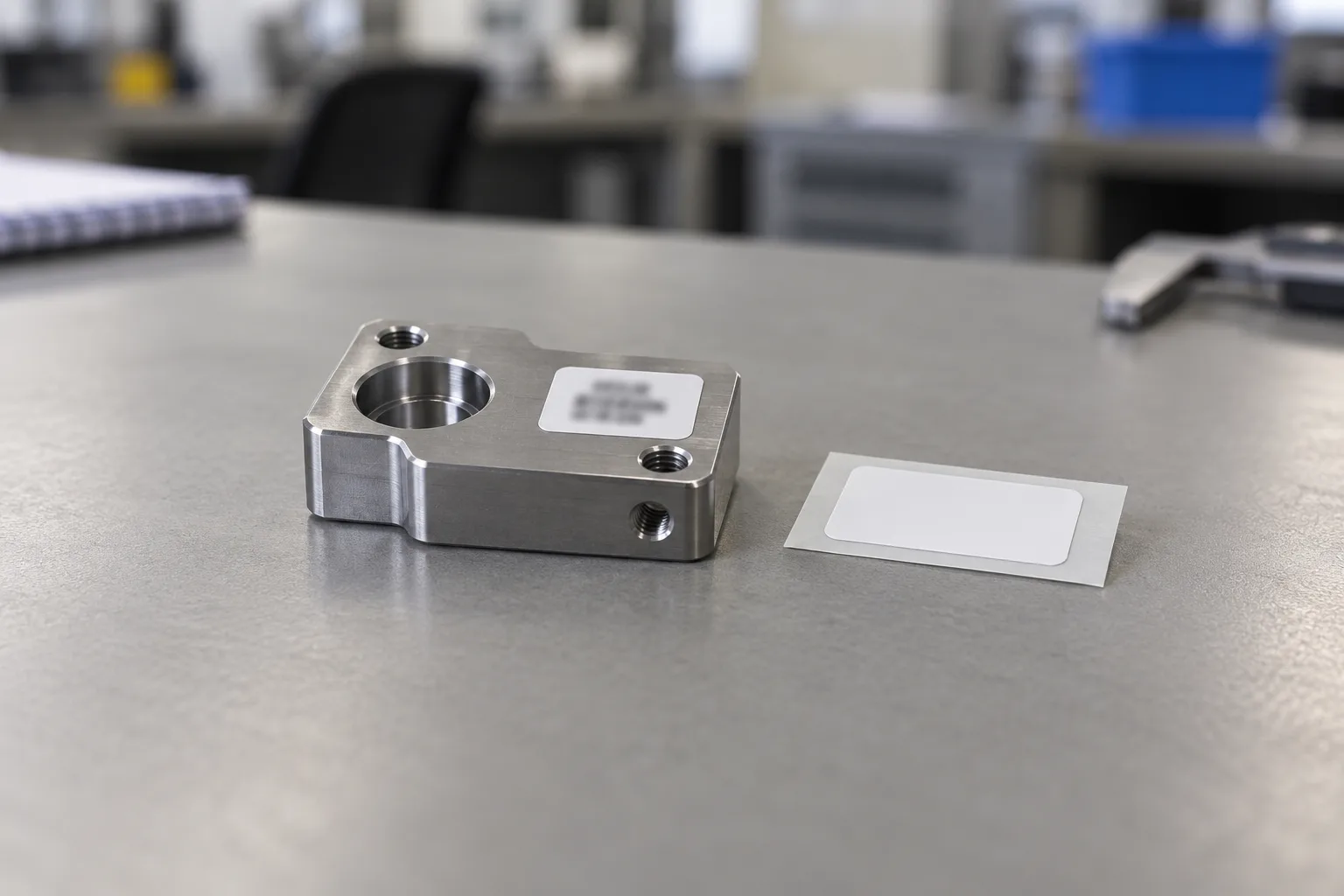
A batch number identifies products manufactured together under the same conditions, while a serial number identifies an individual product. Every product in a batch shares its batch number. Decide whether your task concerns a group or an individual item before choosing how to print the identifier.
The identifier and its physical presentation are separate choices. The supplied serial-number reference lists labels, laser marking, Data Matrix codes and RFID tags as ways an individual product can carry identification. These examples describe different aspects of a system: a label is a carrier, laser marking is a production method, and a Data Matrix code is a way to present data. Treat them as questions to resolve together rather than interchangeable consumables.
For in-house label printing, thermal transfer moves ink from a ribbon onto the label through heat from the printhead. Direct thermal printing applies heat directly to specially treated label material. Therefore, ask which process your current printer uses before treating a ribbon as the required replacement item.
Thermal Transfer Overprinting, or TTO, applies codes to flexible packaging such as film or labels using a thermal printhead and wax-resin or resin ribbon. This is a specific packaging-printing application within the broader identification discussion. A request for industrial identification alone does not establish that TTO is the required process.
Connect in-house printing requirements to the evidence
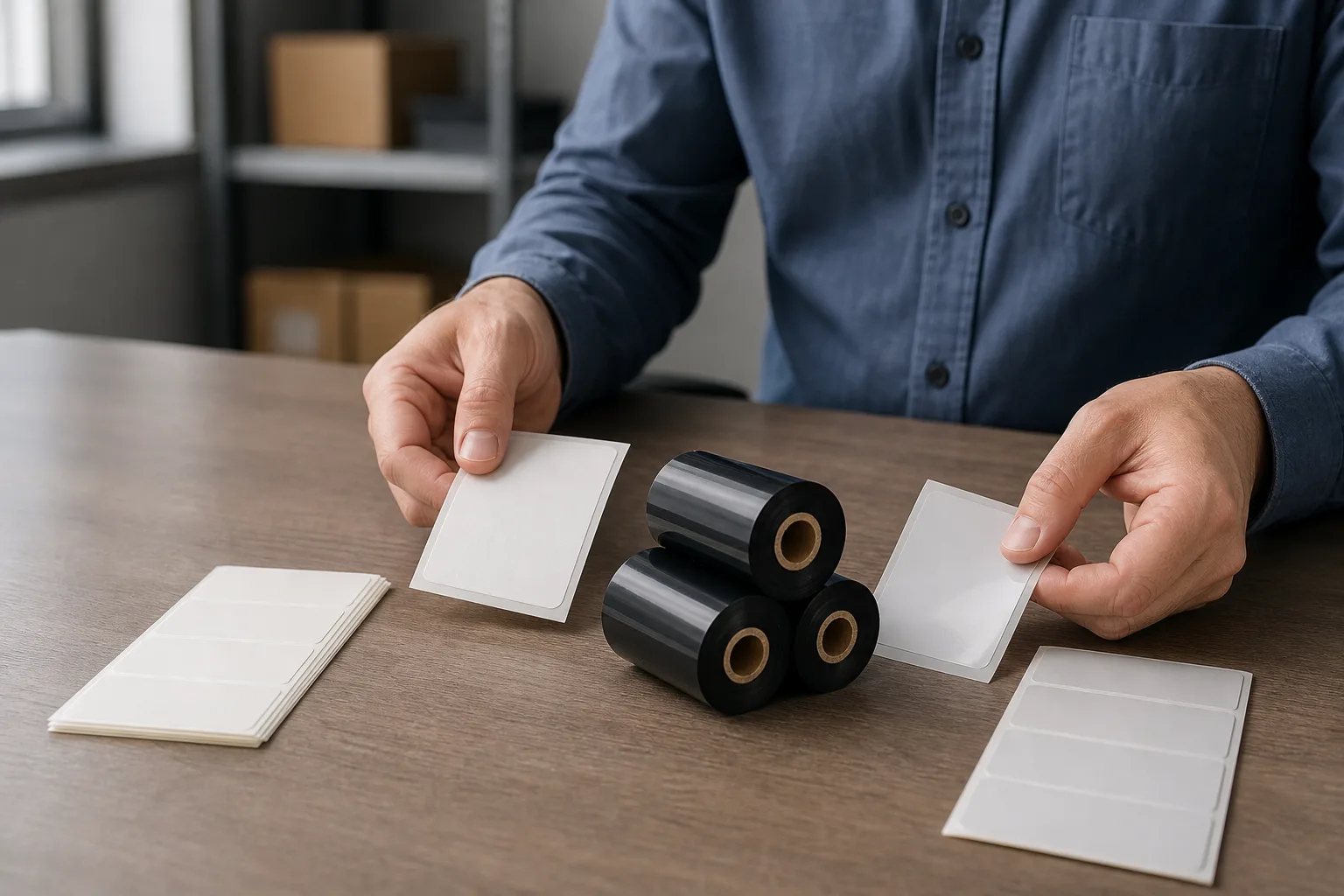
Ribbon selection starts by matching ink formulation, width, core size and roll length to the printer and label material. Record those details from the existing application or confirmed printer requirements before comparing replacement rolls. Keep the data requirement alongside them so the trial prints the information you actually intend to use.
As a general material guide, wax ribbons suit porous and coated paper, wax-resin ribbons suit coated paper and selected synthetics, and full resin ribbons suit demanding synthetic films such as polyester, polyimide and vinyl. Use these categories to frame a shortlist, then identify the particular ribbon and label combination for a trial. The category is a starting point rather than an application-specific approval.
Durability belongs to the complete printed construction. Here, that means evaluating the selected ribbon together with the label face material, printer and settings. Adhesion adds another question: temperature cycling, chemical contact and surface energy can change how a label stays attached. A readable print and an attached label should therefore be separate observations in your trial record.
The aluminium-marking reference highlights high surface temperatures and subsequent heat treatment as challenges. If that is your setting, describe both events in the brief instead of writing only “heat resistant.” Do not turn this example into a temperature rating for an unspecified ribbon, label or complete marking system.
Data and Evidence
The supplied references support distinctions between identification data, printing processes and material matching, but they do not establish one universal industrial-marking specification. The following table turns those distinctions into questions for an in-house printing brief.
| Decision | Supported distinction | What to record |
|---|---|---|
| Identity level | Batch numbers apply to a group; serial numbers apply to an individual product. | Whether the task requires group or individual identification. |
| Printing process | Thermal transfer uses ribbon ink; direct thermal heats specially treated label material. | The confirmed printing method before selecting consumables. |
| Ribbon and material | Wax, wax-resin and full resin have different general material applications. | The exact label material and candidate ribbon, rather than chemistry alone. |
| Application approval | Print performance and adhesion depend on the complete combination and exposure. | The production surface, printer settings and intended conditions. |
Source basis: the supplied references titled Industrial labels, batch number, serial number, Thermal transfer ribbons, Direct thermal printing, Thermal Transfer Overprinting, ribbon, Wax ribbons, Ribbon performance, adhesion and Aluminiumprodukten. These support the distinctions above; the table is a briefing aid, not a certification or a set of numerical acceptance limits.
For the next step, prepare one trial brief with the required identifier, exact printer, label material, ribbon dimensions and expected exposure. Agree what visible evidence will count as acceptable before testing. Produce samples on the production substrate with the intended material combination, then record print readability and attachment separately. If the result is unacceptable, record which requirement failed and return that observation with the sample details for technical review.
Frequently Asked Questions
Does industrielle Kennzeichnung mean the same thing as an industrial label?
Industrial identification describes the identification task, while an industrial label is one way to carry the information. A serial number can also appear in laser marking or on an RFID tag.
Is a batch number enough to identify one individual product?
A batch number is shared by products in the same batch. Use an individual serial number when your task requires a distinct identity for each product.
Does a resin ribbon guarantee durable industrial identification?
No specific durability result follows from the ribbon category alone. Validate the selected ribbon on your own label face material, printer and settings, with the exposures required for the application.
Related Products & Guides
Recommended products for this industry
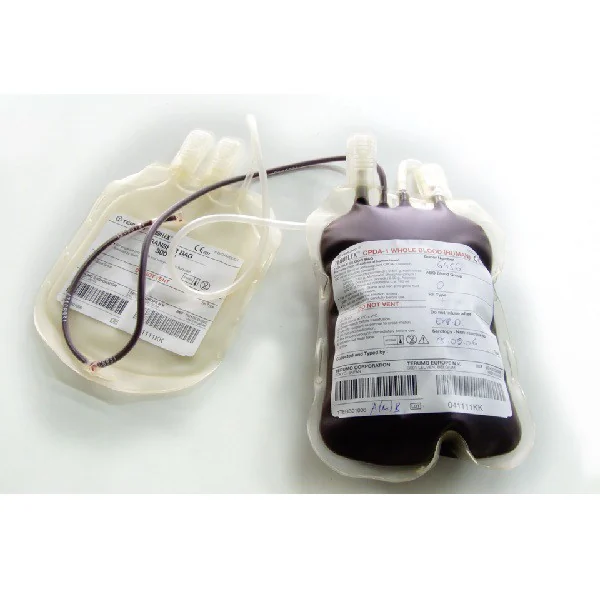
Blood Bag Identification Label
Cold-storage label for blood bags and transfusion containers where traceability remains…
View details
Cable Wrap and Outdoor Identification Label
Vinyl cable-wrap label for outdoor cables, harnesses and power infrastructure exposed to…
View details
Chemical-Resistant PET Identification Label
Durable PET label for asset, rating-plate and component identification exposed to oils…
View details
CL-Z213 Near-Edge Wax-Resin Thermal Transfer Ribbon for Barcode Labels
An enhanced black near-edge wax-resin thermal transfer ribbon for near-edge barcode printers and low- to medium-speed thermal transfer overprinting (TTO). Listed applications include retail labels, warehousing, garment tags and packaging identification. Match the printer, actual print medium and operating speed before selection: print quality and image durability can vary with the printer and substrate.
View detailsNeed the right ribbon for your label application?
Share the label material, printer and operating environment. Our team will recommend a tested combination.
