
How to Select Holographic Security Labels for Product Authentication
Request a solution
- Original TTR manufacturer since 2013
- Automated coating and slitting
- IQC / IPQC / OQC control
- ANSI barcode grade testing
- -20°C to 120°C environmental testing
- Batch-level traceability
- ANSI barcode grade
- Batch traceability
- RoHS / REACH compliance
- SGS and MSDS documents on request
This guide is for buyers choosing holographic security labels for product authentication and packaging seals. It explains how to match overt optical features, covert marks, and tamper evidence to the people who will inspect them, how to choose shape and confirm material suitability with the supplier, and what to check when a label carries a QR code or serial number. The short answer: choose the label your inspection process can actually verify, then confirm the features, material, and tamper behavior on samples before ordering a full batch.
Key Takeaways
- A hologram security label supports physical inspection through defined optical features, so select features your inspectors will really check.
- Covert features such as micro text, hidden images, and UV or infrared printing add a security layer that makes the label more difficult for counterfeiters to replicate.
- Hologram labels can be tamper evident, leaving a residue once they are removed, and holograms are extremely difficult to reapply; confirm the residue behavior of the specific construction on your own packaging samples before relying on it.
- For contoured surfaces such as baseballs or footballs, choose an oval shape.
- Market reporting describes the 2026 category as a hybrid security architecture combining overt visual cues with covert digital verification, so ask each supplier how their labels handle QR codes and unique serial numbers.
Match Overt and Covert Features to Your Counterfeit Risk
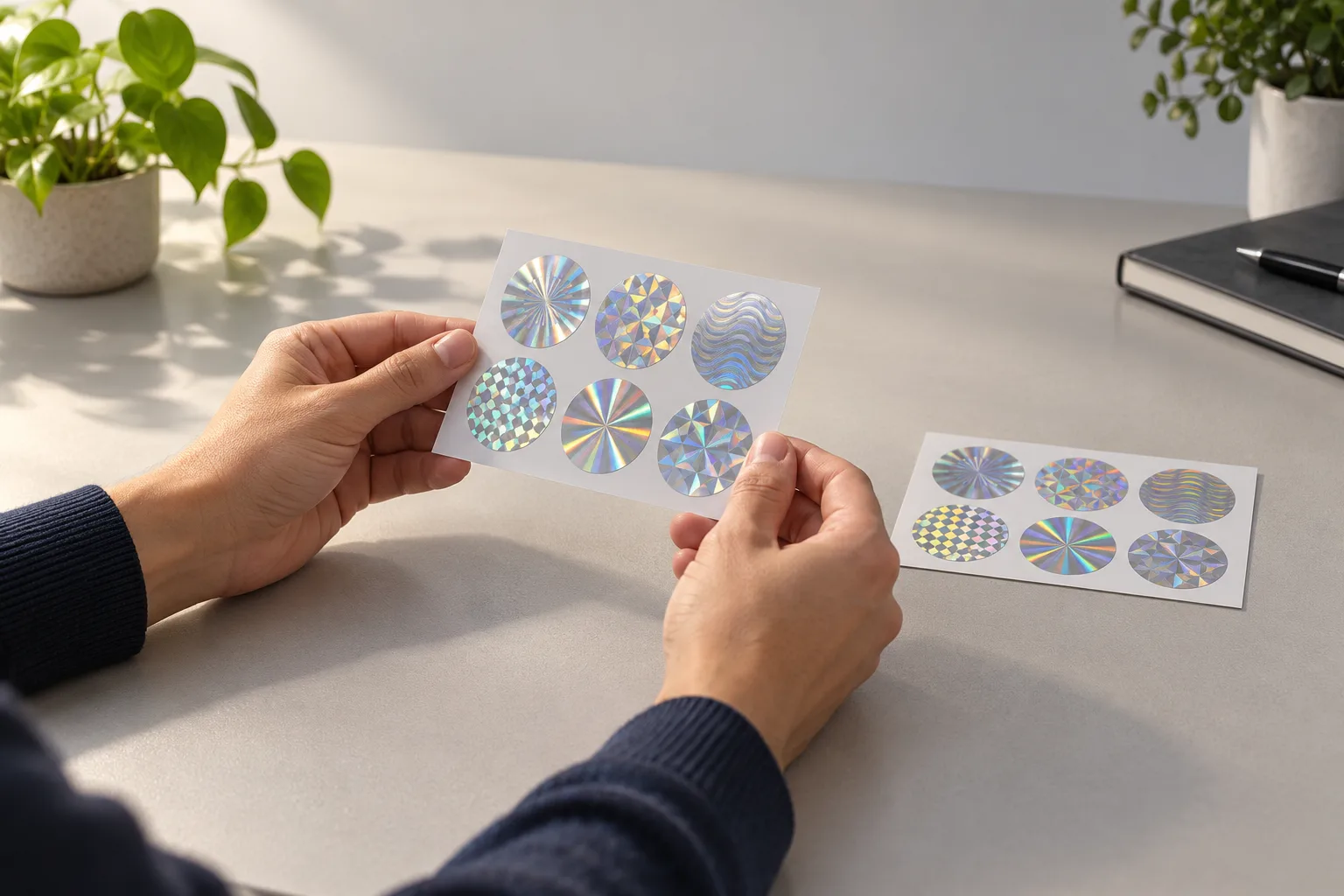
A hologram security label supports physical inspection through defined optical features, so the first decision is which features your verification process will use. Overt features are the optical effects a person checks directly on the product or packaging. Covert features include micro text, hidden images, and UV or infrared printing; these provide an additional layer of security and make it more difficult for counterfeiters to replicate the label.
Work through the selection in the order your product will be checked:
- List who verifies the label: end customers at the shelf, warehouse or customs staff, or your own quality team.
- Choose overt optical features for the checks that happen without tools, and match each feature to the inspection capability of the staff who will perform the check.
- Add covert features such as micro text or UV or infrared printing only where trained staff can inspect them..
- Confirm with the supplier that every feature you selected is defined and repeatable across the whole batch, not only on the sample sheet.
Before selecting covert features, agree who will inspect each one and how the check will be performed.
Choose Tamper Evidence and Shape, Then Confirm Material Suitability
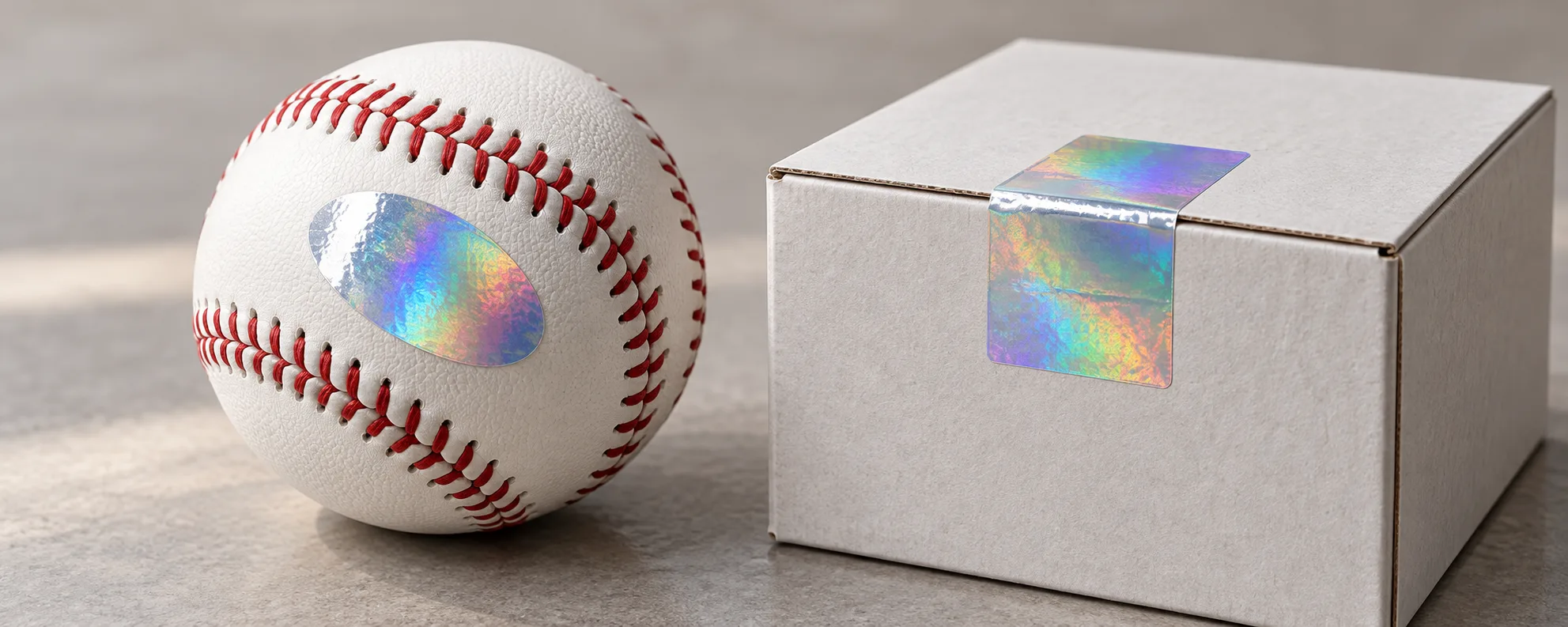
Hologram labels can be tamper evident, leaving a residue once they are removed, and holograms are extremely difficult to reapply, so an opening attempt can stay visible on the pack. The residue behavior depends on the specific tamper-evident construction, so confirm it on samples applied to your own packaging before relying on it. If showing interference matters as much as the image itself, compare the other visual tamper-evidence options in this category too: market reporting summarizes the category's history as visual tamper evidence through VOID patterns, holograms, or destructible films.
Shape follows the surface. For contoured surfaces such as baseballs or footballs, choose an oval shape, and test any alternative shape on the actual curved item before ordering. On flat cartons, lids, and documents the shape choice is wider; let the size of the security image and your application method decide.
For material, ask the supplier to confirm suitability for your target surface and application method, then check samples on the actual packaging. Use the stated material as a specification to verify, rather than as proof of suitability. One documented example, an Amazon retail listing of anti-counterfeit hologram stickers (source Amazon anti-counterfeit hologram sticker listing), states its specification concretely: silver color, 18mm x 26mm size, Polyethylene Terephthalate (PET) face material, glossy finish, sold as a 480pcs pack carrying a QR code and a unique random serial number on each label. Treat it as a single documented example of what a concretely stated specification looks like, not as a baseline that other offers must match; your own surface, application method, and inspection process determine which attributes matter.
Check Variable Data and Its Verification Before You Buy
Market reporting describes the 2026 security label category as a hybrid security architecture that combines overt visual cues with covert digital verification, and one documented stock listing shows the direction in product form: hologram stickers sold in a 480pcs pack with a QR code and a unique random serial number already on each label. When you compare offers, keep two checks separate:
- What is printed on each label: ask whether a QR code, a serial number, or both are already applied when the labels arrive, and whether the data is fixed at order time.
- How the data is verified: scanning a QR code or matching a serial number against records cannot by itself prove a label is genuine, and a publicly readable QR code is an overt feature, not a covert one. Ask the supplier what verification mechanism backs the variable data, what result counts as a pass, and what counts as an anomaly, and confirm those answers fit your inspection process before you rely on the data.
The code on the label is not the authentication; the verification process behind it is what you are selecting.
Data and Evidence
The tables below collect the feature options, the checks to run before ordering, and one documented stock specification for comparing holographic security label offers, with the source of each row marked.
| Selection decision | Options documented in the evidence | How to verify before ordering | Source |
|---|---|---|---|
| Feature level | Overt optical features; covert micro text, hidden images, UV or infrared printing | Inspect the defined optical features on samples with the staff who will do it daily | Hologram security label: selection and product authentication; Using Hologram Labels for Product Security |
| Tamper evidence | Hologram labels can be tamper evident, leaving a residue once removed; historically VOID patterns, holograms, or destructible films | Remove a sample from the real surface and check the residue and reapplication behavior; if the expected tamper evidence does not appear, pause the full order and request an adjusted sample | Using Hologram Labels for Product Security; Global Security Labels Market Set to Surpass USD 82.5 Billion by 2036 as Anti-Counterfeit Imperatives Reshape Packaging Intelligence |
| Shape | Oval for contoured surfaces such as baseballs or footballs | Apply samples to the actual product curve and watch for lifting edges; if edges lift, pause the full order and ask the supplier to adjust the proposal for another sample check | NovaVision, Holograms, Holographic Security Stickers and Labels |
| Variable data | QR code plus unique random serial number, shown already applied in one stock listing | Ask the supplier what verification mechanism backs the code or serial and what counts as a pass or an anomaly; scanning alone does not prove authenticity | Amazon anti-counterfeit hologram sticker listing |
| Attribute | Documented stock listing value |
|---|---|
| Color | Silver |
| Size | 18mm x 26mm |
| Material | Polyethylene Terephthalate |
| Finish | Glossy |
| Pack size | 480pcs |
| Variable data | QR code, unique random serial number |
Source for the stock specification table: Amazon anti-counterfeit hologram sticker listing, an Amazon retail listing of anti-counterfeit hologram stickers; it is one documented example, not a category baseline.
Two statements in this guide come from market reporting rather than product testing, and both are attributed here: the report projects the global security labels market to surpass USD 82.5 Billion by 2036 as anti-counterfeit imperatives reshape packaging, and it describes the 2026 category as a hybrid security architecture combining overt visual cues with covert digital verification (source Global Security Labels Market Set to Surpass USD 82.5 Billion by 2036 as Anti-Counterfeit Imperatives Reshape Packaging Intelligence). Treat both as a reported forecast and a trend description, not as measured requirements for your program.
Your next step: shortlist offers whose specifications are documented and whose suppliers confirm they suit your surface and inspection process, test samples on the real product with the staff who will check them, and compare total cost per protected unit from the actual quotes before placing the full order. If samples show lifting edges, the expected tamper evidence does not appear, or the supplier cannot explain a verification pass and an anomaly, hold the full order. Ask the supplier to adjust the label proposal or clarify the verification process, then repeat the relevant sample checks and confirm the result before proceeding.
Frequently Asked Questions
What covert features make holographic security labels harder to counterfeit?
Covert options include micro text, hidden images, and UV or infrared printing. They provide an additional layer of security and make the label more difficult for counterfeiters to replicate, so specify them where trained staff can inspect the hidden feature.
How does a tamper-evident hologram label protect sealed packaging?
Hologram labels can be tamper evident, leaving a residue once they are removed, and holograms are extremely difficult to reapply, so an opening attempt can stay visible. The residue behavior depends on the specific construction, so confirm it on samples applied to your own packaging before relying on it.
Which hologram label shape suits contoured products like a football?
For contoured surfaces such as baseballs or footballs, choose an oval shape; on flat surfaces you can let image size and application method drive the choice.
What should I check when a hologram label carries a QR code or serial number?
One documented stock listing sells hologram stickers with a QR code and a unique random serial number already on each label. Ask the supplier what verification mechanism backs that data and what counts as a pass or an anomaly: scanning a public QR code or matching a serial number against records cannot by itself prove a label is genuine.
Recommended products for this industry
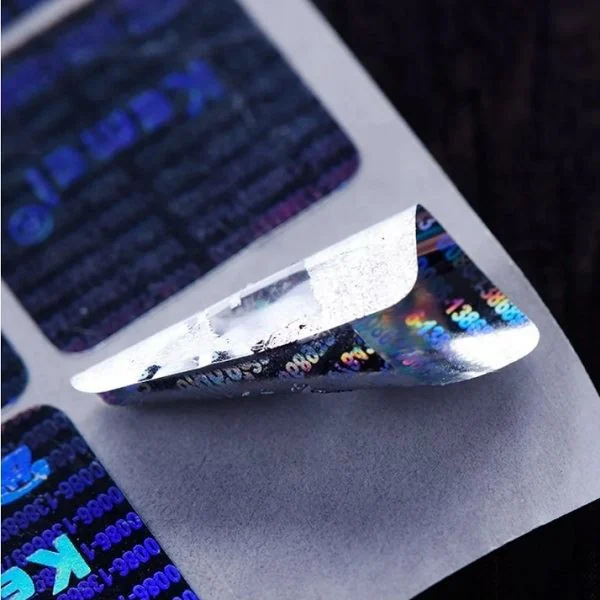
Hologram Security Label
Reflective holographic security label with visual authentication for brand protection and…
View details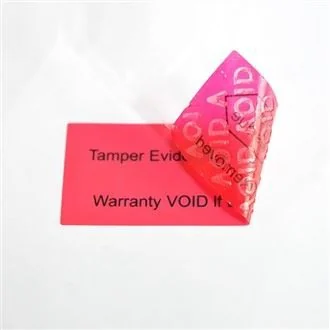
VOID Tamper Evident Security Label
Security label that reveals a tamper message when lifted, helping protect equipment…
View details
Acid and Alkali Resistant Label
Chemical-resistant label construction for acid baths, paint-stripping solutions, alkali…
View details
Aluminum Foil High-Temperature Label
Coated aluminum label for metal processing, heat treatment and high-temperature part…
View detailsNeed the right ribbon for your label application?
Share the label material, printer and operating environment. Our team will recommend a tested combination.
