
Rouleau Encreur Resin Base TTR: How to Choose the Right Resin TTR Ribbon
Request a solution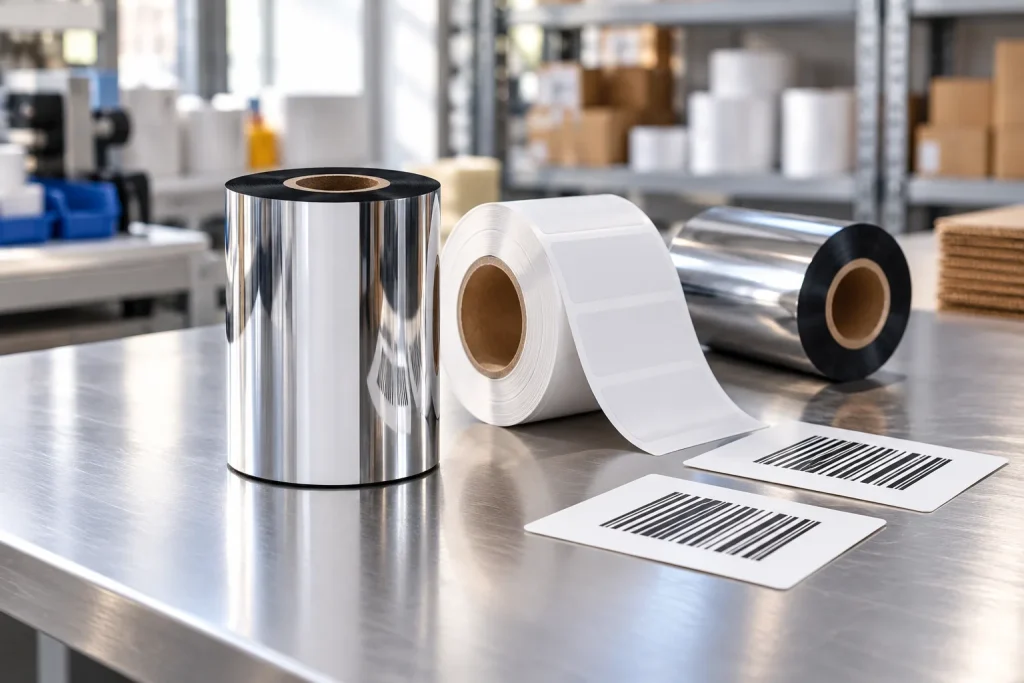
- Original TTR manufacturer since 2013
- Automated coating and slitting
- IQC / IPQC / OQC control
- ANSI barcode grade testing
- -20°C to 120°C environmental testing
- Batch-level traceability
- ANSI barcode grade
- Batch traceability
- RoHS / REACH compliance
- SGS and MSDS documents on request
Key Takeaways
- Rouleau encreur resin base TTR is read in this guide as a resin thermal transfer ribbon — the resin grade among the three main TTR types: wax, wax/resin, and resin.
- Vendor product pages describe one premium resin ribbon (BuyHeatShrink) as printing on the most substrates and synthetic materials and as practically impervious to chemicals and heat — single-product claims to verify, not resin-class guarantees.
- The thermal transfer process produces long-lasting prints that resist moisture, oil, and UV light.
- Ribbon fit is documented per printer line — one vendor's resin ribbon, for example, is specified for Datamax/CAB thermal printers.
- Run a test print on your actual label stock and verify scan quality before committing to a bulk order.
What Rouleau Encreur Resin Base TTR Means
Throughout this guide, rouleau encreur resin base TTR is read as a resin-based thermal transfer ink ribbon: rouleau encreur corresponds to the French for an ink ribbon roll, and resin names the ink formulation. On that reading, the product to compare is the resin grade of a thermal transfer ribbon (TTR), as it is listed in manufacturer catalogs, compatibility lists, and specification sheets.
The product itself is straightforward. Zebra's thermal transfer ribbon overview describes thermal transfer ribbons as essential components in thermal transfer printing — a process that uses heat to transfer ink from the ribbon onto a label or other material — and describes each ribbon as typically a thin polyester film coated with a specific type of ink, which can vary based on the intended application. The main types of thermal transfer ribbons are wax, wax/resin, and resin, and they differ by the ink carried on that film: wax, resin, or a mixture of the two applied to the polyester sheet.
Where Resin-Base TTR Is the Right Choice
Resin-base TTR is the grade buyers put on the candidate list when the label face is a synthetic material or the print must survive chemicals, heat, moisture, oil, or UV exposure. Thermal ribbon is a crucial part of printing with thermal transfer labels, but not all thermal ribbons are made the same, and what the finished label can withstand is settled by the specific product and its specification sheet — verified against the real application — not by the grade name alone.
Substrate coverage shows up in vendor product descriptions, not in the grade name: one retailer's product page (BuyHeatShrink) describes its premium resin ribbon as printing on the most substrates and synthetic materials. That wording belongs to that one product, so treat it as a signal to check resin candidates for a synthetic label face — and confirm actual coverage on each candidate's specification sheet.
Exposure is the second screening factor. The same product page describes the ribbon's output as practically impervious to chemicals and heat — the vendor's own claim for its own product. Separately, an industry market report describes the thermal transfer process in general as producing long-lasting results by resisting environmental elements like moisture, oil, and UV light; that is a process-level description, not proof that every resin ribbon delivers those resistances on a given label. If your labels meet cleaning chemicals, heat, outdoor weathering, or oily surfaces, write those conditions down as the acceptance profile each candidate product has to document.
Print quality is the third checkpoint. The BuyHeatShrink product page says its premium resin ribbon provides brighter colors, sharper lines, darker more distinctive imaging, and exceptional clarity — again, that vendor describing its own product. Attributes like these matter when barcodes or small text must stay readable for the label's whole service life, and they line up with the demand documented across the market: e-commerce labeling, medical labeling, and retail price tags and barcode labels. Filter candidate products by exposure profile rather than by industry name, then let specification sheets and a test print decide.
Wax, Wax/Resin or Resin: Matching the Grade to the Label
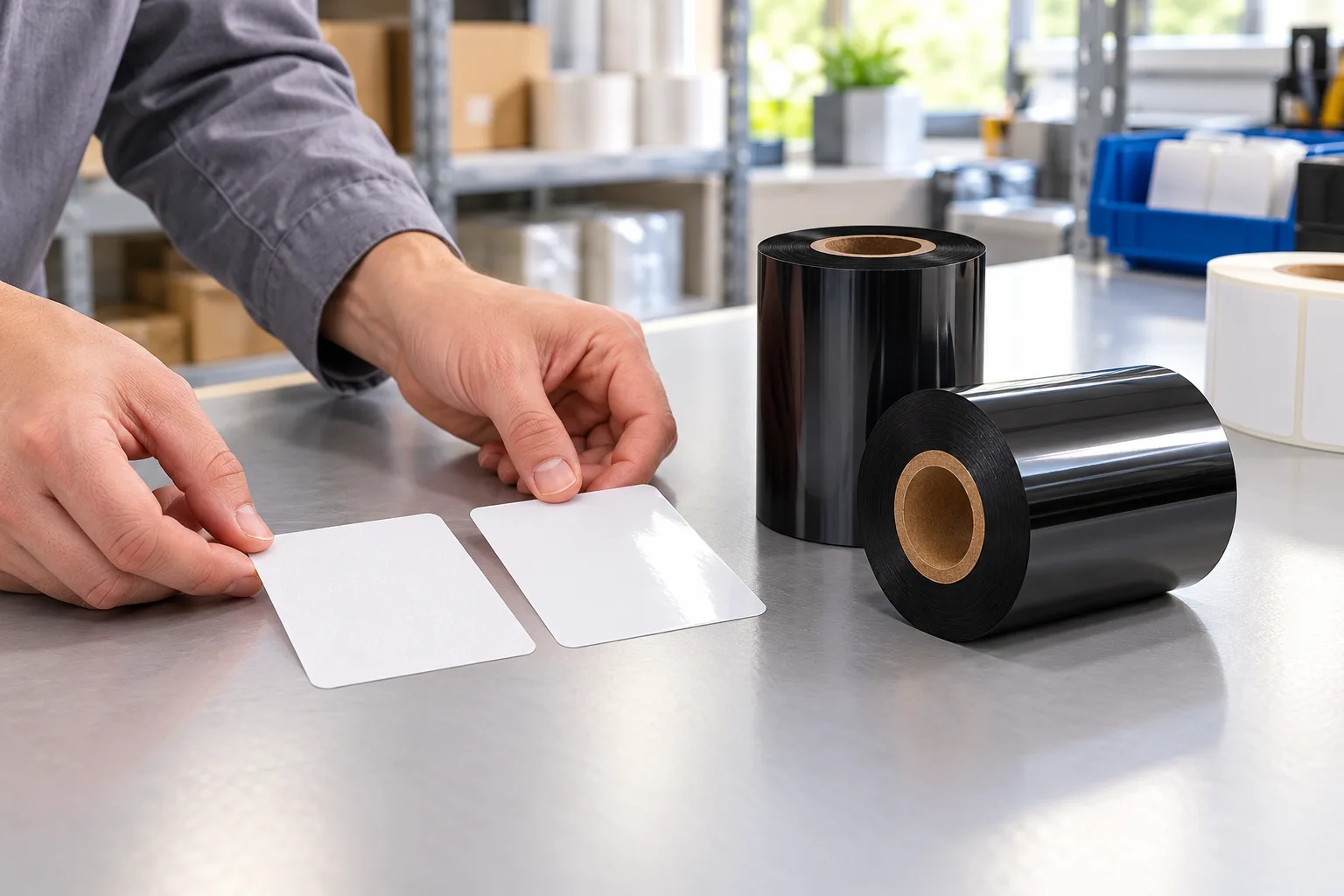
One ink formulation does not fit every label, which is why ribbon vendors sell wax, wax/resin, and resin as separate grades. The grades differ in ink formulation, and what a candidate product is actually rated for comes from its specification sheet, not from the grade name alone. For this query, resin-base is the tier under evaluation, with wax and wax/resin as the comparison points when a resin candidate looks mismatched to the job.
The practical difference shows up in what each job demands. A short-life paper label that never leaves a dry indoor shelf and an exposed synthetic label that meets chemicals or heat call for different candidate lists, and the matching order below reflects that: label face material first, then exposure profile, then printer.
Match candidates in this order. Start with the label face material, because the ink must transfer and bond to that surface. Then weigh the exposure profile over the label's service life — chemicals, heat, moisture, oil, and UV light are the conditions named in the product descriptions and the process overview above — and take each candidate's rated exposures from its specification sheet rather than from the grade name. Finish with the printer, since there are different materials and ink configurations to consider for a desktop or industrial printer, and the grade you want has to be available for your printer class.
How to Select and Buy a Resin-Base TTR Ribbon
A resin-base ribbon purchase comes down to four checks: label material and exposure, printer compatibility, supplier verification, and a test print.
- Identify the label face material and its exposure profile. Note whether the print will meet chemicals, heat, moisture, oil, or UV light during its service life. Synthetic faces and harsh exposure are the conditions that put resin-base ribbons on the candidate list; whether a specific product fits is settled by its specification sheet and a test print on your label.
- Confirm printer compatibility and ribbon dimensions. Ribbon fit is documented per printer family — one vendor's resin ribbon, for example, is specified for Datamax/CAB thermal printers. Check the compatibility list for your make and model, and match the ribbon width and roll length to the printer specification before ordering.
- Shortlist suppliers on resin grade and ink formulation, not price alone. Ask each candidate for the specification sheet covering the ink formulation and the rated substrates and exposures, and verify it with the manufacturer when the claims drive your decision.
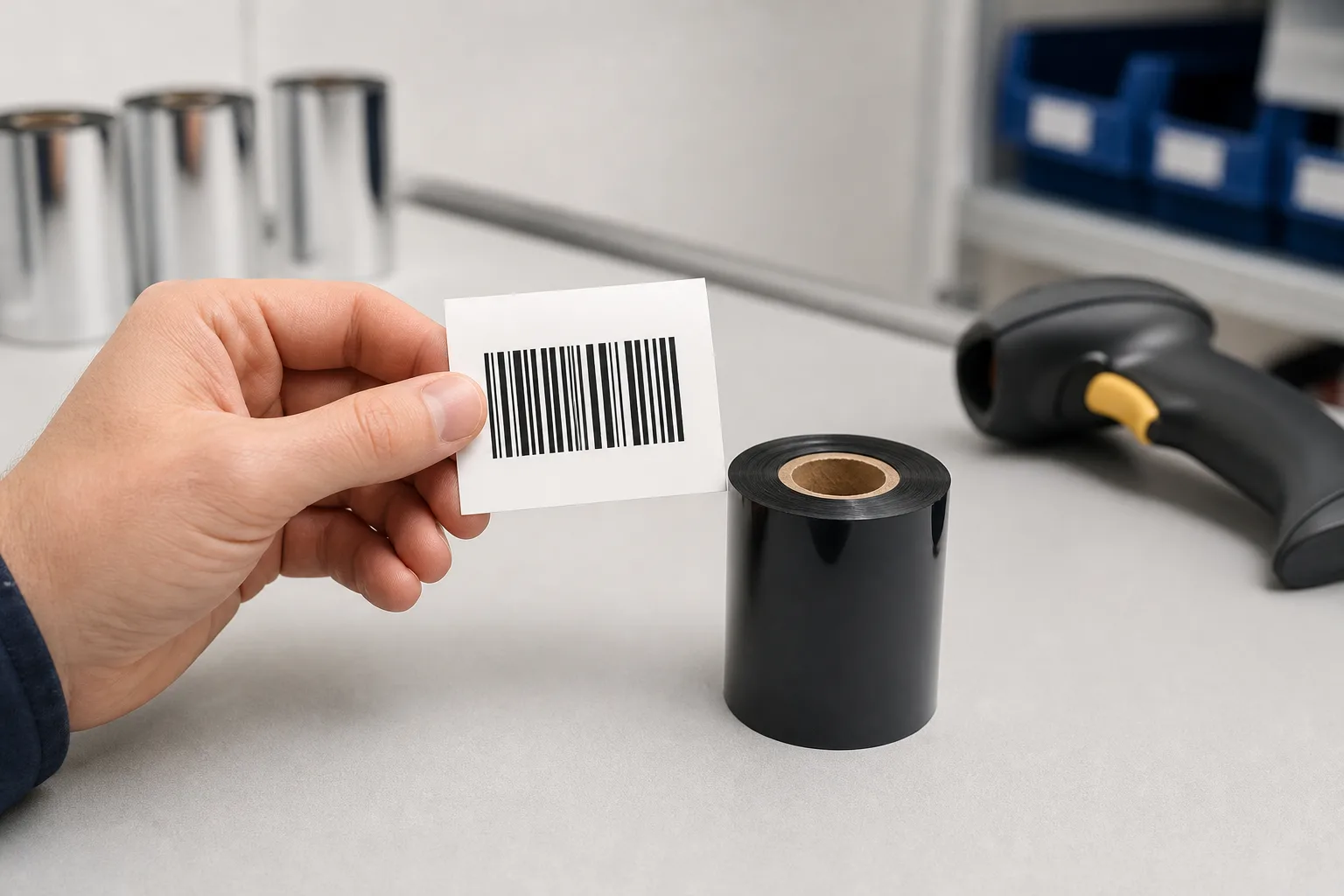
- Run a test print before any bulk order. Print on your actual label stock on your production printer, and judge image darkness, edge sharpness, and barcode scan quality with your own readers against the requirements your application actually imposes, using test methods accepted for your label type rather than invented pass thresholds. If the results fall short, pause the bulk order, re-verify the ribbon–label–printer match with the supplier, and retest before committing to volume.
Before ordering, work through the list of risks buyers can check on their side: buying on price without matching the grade to the substrate; ordering a width or roll length that does not fit the printer; skipping the test print; and assuming every product labeled resin is identical, when vendors caution that not all thermal ribbons are made the same. Next step: run the four checks above on a resin-base sample using your current label stock, and compare scan results against your present ribbon before the next bulk order.
Data and Evidence
The table consolidates the documented properties behind the resin-base decision, with the source named for each one — including where a property is a vendor's own product description — so each can be verified with a supplier before buying.
| Property | Documented evidence | Source |
|---|---|---|
| Ribbon construction | A thin polyester film coated with a specific type of ink for the intended application | Zebra thermal transfer ribbon overview |
| Ink formulations | Wax, resin, or a mixture applied to the polyester sheet | Industry market report |
| Grade range | Wax, wax/resin, and resin | Zebra thermal transfer ribbon overview |
| Substrate coverage | One vendor's premium resin ribbon is described as printing on the most substrates and synthetic materials | BuyHeatShrink product page (vendor's own description) |
| Exposure resistance | The same vendor describes the ribbon's output as practically impervious to chemicals and heat; the market report describes the process in general as resisting moisture, oil, and UV light | BuyHeatShrink product page (vendor's own description); industry market report |
| Print quality | The vendor describes its premium resin ribbon as providing brighter colors, sharper lines, darker more distinctive imaging, and exceptional clarity | BuyHeatShrink product page (vendor's own description) |
| Printer fit example | A resin ribbon specified for Datamax/CAB thermal printers | BuyHeatShrink product page |
| Roll format | Set roll lengths; one resin ribbon sold as 1182 feet | BuyHeatShrink product page |
Verify in this order: request the specification sheet for each candidate ribbon, check the rated exposures against your label's service conditions, and treat each product's resistance and substrate claims as belonging to that product only, because they are documented per product rather than across a vendor's range. A test print on your own stock then combines your printer, your label material, and your exposure profile in one result.
Frequently Asked Questions
What does rouleau encreur resin base TTR mean?
In this guide the phrase is read as a resin thermal transfer ribbon: rouleau encreur corresponds to the French for an ink ribbon roll, and resin designates the ink grade. English catalogs list that product as a resin-based TTR ribbon, one of the three main types alongside wax and wax/resin.
Which label materials should be printed with a resin-base ribbon instead of wax or wax/resin?
Treat synthetic label faces and prints that will meet chemicals, heat, moisture, oil, or UV light as the conditions that put resin-base ribbons on the candidate list. Vendor pages describe individual products in strong terms — one retailer describes its premium resin ribbon as printing on the most substrates and synthetic materials and as practically impervious to chemicals and heat — but those are single-product claims. Confirm what a specific ribbon is rated for on its specification sheet, then validate with a test print on your label before deciding.
Can the same resin TTR ribbon work in Zebra, Datamax, and CAB printers?
Do not assume it. Ribbon fit is documented per printer line — one vendor's resin ribbon, for example, is specified for Datamax/CAB thermal printers. Check the manufacturer's compatibility list for your exact make and model, including ribbon width and roll format, before ordering.
How do I test a resin TTR ribbon before ordering in bulk?
Print on the actual label stock with your production printer, then check image darkness, edge sharpness, and barcode scan quality with your own readers. Judge those results against the requirements your application actually imposes, using test methods accepted for your label type rather than invented thresholds, and compare the print against your current ribbon. If the sample falls short, pause the bulk order, re-verify the ribbon–label–printer match with your supplier, and retest before committing to volume.
Recommended products for this industry

Fully resin-based ribbon
Resin-based ribbons offer superior scratch resistance, high-temperature tolerance…
View details
TTO Resin-Based Ribbon
Near-edge resin-based ribbon, offering excellent scratch resistance and print quality, is…
View details
CL-Z213 Near-Edge Wax-Resin Thermal Transfer Ribbon for Barcode Labels
An enhanced black near-edge wax-resin thermal transfer ribbon for near-edge barcode printers and low- to medium-speed thermal transfer overprinting (TTO). Listed applications include retail labels, warehousing, garment tags and packaging identification. Match the printer, actual print medium and operating speed before selection: print quality and image durability can vary with the printer and substrate.
View details
High-grade wax resin thermal transfer ribbon
Premium wax-resin thermal transfer ribbons are specifically engineered for diverse…
View detailsNeed the right ribbon for your label application?
Share the label material, printer and operating environment. Our team will recommend a tested combination.
