
Label Aktiva Hologram: How to Choose the Right Hologram Asset Label
Request a solution
- Original TTR manufacturer since 2013
- Automated coating and slitting
- IQC / IPQC / OQC control
- ANSI barcode grade testing
- -20°C to 120°C environmental testing
- Batch-level traceability
- ANSI barcode grade
- Batch traceability
- RoHS / REACH compliance
- SGS and MSDS documents on request
Key Takeaways
- A hologram security label supports physical inspection through defined optical features, so staff can verify an asset by eye.
- Covert features such as micro text, hidden images, and UV or infrared printing make the label harder for counterfeiters to replicate.
- Tamper-evident holograms leave a residue once removed, which exposes unauthorized label transfers.
- For contoured assets, choose an oval label shape.
- In 2026, the security label category combines overt visual cues with covert digital verification.
Match the Label Shape, Size, and Material to Your Assets
The asset surface decides the label shape before anything else. Flat panels such as laptop lids, instrument cases, and cabinet doors take standard rectangular hologram labels. Supplier guidance for hologram stickers is to choose an oval shape for contoured surfaces such as balls and sports equipment, because an oval lies flat without lifting at the edges.
Material and finish come next. One widely listed retail pack of anti-counterfeit hologram labels specifies polyethylene terephthalate (PET) as the material, with a silver color and a glossy finish. PET is a polyester film, a common base for holographic stock. Treat these as comparison fields rather than defaults: two packs at the same size can behave differently on your surfaces, which is exactly what samples are for.
Size is a working constraint, not a preference. The label has to fit the flat area you have and still carry the QR code and human-readable serial you plan to show. If your asset list mixes small tools and large cases, order samples in two sizes and check edge fit and scan distance on the real objects.

Layer Overt, Covert, and Digital Security Features
A hologram security label supports physical inspection through defined optical features, which is the overt layer your staff check during a walk-through audit. On its own, that hologram is only the first barrier. Covert features such as micro text, hidden images, and UV or infrared printing provide an additional layer of security and make the label more difficult for counterfeiters to replicate.
The third layer is digital. A QR code tied to a unique random serial number turns one label into one checkable asset record, and this is how retail security-label packs are commonly built; one listed pack pairs holographic stickers with QR codes and unique random serial numbers. It also matches where the category is heading. In 2026, the security label field has evolved into a hybrid security architecture that combines overt visual cues with covert digital verification.
Tamper behavior is a separate axis from all three layers. Historically, security labels were designed to offer visual tamper evidence through VOID patterns, holograms, or destructible films. Holograms can also be tamper evident: they leave a residue once removed, so a label moved from one asset to another shows itself. When you compare label aktiva hologram options, ask what each candidate does on removal instead of assuming they all behave the same way.
Each layer has a job and a cost. Overt features need no tools, so anyone on the floor can verify. Covert features add a replication barrier beyond what a passing glance can copy, but they need the check method your supplier specifies. The digital layer needs a phone or scanner and pays you back with a per-asset record. Choose the layers your actual risk requires rather than paying for every feature by default.

Decide Who Prints the Asset Data
Your sourcing route decides how asset numbers get onto the label. Route one is buying labels that already carry QR codes and unique random serial numbers, like the retail pack above: no printer and no layout work, but you map the supplied serials into your asset register as they arrive. Route two is ordering hologram label stock and printing the asset data yourself with a thermal transfer printer, which keeps numbering under your control and lets you reprint a lost tag the day you need it. Printability differs between stocks, so route two depends on sample prints from your own printer and ribbon.
- List the assets first: surface material, shape, and where each label will sit.
- Fix the data format: what each QR code links to and how serial numbers are structured.
- Shortlist label specs: shape, material, size, security layers, and removal behavior.
- Request samples for both routes, and print route-two samples with your own printer and ribbon.
- Test on real assets: apply the label, then run the three checks described under Data and Evidence.
- If a check fails — weak scan, lifted edge, no residue — adjust size or print setup, or switch routes before you order volume.
Most failures are size or print-setup problems, and samples exist to catch them cheaply. A code that scans on a flat sample sheet but not on the asset itself points to size or placement, not a failed project. Keep the tested configuration as your reference and order against it.
Data and Evidence
The table collects the concrete specifications from one retail anti-counterfeit hologram label listing, as an example of what a purchasable spec looks like when you compare suppliers.
| Specification | Example value | Why it matters for asset labels |
|---|---|---|
| Color | Silver | Changes visibility against your asset surfaces. |
| Size | 18mm x 26mm | Must fit the flat area and carry the QR code plus serial. |
| Material | Polyethylene Terephthalate | The film base of this pack; confirm behavior on your surfaces with samples. |
| Finish type | Glossy | Affects how the hologram reads under light. |
| Security data | QR code plus unique random serial number | Gives each label a per-asset digital record. |
| Pack quantity | 480pcs | Useful for comparing cost per label across candidates. |
Verification comes down to three checks. First, the optical check: inspect the defined optical features by eye and train staff on what a genuine label shows at an angle. Second, the digital check: scan the QR code and match the unique random serial number against your asset register. Third, the tamper check: peel one sacrificial sample and confirm the removal response the specification promises. Your next step is to write down your three most common asset types, request samples of both routes, and run these three checks on one asset of each type this week.
Frequently Asked Questions
What size hologram asset label should I use on laptops?
Start from the flat area on the lid. An 18mm x 26mm PET label like the example in the table above is a workable starting point, but order two candidate sizes and check edge fit and scan distance on your actual devices before ordering volume.
How do I check that a label aktiva hologram is genuine?
Run the three-part check: inspect the optical features by eye, scan the QR code, and match the unique random serial number to your asset register. If your labels carry covert features, use the verification method the supplier specifies for them.
Can I print my own serial numbers and QR codes on hologram label stock?
Yes. Order hologram label stock and overprint the asset data with your thermal transfer printer instead of buying pre-serialized packs. Printability varies between stocks, so run sample sheets and scan-test them before you commit to volume.
Do I need a hologram layer if my assets already have barcode tags?
A plain barcode carries data but has no optical feature to inspect. A hologram asset label adds defined optical features for physical inspection and, when specified as tamper evident, a tamper response on removal. If tag swapping or counterfeit equipment is a real risk in your operation, the hologram layer earns its place.
Recommended products for this industry
Chemical Corrosion Resistant Asset Tag
Long-life asset tag for laboratory and industrial assets exposed to corrosive chemicals…
View details
Destructible Asset Warranty Label
Fragile vinyl asset label that breaks apart during removal to discourage transfer or…
View details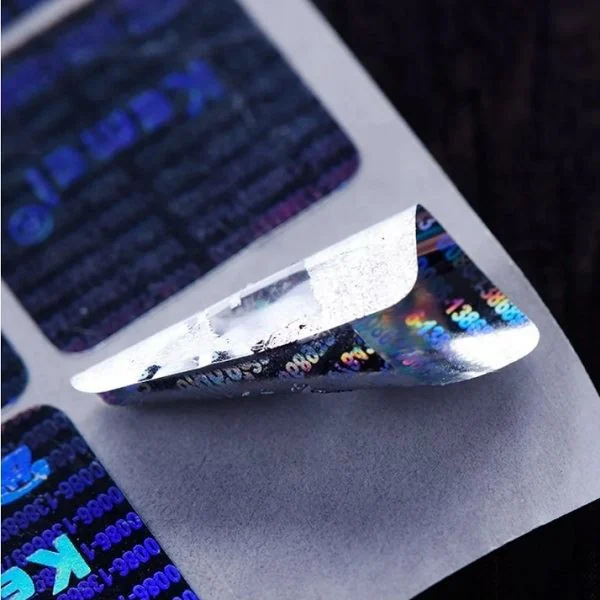
Hologram Security Label
Reflective holographic security label with visual authentication for brand protection and…
View details
Acid and Alkali Resistant Label
Chemical-resistant label construction for acid baths, paint-stripping solutions, alkali…
View detailsNeed the right ribbon for your label application?
Share the label material, printer and operating environment. Our team will recommend a tested combination.
