
- Original TTR manufacturer since 2013
- Automated coating and slitting
- IQC / IPQC / OQC control
- ANSI barcode grade testing
- -20°C to 120°C environmental testing
- Batch-level traceability
- ANSI barcode grade
- Batch traceability
- RoHS / REACH compliance
- SGS and MSDS documents on request
For buyers selecting thermal transfer ribbon, wax is a starting point for general paper labels, wax/resin for added handling resistance, and resin for demanding synthetic-label applications. The final choice also depends on the label surface, exposure and printer requirements. Approve a sample on the intended stock and equipment before ordering production rolls.
Key Takeaways
- Wax ribbons serve general paper-label applications where normal handling is the main exposure.
- Wax/resin combines wax and resin to improve wear resistance and suit semi-gloss paper and some synthetics.
- Resin is a candidate for synthetic labels requiring chemical, heat or outdoor durability.
- Flat-head, near-edge and TTO equipment require ribbon selection that accounts for printhead compatibility.
- Testing the printer, ribbon and label together helps prevent smudging and incomplete transfer.
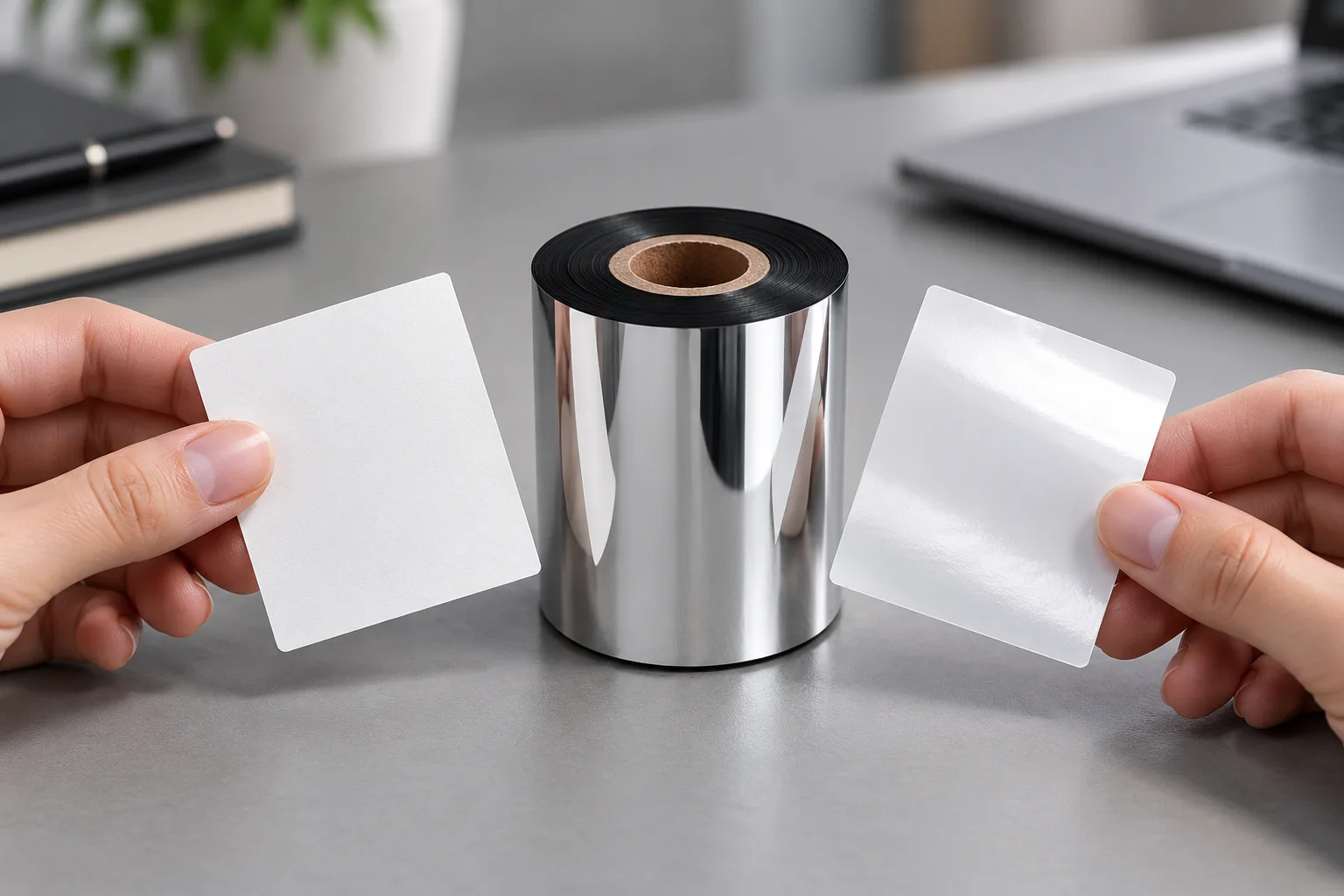
Choose the ink family around the label and its working life
Thermal transfer printing uses printhead heat to transfer ink from a ribbon onto a label. The buying decision is therefore about the printed combination: the label surface must accept the ink, and the resulting image must meet the application’s durability needs. Start with the material you actually print on, then describe what happens to it after printing.
Use wax as the starting point for ordinary paper labels
Wax is an economical option for paper labels such as retail tags, carton identification and general shipping labels. It suits applications dominated by normal handling. If your paper label needs more abrasion resistance, compare a wax/resin sample rather than selecting solely by roll price.
Consider wax/resin when handling becomes more demanding
Wax/resin blends offer better wear resistance than standard wax and suit semi-gloss paper and some synthetic materials. They are worth evaluating when a label moves through repeated handling or needs better resistance to smearing. “Some synthetics” is an important boundary: identify the actual surface coating rather than treating every plastic label as interchangeable.
Evaluate resin for demanding synthetic-label exposure
Resin is a candidate when synthetic labels must withstand chemicals, heat or outdoor conditions. Specify the exposure rather than asking only for a durable ribbon: name the cleaning agent, describe handling and state how long the information must remain readable. Request evidence for the proposed grade under those conditions, then test the combination before approval.
Confirm the printer requirements before choosing the roll
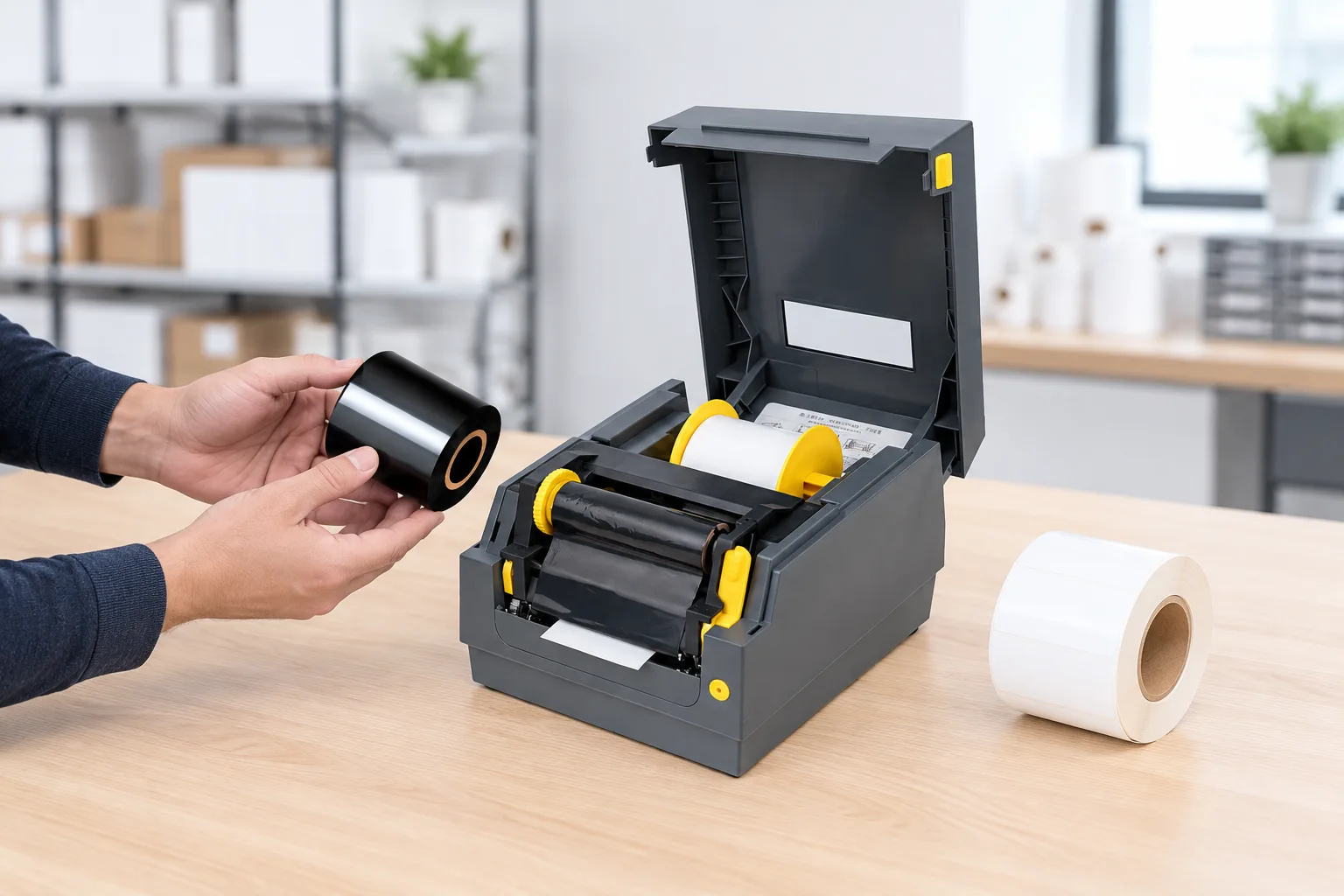
Printhead type influences which thermal transfer ribbon can be used with the equipment. DNP distinguishes flat-head, near-edge and TTO applications when discussing ribbon compatibility. Identify the exact printer model before comparing suppliers; a matching ink family does not complete the equipment check.
Record the required width and length, core diameter and ink-side orientation from the printer specifications. The ribbon should cover the label width, within the printer’s supported limits. Ink-side-in and ink-side-out describe whether the coated surface faces inward or outward around the core; confirm the required winding for the model you operate.
Roll capacity also matters. Shorter ribbons are typically associated with desktop printers, while industrial printers generally use longer rolls. For continuous work, ask which supported roll length fits your production needs. For mixed jobs, list the label stocks and settings separately instead of assuming a successful trial on one stock approves the whole schedule.
Keep the purchase specification together in one record: printer model, printhead type, ribbon dimensions, core, winding and proposed grade. Ask the supplier to confirm that exact combination. Resolve differences before requesting a bulk quote, so a comparison between offers includes the same physical roll and intended application.
Treat packaging codes and colour printing as separate checks
Thermal Transfer Overprinting, or TTO, transfers ribbon ink onto flexible packaging to print variable information such as dates and serial numbers. This is a distinct selection branch for buyers coding packaging on a production line. Give the supplier the packaging material, overprinter model, operating speed and code requirements.
Videojet’s ribbon selection guide states that wax-only ink layers are unsuitable for TTO applications. Begin with a grade specified for the overprinter and packaging application, such as an appropriate wax/resin or resin option. Do not carry a paper-label wax selection into a packaging trial simply because both processes use thermal transfer.
Colour is another requirement to specify separately from durability. Videojet lists colour options within its TTO range, demonstrating that packaging ribbons extend beyond black. That listing does not establish availability or performance for another supplier’s product. Ask for the required colour, substrate and printer combination, and evaluate the printed sample against the actual reading or identification task.
If a quotation includes custom slitting or private-label packaging, request written confirmation of the available specifications and commercial terms. Treat these as items to confirm with the supplier. Avoid basing your buying decision on an assumed custom service or an unverified promise about delivery.
Approve a tested combination before comparing production cost
Ribbon compatibility testing helps prevent smudging and incomplete ink transfer on the selected printer and material. Zebra also identifies reduced waste and reprinting costs as reasons to select the appropriate formulation. Use the trial to compare usable output alongside the price of the ribbon.
- Prepare the application record. Collect the intended label stock, printer model, operating settings and examples of the information you need to print. Describe handling, moisture, chemicals or heat where relevant.
- Request a justified shortlist. Ask why each proposed grade fits the surface and exposure. For coated paper, for example, compare wax with wax/resin if handling resistance is the deciding issue.
- Run a controlled print trial. Print your actual artwork and barcodes on the intended equipment. Record the settings and inspect text, edges and ink coverage; check barcode reading using your application’s agreed acceptance method.
- Check the service conditions. Include representative rubbing or scratching and the relevant environmental exposure in the trial plan. Agree the test method and acceptance criteria before comparing samples.
- Retain the approved specification. Keep the sample, stock identity, ribbon grade and printer settings with the result. Use that record when placing the order or evaluating later changes.
If a sample fails, document whether the problem appeared during printing, reading or exposure testing. Return that evidence to the supplier and review the proposed match and operating instructions before repeating the trial. Change one recorded factor at a time to make the next result useful.
Data and Evidence
The available selection evidence supports matching ribbon chemistry to the label surface and application, followed by printer-specific testing. Use the comparison below to build a shortlist; it is not a universal performance specification for every product within a ribbon family.
| Ribbon family | Starting application | Reason to evaluate it | Decision to verify |
|---|---|---|---|
| Wax | General paper labels, retail tags and shipping identification | Economical paper-label printing | Whether the print survives the intended handling |
| Wax/resin | Semi-gloss paper and some synthetic labels | Better wear and smear resistance than standard wax | Compatibility with the exact surface and exposure |
| Resin | Synthetic labels with chemical, heat or outdoor exposure | A candidate for more demanding durability requirements | The proposed grade’s performance on your stock |
TSC describes wax/resin as a blend suited to semi-gloss paper and some synthetics, with improved resistance compared with standard wax. Etisoft likewise distinguishes paper-label wax applications from wax/resin applications needing greater abrasion resistance. Technicode’s selection information identifies resin for synthetic-label chemical, heat or outdoor durability.
These sources support the choice of candidates, while Zebra’s compatibility guidance supports testing the chosen printer and substrate together. They do not supply a single pass threshold for every barcode, chemical or service life. Before a production order, send the supplier your application record and request sample grades, supporting specifications and a quote tied to the combination you will approve.
Frequently Asked Questions
Which thermal transfer ribbon should I try for PET or polypropylene labels?
Start by evaluating a resin grade for synthetic labels exposed to chemicals or heat. Wax/resin can suit some synthetic surfaces with less demanding exposure, so confirm the exact label coating and test the proposed grade on your printer.
How do I check ribbon compatibility with a Zebra, TSC or Avery printer?
Use the exact printer model and its ribbon specifications to check printhead type, width, length, core and ink-side orientation. A brand name alone is not a purchase specification; ask the supplier to confirm the proposed roll against your model.
Does direct thermal printing need a thermal transfer ribbon?
Direct thermal printing uses heat-sensitive label material without a ribbon. Thermal transfer printing uses a ribbon and is a candidate when a longer-lasting image is needed; select the label and ribbon together for the intended exposure.
What should I include in a request for custom ribbon rolls?
Provide the required width, length, core, winding direction, printer model, label material and application. Ask the supplier to confirm whether those specifications are available, along with sample arrangements, minimum order quantity and lead time, before committing.
Recommended products for this industry
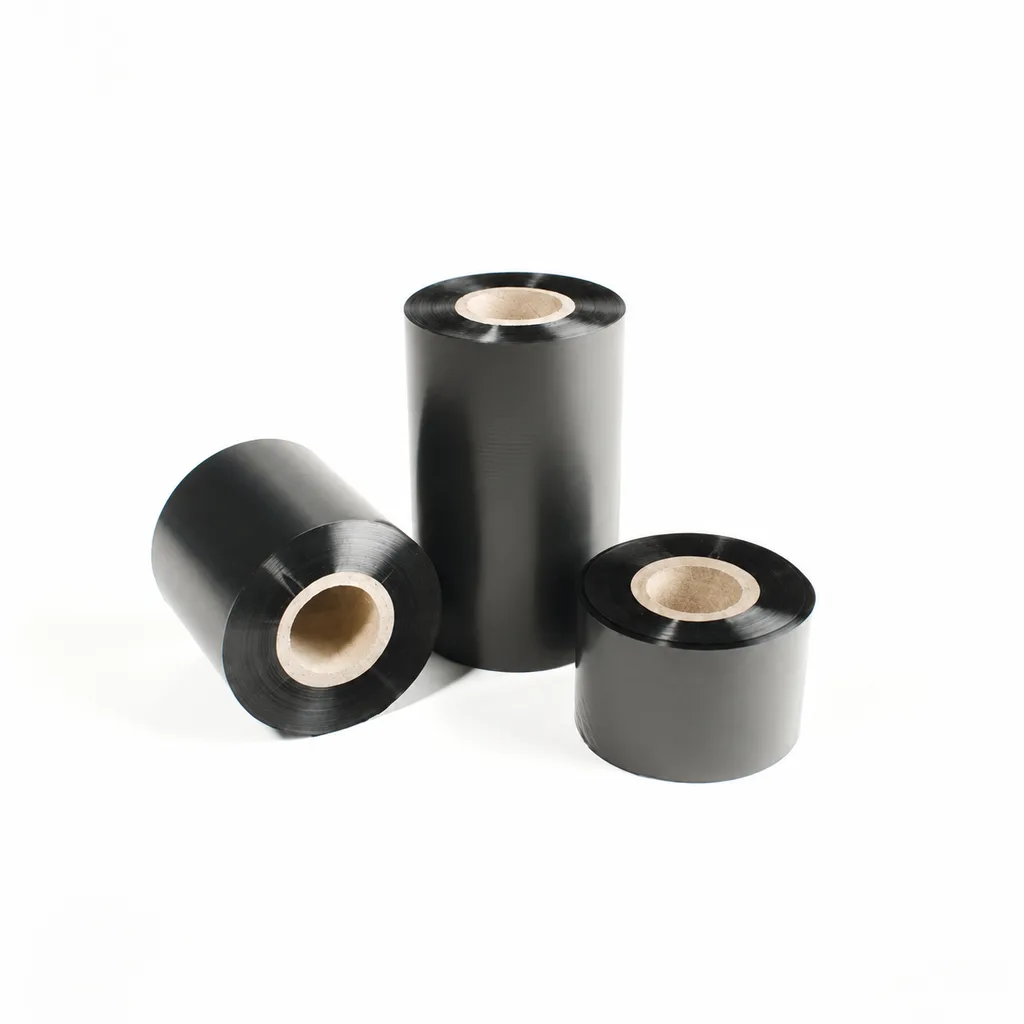
CL-Z112 Enhanced Wax Thermal Transfer Ribbon for Paper Labels and Tags
An enhanced wax thermal transfer ribbon with black ink for paper labels and tags used in retail, warehousing and logistics. It is specified for flat-head printing on desktop or industrial barcode printers at ≤8 inches per second (ips). Select it by checking the actual label material, printer configuration and handling conditions: image-quality, rub-resistance and cold-chamber results were obtained on coated paper, and print quality and image durability may vary with the printer and print medium.
View details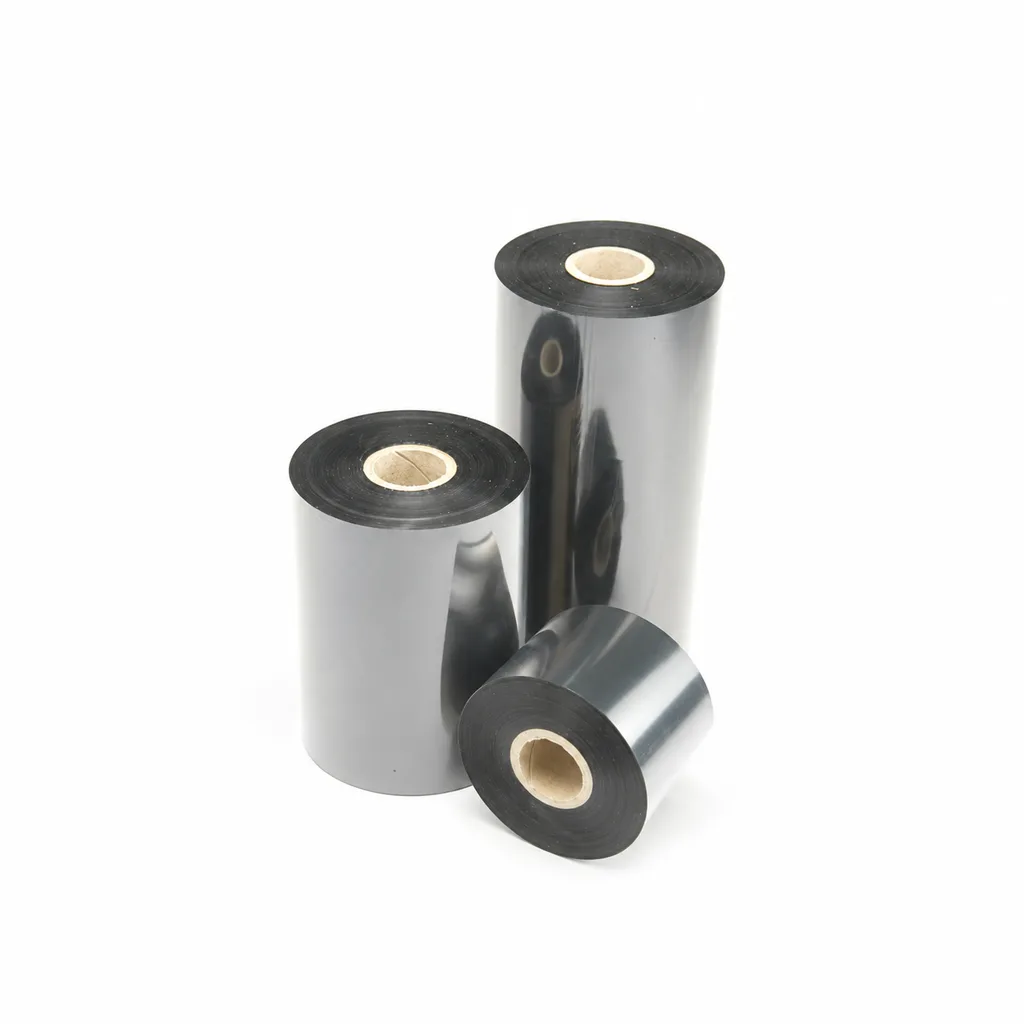
CL-Z203 Wax-Resin Thermal Transfer Ribbon for Barcode Labels
A black wax-resin thermal transfer ribbon for flat-head printing, with listed applications including retail, warehousing, logistics and garment tags. Select it against your actual label material and desktop or industrial barcode printer at speeds ≤6 ips (inches per second). Fine-line, small-text and durability results were obtained on coated paper; print quality and image durability may vary with the printer and printing substrate.
View details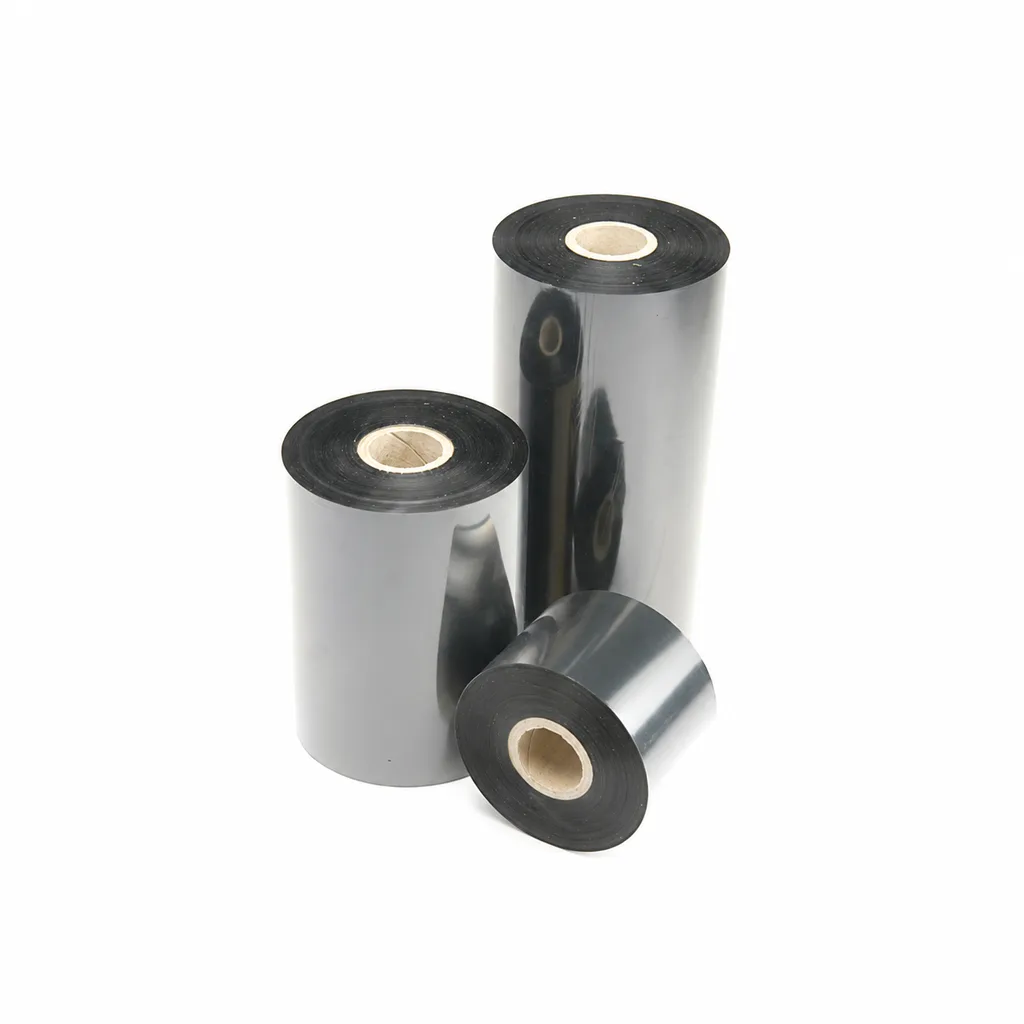
CL-Z213 Near-Edge Wax-Resin Thermal Transfer Ribbon for Barcode Labels
An enhanced black near-edge wax-resin thermal transfer ribbon for near-edge barcode printers and low- to medium-speed thermal transfer overprinting (TTO). Listed applications include retail labels, warehousing, garment tags and packaging identification. Match the printer, actual print medium and operating speed before selection: print quality and image durability can vary with the printer and substrate.
View details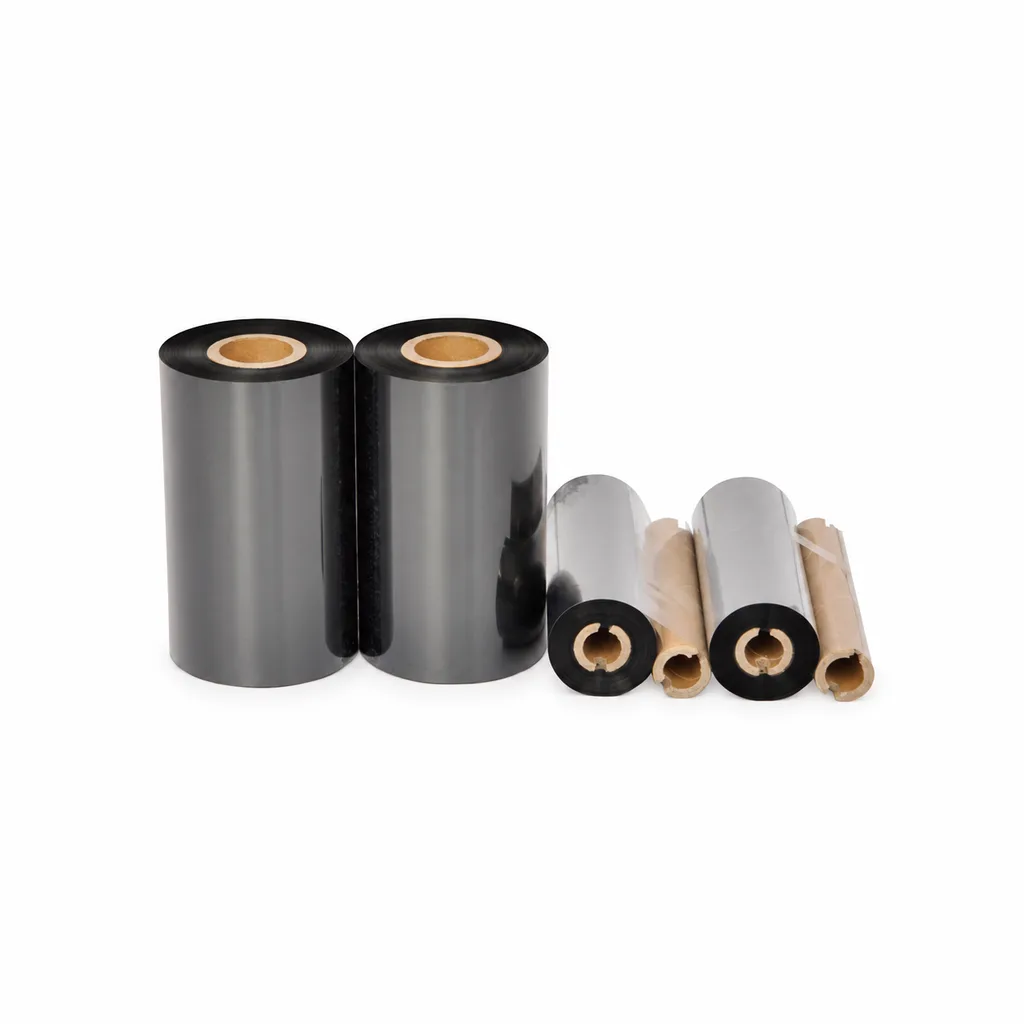
CL-Z908 Wax Thermal Transfer Ribbon for Barcode Labels and Tags
CL-Z908 is an economical black wax thermal transfer ribbon for label and tag printing. Listed applications include retail, warehousing, logistics, clothing tags, simple packaging and production line identification. It is intended for flat-head printing on desktop or industrial barcode printers at speeds of ≤6 inches per second (ips). Select it against your actual paper stock, printer and required image durability: print quality and image durability may vary with the printer and printing substrate.
View detailsNeed the right ribbon for your label application?
Share the label material, printer and operating environment. Our team will recommend a tested combination.
