
Thermal Transfer Ribbon Qualification Checklist for Industrial Barcode Labels
Request a solution
- Original TTR manufacturer since 2013
- Automated coating and slitting
- IQC / IPQC / OQC control
- ANSI barcode grade testing
- -20°C to 120°C environmental testing
- Batch-level traceability
- ANSI barcode grade
- Batch traceability
- RoHS / REACH compliance
- SGS and MSDS documents on request
Buyers qualifying thermal transfer ribbons for industrial barcode labels should pass four gates: confirm the printer model, print mode, and ribbon dimensions; match the ribbon family to the label face material using the current catalog and TDS; qualify the exact label-and-ribbon combination with a recorded sample print; and fix specifications and batch terms for repeat orders. Catalog resistance notes describe the ribbon grade rather than your application, so acceptance limits come from the buyer's specification and applicable standards, verified on printed samples.
Key Takeaways
- Ribbon compatibility is confirmed against the printer model — print mode, ribbon width, core, maximum length, and wound direction — not against the brand name alone.
- Wax ribbons print at low temperature and low cost on coated papers and hang tags; hybrid and resin grades add the abrasion, heat, and chemical resistance that film and synthetic labels need.
- Wash-care resin ribbons are the family for care labels on satin, nylon, and webbing because the image survives detergents and dry cleaning.
- Near-edge TTO ribbons for Videojet, DOMINO, and Markem Imaje coders must not run in flat-head barcode printers.
- A qualification covers only the tested label-and-ribbon combination, so record print settings, environment, and inspection results against acceptance limits from your own specification.
Confirm the Printer Model, Print Mode, and Ribbon Dimensions First
Ribbon qualification starts at the printer, because the print mode and ribbon path decide which ribbons can physically run. Thermal transfer printing needs a ribbon and produces durable characters, while direct thermal printing uses heat-sensitive paper and no ribbon, so ribbons only apply to thermal transfer jobs. Flat-head desktop and industrial printers take wax, hybrid, and resin flat-head ribbons — the flat-head ribbon line lists Zebra, SATO, Honeywell/Intermec, TSC, Datamax, Godex, Argox, Postek, Brady, and cab — while near-edge TTO coders such as Videojet, DOMINO, and Markem Imaje take TTO ribbons like the hybrid CL926. The two formats are not interchangeable, and the TTO line is explicitly not usable in flat-head barcode printers.
Next, check dimensions against the actual model's manual. The JT452/JT453 desktop printers take wax, enhanced wax, hybrid, and resin ribbons in 1–4 inch widths with 0.5"/1" cores and a 67 mm maximum outer diameter; because the source documents conflict on maximum ribbon length, use the external specification of no more than 300 m on a 1" axle pending supplier confirmation; the Q light-industrial line takes wax, hybrid, and resin ribbons in 30–110 mm widths, up to 450 m on a 1" axle with a 75 mm maximum outer diameter. Wound direction matters just as much: ribbons come ink-side-in (CSI) or ink-side-out (CSO), and the direction differs by model even within one brand — the adaptation table lists Datamax and Sato models as mostly ink-side-in, with outer-wound rolls also possible for Datamax. Confirm width, core, length limit, and wind direction from the printer specification instead of assuming from the brand.
Finally, check that the label face material is on the printer's supported media list. The JT452/JT453 desktop printers list direct thermal paper, art paper, silver PET, self-adhesive labels, hang tags, wash-care material, and tickets; the Q420/Q430/Q460 light-industrial printers independently list wash-care labels, silk satin, self-adhesive labels, hang tags, tickets, and direct thermal paper. Media that is not listed, such as metal or cards thicker than 1mm, needs a print test before anyone commits to results.
Match the Ribbon Family to the Label Material and Exposure Conditions
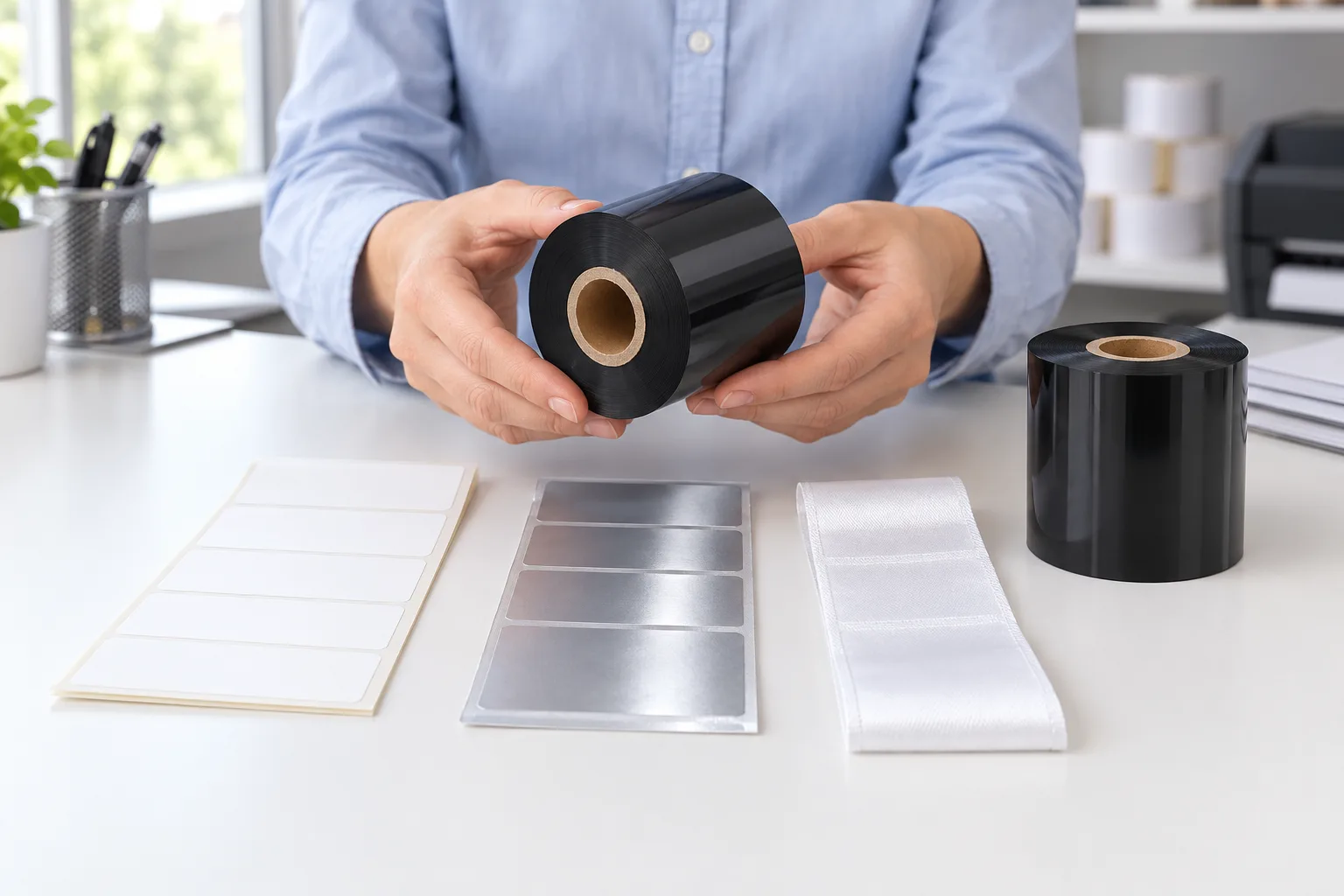
Ribbon chemistry follows the label face material and the conditions the printed label will meet. Wax ribbons deliver high sensitivity and density at low print temperature and low cost, which suits coated paper, label stock, and hang tags in food, retail, warehousing, ticketing, and packaging, but they are not scratch-resistant. Hybrid wax/resin ribbons balance print quality with durability and abrasion resistance on paper, PVC, hang tags, and synthetic paper, with stronger grades such as the super-scratch-resistant CL805 and the film-capable CL508T. Full resin ribbons add heat and corrosion resistance for durable identification: the catalog lists the general grade CL801 for paper, hang tags, and synthetic materials, and enhanced grades CL500/CL501 for PET/PVC/PP labels in electronics and pharmaceutical work.
Wash-care resin ribbons are the match for garment care labels: the family resists scratching, smearing, alcohol and other chemicals, and keeps a clear image after washing with detergents including dry cleaning, with CL609 listed for wash-care satin, nylon, and webbing. For date and batch coding on flexible packaging, TTO ribbons print on aluminum foil bags and PP, PET, PE, PVC, or PS films in near-edge coders.
Draw these boundaries from the supplier's current catalog and the ribbon TDS, and keep durability statements conditional. The archived TDS for CL507, CL508, CL609, and CL807A recommends PP / PET / synthetic paper labels and specifies 10 ips (250mm/s) print speed for the first three and 8 ips (200mm/s) for CL807A, while the CL926 TTO ribbon runs 24 ips (600mm/s) on soft packaging bags. Each TDS states that its information is a general material guide subject to change, so treat catalog resistance notes as selection direction rather than a durability guarantee for your labels.
Qualify the Combination With a Recorded Sample Print
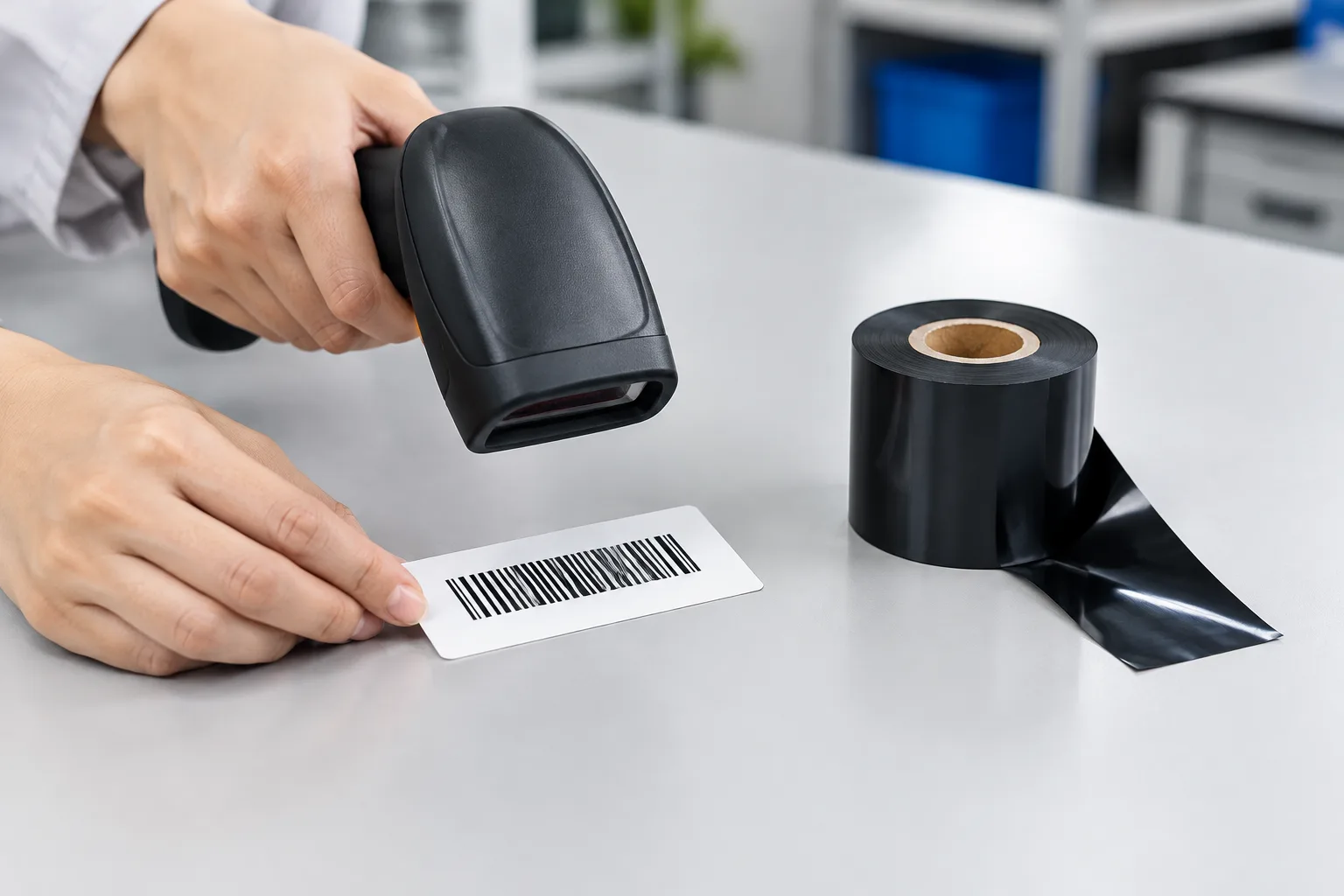
A ribbon is only qualified on your label stock, your printer, and your production settings, because catalog pairings do not transfer automatically to a specific application. Request sample rolls in the supplier's standard sample sizes, print them on the production printer with the label material and lot you will actually use, and check scannability with the scanner or verifier your application requires.
Record what defines the test: ribbon model and batch, label material and lot, printer model, print speed and darkness or energy settings, and the storage and service environment. Product storage is specified at 5–35℃ and 30–70% RH with a 1–2 year shelf life, and the TDS usage window for these grades is 5~35°C / 30~85%RH. Inspection should cover print density and clarity plus the abrasion, scratch, and chemical resistance the labels face — the same points the supplier's own quality control tracks.
Set acceptance limits before mass production from your specification and any applicable standard agreed with the supplier; catalog and TDS values are selection guides, not batch acceptance criteria. If samples fail, rule out handling causes first — exposure to sunlight or moisture, wrinkles or white lines from winding problems, white spots from dust — then retest or step up a grade.
Close Out the Procurement Checklist Before You Order
The checklist below turns the qualification into a sign-off sheet you can attach to the purchase order:
- Printer model and print mode confirmed: thermal transfer, flat-head or near-edge.
- Label face material and size matched to a ribbon family from the current catalog, with the grade's TDS on file.
- Ribbon dimensions confirmed against the printer specification: width, length, core, and wound direction.
- Sample received in the agreed size (standard 110mm×10m, TTO 33mm×50m) and printed on the production printer with the production label lot.
- Qualification record complete: combination, print settings, environment, inspection results, and acceptance limits from your specification.
- Repeat-order terms fixed: batch consistency and packaging, shelf life and storage conditions, and the minimum order quantity, calculated as master roll width ÷ your custom width.
Keep the record with the batch number of the first production ribbon so later deliveries can be checked against the qualified combination.
Data and Evidence
The parameters below come from the current product catalog and the archived TDS documents for the five grades that have one. Each TDS notes that its values are a general guide and may change, so confirm the current document before finalizing a specification.
| Ribbon family | Typical face materials | Resistance profile |
|---|---|---|
| Wax | Coated paper, label stock, hang tags, glossy paper | High sensitivity and density at low print temperature, economical; not scratch-resistant |
| Hybrid (wax/resin) | Paper, PVC, hang tags, glossy paper, synthetic paper; film-capable grades for film labels | Balanced print quality and durability; abrasion-resistant |
| Full resin | Paper, hang tags, synthetic materials; PP / PET / synthetic paper per archived TDS | Abrasion-, heat-, and corrosion-resistant for durable identification |
| Wash-care resin | Wash-care satin, nylon, webbing | Resists scratching, alcohol, detergents, and dry cleaning; image stays clear after washing |
| Grade | Type | Film thickness | Print speed | TDS-recommended labels | Head type |
|---|---|---|---|---|---|
| CL507 | Resin | 4.5±0.5µm | 10 ips (250mm/s) | PP / PET / synthetic paper | Flat-head |
| CL508 | Wash resin | 4.5±0.5µm | 10 ips (250mm/s) | PP / PET / synthetic paper | Flat-head |
| CL609 | Wash resin | 5.5±0.5µm | 10 ips (250mm/s) | PP / PET / synthetic paper | Flat-head |
| CL807A | Resin | 4.5±0.4µm | 8 ips (200mm/s) | PP / PET / synthetic paper | Flat-head |
| CL926 | TTO hybrid | 5.1±0.4µm | 24 ips (600mm/s) | Soft packaging bags | Near-edge |
All five grades list 2.2 Macbeth print density. Standard ribbon widths run 40–110mm with lengths of 74/90/300/450m (custom 20–220mm × 70–600m, plus non-standard widths such as 118mm, 220mm, and 256mm), and TTO widths are 33mm / 55mm as standard. Verify candidates on your combination as the checklist describes, and store rolls at 5–35℃ and 30–70% RH away from direct sunlight and moisture, which affect print quality.
Frequently Asked Questions
How do I check whether a thermal transfer ribbon fits my Zebra or SATO printer?
Match the ribbon to the printer model, not the brand. Confirm the machine is a flat-head thermal transfer printer, then read the ribbon specifications in its manual: ribbon width, core size, maximum ribbon length and roll diameter, and the ink-side wound direction. These details vary by model even within one brand, so a brand name alone is not a compatibility guarantee.
Can a TTO ribbon run in a flat-head industrial barcode printer?
No. TTO ribbons are near-edge products built for high-speed coders from Videojet, DOMINO, and Markem Imaje, and the product line states they must not be used in flat-head barcode printers. Order flat-head wax, hybrid, or resin ribbons for desktop and industrial label printers.
Which thermal transfer ribbon survives washing on satin or nylon care labels?
Use a wash-care resin grade. The catalog lists CL609 for wash-care satin, nylon, and webbing, with resistance to scratching, alcohol, detergents, and dry cleaning. Print a 110mm×10m sample on your actual care-label stock, run your wash process, and check the result against your specification before releasing the purchase order.
What should I record when testing ribbon samples for industrial barcode labels?
Capture the ribbon model and batch, the label material and lot, the printer model, print speed and darkness settings, the storage and service environment, and inspection results for print density, clarity, and the abrasion or chemical exposure the labels face. A complete record lets you reproduce the print and isolate the cause if a later batch prints differently.
What ribbon sample size can I request before a bulk order?
Standard samples are 110mm×10m for barcode ribbons and 33mm×50m for TTO ribbons, slit to the width you need. Non-standard widths such as 118mm, 220mm, or 256mm are produced to customer width requirements. Send your printer model and label width with the sample request so the sample matches your production setup.
Recommended products for this industry
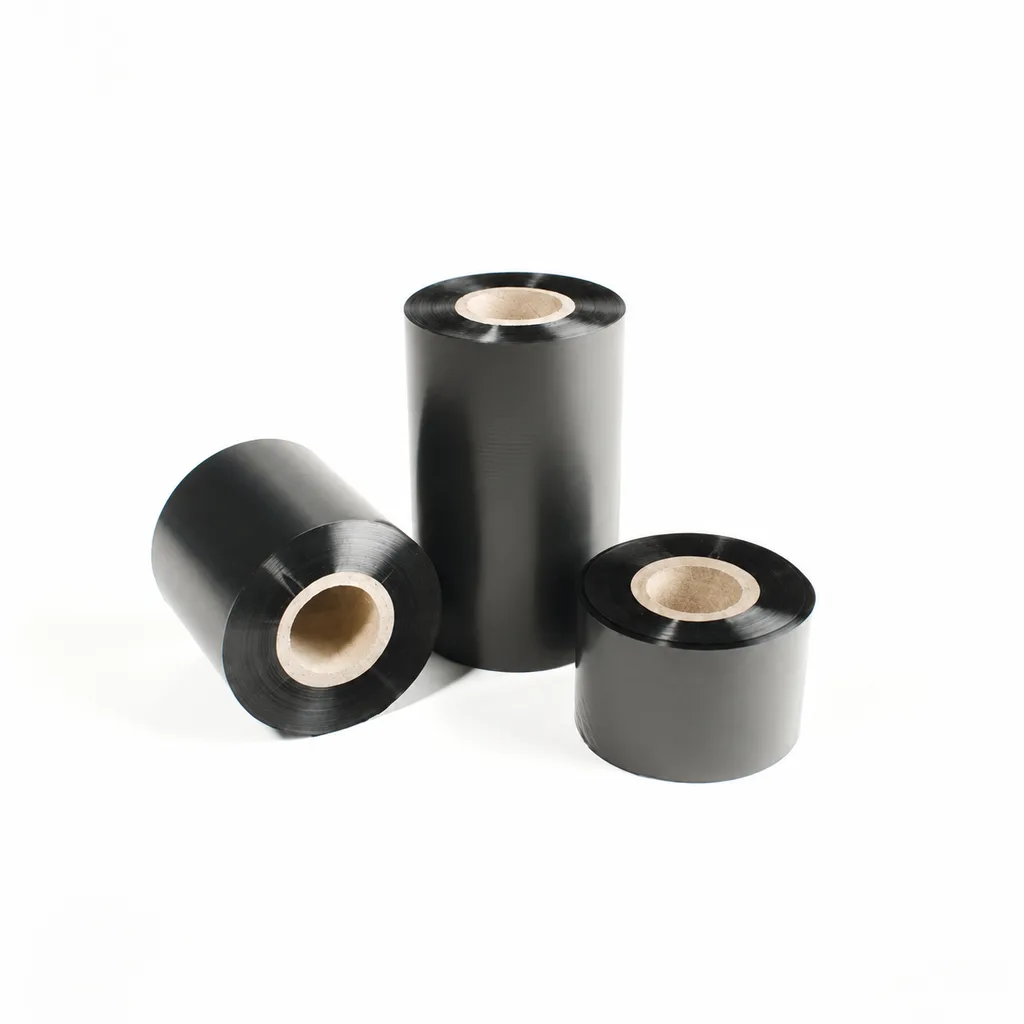
CL-Z112 Enhanced Wax Thermal Transfer Ribbon for Paper Labels and Tags
An enhanced wax thermal transfer ribbon with black ink for paper labels and tags used in retail, warehousing and logistics. It is specified for flat-head printing on desktop or industrial barcode printers at ≤8 inches per second (ips). Select it by checking the actual label material, printer configuration and handling conditions: image-quality, rub-resistance and cold-chamber results were obtained on coated paper, and print quality and image durability may vary with the printer and print medium.
View details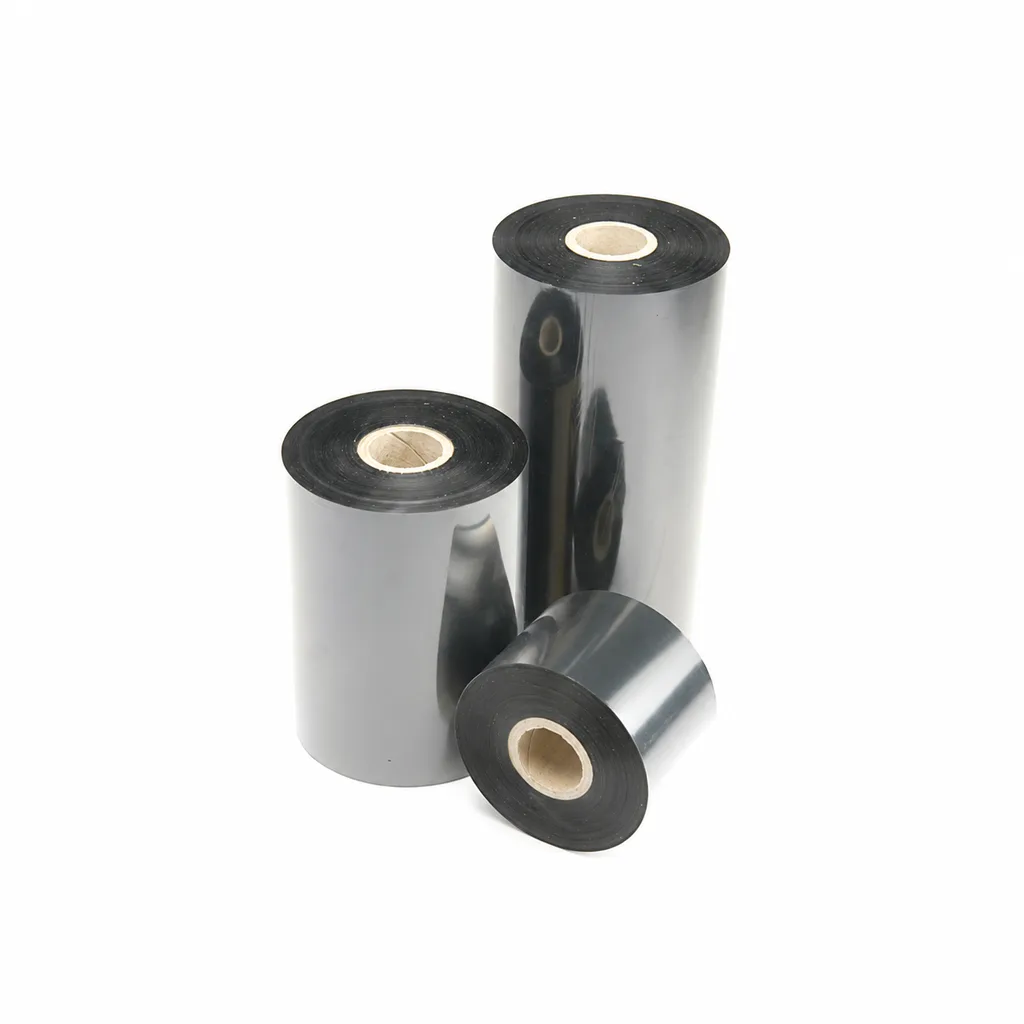
CL-Z213 Near-Edge Wax-Resin Thermal Transfer Ribbon for Barcode Labels
An enhanced black near-edge wax-resin thermal transfer ribbon for near-edge barcode printers and low- to medium-speed thermal transfer overprinting (TTO). Listed applications include retail labels, warehousing, garment tags and packaging identification. Match the printer, actual print medium and operating speed before selection: print quality and image durability can vary with the printer and substrate.
View details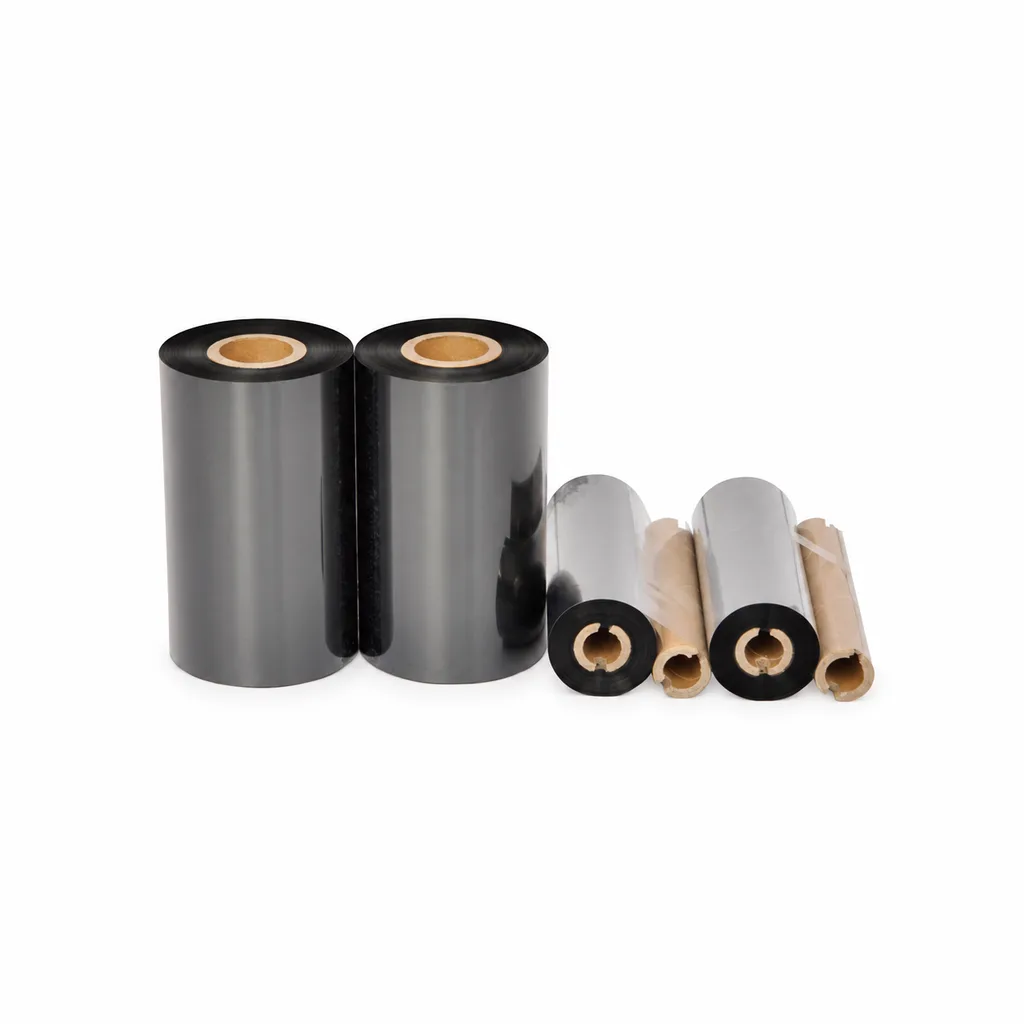
CL-Z908 Wax Thermal Transfer Ribbon for Barcode Labels and Tags
CL-Z908 is an economical black wax thermal transfer ribbon for label and tag printing. Listed applications include retail, warehousing, logistics, clothing tags, simple packaging and production line identification. It is intended for flat-head printing on desktop or industrial barcode printers at speeds of ≤6 inches per second (ips). Select it against your actual paper stock, printer and required image durability: print quality and image durability may vary with the printer and printing substrate.
View details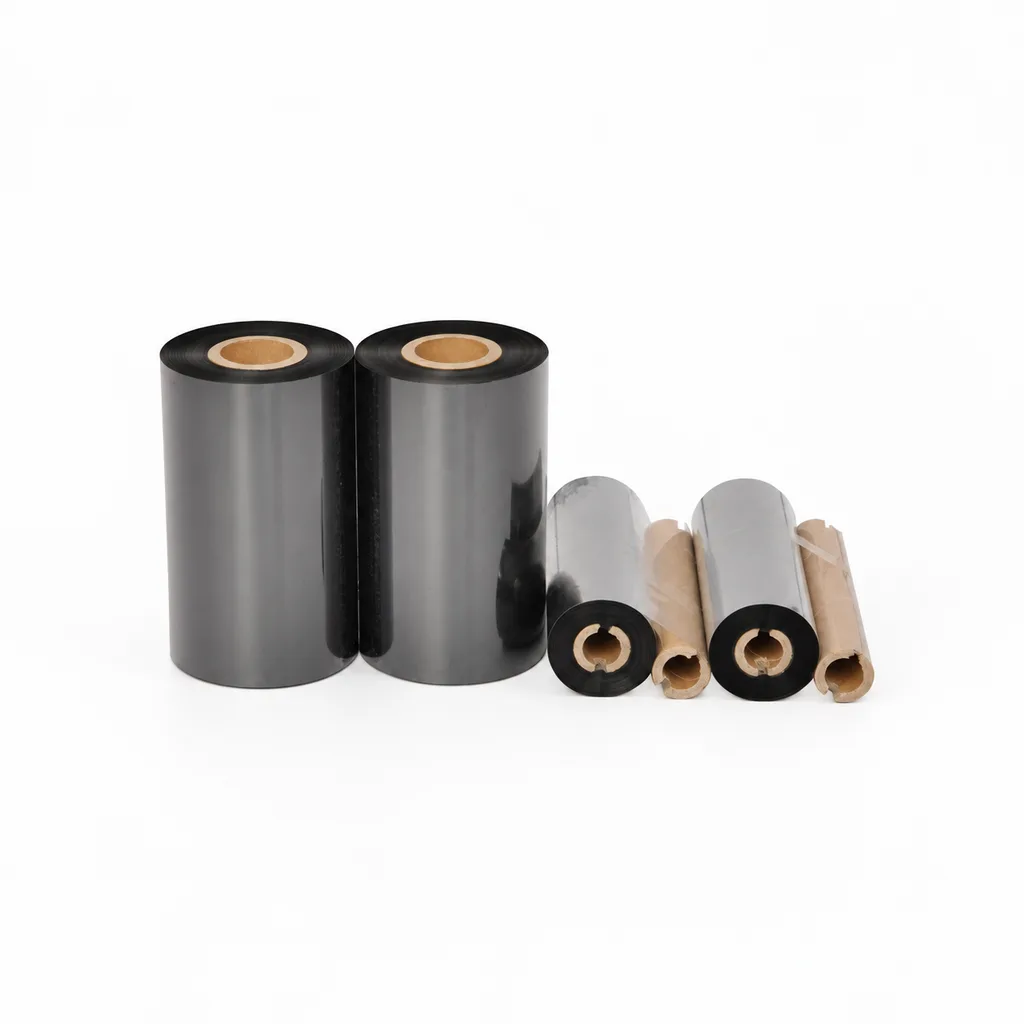
CL-Z908PLUS Wax Thermal Transfer Ribbon for Paper Labels
An economical black wax thermal transfer ribbon for flat-head printing of paper labels in retail, warehousing, logistics, simple packaging and production lines, with garment hangtags also listed as an application. The recommended printing speed is ≤8 inches per second (ips) on desktop or industrial barcode printers. Select it against your actual label material and printer: the material adaptability chart lists lower values for cardstock and hangtags, and print quality and image durability may vary with the printer and print medium.
View detailsNeed the right ribbon for your label application?
Share the label material, printer and operating environment. Our team will recommend a tested combination.
