
Ribbon Core Size 1 Inch vs 3 Inch Comparison: A B2B Buyer's Guide
Request a solution
- Original TTR manufacturer since 2013
- Automated coating and slitting
- IQC / IPQC / OQC control
- ANSI barcode grade testing
- -20°C to 120°C environmental testing
- Batch-level traceability
- ANSI barcode grade
- Batch traceability
- RoHS / REACH compliance
- SGS and MSDS documents on request
Key Takeaways
- The core you can use is fixed by your printer's ribbon spindle, so verify it against the printer specification before ordering.
- Desktop thermal transfer printers typically load ribbon on a 1-inch core; the TSC TE Series supports 300m ribbons on a 1-inch core.
- A 3-inch core serves industrial printers running longer rolls, which cuts roll changes and line interruptions at high volume.
- Ribbon core size and label roll core size are two independent specifications that must be confirmed separately on the same printer.
- Judge the formats on total cost per shift — ribbon price plus change labor and stoppage time — not unit price alone.
Why Ribbon Core Size Decides Compatibility, Roll Length, and Downtime
When you run a ribbon core size 1 inch vs 3 inch comparison, the printer makes the first decision: the core must match your machine's ribbon supply spindle before roll length or price means anything. Core size is a purchasing variable, not a cosmetic one, because it controls three things at once — whether a roll physically mounts on your machine, how much ribbon fits on a single roll, and how often an operator stops work to swap an empty roll for a full one.
Order the wrong core and the shipment cannot be loaded, which turns a routine consumable purchase into a return and a re-order. Order the right core with the wrong roll length and the roll mounts but empties too quickly for your shift pattern. The workable approach treats the choice in sequence: printer class first, daily output second, cost structure third. The sections that follow profile each format, then set out a three-step confirmation method and the buying mistakes that generate the most rework.
1-Inch Core Ribbons: The Desktop Printing Standard
Desktop thermal transfer printers typically load ribbon on a 1-inch core, which pairs with the shorter rolls those machines are built to carry. The TSC TE Series shows how core and roll length connect: it supports shorter ribbons on a 0.5-inch core and 300m ribbons on a 1-inch core. The guidance for that series is to confirm exact ribbon width and the TE-series configuration before ordering, and the same discipline applies to any desktop model you run.
The format covers offices printing asset and shelf labels, retail label stations, and small-batch manufacturing lines that top up rolls during the day instead of running them continuously. Rolls stay light enough for one operator to change without disturbing adjacent work, and stock stays compact because each roll needs little shelf space. The buyer who fits this profile prints small-to-mid daily volumes, runs desktop-series machines, and values quick, frequent changes over maximum running time.
Core size says nothing about ink chemistry. Thermal transfer ribbons come in wax, wax-resin, and resin grades, and grade selection follows your substrate and durability requirements, not the spindle. Treat grade and core as two separate decisions on the same order, and confirm with your supplier that the grade you need is wound on the core your machine takes.
3-Inch Core Ribbons: The High-Volume Format
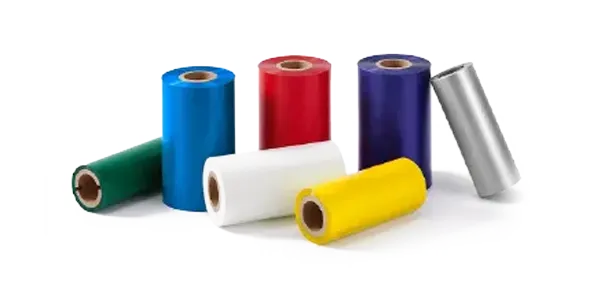
A 3-inch core serves industrial thermal transfer printers, whose larger spindles and heavier transports are designed around longer ribbon rolls. The longer the roll, the fewer times per shift an operator opens the printer, and every avoided change is production time recovered. That is the economic case for the format: it trades roll bulk for running time.
The format maps onto operations that print in bulk rather than on demand — warehouse and logistics shipping labels, continuous production-line printing, and packaging runs that last whole shifts. In these settings a stop costs operator time plus interruption to the line, so a longer roll lowers the labor and downtime share of your printing cost even when the per-meter ribbon price is similar.
Roll length on 3-inch machines varies by printer model, so treat the maximum roll length and core bore as specifications to confirm in your machine documentation rather than numbers to assume. Weigh storage as well: longer rolls are bulkier individually, though you hold fewer of them for the same output, which can simplify consumable planning at the line.
How to Confirm the Right Core Before You Order
Three Steps to Match Core Size to Printer and Output
- Check the printer's ribbon spindle. Read the ribbon-loading section of the printer specification, or measure the spindle that carries the unwound roll, and record the exact core bore it accepts.
- Estimate daily output and change tolerance. From your labels-per-day figure, work out how many roll changes each format implies per shift; if a continuously running line faces multiple changes, the larger core recovers time that smaller rolls lose.
- Review storage and handling. Longer rolls take more space per roll and more care when mounting, so make sure the people loading them can do it safely at the frequency you plan.
Three Buying Mistakes That Cause Rework
The first mistake is applying the label roll core to the ribbon core. On the same printer the label roll and the ribbon roll mount on different spindles, and their core sizes are specified independently — a common source of wrongly ordered ribbon. Check both specifications separately and never copy one into the other.
The second is assuming an adapter exists. Some printers accept smaller cores with a bushing or adapter, but capability differs by machine, so unless your documentation states it, order the core the printer is specified for. The third is comparing unit price alone. A cheaper roll that empties twice as often adds change labor and stoppage time, so compare total cost per shift and request quotations that state core size, width, grade, and roll length together.
Data and Evidence
The table below sets the two formats side by side; treat printer class as the primary filter and daily print volume as the tie-breaker.
| Dimension | 1-Inch Core | 3-Inch Core |
|---|---|---|
| Printer class | Desktop thermal transfer printers | Industrial thermal transfer printers |
| Roll length | Shorter rolls; 300m supported on the TSC TE Series | Longer rolls; maximum varies by printer model |
| Roll changes at equal output | More frequent | Less frequent |
| Handling | Light rolls, quick single-operator change | Bulkier rolls, plan mounting care |
| Best-fit buyer | Small-to-mid daily volume: office, retail, small-batch production | High-volume lines: logistics, manufacturing, packaging |
Two verification methods back this guide. Machine-side, the printer specification names the core bore the ribbon spindle accepts, and the spindle can be measured directly. Model-side, the TSC TE Series supports shorter ribbons on a 0.5-inch core and 300m ribbons on a 1-inch core, with explicit advice to confirm exact ribbon width and the TE-series configuration before ordering. Roll lengths for 3-inch formats depend on the individual machine, so no single number fits all — state core size, width, grade, and roll length together whenever you request a quotation.
Frequently Asked Questions
Can I use a 1-inch core ribbon on a printer designed for 3-inch cores with an adapter?
Some industrial printers accept smaller cores with a bushing or adapter, but the capability differs by machine and model. Unless your printer documentation explicitly states adapter support, order the core size the machine is specified for, and confirm with the printer supplier before deviating.
Does ribbon core size affect print quality or only roll length?
Core size governs how the roll mounts and how much ribbon it carries, not the ink chemistry. Print quality is driven by ribbon grade — wax, wax-resin, or resin — together with printer settings and the label substrate, so choose the grade for your application and the core for your machine.
How do I confirm which core size my thermal transfer printer accepts?
Read the ribbon-loading section of the printer specification, or measure the ribbon supply spindle directly. Then confirm the exact ribbon width and your machine's configuration before ordering — the same discipline recommended for the TSC TE Series.
Is a 3-inch core ribbon always cheaper per meter than a 1-inch core ribbon?
Not automatically. Per-meter cost depends on ribbon grade, width, order volume, and supplier pricing, so the same format can price differently between orders. The dependable saving at high volume is operational: fewer roll changes mean less labor and less line interruption per shift.
Do ribbon cores and label roll cores need to match on the same printer?
No. The ribbon roll and the label roll mount on different spindles, and their core sizes are independent specifications. Confirm each against its own specification before ordering, because copying one to the other is a common cause of wrongly ordered ribbon.
Recommended products for this industry
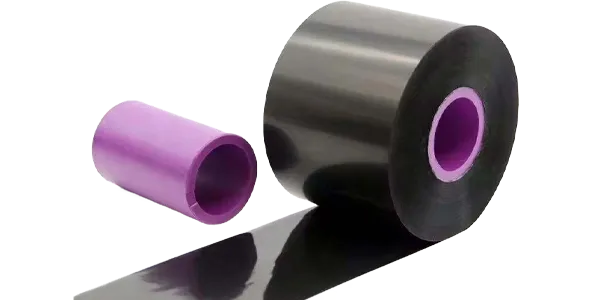
Width 33mm Length 600mm Plastic core near-edge TTO ribbon
TTO Barcode Printer Thermal Transfer Colour Ribbon High-Speed Customisation This TTO…
View details
3-inch mobile printer
These lightweight and cost-effective 3-inch mobile printers enable accurate receipt and…
View details
4-inch lightweight industrial printer
Industrial printers are engineered for lightweight construction, straightforward…
View details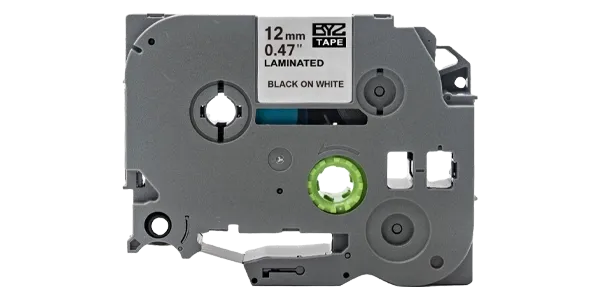
Brother Compatible Label Ribbons (TZe Series)
This Brother-compatible label ribbon (TZe series) is manufactured using high-quality…
View detailsNeed the right ribbon for your label application?
Share the label material, printer and operating environment. Our team will recommend a tested combination.
