
Industrieetiketten Explained: What Industrial Labels Are and How to Print Them Durably
Request a solution
- Original TTR manufacturer since 2013
- Automated coating and slitting
- IQC / IPQC / OQC control
- ANSI barcode grade testing
- -20°C to 120°C environmental testing
- Batch-level traceability
- ANSI barcode grade
- Batch traceability
- RoHS / REACH compliance
- SGS and MSDS documents on request
Key Takeaways
- Industrieetiketten are labels built for industrial marking, and their durability comes from synthetic face materials plus a correctly matched thermal transfer ribbon.
- Thermal transfer ribbons best suited for synthetic materials like polyester, polypropylene, and vinyl resist scratches, smudges, heat, water, chemicals, and abrasion.
- Full resin is the most expensive ribbon option but also the most durable, withstanding abrasion, moisture, extreme temperatures, sun exposure, and some chemicals or oils.
- Ribbons must be compatible with the specific printer and label material, and testing prevents smudging and incomplete transfers.
- Identifying the right ribbon formulation for the application avoids wastage and reduces reprint costs.
What Industrieetiketten Are and What Makes Them Industrial
Industrieetiketten are labels designed for industrial identification work: marking products, equipment, and packaging so they can be identified and tracked through production, storage, and shipping. What separates them from everyday office labels is that the printed information must stay readable for the life of the item, through handling, wiping, and whatever conditions surround it.
That staying power starts with the label face. Demanding industrial applications are printed on synthetic materials — polyester, polypropylene, and vinyl are the standard examples — because these films carry the resistance the job needs. Thermal transfer ribbons that are best suited for printing on these synthetic materials provide exceptional resistance to scratches, smudges, and environmental factors such as heat, water, chemicals, and abrasion, so the printed image can last as long as the label film itself.
The label stock, however, is only half of the system. The ink that forms the barcode, serial number, or rating text comes from a thermal transfer ribbon, which means the ribbon's formulation decides how much of that durability actually reaches the print.
How Thermal Transfer Printing Produces Durable Industrial Labels
Thermal transfer printing forms the image by transferring ink from a ribbon onto the label face with heat from the printhead. Because the ink comes from the ribbon rather than the printer, the formulation you load — not the printer alone — sets the ceiling on print durability.
Ribbons come in several formulations for thermal transfer label printing, and full resin sits at the heavy-duty end. Resin is the most expensive of the ribbon options but also the most durable: materials printed with these ribbons can withstand abrasion, moisture, extreme temperatures and sun exposure and can be resistant to some chemicals or oils. Resin ribbons are known for their excellent high-temperature resistance, friction resistance, and chemical resistance, which is why they are widely used in the printing industry.
In practice, the service conditions of the label decide how much ribbon you need. A label applied to a clean, indoor carton asks less of the ribbon than one fixed to equipment that gets handled daily, cleaned with chemicals, or installed outdoors. Match the formulation to the worst condition the label will meet, not the average one.
Match the Ribbon to the Label Material Before You Order
A thermal transfer ribbon only performs when it is compatible with both the printer and the label material, because compatibility is specific to each combination rather than universal. This is the question buyers of industrieetiketten run into most often: can the same ribbon print different label materials? The practical answer is no — a formulation that prints sharply on one face film can smudge or transfer incompletely on another, so each combination needs its own check.
Work through the selection in this order:
- Record the label's face material — for example polyester, polypropylene, or vinyl — and list the exposures the print must survive: abrasion, moisture, heat, sun, or chemicals.
- Shortlist ribbons suited to that material. Ribbons best suited for printing on synthetic materials like polyester, polypropylene, and vinyl provide resistance to scratches, smudges, heat, water, chemicals, and abrasion; move up to full resin when the label must withstand extreme temperatures, sun exposure, or contact with oils or chemicals.
- Check the ribbon against your printer. Compatibility covers the printer as well as the material, so confirm the ribbon is specified for your model.
- Print a test batch on the actual printer and substrate, and inspect the result. Testing ensures that the ribbon works effectively with the chosen printer and substrate, preventing issues like smudging or incomplete transfers.
- If the test shows smudging or incomplete transfer, read it as a mismatch: switch to a formulation matched to the material and retest before ordering volume.
Settling the formulation early also protects the budget. By identifying the best ribbon formulation for a specific application, companies can avoid wastage and reduce costs associated with reprints.
Data and Evidence
The table below collects the material and ribbon facts that govern industrieetiketten durability, together with the condition each fact depends on.
| Selection factor | What the evidence shows | Condition it depends on |
|---|---|---|
| Synthetic face materials | Ribbons best suited for printing on synthetic materials like polyester, polypropylene, and vinyl provide resistance to scratches, smudges, heat, water, chemicals, and abrasion. | Label uses a synthetic face film. |
| Full resin durability | Resin is the most expensive ribbon option but also the most durable; printed materials can withstand abrasion, moisture, extreme temperatures and sun exposure, and can be resistant to some chemicals or oils. | Label faces harsh exposure and the budget accepts the premium. |
| Heat, friction, and chemicals | Resin ribbons are known for excellent high-temperature resistance, friction resistance, and chemical resistance. | Print must survive heat, rubbing, or chemical contact. |
| Printer and material compatibility | Ribbons must be compatible with specific printers and materials; testing prevents smudging and incomplete transfers. | Every purchase, before a volume order is released. |
To verify a choice, run one test print for every new printer–ribbon–material combination and inspect it for smudging and incomplete transfer before releasing the batch. Where a supplier quotes specific temperature limits or test thresholds, confirm them against your own test result, because durability data belongs to the specific ribbon it was measured on. Your next step is a documented test print on the exact face material you plan to order.
Frequently Asked Questions
Can I use the same ribbon for different label materials?
Not reliably. Ribbons must be compatible with the specific printer and material, so a ribbon that prints cleanly on one face film can smudge or transfer incompletely on another. Test each printer–ribbon–material combination before committing a new label stock to a ribbon.
Which ribbon suits polyester, polypropylene, or vinyl industrial labels?
Ribbons described as best suited for printing on synthetic materials like polyester, polypropylene, and vinyl. They provide resistance to scratches, smudges, and environmental factors such as heat, water, chemicals, and abrasion, which keeps the print readable on synthetic faces.
Is full resin worth the extra cost for industrieetiketten?
It is when the label will face abrasion, moisture, extreme temperatures, sun exposure, or some chemicals or oils: full resin is the most durable ribbon option and also the most expensive. For milder service, test a lower-cost formulation on your material first and pay the resin premium only if that test fails.
Why do my industrial labels smudge or print incompletely?
Usually a mismatch between the ribbon, the printer, and the label material. Testing the ribbon with the chosen printer and substrate catches this before production and prevents issues like smudging or incomplete transfers. If the problem persists, move to a ribbon formulation matched to that face material and retest.
Recommended products for this industry
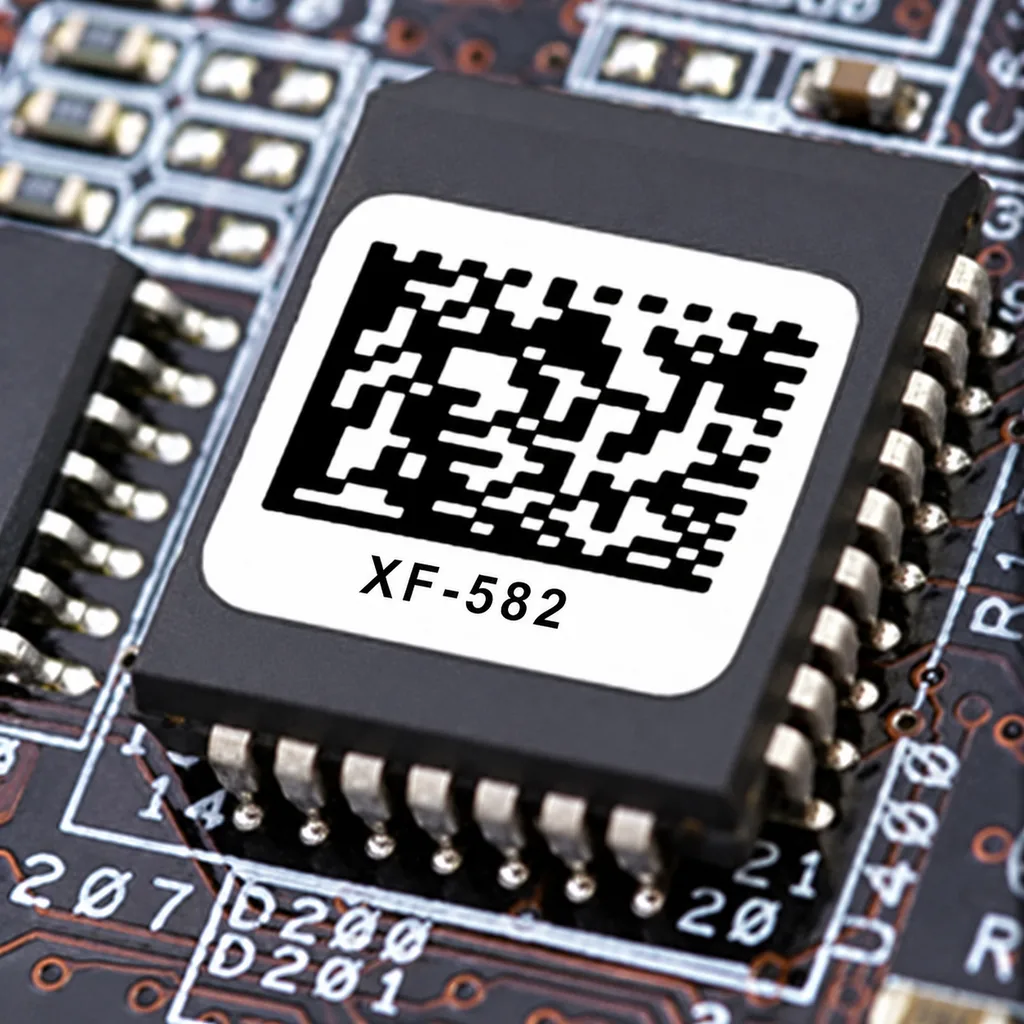
CL-582 High-Temperature Polyimide Labels for Printed Circuit Board Traceability
CL-582 is a high-temperature polyimide (PI) label material for printed circuit board (PCB) and sensitive electronic component process control and product traceability. It has a gloss white coating, a listed thickness of 2mil and an acrylic adhesive. The source identifies wave soldering and reflow soldering as applications. Selection requires confirmation of the actual heat exposure and chemical conditions: the listed temperature range has no specified exposure duration, and solvent resistance is qualitative.
View details
4-inch lightweight industrial printer
Industrial printers are engineered for lightweight construction, straightforward…
View details
Acid and Alkali Resistant Label
Chemical-resistant label construction for acid baths, paint-stripping solutions, alkali…
View details
Aluminum Foil High-Temperature Label
Coated aluminum label for metal processing, heat treatment and high-temperature part…
View detailsNeed the right ribbon for your label application?
Share the label material, printer and operating environment. Our team will recommend a tested combination.
