
What Is a TTR Label? Definition, How It Prints, and What the Term Does Not Tell You
Request a solution
- Original TTR manufacturer since 2013
- Automated coating and slitting
- IQC / IPQC / OQC control
- ANSI barcode grade testing
- -20°C to 120°C environmental testing
- Batch-level traceability
- ANSI barcode grade
- Batch traceability
- RoHS / REACH compliance
- SGS and MSDS documents on request
This guide is for print buyers and production planners who meet the term TTR label in specifications, quotes or printer manuals. A TTR label is a label imaged with a thermal transfer ribbon — TTR is the abbreviation for that ribbon — so the term names a printing method, not one material and not one durability level. The sections below define the term, separate it from TTO and wash-care labeling, and consolidate the catalog parameters you can check a supplier against.
Key Takeaways
- TTR stands for thermal transfer ribbon, so a TTR label is any label printed with that ribbon, whatever the stock — paper, synthetic or fabric.
- The code is applied by a thermal printhead working with a wax, wax-resin or resin ribbon.
- Adjacent terms point to different things: TTO names applying codes to flexible packaging, while wash-care labels are TTR labels on nylon taffeta or polyester satin.
- Every durability figure belongs to a specific ribbon grade and its listed test conditions, so the word TTR alone guarantees none of them.
- Before ordering, match the label material to the ribbon grade in the compatibility chart and confirm darkness settings on your own printer.
What a TTR Label Actually Refers To
A TTR label is a label whose printed image is produced with a thermal transfer ribbon, and TTR is simply the abbreviation for that ribbon. Suppliers use the abbreviation in exactly this sense: Colorfulttr describes its own business as focused on thermal transfer ribbon (TTR) research, production and sales, with a portfolio covering wax, wax-resin, resin, wash-care, TTO and card ribbons. Because the term points to the consumable and the method, it does not tie the label to any stock: an uncoated shipping tag, a matte PP asset label and a sewn garment care label can all be TTR labels, and the catalog treats them as three material classes needing different ribbon families.
Material lists also overlap across imaging methods. The premium wax grade CL110A is recommended for coated paper, uncoated paper and rough tag stock, and the same list includes direct thermal top-coated paper. The stock name and the imaging method are therefore two separate specifications: a label quoted as TTR tells you a ribbon will image it, not which ribbon grade the job needs — and that grade decides print density, scratch resistance and service temperature.
How the Ribbon Produces the Print
A thermal printhead and a ribbon together apply the code to the label: thermal coding is defined as applying a code to flexible packaging such as a flexible film or label by using a thermal printhead and a wax-resin or resin thermal transfer ribbon. You tune the transfer with darkness and speed settings, and a ribbon's printability is a published property: wax ribbons are described as the most economical thermal transfer option, featuring high sensitivity and excellent print density on paper labels.
The catalog splits ribbons into families, and the family decides which stocks a job can run. Wax grades print paper: CL100A covers coated paper with optical density above 1.6; CL110A covers coated and uncoated paper and tag stock at up to 12 ips with optical density above 1.8; CL120A holds clarity at 16 ips on premium coated paper. Wax-resin hybrids — typically 60% wax and 40% resin — extend printing to synthetic stocks: CL210A lists synthetic paper, matte PP, light-coated PET and clothing tag stock, with optical density above 1.9 and service from -10°C to 60°C, and CL220A adds 70% isopropyl alcohol wipe resistance across -20°C to 80°C. The wash-care grade CL230A stands apart: the chart rates it Excellent on nylon taffeta and polyester satin, fabrics on which every other grade is marked No.
Ordering follows the same logic: the ribbon must match the printer physically, with custom widths run from 30mm to 220mm, cores come in 0.5-inch and 1-inch, and the ink coating can be wound inside (CSI) or outside (CSO), so the ink side must be confirmed before ordering. Printer fit is listed per grade — CL110A covers Zebra ZT200, ZT400 and ZT600 series, ZD420, ZD620 and GK/GX printers, plus all flat head thermal transfer printers, while CL240A is the near-edge grade for near-edge printhead technology.
How a TTR Label Differs From Adjacent Terms
Four terms appear in the same quote and do not name the same thing: TTR is the consumable, a TTR label is the printed product, TTO is a packaging-line application, and a washed mark is a sewn textile label. The table keeps them apart.
| Term | What it names | Where you meet it |
|---|---|---|
| TTR | The thermal transfer ribbon itself, in wax, wax-resin, resin, wash-care, TTO and card ribbon families | Ribbon specifications |
| TTR label | Any label imaged with such a ribbon, on paper, synthetic or fabric stock | Label specifications |
| TTO | Applying a code to flexible packaging such as a flexible film or label with a thermal printhead and a wax-resin or resin ribbon | Packaging-line coding |
| Washed mark | Sewn-in thermal transfer clothing labels in nylon or satin | Garment labeling |
TTO is the term most often confused with a general TTR label, because the ribbon chemistry overlaps. Thermal Transfer Overprinting is a digital printing technology that applies a code to flexible packaging such as a flexible film or label by using a thermal printhead and a wax-resin or resin thermal transfer ribbon. It is widely used in food, medical and pharmaceutical applications — wrapped confectionery, bagged snacks, sleeve wrappers for bottles and pharmaceutical labels. A specification that says TTO therefore describes where and how a code is applied on a packaging line, not a distinct label material.
Washed marks sit at the fabric end of the same technology. They are sewn-in clothing labels — the wash mark product line is listed as double-sided thermal transfer printing on nylon cloth for garments and home textiles — and they are why a dedicated ribbon family exists: CL230A withstands 50+ industrial washes at 60°C, professional dry cleaning and 150°C reverse-side ironing, and is the only grade the chart rates Excellent on those fabrics.
What a TTR Label Specification Does Not Tell You
The term does not specify a ribbon grade, and every durability number in the catalog belongs to one. Optical density above 1.6 is CL100A, above 1.8 is CL110A, above 1.9 is CL210A; a 500g rub test at 50+ passes is CL210A and 100+ passes is CL220A; 50+ wash cycles at 60°C is CL230A on taffeta and satin only. A quote that says nothing beyond TTR label has fixed none of these figures — the grade, and with it the durability, remains an open choice.
Catalog settings are not machine settings. The recommended darkness for CL110A is listed as 10-14, and the catalog itself notes that this varies by printer. Treat any published range as a starting point, confirm it on the machine that will run the job, and only then use the result to accept or reject a batch.
Compatibility is per grade and per material, not per term. On PET and PVC the chart rates CL210A only Fair and CL220A Good, with wax grades marked No — a synthetic job specified simply as TTR still needs the chart, and where a cell reads Fair or Good rather than Excellent the pairing deserves a print test first. Durability can also be a compliance matter: for manufacturers shipping hazardous chemicals, industrial products or hardware overseas, label durability is a matter of legal compliance and human safety. There the listed resistances of the chosen grade, verified against your conditions, carry the decision — the term TTR cannot.
Data and Evidence
The table consolidates the catalog data behind this article. Each figure is a catalog value for the named grade, valid for the listed materials and conditions; figures do not transfer between grades.
| Ribbon grade | Family | Listed label materials | Key catalog parameters |
|---|---|---|---|
| CL100A | Economy wax | Coated paper | Optical density >1.6 |
| CL110A | Premium wax | Coated and uncoated paper, tag stock, direct thermal top-coated paper | Up to 12 ips; optical density >1.8; darkness 10-14 (varies by printer) |
| CL120A | High-speed wax | Premium coated paper | Up to 16 ips |
| CL210A | Premium wax-resin hybrid | Coated paper, synthetic paper, matte PP, light-coated PET, clothing tag stock | Optical density >1.9; -10°C to 60°C; 500g rub test 50+ passes |
| CL220A | Chemical-resistant hybrid | Synthetic paper, PP, PET, PVC, coated paper | 70% isopropyl alcohol wipes; -20°C to 80°C; 500g rub test 100+ passes |
| CL230A | Wash-care hybrid | Nylon taffeta, polyester satin, acetate, coated fabrics | 50+ industrial washes at 60°C; dry cleaning; 150°C reverse-side ironing |
Sources: COLORFULTTR wax and wax-resin product catalog (ribbon grades, parameters and material ratings); 公司简介-2025 (company scope); 洗水唛产品清单 20260811 (washed mark product examples); verified fact-sheet entries for the TTO definition, TTO applications and label durability.
To verify a specification before ordering:
- Match your label material to the chart cell for the specific grade rather than trusting the family name.
- Confirm ribbon width, core size and ink side (CSI or CSO) against the printer; all three are ordering options.
- Confirm darkness on your own printer rather than adopting a catalog range as a fixed setting.
- Where the chart shows Fair or Good, print a test on your actual stock before committing a production batch.
Frequently Asked Questions
What does TTR mean in label and ribbon specifications?
TTR stands for thermal transfer ribbon. A TTR label is a label printed with such a ribbon, and the term covers paper, synthetic and fabric stocks alike — it names neither a material nor a durability level.
Is a TTR label the same as a TTO code on flexible packaging?
No. TTO, Thermal Transfer Overprinting, applies a code to flexible packaging such as a flexible film or label by using a thermal printhead and a wax-resin or resin ribbon, typically on food and pharmaceutical packaging lines. A TTR label is the broader category of labels imaged with a ribbon.
Can I print polyester satin care labels with a standard wax ribbon?
The compatibility chart rates nylon taffeta and polyester satin Excellent only with the wash-care grade CL230A; every wax grade in the chart is marked No for those fabrics.
Do catalog darkness settings like 10-14 apply to every printer?
No. The catalog lists CL110A recommended darkness as 10-14 and states that it varies by printer, so treat published ranges as a starting point and confirm on the machine that will run the job.
How durable is the print on a TTR label?
Durability belongs to the ribbon grade, not the term: CL210A lists a 500g rub test at 50+ passes and service from -10°C to 60°C, CL220A lists 70% isopropyl alcohol wipes and -20°C to 80°C, and CL230A lists 50+ industrial washes at 60°C on taffeta and satin. Choose by the listed condition that matches your application.
Related Products & Guides
Recommended products for this industry

Acid and Alkali Resistant Label
Chemical-resistant label construction for acid baths, paint-stripping solutions, alkali…
View details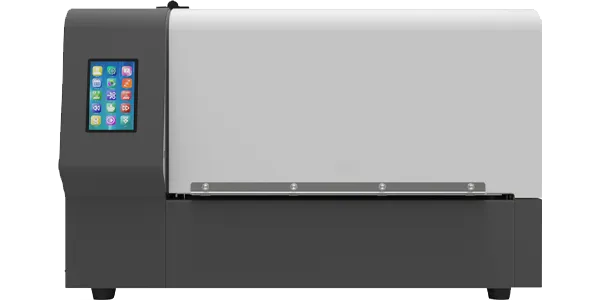
AL10-D Dual-Colour Label Printer
It can enhance industry productivity, optimise supply chain management, reduce…
View details
Aluminum Foil High-Temperature Label
Coated aluminum label for metal processing, heat treatment and high-temperature part…
View details
Anti-Static High-Temperature Polyimide Label
Anti-static polyimide label for ESD-sensitive electronics assembly and high-temperature…
View detailsNeed the right ribbon for your label application?
Share the label material, printer and operating environment. Our team will recommend a tested combination.
