
How Many Wash Cycles Does a Wash Care Label Ribbon Survive? CL230A's Rated 50+ Industrial Washes at 60°C
Request a solution
- Original TTR manufacturer since 2013
- Automated coating and slitting
- IQC / IPQC / OQC control
- ANSI barcode grade testing
- -20°C to 120°C environmental testing
- Batch-level traceability
- ANSI barcode grade
- Batch traceability
- RoHS / REACH compliance
- SGS and MSDS documents on request
Buyers printing sewn-in care labels ask one question first: how many wash cycles the print survives. Colorfulttr's catalog rates its CL230A wash care label ribbon at 50+ industrial wash cycles at 60°C with detergents and bleach, printed on nylon taffeta, polyester satin, acetate, and coated fabric label stocks, with professional dry cleaning and 150°C reverse-side ironing covered by the same data. This guide sets out the rated conditions, the complete durability results, where the rating stops applying, and a wash test you can run on your own labels before committing a production order.
Key Takeaways
- Colorfulttr rates the CL230A wash care label ribbon at 50+ industrial wash cycles at 60°C with detergents and bleach.
- The rating covers nylon taffeta, polyester satin, acetate, and coated fabric label materials.
- The same print survives multiple professional dry-cleaning cycles and 150°C ironing on the reverse side of the label.
- The CL230A ink film does not crack or flake when labels are bent or sewn.
- In the catalog's compatibility chart, CL230A is rated Excellent on nylon taffeta and polyester satin, where the other wax and hybrid models are marked No.
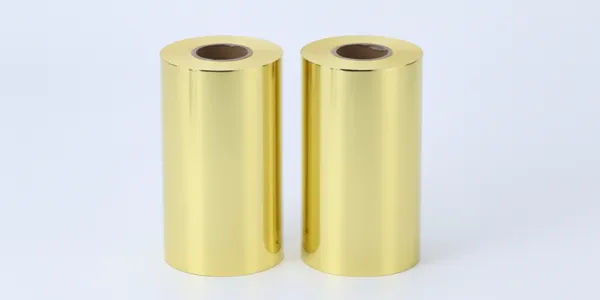
Check Whether Your Process Matches the Rated Wash Conditions
Colorfulttr's published catalog rates the CL230A wash care label ribbon at 50+ industrial wash cycles at 60°C with detergents and bleach. That number is a product rating tied to stated conditions, not a universal promise for any ribbon on any fabric. Match each condition against your own process before you rely on the figure.
The wash condition is industrial laundering at 60°C with detergents and bleach counted inside the rating. If your labels face a hotter process, different chemistry, or heavier mechanical action, the published data does not describe your case, and the rating needs an in-house test before it can speak for you.
The label material is the second condition. CL230A is formulated specifically for nylon taffeta and polyester satin, and its specification lists nylon taffeta, polyester satin, acetate, and coated fabrics as compatible materials. These are the standard sewn-in care label stocks: Colorfulttr's own wash label range includes blank nylon and satin polyester labels built for thermal transfer printing and sewing into garments.
If you source from Chinese suppliers, the same terms appear in their Chinese documents: the sew-in wash label as 水洗唛 (also written 洗水唛), the thermal transfer ribbon as 碳带, and the wash-durability figure as 耐洗次数 — the number of wash cycles. A Chinese catalog line for this product category therefore reads 水洗唛碳带耐洗次数. Colorfulttr's own label list is titled 洗水唛产品清单 and carries the model name Washed Mark, so you can match a Chinese quotation to the ribbon data in this guide.
The rating also belongs to CL230A as a garment wash care thermal transfer ribbon printed in its standard black or navy blue ink. Change the ribbon, the ink, or the material, and the new combination sits outside the conditions the rating describes.
Read the Complete Durability Results Before You Specify
The published durability results for CL230A cover four stresses: industrial washing, professional dry cleaning, reverse-side ironing at 150°C, and the bending and sewing of label conversion. Each result comes from the same catalog entry, so they apply to the same rated conditions.
Washing is the headline result. The print holds through 50+ industrial wash cycles at 60°C, with detergents and bleach inside the rated condition rather than treated as accidental exposure. For programs that launder uniforms, workwear, or bedding textiles on a schedule, that is the number the care label has to defend.
Dry cleaning and ironing follow the same logic. The print performs through professional dry-cleaning processes, rated excellent over multiple cycles, and it withstands ironing at 150°C on the reverse side of the label — the orientation the specification states.
Mechanical flexibility decides sewability. The ink film does not crack or flake when labels are bent or sewn, which keeps the print intact through the stitching a finished label takes. High opacity delivers crisp, dark printing on light and dark fabric labels alike.
The recommended applications match these results: garment care and content labels, apparel size and brand labels, uniform and workwear identification, bedding and textile product labels, and industrial laundry — settings where a label is washed repeatedly rather than once.
Know Where the 50+ Wash Cycles Rating Stops Applying
The 50+ wash cycle figure is a manufacturer performance rating published in the product catalog, not a certification of your laundry. Three limits define how far it reaches.
- The catalog states the temperature, the chemistry, and the materials, but it does not publish the test method behind the number — the wash standard, detergent dosage, or pass criteria. Treat the figure as a rating to confirm in house, not a laboratory report to file.
- The rating covers 60°C washes with detergents and bleach on the four listed label materials. Higher temperatures, different chemistry, and other stocks sit outside the published data, which makes them unverified rather than passed or failed.
- Any change on your side — a different label supplier, printer, or finishing route — moves the combination away from the rated conditions. Re-run the verification test below whenever one of those inputs changes.
These limits do not weaken the rating; they mark the lane it runs in. Hold the rated conditions where you can, and test the part that is genuinely yours: the wash process your labels will actually face.

Verify Wash Cycle Durability on Your Own Labels
A short in-house wash test tells you whether the 50+ cycle rating holds under your laundry, your label stock, and your print setup. It needs a sample roll, your production artwork, and your normal washing process — nothing more.
- Print sample care labels with CL230A on the exact material you will use in production — nylon taffeta, polyester satin, acetate, or a coated fabric from the compatible list — on your own printer with your live artwork.
- Sew or attach the samples to garment panels the way the finished labels will be attached, so the print passes through the same stitching and stress.
- Run the samples through your real wash process at your temperature, with your detergent and bleach, for repeated cycles.
- Pull samples at intervals you fix in advance and check print legibility, the condition of the ink film at the edges, and barcode scannability if your labels carry codes.
- Record the cycle count at which quality still meets your acceptance standard and compare it with the published 50+ rating. If the samples fall short, review the label material and the wash conditions against the rated ones with your ribbon supplier before changing anything else.
Keep the washed samples and the log. They become your internal baseline for every later ribbon or label change, and they show a supplier exactly where a failure appeared. The concrete next step: order a CL230A sample roll in your width, print your live care-label artwork, and start the sequence before you commit the production batch.
Data and Evidence
All values below come from the CL230A section of the COLORFULTTR wax and wax-resin product catalog (document version V1.0, updated July 2026), cross-checked against Colorfulttr's wash label product list 洗水唛产品清单 20260811, which covers nine blank washed-mark label products. The second table reproduces the catalog's material compatibility chart for the two care-label stocks.
| Parameter | Published value |
|---|---|
| Wash resistance | 50+ industrial washes at 60°C |
| Chemistry inside the rating | Detergents and bleach |
| Dry-clean resistance | Excellent, multiple cycles |
| Iron resistance | 150°C on the reverse side |
| Compatible label materials | Nylon taffeta, polyester satin, acetate, coated fabrics |
| Ink colors | Black, Navy Blue (standard for care labels) |
| Standard widths | 30mm, 35mm, 40mm, 45mm, 50mm |
| Standard length | 300m |
| Custom slitting | Available for special label sizes |
The compatibility chart is also what separates CL230A from the rest of the wax and hybrid range on care-label materials:
| Ribbon | Nylon taffeta | Polyester satin |
|---|---|---|
| CL210A | No | No |
| CL220A | No | No |
| CL230A | Excellent | Excellent |
The full chart compares six models — CL100A, CL110A, CL120A, CL210A, CL220A, and CL230A; the near-edge CL240A is described separately in the catalog and does not appear in the material table. The catalog's own selection guide maps garment care labels to CL230A, with the key benefit of withstanding industrial washing.
Frequently Asked Questions
How many wash cycles does the CL230A wash care label ribbon withstand at 60°C?
Colorfulttr's published data rates CL230A at 50+ industrial wash cycles at 60°C with detergents and bleach, on compatible care-label materials such as nylon taffeta and polyester satin.
Does CL230A care label printing survive dry cleaning and ironing?
Yes. The catalog rates dry-clean resistance as excellent over multiple professional cycles, and the print withstands ironing at 150°C on the reverse side of the label.
Which label materials can I print with CL230A wash care ribbon?
Nylon taffeta, polyester satin, acetate, and coated fabrics. The catalog's compatibility chart marks the other wax and hybrid models as not suitable for nylon taffeta and polyester satin, and its selection guide maps garment care labels to CL230A.
What roll sizes and ink colors does CL230A come in?
Standard widths are 30mm, 35mm, 40mm, 45mm, and 50mm, with a standard length of 300m and custom slitting available for special label sizes. Standard ink colors are black and navy blue, and the navy blue is specially formulated for care-label industry standards.
Related Products & Guides
Recommended products for this industry
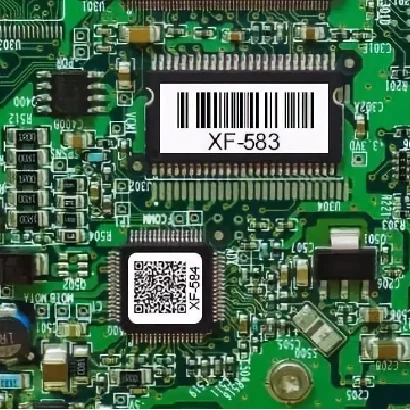
Washable High-Temperature Polyimide Label
Strong-adhesion polyimide label for electronics that pass through washing, soldering and…
View details
Acid and Alkali Resistant Label
Chemical-resistant label construction for acid baths, paint-stripping solutions, alkali…
View details
Aluminum Foil High-Temperature Label
Coated aluminum label for metal processing, heat treatment and high-temperature part…
View details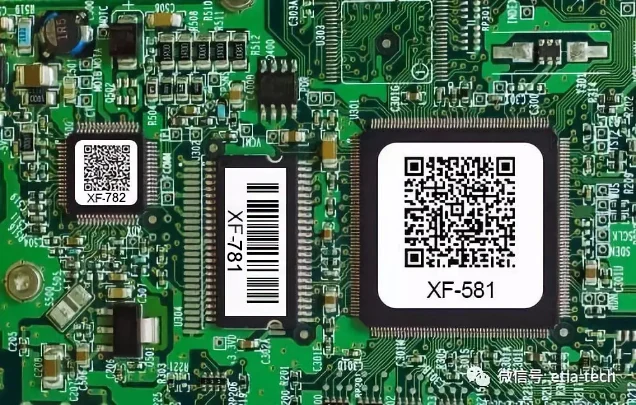
Anti-Static High-Temperature Polyimide Label
Anti-static polyimide label for ESD-sensitive electronics assembly and high-temperature…
View detailsNeed the right ribbon for your label application?
Share the label material, printer and operating environment. Our team will recommend a tested combination.
